Temu is popular for low‑cost dropshipping, but serious brands need more control over sourcing, quality, and logistics. Discover how Doba, AutoDS, AliExpress, Alibaba, Amazon, and B2B‑focused Looperbuy can build a lean, scalable supply chain for your global business.
Running a modern dropshipping business is no longer about chasing the lowest price or the flashiest consumer app. It is about building a lean, reliable supply chain that protects your margins, your brand, and your customer experience over the long term. As someone who has spent years working with cross‑border merchants and B2B resellers, I have seen how choosing the right Temu alternative can make the difference between a scalable business and constant firefighting over delays, returns, and inventory problems.
In this guide, I will walk you through what Temu does well and where it falls short, then compare the leading alternatives like Doba, AutoDS, AliExpress, SHEIN, Alibaba, Amazon, and Looperbuy from a practitioner’s perspective. I will also share a practical playbook for using Looperbuy to build a lean B2B supply chain, using real‑world criteria that matter when your store’s reputation and cash flow are on the line.
Table of Contents
What Temu Really Offers to Dropshippers
Temu is often the first name new dropshippers hear when they look for low‑cost products from China. It aggregates goods directly from manufacturers, offers an easy‑to‑use app, and allows you to test many niches without committing to inventory.
Strengths of Temu’s Model
Temu’s appeal stems from several cost‑driven advantages.
– Direct manufacturer listings push prices down by cutting out intermediaries, enabling aggressive markups for cost‑conscious sellers.
– User‑friendly interfaces on mobile and web simplify product discovery for newcomers, reducing friction when you are just getting started.
– Decentralized logistics partnerships with couriers and regional hubs shorten average shipping times versus traditional post‑from‑China models.
– Wide product coverage across electronics, home goods, fashion, beauty, and niche categories simplifies catalog expansion and trend testing.
– Rapid trend responsiveness means hot products often appear on Temu within days, helping you capture impulse demand quickly.
From a purely tactical standpoint, Temu can be an effective testing ground when you are exploring product ideas and validating early demand.
Hidden Limitations for Long‑Term Brands
However, when I audit stores that rely heavily on Temu, the same structural issues keep surfacing.
– No official dropshipping integrations: There is no native API for automated order sync, inventory updates, or tracking notifications, forcing manual workflows or fragile third‑party hacks.
– Branded Temu packaging erodes brand control; customers clearly see the marketplace behind your store, which undermines premium positioning and repeat loyalty.
– Variable quality control creates inconsistency across suppliers and SKUs, driving returns and negative reviews if you scale volume without robust vetting.
– Inventory mismatches are common because your store is not automatically synced to Temu’s stock data, leading to overselling and cancellations.
– Consumer‑oriented support is not optimized for merchants who need fast escalation for logistics, damaged goods, or complex cross‑border issues.
If your goal is to build a serious brand with predictable operations, Temu’s structure makes it difficult to control quality, delivery, and customer experience at scale.
Key Criteria for Choosing Temu Alternatives
Before we dive into specific platforms, it helps to clarify what serious sellers actually need from a Temu alternative.
Five Practical Criteria from an Operator’s View
From hands‑on work with cross‑border B2B merchants, I focus on five criteria when evaluating alternatives.
1. Source transparency and factory access
You must know who is supplying your goods and be able to negotiate. Platforms like AliExpress and Alibaba expose manufacturers directly but require careful vetting of factories and contracts.
2. Shipping SLAs and warehouse locations
Domestic warehouses (Amazon, Walmart) enable 2–5‑day delivery, while hybrid models like AliExpress “Choice” and Banggood use EU/US hubs to bring cross‑border transit below one week.
3. Workflow integration with your store stack
Tools such as Zendrop, CJdropshipping, Doba, and AutoDS provide automated syncing of orders, inventory, and tracking, which is non‑negotiable once you operate multiple channels.
4. Support for bulk orders and brand building
Platforms like DHgate and Alibaba specialize in bulk and private label, while sourcing partners such as Looperbuy bridge domestic Chinese platforms (like 1688) with consolidation, inspection, and packaging support.
5. Risk management and cash‑flow efficiency
To avoid dead inventory and fragmented logistics, serious B2B sellers lean on dropshipping‑friendly partners and sourcing agents that make just‑in‑time procurement viable while testing many SKUs.
If a platform does not meet these criteria, it usually creates hidden operational costs that show up later in customer complaints, cash‑flow gaps, and management overhead.
Leading Temu Alternatives and How They Fit Different Strategies
Major Temu Alternatives at a Glance
| Platform | Main focus | Shipping time highlight | Tools & automation | Best suited for |
| Doba | Curated, U.S.‑stocked catalog | Fast (2–5 days) to U.S. | Strong API + integrations | Quality‑focused U.S. brands |
| AutoDS | Automation across multiple suppliers | Depends on source | Centralized automation suite | Multi‑supplier dropship ops |
| AliExpress | Massive global marketplace | Often 2–6 weeks | Moderate via third‑party apps | Low‑budget product testing |
| SHEIN | Trend‑driven fashion & lifestyle | ≈1–4 weeks | Weak native tools | Fast‑fashion themed stores |
| Alibaba | Wholesale and private label | ≈3–8 weeks | Limited dropship tooling | Bulk orders & OEM projects |
| Amazon | Prime‑grade logistics | 1–3 days domestically | Moderate via FBA/API | Trust‑driven retail brands |
| Looperbuy | B2B sourcing & dropshipping from China | Coordinated cross‑border | Business‑grade sourcing, QC, logistics | Global B2B resellers & brands |
This table highlights a crucial point: no single platform is “best” for everyone; the right alternative depends on whether you prioritize speed, automation, breadth of catalog, brand control, or factory access.
Deep Dive: How Each Platform Works in Practice
Doba: U.S.‑Stocked, Automation‑Ready Fulfillment
Doba has been serving online sellers in North America for over two decades and remains one of the strongest options when you need domestic inventory, fast delivery, and robust automation.
– U.S.‑based warehouses enable 2–5‑day delivery, aligning your store with customer expectations set by large retailers.
– API integrations with Shopify, BigCommerce, WooCommerce, TikTok Shop, and eBay keep orders, stock levels, pricing, and tracking fully synchronized.
– Curated suppliers are vetted for product quality, packaging, and shipping performance, lowering the risk of surprise defects.
– Tiered subscription plans allow you to scale from side projects to enterprise‑grade operations with bulk imports and analytics.
In my experience, Doba is ideal when your primary market is the U.S. and your brand promise depends on fast, predictable shipping with minimal manual work.
AutoDS: Automation Layer for Multi‑Supplier Workflows
AutoDS is not a supplier marketplace; it is an automation engine that sits between your store and multiple upstream vendors.
– Bulk product importer lets you pull items from sources such as AliExpress and Amazon directly into Shopify, Wix, or eBay listings.
– Price and stock monitoring keeps margins and availability in sync by auto‑updating your listings when supplier data changes.
– One‑click fulfillment and tracking save hours per day once your volume grows, centralizing customer support and returns.
– Print‑on‑demand options extend your catalog into custom branded merchandise without separate POD setups.
For sellers juggling multiple suppliers, AutoDS effectively becomes the control tower, making complex product portfolios manageable.
AliExpress: Infinite Catalog, Slow and Variable Logistics
AliExpress remains the default “testing ground” for many dropshippers thanks to its huge catalog and low entry costs.
– Millions of SKUs across all major categories, plus hobby niches, make it easy to experiment.
– Global shipping via ePacket and standard options can reach 4–6 weeks in some regions, though newer “Choice” shipping and regional warehouses shorten transit for EU/US customers.
– No MOQs (Minimum Order Quantities) make it friendly for early‑stage tests.
– Review and rating systems help you vet suppliers before committing.
However, you must actively manage long shipping times and inconsistent quality, usually by pairing AliExpress with automation tools and sample‑based vetting.
SHEIN: Trend‑Driven Fashion with Brand‑Packaging Issues
SHEIN is a powerhouse for fast‑fashion, lifestyle, and low‑priced accessories.
– Rapid design‑to‑market cycles keep inventory aligned with viral trends.
– Aggressive discounting supports attractive margins even at low ticket values.
But from a dropshipping perspective, there are serious tradeoffs:
– Highly branded packaging makes it obvious to customers that they are receiving SHEIN products, weakening your own brand narrative.
– No official dropshipping program means fulfillment and tracking are largely manual.
– Image rights concerns require you to shoot your own product photography or use compliant mockups.
As an advisor, I usually position SHEIN as a niche source for fashion‑centric stores that accept visible co‑branding and slower operations, not as a universal backbone.
Alibaba: Bulk, OEM, and Long‑Term Factory Partnerships
Alibaba is built for wholesale and private‑label manufacturing, not pure dropshipping.
– Direct factory access lets you negotiate custom specs, packaging, and MOQs with manufacturers.
– Bulk pricing drives down per‑unit cost once you move beyond testing into stable demand.
The tradeoff:
– Higher MOQs and longer lead times make it unsuitable for early experimentation unless you share risk via consignment or group buys.
– Communication and QC require structure: inspection services, clear contracts, and contingency planning for delays.
In a typical growth path, I see sellers test products via dropshipping (Temu, AliExpress, Looperbuy), then shift to Alibaba to secure private‑label arrangements once volumes justify it.
Amazon: Prime‑Grade Logistics and Brand Trust
Amazon operates more as a retail giant with embedded fulfillment and advertising than as a traditional dropshipping marketplace.
– Prime logistics deliver in 1–3 days for many items, aligning with top‑tier customer expectations.
– Rich product data (reviews, Q&A, and detailed specs) allows you to gauge demand and customer sentiment before listing comparable offers elsewhere.
– Integrated ad stack helps you target high‑intent buyers directly on the platform.
The downside for dropshippers is margin pressure from fees, strict policy compliance, and complex returns, but for some brands the tradeoff is worth the embedded trust and reach.
Looperbuy: A B2B‑First Alternative to Temu from China
Where most “sites like Temu” focus on consumer shopping apps, Looperbuy is designed from the ground up for B2B sellers who need business‑grade sourcing and logistics from China.
What Looperbuy Actually Does for Global B2B Sellers
Looperbuy acts as a one‑stop sourcing and dropshipping partner, solving the messy parts of China procurement that traditional marketplaces leave to you.
– Direct sourcing from domestic platforms like 1688 at factory‑level prices, without forcing you to register, negotiate, or manage Chinese‑language seller interfaces.
– Transparent pricing that surfaces product and service costs clearly, avoiding hidden markups.
– End‑to‑end workflow: sourcing, order consolidation, quality checks, packing, and international shipping managed in a single pipeline.
– Multi‑currency payment support (USD, EUR, GBP and more) through partners such as LianLian, enabling transactions without a local Chinese bank account.
– Dropshipping‑friendly operations, so you can ship directly to end customers and reduce warehouse commitments and inventory risk.
For B2B resellers and cross‑border brands, this combination of factory access, inspection, and logistics in one partner is precisely what Temu and general marketplaces do not offer.
How Looperbuy Solves Pain Points Temu Cannot
When merchants graduate from consumer marketplaces to business‑grade sourcing, they run into recurring issues: high product cost beyond initial loss‑leader deals, communication gaps, fragmented shipments, and uncontrolled quality.
Looperbuy is explicitly designed to address these pain points.
– Guided access to 1688 means you skip complex registration and negotiation processes while still benefiting from domestic Chinese pricing.
– Centralized inspection and consolidation ensure that products from multiple factories arrive in consistent condition under unified standards.
– Streamlined logistics coordination removes the need to juggle separate freight forwarders, customs brokers, and local warehouses.
– Just‑in‑time procurement workflows reduce working‑capital pressure by enabling controlled dropshipping tests before scaling into larger commitments.
If you are building a serious B2B brand around tools, packaging, industrial goods, or durable consumer products, Looperbuy gives you Temu‑like pricing with far more control over quality and delivery.
Where Looperbuy Fits Among Other Temu Alternatives
Looperbuy is best understood as a bridge between low‑cost domestic platforms in China and global merchants, rather than a standalone shopping app.
| Need | Temu‑style option | Strong alternatives | Where Looperbuy fits |
| Fast local shipping to US/EU | Consumer apps + local warehouses | Amazon, Walmart, Joom, Banggood | Use Looperbuy when core sourcing is in China but you need coordinated cross‑border logistics. |
| Zero‑budget product testing | Ultra‑cheap marketplaces | AliExpress “Choice”, Wish, Shein | Move validated SKUs into Looperbuy for factory‑grade pricing and more stable supply. |
| Fully automated dropshipping | App‑based tools | Zendrop, CJdropshipping, AutoDS | Pair Looperbuy with your existing automation stack to gain quality control over sourcing. |
| Bulk orders & private label | Wholesale marketplaces | DHgate, Alibaba, 1688 | Use Looperbuy to navigate 1688, pre‑screen factories, and consolidate shipments for B2B customers. |
Practically, I recommend using Temu or AliExpress only at the earliest testing stage, then transitioning winning products into Looperbuy workflows once you need reliable sourcing, inspection, and repeat ordering.
Practical Playbook: Building a Lean B2B Supply Chain with Looperbuy
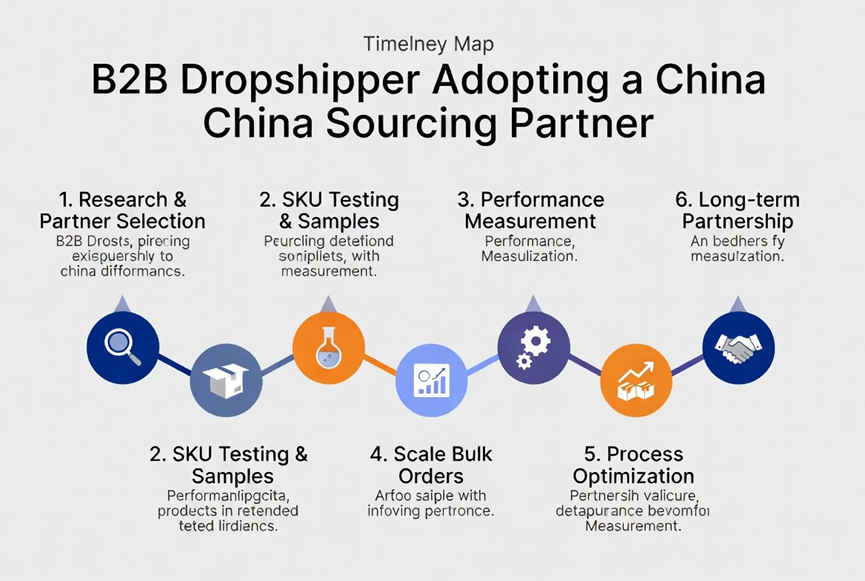
To make this concrete, here is a simple, repeatable framework I use when helping B2B sellers build a lean cross‑border supply chain with Looperbuy at its core.
Step‑By‑Step Implementation
1. Clarify product strategy and target markets
Map out product categories (e.g., tools, packaging materials, home goods, industrial accessories) and identify priority regions (U.S., EU, Middle East, etc.). This defines acceptable transit times and regulatory requirements.
2. Source candidate SKUs via Looperbuy’s 1688 access
Work with Looperbuy’s team to identify factory‑grade options, focusing on MOQ, quality, and repeat‑order potential instead of only sticker price.
3. Run small‑batch tests using dropshipping workflows
Place controlled orders where Looperbuy handles consolidation, inspection, and direct shipping to end customers, avoiding upfront inventory commitments.
4. Measure operational performance and customer feedback
Track delivery windows, defect rates, refund frequency, and customer reviews against your margin targets and service levels.
5. Scale winning SKUs and negotiate deeper factory terms
Once performance is stable, use Looperbuy’s factory access to expand variants, improve packaging, and increase volumes with better pricing.
This playbook allows you to combine the price advantages of consumer marketplaces with the reliability of business‑grade sourcing, without building your own local team in China.
When Looperbuy Is the Right Choice and How to Move Forward
From a practitioner’s perspective, Looperbuy is particularly strong when:
– You sell B2B or higher‑value consumer products where repeatability and stable quality matter more than random deals.
– You want factory‑level pricing from China but do not have a local sourcing team or Chinese entity structure.
– You need a single accountable partner for sourcing, inspection, consolidation, and cross‑border delivery instead of juggling multiple fragmented vendors and logistics providers.
If you are currently relying on consumer marketplaces or scattered suppliers for China sourcing, this is an excellent moment to upgrade to a dedicated B2B partner capable of handling sourcing, quality control, and dropshipping in one place.
Recommendation: review your top 20 SKUs sourced from consumer marketplaces, identify those with consistent demand and margin potential, and run a pilot via Looperbuy to benchmark pricing, quality, and delivery against your existing setup.
FAQs
1. Is Looperbuy only suitable for large B2B buyers?
Looperbuy is built for both small B2B resellers testing new SKUs and established brands that need long‑term support from China; you can start with small dropshipping tests and scale up as volumes grow.
2. Can I use Looperbuy alongside platforms like AliExpress or Temu?
Yes. Many merchants begin by validating demand on open marketplaces, then migrate proven items into Looperbuy’s factory‑level sourcing and consolidated logistics to improve margins and reliability.
3. How does Looperbuy compare to automation tools such as AutoDS or Zendrop?
Looperbuy focuses on sourcing, inspection, and logistics from China, while tools like AutoDS and Zendrop specialize in storefront automation; combining them gives you both operational control and workflow efficiency.
4. What product categories work best with Looperbuy?
Looperbuy fits a wide range of categories—from home goods and tools to packaging materials and industrial accessories—especially where B2B buyers value consistent quality and repeat orders.
5. How can I reduce risk when shifting from Temu to Looperbuy?
Start with a controlled pilot: select a subset of SKUs, run parallel orders through Looperbuy, compare delivery times, defect rates, and customer feedback, then gradually transition more volume once performance meets your targets.
References
1. Doba – “Top Alternatives to Temu for Successful Dropshipping Businesses” (platform strengths, limitations of Temu, supplier comparisons). [doba]
2. Looperbuy – “Looperbuy: A Business‑Grade Temu Alternative for Global B2B Dropshipping” (B2B‑oriented sourcing model, workflows, comparison tables). [sellthetrend]
3. Similist – “Sites Like Temu: 12 Better Alternatives” (overview of consumer and hybrid marketplaces similar to Temu). [similist]
4. NextSmartShip – “Best Sites Like Temu to Shop From in 2026” (shipping performance comparisons and cross‑border fulfillment insights). [nextsmartship]