Launch a real brand without ever holding stock. Discover how to build a high-converting e-commerce dropshipping store, choose profitable niches, partner with Chinese sourcing platforms like Looperbuy, and create a seamless customer experience without inventory risk.
Launching a store without inventory is no longer a fringe tactic—it now powers roughly 23–27% of online stores and around 23% of global online sales, driven by dropshipping and hybrid fulfillment models. At the same time, industry data shows that only 10–20% of new dropshipping stores become profitable in their first year, so the way you design your brand, choose suppliers, and structure operations matters more than ever. As someone who has helped multiple B2B sellers and DTC brands build inventory-free models, my core principle is simple: treat dropshipping as a brand business first and a logistics shortcut second.
Table of Contents
What “Branded” Dropshipping Really Means Today
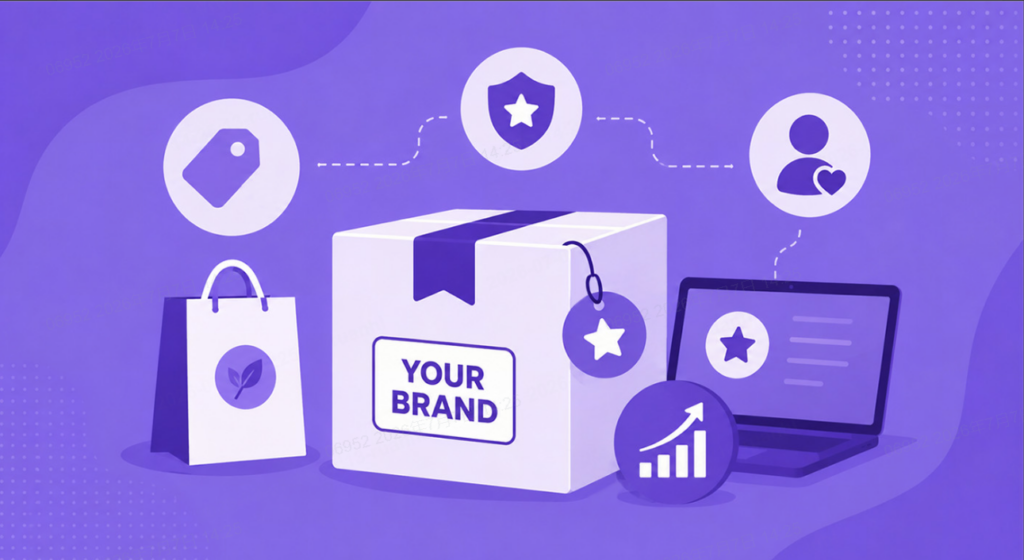
A branded e-commerce dropshipping store is not just a generic catalog with random products—it’s a cohesive brand experience where a partner handles storage, packing, and shipping while you own the identity and relationship with the customer. [eprolo]
Key elements of a branded store:
– Niche clarity: One audience, one main problem, one clear promise. [getcarro]
– Consistent visual identity: Logo, color system, typography, and product image style that match across your website, ads, and emails. [usadrop]
– Controlled customer experience: You write the product pages, define policies, and manage support, while your partner executes fulfillment. [eprolo]
– Custom cues: Branded packaging, labels, or invoices where available, so orders feel truly “from your brand,” not from a random marketplace. [branvas]
In practice, you can think of your store as the front office, while a sourcing and fulfillment partner like Looperbuy operates the back office that your customers never see.
Why Build an Inventory-Free Branded Store?
Modern market data makes a strong case for a zero-inventory approach when you’re building a brand from scratch.
Financial and Operational Advantages
– No warehousing risk: You avoid tying capital into stock and local storage; this allows you to test more products with far less upfront cash. [privy]
– Flexible product strategy: You can add, remove, or rotate SKUs quickly based on demand without being locked into pallets of unsold items. [autods]
– Improved margin potential: Studies on dropshipped goods show net margins in the 10–30% range, with some manufacturers seeing 18%+ profit lifts versus traditional online sales models. [companieshistory]
A simple example: instead of spending $10,000 on inventory and warehousing, a brand can invest that same budget into branding, content, and performance marketing while using a partner to handle procurement, packaging, and distribution. [privy]
Strategic Fit for Global Brands
Global data shows that Asia–Pacific, led by China’s manufacturing ecosystem, now holds the largest regional share of dropshipping activity at around 36%, especially in fashion, accessories, and consumer goods. For international sellers, partnering with a China-based sourcing platform means you can access massive product depth, competitive pricing, and cross-border logistics without opening your own office or warehouse in China. [getcarro]
Step 1 – Define Your Brand and Customer Before You Pick Products
Many of the 80–90% of failing stores start with product hunting instead of brand building. To avoid that trap, begin with positioning, not product lists. [branvas]
Clarify Your Brand Foundation
Answer these questions before you source anything:
1. Who is your primary customer? Describe their age, location, budget, and key frustrations.
2. What transformation do you promise? Faster workflow, better health, more status, or lower hassle?
3. What makes your brand different? Unique bundles, quality control, specialist support, or value-added content?
4. What tone and personality will you use? Professional and technical, playful and casual, or minimalist and premium?
Once you lock this down, you can craft:
– A short brand story that appears on your About page and product pages.
– A tagline that shows up in your hero section and campaign creatives.
– A visual style you’ll replicate in AI-generated images, banners, and social content.
Step 2 – Choose a Profitable, Brandable Niche
Data from 2026 shows that fashion, accessories, home, beauty, and hobby gear dominate dropshipping volume, but the most profitable brands go narrower with strong differentiation. [companieshistory]
Criteria for a High-Quality Niche
Use these filters when evaluating categories:
– Margin potential: Aim for products that can support 40%+ gross margin after cost of goods and international shipping. [branvas]
– Brandability: Prefer items that can be private-labeled, custom-packaged, or bundled into kits instead of pure commodities. [branvas]
– Logistics feasibility: Light, non-fragile, and small products tend to ship faster and break less.
– Evergreen plus trend blend: Mix stable demand products (e.g., office tools) with a few carefully tested trend items (e.g., seasonal gadgets). [autods]
Example niche ideas
– Productivity tools for remote teams (cables, organizers, laptop stands, branded desk sets).
– Home fitness accessories kits tailored by region or demographic.
– Smart kitchen starter bundles for first apartments.
These categories are well-suited to Chinese sourcing and global dropshipping, because manufacturers already produce at scale and can offer consistent quality when paired with a vetting partner. [getcarro]
Step 3 – Partner with a Reliable Sourcing and Fulfillment Platform
Once you know your niche, the next critical step is selecting a reliable China-based partner who can source, inspect, pack, and ship on your behalf.
What to Look For in a Partner
Industry data shows that shipping delays and thin margins are the top complaints among dropshippers, so your partner must directly help you avoid these two issues. [companieshistory]
Non-negotiable qualities:
– Access to verified suppliers with consistent lead times and low defect rates. [autods]
– Order automation and tracking, so every order from your store is processed with accurate status updates and tracking codes. [autods]
– Flexible MOQs and product sourcing, including the ability to add new SKUs and customize packaging over time. [privy]
– Global shipping capabilities, optimized for your target markets, with clear cost and delivery time structures. [getcarro]
A platform like Looperbuy can act as your single gateway to Chinese manufacturers, handling procurement, consolidation, quality checks, and direct-to-consumer shipping, while you focus on brand, content, and customer relationships.
Step 4 – Build a High-Converting Storefront
Designing the storefront is where your brand becomes real to customers. You can build on platforms like Shopify, WooCommerce, or other modern e-commerce systems that integrate easily with sourcing partners. [getcarro]
Essential Store Pages and Structure
At minimum, your branded dropshipping store should include:
– Home page with a clear value proposition, hero image, and featured collection.
– Category pages organized by customer use case (e.g., “Remote Work Essentials” rather than generic “Accessories”).
– Product detail pages with strong storytelling, benefit-driven bullet points, and clear shipping expectations.
– About page explaining your mission, sourcing standards, and fulfillment process.
– Support pages for FAQs, contact, and returns/refunds policies.
Who Handles What in a Branded Dropshipping Model
| Area | You (Store Owner) | Partner (e.g., Looperbuy) |
| Brand identity | Logo, colors, storytelling, visuals | Optional branded packaging/invoices if supported |
| Product strategy | Niche selection, bundles, pricing, upsells | Sourcing, quality inspection, availability |
| Storefront UX | Layout, copywriting, product photos, on site navigation | System integration, order syncing |
| Fulfillment | Order tracking communication, proactive delay notifications | Storage, picking, packing, global shipping |
| Customer support | Email, chat, social replies, issue resolution policies | Factual logistics status and shipment confirmation |
This table can be embedded in your “How It Works” page to reassure buyers and explain your fulfillment architecture.
Step 5 – Design Product Pages That Feel Like a Real Brand
In an inventory-free business, product pages carry a huge share of the trust load. They must sell the product and the reliability of your fulfillment.
Anatomy of a High-Performing Product Page
Each product detail page should include:
– Clear product name and subtitle that highlight the main benefit.
– Structured descriptions using short paragraphs and bullet points for features and benefits.
– Visual hierarchy: headline, hero image, key benefits above the fold, then specifications, reviews, and FAQs.
– Transparent logistics information: average shipping time windows, regions served, and return/refund rules. [privy]
Use bold strategically:
– Highlight core benefits and unique value (e.g., “no need to manage any warehouse space“).
– Emphasize decision-making clues such as “ships in 5–8 business days from our China fulfillment center” where your partner supports those timelines. [companieshistory]
Step 6 – Build a Smooth Ordering and Fulfillment Flow
The technical glue between your e-commerce platform and your sourcing partner is critical. Top performing dropshippers increasingly rely on automated order processing and tracking, which is associated with higher success rates. [autods]
Core Workflow You Should Implement
1. Customer places an order on your branded storefront.
2. Order syncs automatically to your partner’s system, including SKU, quantity, and customer address. [autods]
3. Partner picks, packs, and ships, following agreed packaging and quality standards. [eprolo]
4. Tracking details return to your store, and you send branded notifications and status emails.
5. You handle service and returns, coordinating with the partner when replacements or refunds are needed. [autods]
The goal is for the buyer to feel that they are dealing with one unified brand, even though multiple companies are involved behind the scenes.
Step 7 – Use Content and Community to Build Long-Term Brand Equity
Because many stores use similar catalogs, your narrative and community become your main differentiators. Long term successful brands invest heavily in content and audience relationships instead of relying only on transient campaign traffic. [printful]
Content Types That Work Well
– Educational articles explaining how to choose the right products or setups in your niche.
– Case studies and user stories showcasing how customers improved their workflow, home, or lifestyle with your products. [usadrop]
– Short video explainers embedded on product pages to demonstrate usage and unboxing.
– Email sequences that guide new buyers through onboarding and cross-sell relevant items.
You can also leverage community channels (social groups, live sessions, or Q&A streams) to test new product ideas coming from your sourcing partner and to refine your offers based on direct feedback. [getcarro]
What Actually Separates Winning Dropshipping Brands
Looking across multiple datasets and observed stores, a few patterns consistently appear among brands that break past the first year failure barrier. [printful]
Execution Principles from Industry Experience
– Obsess over supplier reliability: Verify shipping speed, defect rates, and communication responsiveness before you scale. [branvas]
– Commit to a single brand narrative: Avoid mixing unrelated niches; it dilutes trust and harms repeat purchase rates. [printful]
– Invest early in customer support: Prompt, empathetic responses and clear policies can turn delayed orders into loyal customers. [autods]
– Use data to iterate: Track conversion rates, repeat purchase, and ticket topics to decide which SKUs to expand and which to retire. [ecommercemanager]
From a personal perspective working with B2B sellers and digital brands, the most resilient inventory-free stores treat logistics partners like strategic allies—sharing forecast data, building custom packaging, and collaborating to improve service levels rather than constantly hopping between random suppliers.
Practical Implementation: Building Your Store with Looperbuy as Backend
While the exact integration steps depend on your platform, you can follow this simplified blueprint when using Looperbuy or a similar China-based sourcing and fulfillment partner:
– Step 1 – Account and niche alignment: Create your seller account, share your brand niche, preferred product categories, and quality expectations.
– Step 2 – Product sourcing and vetting: Work with the platform team to shortlist SKUs, review samples, and define packaging and labeling options.
– Step 3 – Catalog setup: Import selected SKUs into your store with localized descriptions and your own brand visuals.
– Step 4 – Logistics configuration: Set shipping zones, average delivery windows, and return workflows based on Looperbuy’s capabilities.
– Step 5 – Launch and optimize: Monitor early orders, gather feedback on delivery and product quality, and refine your catalog and messaging.
This approach allows global B2B and DTC sellers to launch branded stores without any physical inventory, tapping into China’s manufacturing strengths while maintaining full control over front-end experience.
Actionable Checklist Before You Launch
To make this concrete, here’s a simplified checklist you can work through:
1. Define your brand positioning, story, and tone.
2. Select 1–2 core niches with strong margin and brandability.
3. Partner with a verified sourcing and fulfillment platform in China.
4. Design a conversion-focused storefront with clear messaging and UX.
5. Build trust-rich product pages with strong visuals and logistics transparency.
6. Implement automated order and tracking flows between your store and partner.
7. Launch with a content plan and communication strategy to grow your audience.
Focus on doing each item well instead of chasing every possible channel or product trend simultaneously.
Turn Your Brand Idea into a Store
If you’re ready to stop hesitating and start building, the next step is straightforward: choose your niche, define your brand story, and connect your store to a reliable Chinese sourcing and fulfillment partner like Looperbuy. With the right backend, you can test ideas quickly, avoid inventory risk, and deliver a professional brand experience to customers worldwide. Reach out to explore how Looperbuy can source products, streamline fulfillment, and help you launch a truly branded store without ever renting a warehouse or packing a box yourself.
FAQs
Is a branded dropshipping store viable in 2026?
Yes. Dropshipping now represents roughly 23% of online sales and continues growing near 20% annually, especially in hybrid models where brands combine their own stock with partner fulfillment. The key is focused execution—clear niche, reliable partner, and strong customer experience. [ecommercemanager]
How long does shipping usually take from China?
Typical delivery windows range from about 5–15 business days depending on destination region, shipping method, and partner capabilities. Work with your platform to select routes and clearly communicate expected timeframes on your product pages and checkout screens. [companieshistory]
What budget do I need to start?
Many private-label or branded dropshipping stores launch with $500–$2,000 allocated to branding, store setup, and marketing rather than inventory. This is enough to test a focused catalog, especially when your partner offers flexible MOQs and supports gradual scaling. [branvas]
How do I choose products that fit my brand?
Combine data-driven research (demand, margin, and shipping feasibility) with brand alignment criteria like visual fit, storytelling potential, and bundle options. Avoid random “winning products” that don’t match your long-term narrative. [companieshistory]
What type of support should I offer customers?
Offer clear channels (email, chat, or ticket system), fast replies, and transparent policies, and proactively update buyers on shipping status and potential delays. Strong support often turns first-time buyers into repeat customers, even in a logistics-heavy model. [autods]
References
1. USA Drop – *Build a Real Brand Without Holding Inventory* – [usadrop]
2. Eprolo – *Branded Dropshipping Stores: Build a Zero-Inventory Store* – [eprolo]
3. Privy – *7 Ways To Sell Online Without Inventory* – [privy]
4. CompaniesHistory – *Dropshipping Market Statistics 2026* – [companieshistory]
5. Printful – *Top Dropshipping Statistics You Need to Know in 2026* – [printful]
6. eCommerce Manager – *120 Dropshipping Statistics for 2026* – [ecommercemanager]
7. Branvas – *Dropshipping Statistics for 2026* – [branvas]
8. AutoDS – *How To Start An Online Store Without Inventory: A Step-By-Step Guide* – [autods]
9. GetCarro – *How to Start an Online Store Without Inventory* – [getcarro]