White label dropshipping helps ecommerce sellers build customer loyalty through branded packaging, reliable fulfillment, accurate delivery communication, and stronger post-purchase engagement. Learn practical strategies to create a memorable brand experience, increase repeat purchases, and reduce the operational burden of inventory and global shipping.
White label dropshipping helps online sellers turn generic products into a recognizable customer experience. Instead of sending buyers a supplier-branded or anonymous package, merchants can present products, packaging, inserts, and post-purchase communication under one consistent brand identity—without carrying large amounts of inventory themselves.
For a modern B2B seller, customer loyalty is not created by a logo alone. It comes from the complete journey: product quality, accurate listings, branded packaging, predictable delivery, transparent tracking, responsive support, and a smooth returns process. When these elements work together, white label dropshipping can help a store look more established, reduce repeat-purchase friction, and build a brand that customers remember.
Table of Contents
What Is White Label Dropshipping?
White label dropshipping is a business model in which a seller offers products made by a third-party supplier under the seller’s own brand. The supplier or fulfillment partner stores, packs, and ships orders directly to the final customer, while the merchant focuses on product positioning, storefront management, marketing, pricing, and customer relationships.
In simple terms:
– A supplier provides ready-made products.
– The seller creates the brand experience.
– The fulfillment partner processes and ships orders.
– The buyer sees the seller’s brand rather than an unfamiliar supplier.
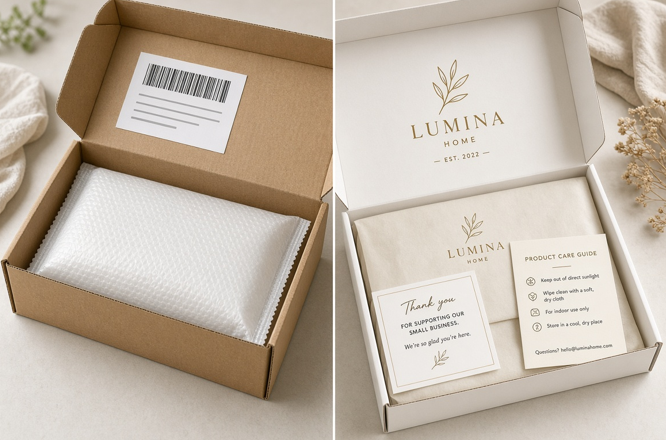
White label dropshipping should not be confused with ordinary dropshipping. Traditional dropshipping primarily describes the fulfillment method: a supplier ships directly to the buyer. White labeling is the branding layer placed on top of that fulfillment model. It may include custom packaging, branded invoices, logo labels, gift cards, product inserts, or consistent unboxing materials.
For example, a merchant selling reusable water bottles may source a standard product from a Chinese supplier. With white label dropshipping, the merchant can add its own name, logo, branded package, product-care insert, and QR code linking to warranty registration or product tips. The physical product may be similar to competing items, but the customer receives a distinctly branded purchase experience.
This distinction matters because customers rarely become loyal to a generic product listing. They become loyal to a brand they trust.
Why Customer Loyalty Matters in Ecommerce
Customer loyalty is the willingness of buyers to return, purchase again, recommend a seller, and choose that seller even when alternatives are available. It is especially valuable in ecommerce because product discovery is easy and price comparison is immediate.
A shopper can often find a similar item within minutes. That means sellers need more than a competitive price to encourage repeat purchases. They need to create confidence before purchase and satisfaction after delivery.
Research consistently shows that fulfillment has a meaningful effect on repurchase behavior. Australia Post reports that 73% of shoppers say a great delivery experience makes them more likely to buy again, while 70% say poor delivery communication during checkout makes them less likely to complete a purchase.
A 2025 consumer survey from Sifted similarly found that 76% of shoppers said a positive delivery experience influenced their decision to repurchase from a brand. The same report noted that nearly half of consumers stop buying from a brand after poor delivery or packaging experiences.
For sellers, the takeaway is clear: the delivery box is not simply a logistics expense. It is a key customer-retention moment.
How White Label Dropshipping Creates Loyalty
1. It Makes Your Brand Memorable
A customer who receives an unbranded parcel may remember the product but forget where it came from. A branded package creates stronger mental association between the product experience and your business.
A consistent visual identity can include:
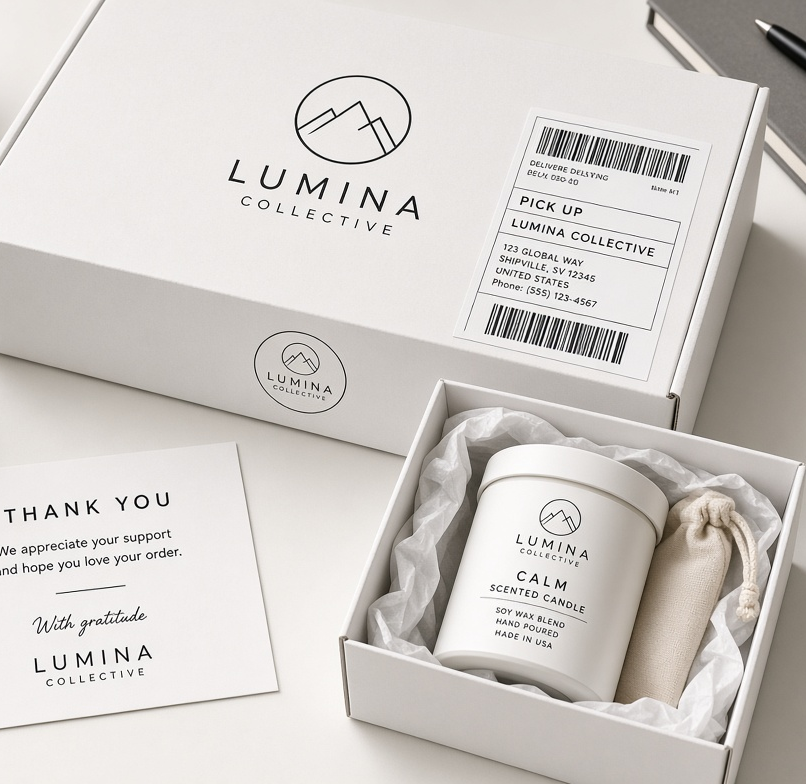
– Branded shipping boxes, mailers, or tissue paper
– A recognizable logo or color palette
– Custom product labels
– Branded thank-you cards
– Care instructions or setup guides
– QR codes that lead to product support, community content, or future offers
– A branded return label or returns portal
These details help transform a single transaction into a recognizable brand interaction.
Consistency is more important than complexity. A simple, well-designed insert card and reliable packaging can be more effective than expensive packaging that changes from order to order. Buyers should know what to expect whenever they purchase from your store.
2. It Gives You More Control Over the Unboxing Experience
The unboxing experience shapes a customer’s first physical impression of an online brand. Before the customer tests the product, they notice whether the package is clean, protective, organized, and aligned with the promise made on the website.
White label dropshipping enables sellers to influence that experience without personally packing every order. For example, a seller may request:
– Minimalist eco-conscious packaging for sustainable products
– Premium gift-ready packaging for higher-margin items
– Protective packaging for fragile goods
– Product inserts that explain usage and care
– Warranty or replacement instructions
– Promotional cards for related products
This creates a stronger connection between the online storefront and the product that arrives at the customer’s door.
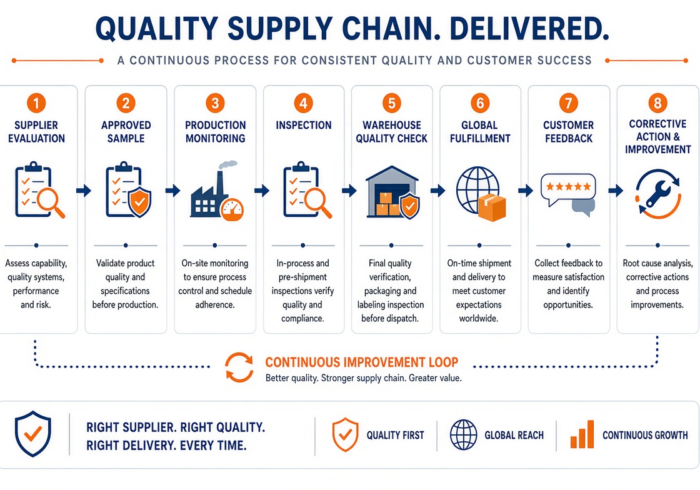
However, packaging should never compensate for weak product quality. A premium-looking box cannot build long-term loyalty if the product is defective, misrepresented, or difficult to use. The strongest white label strategy begins with rigorous supplier evaluation, product sampling, and quality-control standards.
3. It Builds Trust Through a Cohesive Experience
Trust grows when every customer touchpoint tells the same story. The product page, order confirmation email, packaging, tracking page, support response, and return process should all feel like they come from one business.
This is where white label dropshipping becomes more than a sourcing arrangement. It becomes an operational discipline.
A cohesive experience means:
| Customer Touchpoint | What the Customer Should Experience | Loyalty Benefit |
| Product page | Accurate images, clear specifications, realistic delivery information | Reduces disappointment and return requests |
| Checkout | Transparent shipping costs and delivery options | Improves purchase confidence |
| Order confirmation | Branded, clear, and timely communication | Reassures the customer after payment |
| Packaging | Protected product with recognizable brand elements | Makes the purchase memorable |
| Tracking updates | Accurate status updates and clear support contacts | Reduces uncertainty and support tickets |
| Returns process | Fair, simple, and easy-to-understand instructions | Protects trust when something goes wrong |
| Follow-up email | Helpful usage advice or relevant reorder reminder | Encourages repeat purchases |
The strongest brands do not disappear after checkout. They stay present in helpful, relevant ways.
4. It Supports Better Post-Purchase Engagement
White label dropshipping can create a direct bridge between the delivered product and future customer engagement. Branded inserts, QR codes, and post-purchase email flows can guide buyers toward useful resources instead of simply asking them to buy again.
A customer who purchases a kitchen storage product, for instance, could receive:
– A branded organizing guide
– A QR code to a short setup video
– A link to complementary products
– A registration page for a limited warranty
– A discount offer for a future bundle
This approach is more effective than sending a generic “buy again now” email immediately after delivery. The goal is to create value first.
A useful post-purchase sequence may look like this:
1. Order confirmation: Confirm the purchase, delivery address, and estimated shipping window.
2. Shipment notification: Provide tracking details and customer-service contact options.
3. Delivery follow-up: Ask whether the item arrived safely and provide setup or care guidance.
4. Value email: Share a useful tip, product tutorial, or complementary use case.
5. Review request: Invite feedback after the customer has had time to use the product.
6. Reorder or cross-sell offer: Recommend relevant products based on the original purchase.
This process makes customers feel supported rather than pressured.
Delivery Reliability Is Part of Your Brand
Many merchants treat shipping as the fulfillment partner’s responsibility. From the buyer’s perspective, that distinction does not exist. If a package is late, damaged, missing, or confusingly tracked, the customer generally blames the brand that accepted the order.
That is why a white label dropshipping strategy must include delivery reliability—not just branding.
Bringg’s consumer research found that 72% of shoppers consider on-time delivery an essential factor in the delivery experience. The study also reported that 55% of shoppers stop buying from a brand after a single negative delivery experience.
For a growing online seller, this creates an important principle:
> Do not promise a delivery speed that your supply chain cannot reliably achieve.
A realistic delivery promise often creates more trust than an aggressive promise that is frequently missed. This is especially relevant when sourcing internationally, where processing times, cross-border transit, customs clearance, peak seasons, and local last-mile carrier performance can affect delivery dates.
Delivery Practices That Protect Loyalty
To reduce avoidable disappointment, merchants should:
– Display realistic processing and shipping times before checkout.
– Use suppliers with stable inventory visibility.
– Confirm that products meet packaging and labeling requirements.
– Offer tracking for orders whenever possible.
– Notify customers proactively about meaningful delays.
– Create a clear replacement or refund process for lost and damaged parcels.
– Review fulfillment performance regularly by destination country, carrier, product type, and supplier.
A study of ecommerce customers found that delivery accuracy, returns handling, and delivery speed all significantly influence customer loyalty, with delivery accuracy emerging as the strongest factor.
Choosing Products That Encourage Repeat Purchases
Not every white label dropshipping product is equally suited to loyalty-building. Product selection should go beyond trend potential and initial margin. The best products also create opportunities for repeat orders, complementary purchases, or long-term brand association.
Strong Product Characteristics
Consider products that have one or more of the following qualities:
– Repeat-use potential: Consumables, replenishable items, or products customers use frequently.
– Natural cross-sell opportunities: Products that work as a collection, kit, or bundle.
– Room for differentiation: Products that can be improved through packaging, instructions, accessories, or positioning.
– Clear customer problem-solving value: Products that make a task easier, safer, faster, or more enjoyable.
– Low defect risk: Products that can be consistently sourced and shipped with fewer damage issues.
– Shareable appeal: Products that customers may recommend, gift, or feature on social media.
For example, a seller of ordinary pet accessories may struggle to stand out with a single generic item. But the same seller can create a branded “new puppy essentials” collection, including a collapsible bowl, grooming accessory, travel pouch, care guide, and repeat-purchase offer for related items. The value is not only in each individual product; it is in the branded solution.
Avoid Building Loyalty on Unstable Products
Be cautious with products that create predictable post-purchase problems, such as:
– Items with inconsistent sizing
– Fragile goods with insufficient protective packaging
– Products that require unclear safety instructions
– Goods with frequent quality variation between batches
– Trend products that are easily copied and have little brand relevance
– Products subject to legal, regulatory, or intellectual-property restrictions
A low upfront product cost is not a real advantage if it creates refunds, negative reviews, chargebacks, and lost trust.
A Practical White Label Dropshipping Framework
For B2B sellers using China sourcing and fulfillment services, a structured approach can reduce risk while improving brand consistency.
Step 1: Define the Brand Promise
Start by answering one question: Why should a customer choose your store instead of another seller offering a similar product?
Your answer might focus on:
– Better product selection
– More useful bundles
– Premium presentation
– Sustainable positioning
– Faster regional delivery
– More responsive customer support
– Specialized knowledge for a particular audience
This promise should guide your product sourcing, packaging requirements, website language, and customer service standards.
Step 2: Validate the Supplier and Product
Before launching, order samples and inspect them as a customer would.
Review:
– Product materials and build quality
– Actual size, color, and functionality
– Packaging protection
– Branding placement options
– Processing time
– Inventory stability
– Available shipping methods
– Defect and replacement procedures
If you cannot confidently explain the product’s quality and delivery experience, customers will notice the same uncertainty.
Step 3: Create Brand Assets That Add Value
A logo on a package is only the starting point. Develop assets that help the customer use and trust the product.
Examples include:
– Branded instruction cards
– Setup guides
– Warranty information
– Care instructions
– QR-linked product videos
– Thank-you cards with relevant, modest offers
– Product registration pages
– Customer support contact details
Every asset should be useful. Avoid excessive inserts that make the package feel promotional or wasteful.
Step 4: Set Clear Fulfillment Standards
Document the operational requirements you expect from your fulfillment partner. These may include:
– Product inspection requirements
– Packaging specifications
– Correct SKU and quantity checks
– Branding-insert placement
– Photo confirmation for selected orders
– Tracking upload standards
– Dispatch-time targets
– Escalation procedures for exceptions
A platform such as Looperbuy can help merchants centralize sourcing, product purchasing, consolidation, customized packaging, and order fulfillment. The key is to align operational requirements with the experience promised to end customers.
Step 5: Measure Loyalty Beyond Sales
Revenue is important, but it does not reveal the full health of a brand. Track signals that show whether customers are becoming more confident in your business.
Useful metrics include:
| Metric | What It Indicates | Improvement Opportunity |
| Repeat purchase rate | How many buyers return to place another order | Improve product fit, follow-up, and assortment |
| Refund and return rate | Whether expectations match delivered reality | Improve listings, quality control, and packaging |
| On-time delivery rate | Whether customers receive orders within the promised window | Improve supplier, carrier, and destination planning |
| Customer support contact rate | How often buyers need help after ordering | Improve tracking, instructions, and product information |
| Product review themes | The reasons buyers are satisfied or dissatisfied | Identify recurring operational problems |
| Net Promoter Score or referral rate | Whether buyers would recommend the brand | Improve the overall experience, not only price |
Common Mistakes That Damage Loyalty
White label dropshipping can strengthen a brand, but only when the execution matches the promise. The most common mistake is treating branding as decoration rather than a customer commitment.
Avoid these issues:
– Overpromising delivery speed: Customers care about accurate expectations, not only fast estimates.
– Using inconsistent packaging: Changing boxes, inserts, or product presentation creates uncertainty.
– Hiding shipping information: Unexpected fees or long transit times can cause abandonment and complaints.
– Neglecting customer support: A buyer with a delivery issue needs fast, clear options—not silence.
– Failing to inspect suppliers: Product defects quickly undermine a carefully designed brand.
– Sending irrelevant promotions: Follow-up messages should be timely and connected to the customer’s purchase.
– Ignoring returns feedback: A return is valuable operational data, not just a cost.
A reliable fulfillment experience is often more powerful than a dramatic marketing claim. When customers receive what they expected, in good condition, within the stated timeframe, they have a reason to trust the next purchase.
Build a Brand Customers Return To
White label dropshipping gives merchants an opportunity to build a recognizable brand without investing heavily in inventory ownership, warehousing, or in-house fulfillment operations. But the model succeeds only when it combines branding with operational reliability.
The most effective strategy is not to make a generic product look expensive. It is to deliver a coherent, dependable, and useful experience from the first product-page visit through to delivery, support, and the next purchase.
For online sellers sourcing from China, Looperbuy can support this process by helping coordinate product sourcing, order fulfillment, product consolidation, custom packaging, and shipping workflows. This allows merchants to focus on the part customers remember most: building a brand that delivers on its promises.
Ready to turn product sourcing into a stronger customer experience? Explore how Looperbuy can help you source, brand, consolidate, and fulfill orders for customers worldwide—while reducing inventory and operational complexity.
Frequently Asked Questions
1. What is white label dropshipping?
White label dropshipping is a model in which merchants sell ready-made supplier products under their own brand while a third-party supplier or fulfillment partner ships orders directly to customers. Branding may include custom labels, packaging, inserts, and customer-facing documentation.
2. How does white label dropshipping improve customer loyalty?
It creates a more consistent customer experience. When product presentation, packaging, shipping communication, and support all reflect the same brand, customers are more likely to remember the seller, trust future purchases, and recommend the business to others.
3. Can small ecommerce businesses use branded packaging?
Yes. Small businesses can start with low-complexity options, such as logo stickers, thank-you cards, branded inserts, product-care instructions, or custom tape. As order volume grows, they can expand into custom boxes, branded tissue paper, and more advanced packaging.
4. Is white label dropshipping better than traditional dropshipping?
It can be better for long-term brand building because it provides more control over the customer-facing experience. Traditional dropshipping may be simpler to launch, but it often offers less differentiation when customers receive generic products and packaging.
5. What should sellers check before choosing a white label dropshipping supplier?
Sellers should check product quality, inventory stability, minimum order requirements, branding options, processing times, shipping methods, quality-control procedures, packaging standards, and the supplier’s handling of defects, replacements, and returns.
6. How can delivery affect customer loyalty?
Delivery affects the final stage of the buying journey. Late deliveries, inaccurate tracking, damaged packages, and complicated returns can reduce trust, even when the product itself is good. Clear delivery expectations and proactive communication are essential for repeat purchases.
7. Which products work best for white label dropshipping?
Products with clear utility, stable quality, low damage risk, room for branding, natural bundling potential, and repeat-purchase or cross-sell opportunities generally work well. Sellers should avoid products with inconsistent quality, unclear compliance requirements, or high return risk.
References
1. Australia Post. “[How Delivery Experience Drives Repeat Sales].”
2. Sifted. “[2025 Consumer Survey: The Importance of a Positive Delivery Experience for Customer Loyalty].”
3. Bringg. “[New Bringg Study Reveals Consumers Value Reliable, Flexible Delivery Experiences Over Free Shipping].”
4. International Journal of Research and Scientific Innovation. “[The Effect of Last-Mile Delivery Performance on E-Commerce Customer Loyalty].”
5. AliDropship Wiki. “[White-Label Dropshipping: Definition and Meaning].”
6. Whistl. “[How Delivery Problems Impact the Online Shopping Experience].”