Explore the top dirt bike brands, including KTM, Honda, Yamaha, Kawasaki, Husqvarna, Beta, and emerging electric-bike innovators. This practical buyer and B2B sourcing guide compares motocross, enduro, trail, dual-sport, and electric dirt bikes while covering selection criteria, product quality checks, safety requirements, and wholesale sourcing strategies for global sellers.
Choosing among the top dirt bike brands is not simply a matter of picking the highest horsepower figure or the lowest wholesale price. For riders, the right bike must fit the terrain, experience level, body size, maintenance expectations, and local riding rules. For B2B buyers, the decision also depends on product compliance, supplier consistency, spare-parts availability, shipping risk, and the ability to build a profitable product line.
From established Japanese and European manufacturers to fast-improving Chinese factories and electric-bike innovators, the global dirt bike market now serves a much broader range of customers than traditional motocross riders. This guide explains the leading dirt bike brands, the major bike categories, key purchasing criteria, and a practical sourcing framework for importers, online sellers, distributors, and private-label brands.
Table of Contents
Top Dirt Bike Brands in the Global Market
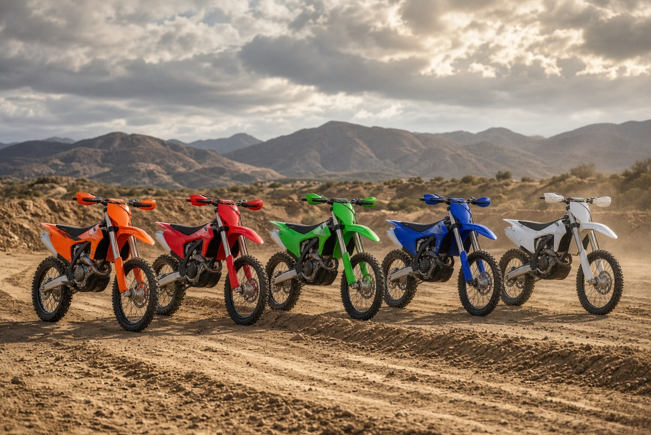
The best dirt bike brand depends on the rider and the business model. A professional motocross rider may prioritize suspension performance and aggressive power delivery, while a first-time buyer may need manageable power, easy maintenance, and reliable dealer support. A retailer or online seller may instead prioritize competitive pricing, replacement parts, customization, and stable supply.
The following brands remain highly visible across motocross, enduro, trail, trials, and electric off-road segments.
| Brand | Core Strength | Best Known For | Typical Buyer Profile |
| KTM | Race-focused engineering | Motocross, enduro, hard enduro | Performance-oriented riders |
| Honda | Reliability and usability | CRF trail and motocross range | Beginners through experienced riders |
| Yamaha | Balanced performance | YZ motocross and WR off-road bikes | Riders seeking handling and durability |
| Kawasaki | Strong engine character | KX motocross models | Riders who prefer responsive power |
| Suzuki | Accessible performance | RM-Z motocross bikes | Value-conscious motocross buyers |
| Husqvarna | Premium components and design | Motocross, enduro, dual-sport-inspired off-road | Enthusiasts seeking a premium option |
| GasGas | More approachable European off-road option | Enduro and motocross | Riders wanting European platform value |
| Beta | Technical enduro expertise | Two-stroke and four-stroke enduro bikes | Trail and enduro specialists |
| Sherco | Technical terrain capability | Enduro and trials | Riders focused on difficult terrain |
| TM Racing | Boutique craftsmanship | Premium motocross and enduro bikes | Enthusiasts seeking exclusive machines |
KTM: A Performance-Led Dirt Bike Brand
KTM has built its identity around competitive off-road riding. Its “Ready to Race” positioning is reflected in lightweight chassis designs, broad enduro offerings, and a serious focus on motocross, rally, and hard enduro competition.
For experienced riders, KTM is often attractive because of its performance-focused engines, high-spec suspension, and large selection of two-stroke and four-stroke models. However, a high-performance motorcycle also requires realistic maintenance planning. A buyer should consider local service availability, spare-parts access, and the cost of suspension and engine service before committing to a premium competition-oriented model.
Honda: Reliable and Beginner-Friendly Dirt Bikes
Honda’s CRF family remains one of the best-known dirt bike ranges globally. Honda is frequently associated with durable engineering, predictable handling, and widespread parts and dealer availability in many regions.
For new riders, a Honda trail bike or smaller-displacement CRF model can be less intimidating than a full motocross machine. For distributors, Honda’s reputation can also make the brand easier to position in markets where buyers prioritize proven reliability over highly specialized race components.
Yamaha: Strong All-Around Motocross and Off-Road Value
Yamaha is a major force in the off-road market, particularly through its YZ motocross and WR enduro-oriented lineups. The brand is recognized for combining performance with a reputation for build quality.
A Yamaha dirt bike can appeal to buyers who want a practical balance: enough performance for serious riding, but not necessarily the most aggressive or specialized character in every category. This makes Yamaha a useful benchmark when comparing motocross bikes, trail bikes, and enduro models.
Kawasaki and Suzuki: Japanese Motocross Alternatives
Kawasaki’s KX lineup is widely associated with strong power delivery and competition-focused motocross performance. Its distinctive green branding is especially recognizable within racing communities.
Suzuki’s RM-Z series is another established motocross option. Suzuki often attracts buyers looking for competitive handling and recognizable Japanese engineering without always targeting the most premium segment of the market.
For a retailer, these brands demonstrate an important product-positioning lesson: not every buyer wants the most expensive dirt bike. Many customers want a capable machine with familiar parts, practical ownership costs, and a clear resale market.
Husqvarna and GasGas: European Platforms, Different Positioning
Husqvarna and GasGas operate within the broader Pierer Mobility Group ecosystem alongside KTM, but each brand has a distinct customer-facing identity. Husqvarna commonly emphasizes premium styling, components, and a polished ownership experience. GasGas is often positioned as a more accessible route into performance-oriented European off-road motorcycles.
This illustrates a useful strategy for B2B sellers building a catalog: products can share core technology while serving different customer segments through design, pricing, accessory bundles, and brand presentation.
Beta, Sherco, and TM Racing: Specialist Choices
Beta has a strong reputation in technical enduro riding and offers both two-stroke and four-stroke options. Sherco is also well regarded in enduro and trials, where traction, maneuverability, and precise low-speed control matter more than outright top speed.
TM Racing represents a smaller-scale Italian manufacturer known for premium, lower-volume motorcycles. It appeals to enthusiasts who value exclusivity, detailed component specifications, and racing heritage.
These specialist brands are not necessarily the highest-volume choice for every distributor. They can, however, be valuable for stores serving dedicated enduro riders, technical trail communities, or premium performance niches.
Types of Dirt Bikes: Match the Bike to the Ride
Many purchasing mistakes happen because buyers use the term “dirt bike” too broadly. A motocross bike, trail bike, enduro bike, and dual-sport bike may all look similar at first glance, but they are engineered for different conditions.
Motocross Bikes
Motocross bikes are designed for closed-course tracks with jumps, berms, ruts, and repeated high-intensity riding. They usually feature lightweight construction, long-travel suspension, sharp handling, and aggressive engines.
Most motocross bikes are not street legal. They may not include lights, mirrors, turn signals, or other road equipment. They are ideal for riders who regularly visit motocross tracks or compete in organized events.
Enduro Bikes
Enduro bikes combine off-road performance with features suited to longer rides and technical terrain. Compared with motocross bikes, they often have smoother power delivery, more practical gearing, lighting equipment, and fuel capacity better suited to extended trail use.
An enduro bike may be a smarter choice for riders navigating woods, rocky climbs, remote trails, or mixed terrain. Street legality varies by model and country, so buyers should verify local registration and equipment requirements before importing or purchasing.
Trail Bikes
Trail bikes are usually the most approachable option for recreational riders. They tend to offer softer suspension, predictable engines, more comfortable seats, and user-friendly controls.
A trail bike is often a better first purchase than a race-oriented motocross model. For sellers, this category can be particularly attractive because it reaches beginners, families, casual riders, rental operators, farms, and outdoor recreation customers.
Trials Bikes
Trials bikes are highly specialized machines designed for obstacle-focused riding. They have extremely low gearing, very light weight, minimal seats, and precise throttle response.
They are not intended for high-speed trail riding. Instead, they help riders develop balance, clutch control, body positioning, and slow-speed technical skills.
Dual-Sport Bikes
Dual-sport motorcycles bridge the gap between dirt bikes and road motorcycles. They are built to travel on public roads while retaining useful off-road capability.
For customers who need to ride from home to trails, a dual-sport model can be more practical than transporting a motocross bike by truck or trailer. The compromise is that dual-sport bikes are often heavier and less specialized off-road than pure motocross or enduro machines.
Electric Dirt Bikes
Electric dirt bikes are creating new opportunities in the market because they reduce local exhaust emissions and can operate more quietly than internal-combustion models. This can matter in noise-sensitive areas, private land, youth riding programs, and locations with stricter environmental rules.
For example, Stark Future states that its VARG MX 1.2 uses a 7.2 kWh, 420 V battery, offers customizable output from 10 to 80 horsepower, and can be charged in approximately two hours using 240 V power. Actual range varies substantially with terrain, speed, rider weight, temperature, and riding intensity.
How to Choose the Right Dirt Bike
A good dirt bike purchase starts with the rider’s actual needs, not an aspirational image of how they may ride in the future.
1. Choose the Correct Engine Size
Engine displacement strongly affects how manageable a dirt bike feels. Smaller engines generally suit younger riders, beginners, or riders who value control over maximum acceleration. Larger engines may be appropriate for experienced riders, racing, sand riding, open terrain, or heavier adults.
A practical approach is to choose the smallest engine that comfortably meets the rider’s needs. Too much power can slow skill development, cause fatigue, and make riding less enjoyable.
2. Select Two-Stroke or Four-Stroke Power
Two-stroke bikes are usually lighter and mechanically simpler. They often produce a sharper, more immediate powerband and can be popular in motocross and technical enduro riding.
Four-stroke bikes generally offer smoother, broader power delivery and stronger traction in many conditions. However, their valve-train and engine maintenance can be more complex.
The best choice depends on the rider’s maintenance confidence, local mechanic support, riding terrain, and preferred engine feel.
3. Check Seat Height and Ergonomics
A dirt bike should fit the rider physically. Seat height, handlebar position, footpeg placement, clutch reach, and overall weight all affect confidence and control.
When evaluating a model, riders should be able to operate the clutch, brake, throttle, and gear shifter comfortably. They should also feel stable when stopping on uneven ground. A bike that is technically excellent but too tall or heavy can become difficult to enjoy.
4. Evaluate Suspension Before Accessories
Suspension is one of the most important components on any off-road motorcycle. It affects safety, comfort, traction, jump control, and rider fatigue.
Before spending heavily on graphics, exhaust systems, or cosmetic upgrades, buyers should confirm that the suspension is appropriate for their body weight, riding speed, and terrain. Professional suspension setup can deliver more useful improvement than many aftermarket accessories.
5. Budget for Total Ownership Cost
The purchase price is only one part of the cost. Buyers should also plan for:
– Riding gear, including a certified helmet, boots, gloves, goggles, and protective clothing
– Routine oil, filters, tires, chains, sprockets, brake pads, and bearings
– Engine and suspension servicing
– Transport, fuel or charging, storage, and insurance where applicable
– Replacement parts and repair downtime
– Local registration, land access fees, or event fees
A lower-priced bike with poor parts availability may cost more over time than a higher-priced model supported by a reliable dealer network.
A Practical Wholesale Sourcing Framework
For an importer, online B2B seller, or private-label brand, sourcing dirt bikes from China requires more than requesting the lowest factory quotation. Dirt bikes are safety-critical products with complex components, shipping restrictions, and country-specific compliance requirements.
A more reliable sourcing process includes the following steps.
Define the Product Segment First
Start with a clear product brief. Examples include:
– 50cc to 125cc youth trail bikes
– 125cc to 250cc recreational off-road motorcycles
– Adult pit bikes
– Electric mini dirt bikes
– Electric off-road motorcycles
– Motocross protective gear and replacement parts
– Private-label accessories, graphics, tires, chargers, or maintenance products
Each segment has different buyer expectations, price points, certifications, battery risks, packaging requirements, and warranty needs.
Verify Factory Capabilities
Do not rely solely on product photos or broad claims. Request evidence related to:
– Factory business registration and export experience
– Production lines and assembly processes
– Quality-control procedures
– Engine, battery, controller, frame, brake, and suspension suppliers
– Product testing reports and certification documentation
– Quality records for previous export orders
– Availability of replacement parts
– Warranty process and technical support capacity
For electric dirt bikes, buyers should also investigate battery specifications, battery-management systems, transport documentation, packaging, charger compatibility, and local electrical standards.
Request a Pre-Production Sample
A sample is essential before placing a large order. Inspect build quality, welding finish, fasteners, wiring, tire quality, braking response, suspension action, packaging, and included documentation.
For private-label projects, check whether the supplier can apply your logo consistently across cartons, graphics, manuals, labels, product plates, and spare-parts packaging. Small inconsistencies can weaken brand credibility when products reach customers.
Use Independent Quality Inspection
A pre-shipment inspection can help identify issues before a container leaves the factory. A typical inspection should review:
– Quantity and carton count
– Cosmetic condition
– Frame and weld appearance
– Brake operation
– Fastener torque checks
– Electrical function
– Charger compatibility for electric models
– Packaging integrity
– Labels, manuals, warning notices, and spare-part inclusion
– Random functional testing
This does not replace compliance testing or ongoing supplier management, but it can reduce avoidable defects and costly post-sale disputes.
Plan Shipping and Fulfillment Early
Complete dirt bikes can be bulky, while batteries can introduce additional logistics complexity. Inventory, warehousing, packaging damage, international freight, customs clearance, and last-mile delivery must all be planned before committing to a product launch.
Looperbuy can support B2B sellers by helping them source Chinese products, consolidate orders, manage fulfillment, and ship products to global customers. This approach can reduce the need for sellers to hold large amounts of inventory or manage every supplier and logistics relationship independently.
Safety, Rules, and Responsible Riding
A dirt bike should only be used in areas where riding is permitted. Rules vary by country, state, province, municipality, landowner, and trail authority.
In the United States, public-land requirements can include restrictions on excessive noise and spark-arrester requirements. The U.S. Forest Service notes that off-highway vehicle spark arresters are tested against Forest Service or SAE standards, while one Forest Service wildland OHV standard specifies a maximum sound level of 96 dBA.
Before riding or selling into a market, verify local requirements for:
– Helmet and protective equipment
– Age limits and youth supervision
– Registration and title requirements
– Road legality and lighting equipment
– Noise limits
– Spark arresters
– Emissions requirements
– Trail permits and permitted riding areas
– Lithium-battery transport and disposal rules
Responsible riding protects riders, trail access, local communities, and the long-term future of off-road recreation.
FAQs About Dirt Bike Brands and Buying
1. What is the best dirt bike brand for beginners?
Honda and Yamaha are commonly considered strong starting points because they offer user-friendly models, established dealer networks, and broad parts availability in many markets. The best option still depends on the rider’s height, riding area, budget, and access to local service.
2. Is a motocross bike good for trail riding?
It can be ridden on trails, but it is not always the most comfortable or practical choice. Motocross bikes are designed for closed tracks and aggressive riding. Trail or enduro bikes generally offer smoother power delivery, more practical gearing, and features better suited to extended off-road use.
3. Should I buy a two-stroke or four-stroke dirt bike?
Choose a two-stroke if you prefer lighter weight, simpler mechanics, and a lively power delivery. Choose a four-stroke if you prefer smoother, more predictable power and strong traction. Maintenance requirements, local mechanic support, and riding style should guide the decision.
4. Are Chinese dirt bikes suitable for resale?
They can be suitable when a buyer carefully verifies the manufacturer, sample quality, parts availability, compliance documentation, and quality-control process. The lowest price alone is not a reliable indicator of long-term value or customer satisfaction.
5. What should a B2B buyer inspect before importing dirt bikes?
A B2B buyer should inspect factory capability, certificates, samples, production quality, replacement-parts availability, packaging, manuals, warranty terms, battery documentation for electric models, and destination-market requirements.
6. Are electric dirt bikes practical for business buyers?
Electric dirt bikes can be practical for youth products, private land, rental operations, quiet-area use, and customers who value reduced local emissions and lower routine maintenance. Businesses should carefully assess charging, battery shipping, after-sales support, replacement battery supply, and real-world runtime expectations.
Source Notes and References
1. [Global Sources — Top 10 Dirt Bike Brands in 2025] — Brand overview, dirt bike categories, purchasing factors, market trends, and sourcing context.
2. [Stark Future — Stark VARG MX 1.2] — Manufacturer specifications for the VARG MX 1.2, including battery capacity, charging information, power configuration, and stated use cases.
3. [U.S. Forest Service — OHV Spark Arresters Guide] — Information on Forest Service and SAE spark-arrester testing standards for off-highway vehicles.
4. [U.S. Forest Service — Wildland Fire OHV Standard] — Wildland fire-related off-highway vehicle requirements, including spark-arrester and sound-level provisions.
5. [Cycle News — New 2026 Stark VARG MX 1.2 Specs and Price] — Independent reporting on the updated VARG MX 1.2 battery, chassis, and charging specifications.
6. [U.S. Bureau of Land Management Regulations via Cornell Law School — 43 CFR § 9268.3] — Federal public-land provisions related to off-road vehicle noise and spark arresters.