Why do most new dropshipping stores fail within the first year? Learn the real causes—from poor supplier choices and weak profit margins to slow shipping, low trust, and costly ads—and discover practical steps to build a more reliable, scalable dropshipping business.
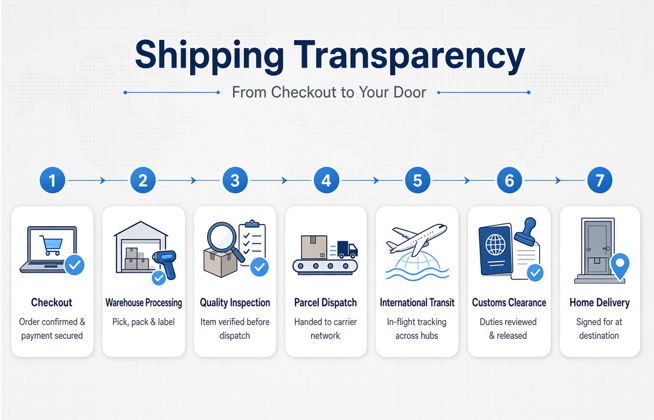
Most new dropshipping stores fail within the first year not because dropshipping is inherently broken, but because founders underestimate the operational discipline required to turn a storefront into a real retail business. They launch fast, copy a product trend, buy traffic, and discover too late that supplier reliability, delivery promises, product economics, and customer trust determine whether a store survives.
Dropshipping can still be a practical low-inventory model: the supplier or manufacturer stores, packs, and ships products directly to the buyer after an order is placed. However, low upfront inventory risk does not mean low business risk. explains that suppliers handle fulfillment, but the store owner remains responsible for the customer experience, product selection, pricing, marketing, support, and brand reputation.
> Key takeaway: A new dropshipping store usually fails when it treats fulfillment as a background task rather than a core part of its product promise.
Table of Contents
The Real Meaning of “Failure” in Dropshipping
When people say that “most dropshipping stores fail,” they may mean several different things:
– The store closes after losing money on ads and refunds.
– The owner stops operating because fulfillment and support become unmanageable.
– The store generates sales but never reaches sustainable profit.
– The business relies on a single trend product that quickly loses demand.
– The founder cannot replace inconsistent suppliers or solve shipping problems.
– The store’s customer acquisition cost becomes higher than the profit earned per order.
There is no single official global database that tracks every dropshipping business closure. Therefore, any universal “dropshipping failure rate” should be treated carefully rather than repeated as a proven fact.
Still, industry estimates commonly suggest that a large share of new stores do not become sustainably profitable in their first year. Some reports cite a range of 80% to 90%, but these figures are usually based on platform observations, seller surveys, or market commentary—not a standardized global census of stores. The more useful conclusion is not the exact percentage. It is that the odds are poor for stores that launch without a clear offer, reliable supply chain, realistic margins, or retention strategy.
The opportunity remains meaningful. Shopify notes that dropshipping businesses can operate with typical gross-margin ranges of around 15% to 20%, depending on products, supplier costs, shipping, and pricing. But a gross margin is not net profit. Advertising, payment processing, refunds, chargebacks, customer service, apps, and currency costs can quickly consume that margin.
Why Most New Dropshipping Stores Fail
1. They Sell the Same Products as Everyone Else
A common first-year mistake is choosing products solely because they are trending on TikTok, Facebook, Instagram, or a product-research tool.
The issue is not product research itself. The issue is that dozens or hundreds of stores often see the same “winning product” at the same time. They then use nearly identical supplier photos, product descriptions, landing pages, and ad angles.
That creates a race to the bottom:
– Competitors lower prices.
– Ad costs rise as more sellers target the same audience.
– Buyers see repetitive ads and become skeptical.
– Product pages look interchangeable.
– The store has no reason for customers to return.
A product should not be selected simply because it has viral potential. It should meet several commercial conditions:
| Product evaluation factor | Why it matters |
| Clear problem or desire | Makes advertising easier to understand |
| Healthy landed margin | Leaves room for ads, support, and refunds |
| Low damage risk | Reduces replacement and dispute costs |
| Simple sizing or setup | Lowers return rates and customer confusion |
| Stable supplier availability | Prevents stockouts after an ad performs |
| Bundle or repeat-purchase potential | Improves average order value and customer lifetime value |
| Differentiation opportunity | Supports better branding and pricing |
Better approach: Build an offer, not just a listing. For example, instead of selling a generic pet grooming tool, create a “home shedding-control kit” with a grooming brush, cleaning roller, storage pouch, usage guide, and clear before-and-after demonstration.
2. They Ignore Unit Economics Until After Scaling Ads
Many new store owners celebrate revenue too early. A store can make $10,000 in sales and still lose money.
The question is not, “How much revenue did we generate?” The question is:
> How much contribution profit remains after every variable cost is paid?
A basic contribution-profit calculation looks like this:
Contribution Profit per Order=Selling Price−Product Cost−Shipping−Payment Fees−Ad Cost−Refund/Return Allowance−Fulfillment Fees
Consider this simplified example:
| Per-order metric | Amount |
| Selling price | $49.99 |
| Product cost | -$14.00 |
| Shipping and fulfillment | -$8.50 |
| Payment processing | -$1.75 |
| Expected refund and replacement allowance | -$3.00 |
| Customer acquisition cost | -$18.00 |
| Contribution profit | $4.74 |
At first glance, the product appears to have a strong gross margin. In reality, the remaining $4.74 must still cover software subscriptions, support labor, taxes, chargebacks, content creation, currency fluctuations, and business overhead.
Shopify defines customer acquisition cost, or CAC, as total sales and marketing spend divided by the number of new customers acquired. It also notes that a healthy long-term LTV:CAC ratio is often considered around 3:1, meaning the customer’s lifetime value should substantially exceed the cost of acquiring them.
A practical pre-launch profit test
Before spending heavily on paid ads, calculate these numbers:
1. Landed product cost: Product price plus domestic supplier delivery, inspection, packaging, and international fulfillment cost.
2. Gross margin before marketing: What remains before advertising and operating expenses.
3. Break-even customer acquisition cost: The maximum you can spend to get one order without losing money.
4. Refund allowance: A realistic reserve for defective items, lost parcels, dissatisfied buyers, and chargebacks.
5. Break-even ROAS: The minimum return on ad spend needed to avoid a loss.
Shopify’s break-even ROAS guidance emphasizes including all variable costs—not only inventory cost—when calculating profitability. These may include shipping, payment processing, pick-and-pack work, and fulfillment-related costs.
Supplier Problems Become Store Problems
3. They Choose Suppliers Based on the Lowest Product Price
The cheapest supplier is often the most expensive choice over time.
A lower unit cost can be erased by inconsistent quality, stockouts, poor packaging, inaccurate tracking, delayed dispatch, and slow responses when a customer reports a problem. In dropshipping, the customer rarely blames the factory, warehouse, or courier. They blame the store where they paid.
This is why supplier selection is a revenue decision, not an administrative decision.
A reliable supplier or sourcing partner should be evaluated on more than product price:
– Product consistency across multiple samples.
– Inventory visibility and replenishment capability.
– Processing time before dispatch.
– Accurate shipping-method options by destination.
– Tracking quality and carrier reliability.
– Packaging standards and branding flexibility.
– Communication speed when issues arise.
– Replacement, refund, and defective-item procedures.
– Ability to consolidate multiple products into one shipment.
– Quality-control options before international dispatch.
Shopify specifically advises sellers to contact suppliers before ordering and ask questions about product details, packaging, shipping, and returns. A supplier’s response quality before the sale often signals how they will respond when an order goes wrong.
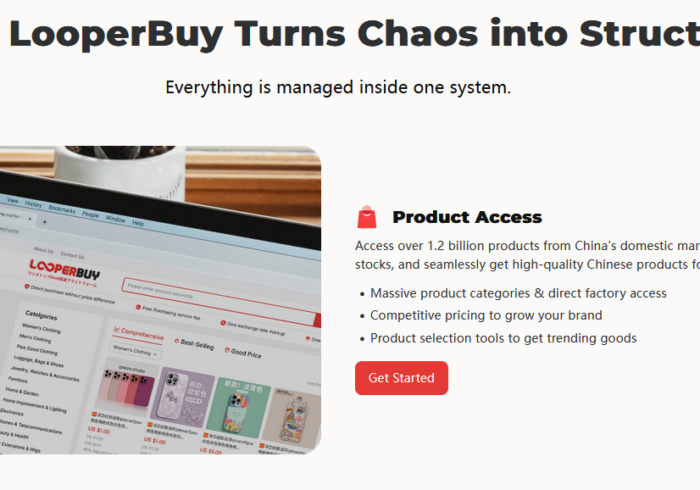
For a sourcing platform such as Looperbuy, the strategic advantage is not simply access to Chinese products. It is helping merchants create a more controlled procurement and fulfillment workflow: source products, verify suppliers, consolidate orders, inspect goods, manage shipping choices, and reduce the operational friction that causes first-year stores to lose customer trust.
The sample-order rule
Never scale a product you have not personally tested.
Order a sample to the same destination as your target customers whenever possible. Review:
– Actual product quality versus supplier photos.
– Packaging durability.
– Product instructions and safety information.
– Delivery speed from order to arrival.
– Tracking visibility.
– Customs-related friction.
– Whether the unboxing experience matches your brand positioning.
Expert perspective: Many sellers test ads before they test operations. The stronger sequence is the opposite: validate the product and fulfillment experience first, then buy traffic.
4. They Make Shipping Promises They Cannot Keep
Long or uncertain delivery windows remain one of the fastest ways to damage a new store.
Today’s buyers compare a small independent store not only with other dropshippers, but also with established marketplaces and retailers that offer predictable delivery updates, easy returns, and responsive support. A store does not need to match every major retailer’s speed. It does need to be honest, specific, and proactive.
The U.S. Federal Trade Commission’s Mail, Internet, or Telephone Order Rule requires sellers to have a reasonable basis for promised shipping times. If a company cannot meet the stated shipping time, it must provide timely notification and give consumers an opportunity to cancel and receive a prompt refund.
This creates both a legal and commercial reason to avoid vague or unrealistic shipping claims.
What a trustworthy shipping policy should include
– Order-processing timeframe.
– Estimated transit time by country or region.
– Clear distinction between processing and shipping time.
– Tracking availability and when tracking is expected to update.
– Customs, duties, and tax responsibility where relevant.
– Procedures for delayed, lost, or damaged parcels.
– Return eligibility and refund conditions.
– A direct customer-support contact method.
Do not write “fast shipping” unless you can define it. Instead, write a credible statement such as:
> “Orders are processed within 1–3 business days. Estimated delivery to the United States is 7–12 business days after dispatch. Tracking details are emailed once the parcel is shipped.”
That is more useful than a broad promise and easier for customers to trust.
Weak Customer Experience Kills Conversion
5. Their Store Looks Untrustworthy or Makes Buying Difficult
Paid traffic cannot permanently compensate for a weak storefront.
If visitors cannot understand the offer, identify the product’s value, estimate delivery, verify payment safety, or find return information, they leave. Baymard Institute’s analysis of 50 studies places average online cart abandonment at 70.22%. This does not mean every abandonment is avoidable, but it shows how much revenue is lost when checkout and product-page friction are ignored.
New dropshipping stores often create avoidable friction through:
– Generic product titles copied from supplier listings.
– Poorly translated descriptions.
– Missing size charts, dimensions, compatibility details, or materials.
– No clear shipping estimate near the add-to-cart button.
– Weak product images or misleading edited images.
– Hidden shipping fees revealed only at checkout.
– Complicated checkout forms.
– No contact information, policies, or support expectations.
– No proof that real customers have received the item.
Product-page trust checklist
Use this checklist before launching traffic campaigns:
– One clear value proposition in the first screen of the page.
– Original or verified visuals that accurately show the product.
– Benefit-led copy followed by factual specifications.
– Shipping estimate visible before checkout.
– Returns and refund policy linked clearly.
– Frequently asked questions that answer the buyer’s real concerns.
– Reviews or user-generated content only when authentic and properly presented.
– Mobile-first layout, because many first visits come from mobile ads.
– Support contact details that customers can actually use.
A small improvement in checkout clarity can matter. Baymard reports that showing estimated delivery dates for delivery options reduced cart abandonment by an average of 0.5% for one large luxury retailer example.
6. They Depend on One Paid-Traffic Channel
A store that depends entirely on one advertising platform is vulnerable.
An account restriction, creative fatigue, bidding competition, privacy-policy change, or campaign-performance decline can eliminate sales within days. This is especially dangerous for new businesses because they often have no email list, no repeat buyers, no organic content, and no referral system to stabilize revenue.
A more resilient customer-acquisition mix includes:
– Short-form product demonstrations on TikTok, Instagram Reels, and YouTube Shorts.
– Search-focused product pages for buyers actively looking for solutions.
– Influencer or creator partnerships with permission to reuse content.
– Email capture through a useful offer, warranty registration, or product guide.
– Post-purchase email sequences that encourage a second purchase.
– Bundles and cross-sells that raise average order value.
– Customer education content that reduces returns and improves satisfaction.
Do not treat paid ads as the business. Treat ads as a way to test and amplify an offer that already has sound economics and fulfillment.
The First-Year Survival Framework
The stores that survive their first year usually do not win by finding a secret product. They build a repeatable operating system.
A 90-day plan for a new dropshipping store
| Stage | Primary goal | Critical actions |
| Days 1–30 | Validate the offer | Research customer pain points, source samples, test product quality, calculate landed costs, define delivery expectations |
| Days 31–60 | Build customer trust | Create original product content, improve product pages, publish policies, set support workflows, launch small-budget test campaigns |
| Days 61–90 | Improve economics | Pause unprofitable variants, negotiate sourcing costs, bundle products, improve conversion pages, test email recovery and post-purchase offers |
The operating dashboard every founder needs
Track these metrics weekly, not only revenue:
1. Conversion rate: Percentage of visitors who buy.
2. Average order value: Revenue per completed order.
3. Customer acquisition cost: Marketing spend divided by new customers.
4. Contribution profit per order: Actual profit before fixed overhead.
5. Refund and chargeback rate: Signal of product or delivery problems.
6. Supplier processing time: Days from order receipt to dispatch.
7. On-time delivery rate: Percentage of orders delivered within the stated estimate.
8. Support ticket rate: Number of customer inquiries per order.
9. Repeat purchase rate: Indicator of product and customer satisfaction.
10. Stockout frequency: A direct signal of supplier reliability.
The goal is not to monitor every possible number. It is to identify the constraint limiting growth. If conversion is low, improve the product page and offer. If refunds are high, inspect product quality and delivery expectations. If ad costs are rising, improve creative, targeting, bundles, retention, and organic acquisition.
How Looperbuy Can Reduce Operational Risk
For global merchants sourcing from China, the hardest part is often not finding a product. It is coordinating multiple moving parts after the product has been chosen.
A managed sourcing and fulfillment workflow can help reduce common first-year failures by giving sellers more control over:
– Product sourcing from China.
– Supplier communication and order coordination.
– Consolidation of products from multiple suppliers.
– Product inspection before international dispatch.
– Packaging and shipment preparation.
– Shipping-method selection by destination, cost, and delivery requirements.
– Centralized order management rather than handling separate supplier relationships.
– Inventory-light fulfillment that reduces the need to pre-purchase and warehouse large quantities.
For a new store, this creates an important operational benefit: fewer handoffs between product selection, quality checks, packaging, and delivery. It also allows the merchant to spend more time on what customers see—product positioning, brand content, customer service, and retention.
> The strongest dropshipping businesses are not passive-income stores. They are lean retail operations with disciplined sourcing, transparent fulfillment, and customer-first communication.
Build for Repeatable Growth
Most new dropshipping stores fail within the first year because they launch a website before building a business model. They chase revenue before confirming profitability, advertise before testing delivery, and focus on product trends before earning customer trust.
The alternative is more durable:
– Choose products with room for real margins.
– Verify quality before spending heavily on ads.
– Use reliable sourcing and fulfillment processes.
– Show honest delivery expectations.
– Build product pages that answer customer questions.
– Track contribution profit, not revenue alone.
– Create reasons for customers to buy again.
If you are building a global dropshipping store and want a more reliable way to source Chinese products, manage fulfillment, consolidate shipments, and reduce operational complexity, explore how Looperbuy can support your sourcing and dropshipping workflow. Build a store that customers can trust from the first order—not one that depends on luck.
FAQs
1. Why do most dropshipping stores fail in the first year?
Most stores fail because of weak unit economics, low product differentiation, unreliable suppliers, unclear shipping expectations, poor customer experience, and an overreliance on paid ads. These issues compound quickly when a store starts receiving real orders.
2. Is dropshipping still profitable?
Dropshipping can be profitable when a store has reliable fulfillment, healthy margins, controlled customer acquisition costs, and a repeat-purchase strategy. Profitability should be assessed after product cost, shipping, payment processing, advertising, refunds, support, and other direct expenses—not from revenue alone.
3. How much money do I need to start a dropshipping store?
The amount varies by product category, target market, platform, and advertising approach. Beyond store setup, founders should reserve budget for product samples, branding assets, product content, initial testing, customer support, refunds, and unexpected fulfillment issues. Starting with a controlled test budget is safer than immediately scaling ads.
4. What is the biggest challenge in dropshipping?
For many sellers, the biggest challenge is maintaining a dependable customer experience while relying on third-party suppliers and carriers. Product quality, stock availability, processing time, tracking, and delivery performance all affect the store’s reputation.
5. How can I find a reliable dropshipping supplier in China?
Start by requesting samples, asking detailed questions about stock, processing, packaging, shipping, returns, and defective products, and assessing response quality. Consider using a sourcing and fulfillment partner that can coordinate suppliers, inspect products, consolidate shipments, and support international delivery.
6. Should I offer free shipping for a dropshipping store?
Free shipping can improve conversion when the cost is built into the product price or order value. However, it should never hide unrealistic delivery expectations. Clearly state processing times, estimated delivery windows, and tracking availability.
7. How do I reduce dropshipping refunds and chargebacks?
Reduce refunds by testing samples, using accurate product descriptions, showing dimensions and compatibility information, providing realistic delivery estimates, tracking orders, responding quickly to support requests, and maintaining a clear resolution process for delayed or defective products.
References
1. Shopify. “[What Is Dropshipping and How Does It Work?]”
2. Shopify. “[4 Real Dropshipping Success Stories + Beginner Tips]”
3. Shopify. “[AliExpress Dropshipping in 2026 With Shopify]”
4. Shopify. “[Ecommerce Customer Acquisition: Channels & Formula]”
5. Shopify. “[What Is a Good LTV to CAC Ratio? How to Calculate It]”
6. Shopify. “[Break-Even ROAS Calculator]”
7. Baymard Institute. “[Cart Abandonment Rate Statistics]”
8. Baymard Institute. “[AI Heuristic UX Evaluations With a 95% Accuracy Rate]”
9. Federal Trade Commission. “[Coronavirus (COVID-19)]”
10. AutoDS. “[Dropshipping Statistics: Essentials Stats & Facts To Know in 2025]”
-700x490.jpeg)