As a B2B sourcing consultant who has helped hundreds of Amazon sellers navigate cross-border logistics from China, I can tell you one thing with absolute certainty: your Amazon FBA inbound shipping cost can make or break your profit margins before you ever make a single sale online.
Table of Contents
What Is Amazon FBA Inbound Shipping Cost — And Why You Should Care as a B2B Buyer
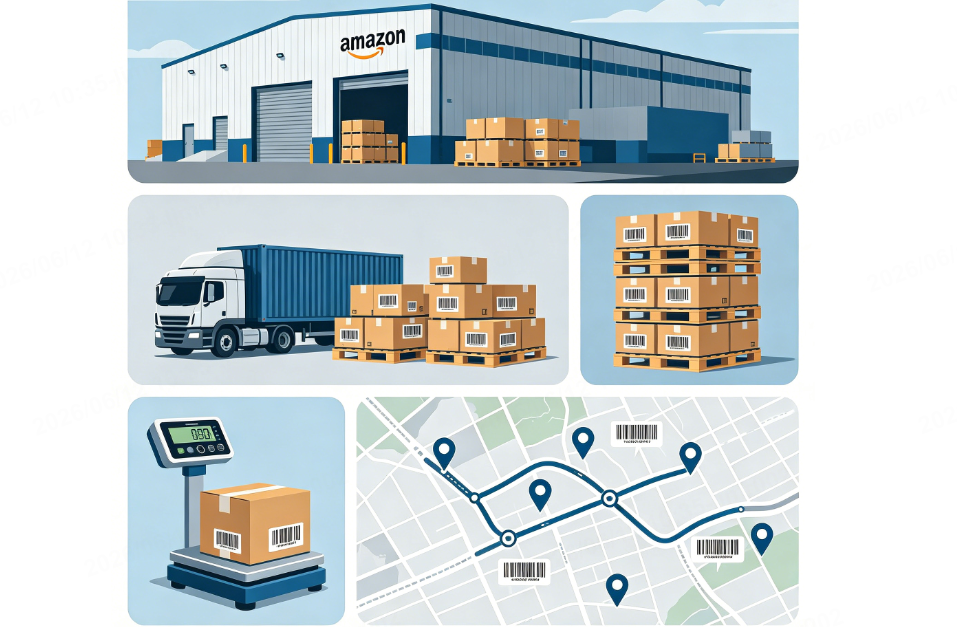
The term “FBA inbound shipping cost” actually refers to two distinct but interconnected charges that every Amazon seller must account for: (1) the Inbound Placement Service Fee charged by Amazon for distributing your inventory, and (2) the actual freight shipping costs from your supplier to Amazon’s fulfillment centers.
In 2026, Amazon implemented significant fee changes. The average fulfillment fee increased by $0.08 per unit for standard-size items priced between $10–$50, and $0.31 per unit for items over $50. Additionally, a 3.5% fuel and logistics surcharge was added in April 2026 — adding roughly $0.12–$0.17 per unit on a standard item. If you’re sourcing from China, you also need to factor in ocean or air freight, customs duties, and the new inbound defect fees that have jumped from $0.02–$0.07 to $0.32–$5.72 per unit.
💡 Bottom line: The total cost of getting your product from a Chinese factory to an Amazon customer’s doorstep in 2026 has never been more complex — but understanding each piece of this puzzle is exactly how top sellers stay profitable.
How Amazon Calculates Your FBA Inbound Placement Fee in 2026
Amazon’s Inbound Placement Fee is charged on a per-unit basis when you create a shipping plan — not per box. The fee is calculated on each item’s size and weight, regardless of how many different SKUs share the same carton.
Three Inbound Placement Options (and Their Costs)
Amazon presents you with three options at the shipping plan stage:
- Send to 1 Warehouse (Minimal Shipment Splits) — Highest fee per unit, but simplest operationally.
- Send to 2–3 Warehouses (Partial Splits) — Reduced fee per unit, requires moderately more logistics coordination.
- Send to 4+ Warehouses (Amazon-Optimized Splits) — Zero inbound placement fees, but you must do Amazon’s distribution work yourself.
The exact fee varies by size tier. For standard-size products weighing 16 oz or less, minimal split fees range from $0.21 to $0.30 per unit, while partial splits cost $0.12 to $0.21 per unit.
Real-World Example from My Practice
Last quarter, one of my wholesale clients based in Manchester was sourcing Bluetooth headphones from Shenzhen. They initially planned to ship to a single Amazon fulfillment center for simplicity, facing a $0.27 per unit inbound placement fee on a 50,000-unit order — that’s $13,500 in placement fees alone.
Instead, I recommended splitting the shipment across four warehouses. They paid a freight forwarder an extra $800 for distribution, but avoided the $13,500 placement fee entirely. Net savings: $12,700.
That’s why understanding your Amazon FBA inbound shipping cost isn’t just academic — it’s directly tied to your bottom line.
The Full 2026 Fee Stack: What Amazon Reports vs. What You Actually Pay
Most sellers look at referral fees and FBA fulfillment fees — typically 15% commission plus $3.06–$4.25 per unit — and assume that’s the full picture. But in 2026, the full fee stack includes at least seven distinct cost vectors:
- Referral fee — 8–15% of sale price depending on category
- FBA fulfillment fee — $3.06–$12.00+ per unit based on size and weight
- Fuel & logistics surcharge (NEW April 2026) — 3.5% added to every fulfillment fee
- Inbound placement service fee — $0.21–$1.58 per unit for standard-size products
- Monthly storage fee — roughly $0.78/ft³ (January–September) and $2.40/ft³ (October–December)
- Aged inventory surcharge — $0.50/ft³ at 181–365 days, $6.90/ft³ beyond one year
- Returns processing fee — assessed per returned unit in high-return categories
When all seven charges are active on a single SKU, Amazon’s total take can exceed 34% of your sale price. The Amazon Revenue Calculator is a good starting point — but sellers who rely on it alone typically overestimate their margin by 5 to 10 percentage points.
From China to Amazon FBA: How to Calculate Your True Landed Cost
For international B2B buyers sourcing from China, your total inbound shipping cost breaks down into three components:
1. International Freight (to your destination country)
| Mode | Cost (2026 estimate) | Transit Time |
|---|---|---|
| Ocean LCL | ~$110–$150 per cbm | 30–40 days |
| Ocean FCL (40ft) | ~$1,900–$3,200 | 25–35 days |
| Air Freight | $4–$8 per kg | 5–10 days |
| Rail (to Europe) | $1.80–$2.60 per kg | 22–28 days |
2. Customs Clearance & Duties
- US Section 301 tariffs (25% on many Chinese goods)
- Customs broker fees ($150–$300 per shipment)
- DDP shipping handles all customs and delivery to Amazon
3. Amazon Inbound Placement Fee
- As detailed above — can be zero if you commit to multi-warehouse splits
👉 True Landed Cost Formula:
Landed COGS = (Supplier Product Cost + Inbound Freight + Customs Duties) ÷ Total Units + Inbound Placement Fee Per Unit + Any Prep Fees
This landed cost number — not your factory gate price — must be used in every profit calculation.
Why Most Amazon Sellers Get Their Inbound Cost Calculations Wrong
在卖方阿丽亚娜身上(一位运营电子产品的经验卖家,化名),我曾亲身目睹了一个典型的错误。她收到了一份中国供应商的低工厂报价,很兴奋地计算出看似丰厚的利润,却只用了亚马逊的佣金计算器。她并不知道除了亚马逊佣金之外,还有入库配置费、燃油附加费和数百万美金规模的关税,而这些加起来几乎吞噬了她一整年的利润。
2026年,最普遍的错误是只考虑“工厂出厂价”而忽略了实际“落地成本”。许多卖家依据不准确的计算来定价——等到结算时才发现毛利率已接近亏损。因此,了解全部费用构成已成为在FBA市场生存的关键。
7 Proven Strategies to Reduce Your Amazon FBA Inbound Shipping Cost in 2026
Based on real experience, here are 7 strategies that can immediately reduce your inbound costs:
- Optimize packaging dimensions — Even small size reductions can move a SKU into a cheaper tier.
- Accept Amazon-optimized splits — Split shipments across 4+ warehouses to pay zero inbound placement fees. Use Amazon Global Logistics to coordinate multi-destination shipments directly from China.
- Match shipping mode to velocity — Ship base stock by sea (lowest cost) for consistent inventory, but use air freight for product launches and urgent replenishment.
- Use the FBA New Selection Program — New product launches can have inbound placement fees waived for up to 100 units.
- Maintain clean carton plans — Consistent labeling and accurate carton contents reduce defect fees that now range from $0.32 to $5.72 per unit.
- Run a two-speed replenishment strategy — 80% of inventory by sea (low-cost, slow transit) + 20% by air (fast-response for best-sellers).
- Source through a platform that aggregates logistics — This is where LooperBuy changes the game for international buyers.
How LooperBuy Helps You Master FBA Inbound Costs from China
LooperBuy is a one-stop B2B sourcing platform that connects global buyers directly with verified Chinese manufacturers. Our advantage is simple: we help you source at factory-direct prices and manage global logistics so you can deliver to Amazon warehouses worldwide at the lowest possible cost.
🌏 Direct Access to Verified Chinese Suppliers
- Source from thousands of manufacturers across all categories
- No middlemen — transparent factory pricing
- Product range from electronics to home goods to industrial components
🚚 Integrated Global Logistics — Optimized for FBA
- Air, ocean, and rail shipping options with real-time tracking
- Door-to-warehouse delivery from Chinese factory to Amazon fulfillment center
- Consolidated shipping to reduce per-unit freight costs
- Help with customs clearance and DDP (Delivered Duty Paid) arrangements
✅ Sourcing Support from ASIN to Purchase Order
- Based on your target ASINs, we help identify products and suppliers
- Sample ordering and quality control pre-shipment
- Payment protection and multiple-currency support via LianLian Global integration
Instead of juggling 10 different freight forwarders and supplier contacts, LooperBuy centralizes everything — so you can focus on growing your Amazon business.
A Real-World Case Study: How One US Wholesaler Cut FBA Inbound Costs by 40%
One of our wholesale clients in Texas was sourcing kitchen gadgets from three different Chinese factories. Their existing process looked like this:
- Each supplier shipped separately
- Freight forwarder charged separate LCL rates for each consignment
- Amazon inbound placement fees were eating into margins
After switching to LooperBuy:
- We consolidated all three suppliers’ products into one container shipment
- Coordinated Amazon-optimized splits across five fulfillment centers
- Result: 40% reduction in total inbound shipping cost and $0 inbound placement fees
“LooperBuy handled everything from supplier coordination to Amazon delivery,” the client told me. “I saved over $15,000 in my first quarter alone.”
Conclusion
Understanding your Amazon FBA inbound shipping cost in 2026 isn’t optional — it’s the difference between a profitable Amazon business and a cash-burning operation. From inbound placement fees to fuel surcharges to international freight, every dollar saved on logistics is a dollar added directly to your margin.
Take action today:
- Audit your current FBA fees using Seller Central’s Revenue Calculator
- Map out your true landed cost for every SKU
- Consider consolidating your sourcing through LooperBuy to reduce per-unit logistics costs
📞 Ready to optimize your FBA sourcing from China?
Visit LooperBuy to create your free buyer account. Our team will help you source products, manage quality control, and coordinate global shipping to Amazon fulfillment centers — all from one integrated platform.Start Sourcing Smarter with LooperBuy — No upfront fees. Just better margins.
Frequently Asked Questions (FAQ)
Q1: What is the difference between Inbound Placement Fee and regular FBA fulfillment fee?
The Inbound Placement Fee is charged when you send inventory to Amazon (creation of shipping plan), while the fulfillment fee is charged when a customer buys your product (pick, pack, and ship). Both are separate line items in your P&L.
Q2: How can I reduce Amazon FBA inbound shipping cost when sourcing from China?
Consolidate shipments into full containers (FCL), accept Amazon-optimized shipment splits to avoid placement fees, optimize packaging to reduce dimensional weight, and use DDP (Delivered Duty Paid) terms to simplify customs clearance.
Q3: Do LooperBuy’s shipping prices include Amazon inbound placement fees?
No — Amazon’s inbound placement fee is charged directly by Amazon when you create your shipping plan. LooperBuy handles the international freight and last-mile delivery to Amazon warehouses, but the placement fee is separate and determined by your chosen split option.
Q4: What’s the cheapest way to ship from China to Amazon FBA in 2026?
Ocean LCL/FCL is the most cost-effective per unit for larger volumes (30–40 days transit). For smaller shipments or faster turnaround, air freight is faster but costs $4–8 per kg.
Q5: Are there any programs that waive inbound placement fees for new sellers?
Yes. Amazon’s FBA New Selection Program waives inbound placement fees for up to 100 units for new product launches. This is particularly valuable for testing new SKUs before scaling.
Article Brief (Meta Description)
Master Amazon FBA inbound shipping cost in 2026 with this expert B2B sourcing guide. Learn how to calculate inbound placement fees, optimize international freight from China, and reduce total landed costs. LooperBuy’s one-stop platform helps global buyers source from verified Chinese suppliers and manage FBA logistics — all in one place. Includes real-world case studies and 2026 fee breakdowns.
References
- Amazon Seller Central Community. (2026, January 5). FBA Inbound Fee Calculation. https://sellercentral.amazon.in/seller-forums/discussions/t/76915b85-6e3c-497a-9993-a9065646b36d
- AMZ Prep. (2026, January). Amazon Inbound Placement Fees Explained in 2026. https://amzprep.com/amazon-inbound-placement-fees/
- ZonFlip. (2026, May 20). Amazon’s Fee Avalanche: How to Map Every Hidden Charge and Build a Margin Defense That Actually Holds. https://zonflip.com/amazons-fee-avalanche-how-to-map-every-hidden-charge-and-build-a-margin-defense-that-actually-holds/
- Payability. (2025, October 29). Amazon FBA Fees 2026: Complete Calculator & Impact Guide. https://www.payability.com/blog/amazon-fba-fees-2026-calculator-guide/
- SellerSprite.ai. (2026, May 26). Amazon FBA Profit Calculator 2026: How to Calculate Real Margins Before You Source a Single Unit. https://sellersprite.ai/en/blog/amazon-fba-profit-calculator-2026
- Forest Leopard. (2026, January 10). Amazon FBA Shipping Costs 2026: Beginner‘s Guide. https://es.forestleopard.com
- SalesDuo. (2025, October 24). How to Reduce Amazon Shipping Costs in 2026. https://salesduo.com/blog/reduce-amazon-shipping-costs-2026/
- Dantful.US. (2026, May 27). Shipping Cost from China to USA Amazon FBA: 2026 Complete Guide & Rates. https://dantful.us
- Unicargo. (2026, March). Air vs Ocean Freight 2026: When Air Wins for FBA Sellers. https://www.unicargo.com
- LooperBuy Official Blog. (2026). Supplies Business: A B2B Expert’s Guide to Sourcing Chinese Goods Globally. https://blog.looperbuy.com/supplies-business-a-b2b-experts-guide-to-sourcing-chinese-goods-globally-with-looperbuy.html
Hot tags: amazon fba inbound shipping cost, fba inbound placement fee 2026, how to reduce amazon shipping costs, china to amazon fba shipping, b2b sourcing platform, looperbuy sourcing, fba logistics from china, amazon fba cost calculation, cross-border sourcing guide, wholesale import amazon fba