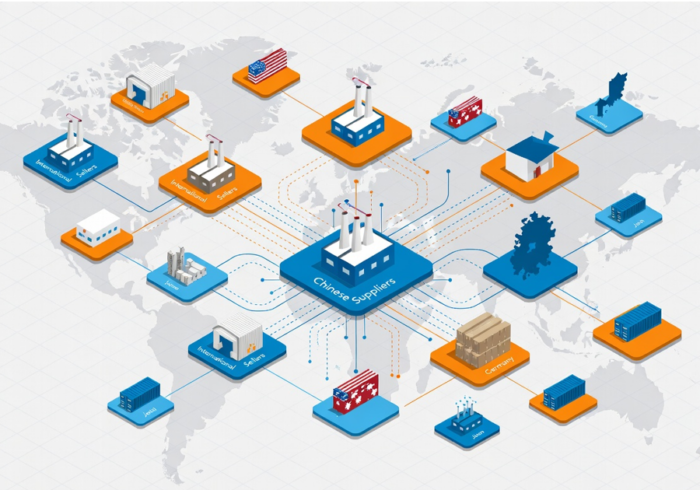
Amazon dropshipping in 2026 remains a practical, low-inventory way to sell online, but success depends on compliant operations, reliable suppliers, and a customer experience that feels consistent from order to delivery. This guide explains the model, risks, launch steps, and growth strategy.
Amazon dropshipping remains a viable way to sell online in 2026, but success depends on strict compliance, reliable suppliers, and a customer experience that feels consistent from checkout to delivery. Amazon allows dropshipping only when you are the seller of record, your name appears on packing slips and packaging, and you stay responsible for customer returns and support.
For B2B sellers, wholesale brands, and export-focused merchants, this model can reduce inventory pressure, warehouse costs, and operational complexity. But it also creates new risks if shipping speed, packaging quality, or account management are not handled carefully.
Table of Contents
What Amazon Dropshipping Means
Amazon dropshipping is a fulfillment model where you list products on Amazon without holding stock yourself. When a customer places an order, your supplier ships the item directly to the buyer under your store identity.
This model works best when you treat it as a business system, not a shortcut. The seller controls product selection, pricing, listing quality, customer communication, and returns, while the supplier handles storage and shipping.
The appeal is easy to understand. You do not need to purchase large quantities of inventory upfront, rent warehouse space, or manage bulk stock movement before proving demand. For new sellers, that lowers the barrier to entry. For established sellers, it creates a testing environment where products can be validated before committing to larger inventory plans.
However, the fact that the model is simple does not mean it is easy. Amazon is highly sensitive to shipping quality, customer complaints, and fulfillment accuracy. That means the business model is only as strong as the supplier network supporting it.
How The Model Works
A standard Amazon dropshipping workflow has five stages:
1. You select a product and create the listing.
2. A customer places an order on Amazon.
3. You forward the order to your supplier.
4. The supplier ships the item directly to the customer.
5. You manage tracking, service issues, and returns.
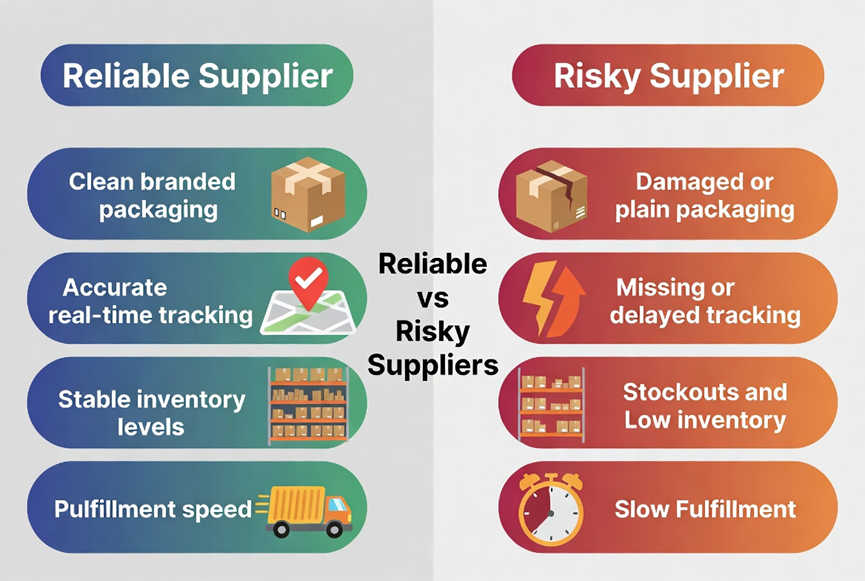
The process sounds simple, but the execution is where most sellers win or fail. The best results come from suppliers that can provide stable inventory, fast dispatch, and accurate tracking, because Amazon expects a reliable customer experience.
In practice, the seller needs to build a repeatable operating rhythm. Product pages must be accurate. Supplier stock must be checked regularly. Tracking details must be updated quickly. If any one of those steps breaks down, the customer experience suffers and the account risk rises.
A useful way to think about this is that Amazon dropshipping is not just order forwarding. It is a chain of quality control checkpoints. Every checkpoint must hold up under volume, not just under a few test orders.
Why Sellers Use It
The biggest reason sellers choose dropshipping is capital efficiency. You do not need to buy large amounts of inventory in advance, which lowers the barrier to entry and reduces the risk of unsold stock.
It also gives sellers more flexibility. Instead of committing to one warehouse full of products, you can test categories, compare demand, and scale only the items that show real traction.
For global merchants, that flexibility matters even more. A strong supplier network can help you sell across markets without building your own fulfillment system from scratch.
There is also a strategic reason many B2B sellers like this model: it creates a path to market validation. A seller can use dropshipping to identify winning products, then later move best-sellers into bulk buying, private inventory, or hybrid fulfillment for higher margins and greater control.
That progression is often smarter than trying to start with a fully stocked operation. It reduces risk at the beginning and preserves room for scale later.
Policy Rules To Follow
Amazon’s dropshipping policy is very clear. You must be the seller of record, and the customer must never see another seller’s branding on packing slips, invoices, or packaging.
You must also remain responsible for returns and customer issues. If a shipment arrives with a retailer’s branding, incorrect invoice details, or confusing contact information, that can trigger account problems.
Non-Negotiables
– Your business name must appear as the seller.
– No third-party retailer branding should reach the customer.
– You must process returns and refunds yourself.
– Your supplier agreement must support your compliance obligations.
For sellers working with outsourced fulfillment, this is the point that matters most: control the customer experience even when you do not touch the product.
One practical mistake many sellers make is assuming that the cheapest supplier is automatically the best partner. In reality, the supplier must be able to deliver operational discipline. If the packaging is inconsistent, the tracking is late, or the document trail is messy, the account can become vulnerable quickly.
For that reason, it is wise to review supplier terms before launching any product. Ask what branding appears in the box, how returns are handled, whether the packing slip can be customized, and how often inventory data is updated. The more precise your supplier agreement is, the more stable your business becomes.
What Is Different In 2026
The Amazon marketplace has continued to grow, and independent sellers are still a major force. Amazon reported that more than 60% of store sales come from independent sellers, U.S. sellers averaged more than $375,000 in annual sales in 2025, and more than 75,000 sellers surpassed $1 million in sales that year.
That matters because it shows the marketplace is still rewarding sellers who build systems, not just listings. It also means competition is stronger, and sellers who rely on weak supplier relationships or generic products can struggle quickly.
The lesson for 2026 is simple: product selection alone is not enough. Execution matters more than ever. Buyers expect fast shipping, clear product information, and responsive support. Sellers who can combine good sourcing with good operation design are the ones most likely to keep growing.
This is also where cross-border sellers have an advantage if they operate carefully. Many Chinese manufacturers and suppliers already have strong sourcing and production capabilities. The challenge is not finding products. The challenge is packaging those products into a fulfillment workflow that looks trustworthy and efficient to a global buyer.
Where The Real Risks Are
Dropshipping is often marketed as low-risk, but the operational risks are real. Amazon notes that a seller can face issues when customer service, product quality, shipping timelines, or returns are inconsistent.
The most common problems are:
– Late shipments.
– Tracking delays.
– Poor packaging.
– Wrong or damaged items.
– Returns that are hard to process.
A good rule is simple: if a supplier cannot meet your service standard repeatedly, it is not a fit for Amazon.
There are also hidden risks that less experienced sellers sometimes overlook. One is overselling, which happens when a supplier’s stock changes faster than the store listing updates. Another is product mismatch, where the photos or descriptions create expectations the supplier’s actual item cannot meet. A third is weak post-purchase communication, where the seller fails to update the customer clearly when delays happen.
These are not small issues. On Amazon, trust is cumulative. Small errors repeated over time can become account-level problems. That is why many experienced sellers prefer a conservative launch strategy, testing a few SKUs first before opening up wider catalog expansion.
How To Choose Suppliers
A reliable supplier is more important than a trendy product. You should look for fast fulfillment, accurate inventory data, responsive service, and a willingness to support branded or neutral packaging.
Before you commit, ask these questions:
– How fast do you process orders?
– Can you provide tracking quickly?
– Do you support white-label or neutral packaging?
– What happens when an item is out of stock?
– How do you handle returns and damaged items?
– Can you maintain stable inventory for fast-moving products?
If you are selling Chinese goods to global buyers, the supplier should also understand export expectations, cross-border coordination, and clear documentation.
It also helps to evaluate suppliers beyond the price sheet. A low-cost supplier that misses orders is usually more expensive in the long run than a slightly higher-cost supplier with dependable service. Operational stability has value, especially when your marketplace account depends on order accuracy.
For Looperbuy-style sourcing and fulfillment support, the ideal supplier relationship is one where product sourcing, inventory visibility, and shipping execution are connected in a single workflow. That is what helps reduce time wasted on manual follow-up and reduces the chance of avoidable mistakes.
Product Selection Strategy
The easiest products to sell are not always the best products to scale. A better approach is to choose items that balance demand, margin, shipping ease, and low return risk.
Look for products with these traits:
– Lightweight and compact.
– Low breakage risk.
– Simple sizing.
– Clear product specifications.
– Room for branding or bundle differentiation.
Avoid products that tend to create customer disputes, such as fragile items, highly regulated goods, or products with too many variants unless your supplier system is extremely reliable.
A strong product is not just one that gets clicks. It is one that can be delivered consistently, described accurately, and supported without constant intervention. That distinction matters because many products look attractive in keyword tools but become troublesome when real customers begin asking for delivery updates, returns, or replacements.
If you are uncertain, start with products that have a narrower use case and fewer variation points. A simpler product usually means fewer misunderstandings, fewer support tickets, and fewer fulfillment mistakes.
A Better Operating Framework
Instead of treating dropshipping as a listing activity, treat it as a four-part system:
1. Source smartly. Choose suppliers that can deliver consistent service.
2. List accurately. Make product pages clear, complete, and expectation-setting.
3. Fulfill quickly. Track inventory and shipments daily.
4. Support proactively. Resolve issues before they become account problems.
This approach lowers risk and improves trust. It also makes scaling much easier because each part of the workflow can be repeated.
A good operating framework also helps teams coordinate internally. Many B2B sellers have separate people handling sourcing, listings, customer service, and logistics. Without a standard process, these functions drift apart. With a system, everyone knows what the product promise is, how it will be fulfilled, and what to do when something changes.
The more repeatable the workflow, the easier it is to add new products and new markets without multiplying chaos.
Amazon Dropshipping Vs Other Models
| Model | Upfront Inventory | Fulfillment Control | Cash Flow Pressure | Best For |
| Dropshipping | Low | Medium | Low | Sellers testing products or markets |
| FBA | Medium to high | High | Medium | Brands wanting Amazon-managed fulfillment |
| Wholesale inventory | High | High | High | Established sellers with predictable demand |
| Private label | High | High | High | Sellers building long-term brand equity |
Dropshipping is usually the most flexible option for testing markets, but it is not the strongest option for maximum control. If your main priority is faster testing and lower inventory exposure, it can be the right starting point.
The key is matching the model to the business stage. Early-stage sellers often benefit from low inventory exposure. Later-stage sellers often prioritize margin, control, and brand defensibility. A hybrid strategy can work especially well: use dropshipping to validate demand, then move high-performing SKUs into more controlled fulfillment methods.
Practical Launch Steps
Use this workflow to launch more safely:
1. Choose one narrow niche.
2. Verify supplier compliance and packaging rules.
3. Order samples.
4. Build your product listing with accurate claims.
5. Set clear shipping and return policies.
6. Test the full order flow before scaling.
7. Review tracking, refunds, and customer response quality weekly.
That sequence keeps you from scaling too early. It also helps you catch supplier problems before they hurt performance.
The sample order step is especially important. It is the fastest way to see what the customer will actually experience. You can inspect packaging, delivery time, product quality, and document presentation. This is not just a nice-to-have step. It is one of the most important checks in the whole process.
It is also wise to measure performance after launch. Track order defect patterns, delivery time, refund frequency, and customer service volume. Those signals tell you whether the product is worth scaling or whether the supplier needs to be replaced.
Supplier Scorecard
A simple supplier scorecard can help you decide whether a partner is worth keeping. Score each area from 1 to 5:
– Dispatch speed.
– Inventory stability.
– Packaging quality.
– Tracking accuracy.
– Return handling.
– Communication speed.
– Ability to support branded presentation.
If a supplier is weak in two or more critical areas, do not scale with them. For Amazon sellers, consistency is usually more valuable than chasing the lowest unit price.
This scorecard works best when used regularly rather than only at the beginning. A supplier that performs well today may not perform well three months later if volume rises or inventory shifts. Regular review helps you stay ahead of those problems before they affect customers.
For larger sellers, this can also be built into an internal approval process. Only products that pass the scorecard should move into live listings. That creates a cleaner, more disciplined catalog.
Margin Planning
Many sellers focus on product markup and ignore the hidden costs. Your actual margin must include referral fees, shipping costs, refunds, payment fees, and service overhead.
A simple example helps:
– Product cost: $18
– Amazon fee and payment costs: $6
– Shipping and handling: $4
– Support and misc. overhead: $2
– Selling price: $32
That leaves only $2 profit before ads or losses. So the real question is not “Can I sell this?” but “Can I sell this profitably, repeatedly, and with low support friction?”
This is where many sellers make a strategic mistake. They chase products with attractive gross margins but ignore real operating expenses. A product that looks profitable on paper can become marginal once support tickets, refund rates, and shipping delays are added in.
The better method is to model your true unit economics before listing. Estimate your average shipping cost, expected return rate, support load, and any additional costs for branded packaging or supplier communication. If the margin still works after those assumptions, the product is worth considering.
Content That Converts
A strong product page can reduce support friction and improve conversion. The listing should answer the buyer’s biggest questions before they ask them. That means short, specific benefit statements, clear images, and realistic claims.
Focus on these elements:
– What the product is.
– Who it is for.
– What it includes.
– How it is used.
– What makes it different.
– What shipping or support expectations apply.
This matters because unclear listings create avoidable returns. If a buyer is unsure about size, compatibility, material, or use case, they are more likely to hesitate or complain later. Good product content is not just about ranking or clicks. It is about reducing friction across the full buying journey.
For B2B sellers, this also means presenting product information in a more professional tone. Buyers want concise specifications, reliable sourcing, and strong use-case clarity. A clean, informative listing can do more to improve trust than a long sales paragraph.
Why Looperbuy Fits This Model
Looperbuy is designed for sellers who want to reduce the burden of stocking, storage, payment handling, and logistics management. That makes it especially relevant for merchants who need a smoother bridge between sourcing and order delivery.
For Amazon-focused and global B2B sellers, a platform like Looperbuy can help simplify supplier coordination, reduce operational overhead, and support a more scalable fulfillment setup. This is especially useful when the goal is not just to sell, but to build a repeatable cross-border business system.
What makes this especially useful for international merchants is the ability to stay lean while still operating professionally. Instead of building a heavy internal logistics structure too early, sellers can use a platform-based workflow to reduce friction and stay focused on product quality, customer experience, and expansion.
If your business wants to sell globally without carrying heavy inventory, Looperbuy can be positioned as the operating layer that connects sourcing, fulfillment, and cross-border order handling. A clear next step is to map your top 20 products, identify supplier gaps, and test which items can be fulfilled with the fastest and most consistent customer experience.
FAQ
1. Is Amazon dropshipping still allowed?
Yes. Amazon allows it only when you are the seller of record and the customer sees your business identity on the order documents and packaging.
2. Do I need to hold inventory?
No. That is the core advantage of dropshipping, since the supplier stores and ships products for you.
3. What is the biggest risk?
The biggest risk is supplier inconsistency, especially slow shipping, poor packaging, and tracking issues.
4. Can I scale this model internationally?
Yes, but only if your supplier network, returns process, and customer service structure can support cross-border expectations.
5. What products work best?
Lightweight, low-breakage, easy-to-describe products are usually easier to manage than fragile or highly customized items.
6. Is this model good for new sellers?
Yes, but only if they start small, test suppliers, and avoid scaling until operations are stable.
7. What should I check before launching?
Check supplier compliance, sample quality, packaging presentation, shipping speed, and return handling before you list at scale.
8. Why do some sellers fail with dropshipping?
Many fail because they focus on product ideas but ignore fulfillment quality, policy compliance, and customer service reliability.
References
– Amazon Seller Central. Drop Shipping Policy: [Amazon Seller Central]
– Amazon. What Is dropshipping? How does it work in 2026?: [Amazon]
– Amazon. Selling stats: [Sell Amazon]
– About Amazon. Amazon’s 2025 Small Business Empowerment Report: [About Amazon]
– Doba. A Complete Guide to Dropshipping on Amazon: [Doba]
-700x490.jpeg)