Learn how to start a dropshipping business in 2026 with a practical, customer-focused framework for product research, China supplier sourcing, pricing, store setup, fulfillment testing, and global shipping. Discover how Looperbuy can help online B2B sellers source products, avoid inventory risk, and deliver orders worldwide.
Starting a dropshipping business can be an accessible way to sell online without buying inventory upfront or operating your own warehouse. However, successful dropshipping is not simply about uploading products to a website—it depends on selecting the right market, verifying suppliers, controlling fulfillment quality, pricing for real margins, and building customer trust from the first order.
For new sellers, the most sustainable approach is to begin with a focused product range, test the complete order journey yourself, and choose a sourcing partner that can manage product procurement, quality checks, packaging, and global shipping. Looperbuy helps B2B sellers source products from China and arrange dropshipping fulfillment without requiring them to hold stock or manage complex logistics independently.
Table of Contents
What Is Dropshipping and How Does It Work?
Dropshipping is an e-commerce fulfillment model in which the seller markets products but does not keep those products in stock. When a customer places an order, the seller forwards the order details to a supplier or fulfillment partner. That partner picks, packs, and ships the product directly to the customer.
The seller’s primary responsibilities are product selection, store management, pricing, customer acquisition, and customer support. The supplier or sourcing agent handles procurement and order fulfillment.
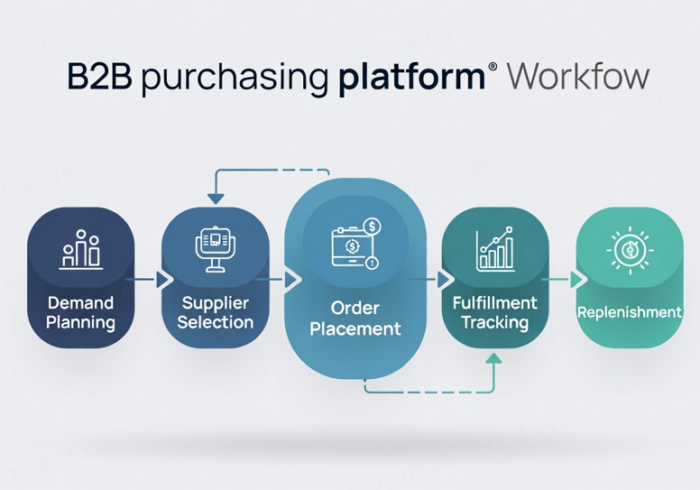
A typical order flow looks like this:
1. A customer visits your online store and places an order.
2. The customer pays your retail price.
3. You submit the order to your supplier or dropshipping fulfillment partner.
4. The supplier purchases, picks, packs, and ships the item.
5. Tracking information is provided to you and, ideally, shared automatically with the customer.
6. You manage after-sales communication, delivery questions, returns, and refunds.
This model can reduce several early-stage barriers to e-commerce, including inventory investment, warehouse rent, packing labor, and unsold-stock risk. It does not eliminate business risk, though. You still need to pay for marketing, payment processing, customer service, returns, chargebacks, and supplier-related issues.
The most important principle is simple: you may not physically ship the product, but customers still hold your brand accountable for the order experience.
Why Dropshipping Remains Attractive for Global Sellers
Global e-commerce continues to create opportunities for niche retailers and online brands. Worldwide e-commerce sales reached approximately $6.42 trillion in 2025 and represented about 20.5% of total retail sales, according to eMarketer-based market reporting. This means customers are increasingly comfortable discovering and buying specialized products online, including from emerging brands and cross-border sellers.
Dropshipping can be particularly useful for:
– New entrepreneurs testing a product idea with limited inventory risk
– Social-media sellers validating demand before purchasing in bulk
– Marketplace sellers adding new product categories
– B2B distributors expanding their catalog without warehousing every SKU
– International sellers seeking access to China-made products
– Existing brands testing a new region before committing to local inventory
The advantage is not that dropshipping is “easy.” The advantage is that it allows sellers to test demand before making large purchasing commitments.
For example, a seller interested in ergonomic desk accessories could launch a small collection of laptop stands, cable organizers, monitor risers, and desk lamps. Instead of purchasing 500 units of each product, the seller can test product pages, advertising messages, conversion rates, delivery performance, and customer feedback first. If one item consistently generates profitable orders, the seller can then negotiate better supplier pricing, consider branded packaging, or move to a hybrid inventory model.
Choose a Niche Before Choosing Products
Many first-time stores fail because they begin with random “viral” products rather than a clear customer problem. A focused niche makes product research, content creation, advertising, and customer trust much easier.
A niche does not need to be extremely narrow, but it should give your store a recognizable purpose.
Good niche examples
– Travel accessories for frequent business travelers
– Storage solutions for small apartments
– Home workout accessories for beginners
– Pet enrichment products for indoor cats
– Desk organization products for remote workers
– Sustainable kitchen accessories
– Practical tools for car owners
– Personalized gift products for special occasions
Instead of building a store that sells a pet brush, a portable blender, a LED lamp, and a kitchen gadget, build a store that serves one identifiable type of customer.
A focused store is easier to position because customers can quickly understand:
– Who the store is for
– What problem it solves
– Why its products belong together
– Why they should trust the product recommendations
Use a product opportunity checklist
Before adding a product to your store, assess it against practical commercial criteria.
| Product factor | What to look for | Why it matters |
| Customer problem | A clear inconvenience, need, or desire | Easier to explain and sell |
| Demand pattern | Stable or growing demand | Reduces dependence on short-lived trends |
| Competition | Existing demand but room to differentiate | Validates the category without copying competitors |
| Shipping suitability | Compact, durable, and reasonably lightweight | Helps control shipping cost and damage risk |
| Product margin | Sufficient room after product, shipping, fees, and advertising | Revenue is not the same as profit |
| Return risk | Low sizing, compatibility, or quality uncertainty | Fewer costly customer-service issues |
| Visual appeal | Easy to demonstrate in images or video | Stronger social-media and product-page performance |
| Repeat-purchase potential | Refills, accessories, bundles, or related products | Supports higher customer lifetime value |
Avoid relying entirely on product “virality.” A viral product may generate views, but it can also attract dozens of copycat sellers, increase ad costs, and create customer expectations that are difficult to meet.
Validate Product Demand Before You Build a Store
Product research should combine market signals with operational reality. A product can look attractive on social media but still be a poor business choice if it has slow shipping, weak packaging, high defect rates, or very little profit after advertising.
Start by reviewing several sources of evidence:
– Search trends to understand whether interest is stable, seasonal, or declining
– Customer reviews on major marketplaces to identify complaints and unmet needs
– Competitor product pages to evaluate pricing, bundles, delivery promises, and positioning
– Social-media comments to understand the language customers use
– Supplier catalogs to compare product variations and available stock
– Advertising libraries to see whether competitors are actively promoting similar products
Read reviews as product-development research
Do not only count five-star reviews. Read one-star, two-star, and three-star reviews carefully. They often reveal opportunities to improve the offer.
For instance, customers may say:
– “The product works, but the instructions are confusing.”
– “The packaging was damaged.”
– “It took too long to arrive.”
– “The material feels cheaper than expected.”
– “It did not fit my device.”
– “The photos made it look bigger.”
These comments can help you choose a better supplier, improve your product description, create clearer size charts, add usage videos, or remove misleading claims.
How to Find and Vet a Reliable Dropshipping Supplier
Your supplier is not merely a backend vendor. In practice, the supplier becomes part of your customer experience. Late deliveries, incorrect products, poor packaging, missing tracking, and inconsistent stock all affect your store’s reputation.
Before listing a product, verify the supplier’s ability to fulfill consistently.
Supplier evaluation checklist
Ask the supplier or sourcing partner the following questions:
1. What is the current product price, and what does it include?
2. Is the item consistently in stock?
3. What is the estimated processing time before shipment?
4. What shipping methods are available for each destination market?
5. Is tracking available for every shipment?
6. Can you provide real product photos or videos?
7. Can you conduct basic quality inspection before shipping?
8. What happens if a product is defective, incorrect, or lost?
9. Can you offer custom packaging, branded inserts, or private-label options later?
10. Is there a backup source if the original factory runs out of stock?
Industry guidance consistently recommends ordering samples before scaling a product. A sample lets you inspect actual quality, packaging, delivery speed, tracking performance, and product accuracy rather than trusting catalog images alone.
Order samples to your target country
A sample should be sent to the same country—or a similar shipping region—you plan to serve. This is essential because shipping performance can vary significantly by destination.
When the sample arrives, document:
– Order date
– Supplier processing time
– Dispatch date
– Tracking update frequency
– Delivery date
– Packaging condition
– Product quality
– Product dimensions and weight
– Accuracy of colors, materials, and features
– Whether the item matches the listing description
– Potential product-photo or video opportunities
Use this experience to write more truthful product pages. If the delivery time is 10–15 business days, do not promise “fast shipping” unless you can reliably meet that expectation.
For sellers sourcing from China, a service such as Looperbuy can help centralize sourcing, purchasing, inspection, consolidation, packaging, and worldwide dropshipping fulfillment. This can be particularly valuable when a seller wants products from multiple Chinese suppliers but prefers not to manage separate supplier payments, inventory coordination, or international logistics independently.
Calculate Your Real Dropshipping Profit Margin
One of the biggest mistakes in dropshipping is using a simple markup formula without calculating the full cost of acquiring and serving each customer.
If a product costs $8 and sells for $29.99, the store does not automatically earn $21.99 in profit.
Your actual per-order calculation should include:
Net Profit=Selling Price−Product Cost−Shipping−Payment Fees−Ad Cost−Refunds/Returns Allowance−Operational Costs
Here is a simplified example:
| Cost item | Example amount |
| Retail selling price | $39.99 |
| Product cost | $10.00 |
| Shipping cost | $6.00 |
| Payment processing fee | $1.50 |
| Advertising cost per purchase | $12.00 |
| Returns and customer-service allowance | $2.00 |
| Estimated net profit | $8.49 |
In this example, the gross margin may initially look strong, but the real margin is much lower after customer-acquisition and operating costs.
Before launching paid ads, establish a target break-even point. Know the maximum amount you can spend to acquire one customer while remaining profitable.
Improve margins without simply raising prices
– Bundle complementary products to increase average order value
– Offer quantity discounts for consumable or repeat-use products
– Use post-purchase offers for low-cost accessories
– Improve conversion rate through better product pages
– Reduce refunds with accurate descriptions and clear delivery expectations
– Negotiate product pricing after sales volume increases
– Use product bundles instead of relying on one-item orders
– Offer branded packaging when it supports a higher perceived value
Build a Store That Customers Can Trust
A dropshipping store should not look like a temporary catalog. Customers need confidence that the store is real, accountable, and prepared to support their purchase.
Your essential trust elements should include:
– A clear About Us page explaining your brand and product focus
– Detailed product descriptions written for customers, not copied from suppliers
– Accurate product dimensions, materials, compatibility details, and care instructions
– Clear shipping information with realistic delivery windows
– Easy-to-find return and refund policies
– Contact information and responsive customer support channels
– Secure checkout and transparent pricing
– Product photos, videos, and customer reviews where available
– FAQ content that addresses delivery, returns, and product usage questions
Write product pages that reduce uncertainty
Every product page should answer the questions a buyer would ask before purchasing:
– What problem does this product solve?
– Who is it best for?
– What exactly is included?
– What are the size, material, specifications, and compatibility requirements?
– How is it used?
– How long will delivery take?
– What happens if there is a problem with the order?
Do not use exaggerated claims such as “best product ever,” “guaranteed results,” or “works for everyone.” Clear, evidence-based product descriptions build stronger long-term trust than hype.
Launch With a Small, Controlled Product Test
A better launch strategy is to start with a limited selection rather than uploading hundreds of untested products.
Begin with one core product and several related products or accessories. This makes your website easier to navigate and gives your advertising a more consistent message.
A practical 30-day launch plan
| Period | Main goal | Key actions |
| Days 1–7 | Market and supplier research | Select a niche, shortlist products, compare suppliers, order samples |
| Days 8–14 | Store foundation | Build product pages, set policies, configure payment and shipping settings |
| Days 15–21 | Fulfillment testing | Place a complete test order, inspect tracking flow, verify customer emails and delivery communication |
| Days 22–30 | Controlled traffic test | Publish content, test a small advertising budget, collect customer feedback, review results |
Before spending heavily on advertising, complete a full test order through your own website. Check the experience from checkout to order confirmation, supplier notification, tracking updates, delivery, and post-purchase follow-up.
This process often exposes small but important problems, such as incorrect shipping rates, missing order emails, unclear tracking pages, or inaccurate delivery estimates.
Market Your Store With Useful Content and Honest Offers
Marketing works best when it matches the buying stage of your audience.
A customer who has never heard of your category may need educational content. A customer comparing products may need a demonstration, comparison chart, or buyer guide. A customer who has already visited your product page may need social proof, a reminder, or a limited bundle offer.
Use a balanced acquisition strategy:
– Short-form product demonstration videos for social platforms
– Educational articles that answer buyer questions
– Email flows for welcome messages, abandoned carts, and post-purchase support
– Retargeting campaigns for previous website visitors
– Creator partnerships with people relevant to your niche
– User-generated content that shows real product usage
– Search ads for high-intent product queries
Email remains especially useful because it gives sellers a direct channel to communicate with customers after they have visited or purchased. Use email to provide value—not just discounts. Send setup tips, product-care instructions, related-product recommendations, and transparent delivery updates.
Common Dropshipping Mistakes to Avoid
Avoiding predictable mistakes can protect both your budget and brand reputation.
– Listing products without ordering a sample
– Selling too many unrelated products in one store
– Copying supplier descriptions and photos without improving them
– Promising unrealistic delivery times
– Ignoring packaging quality and unboxing experience
– Launching paid ads before calculating break-even acquisition cost
– Offering unclear return terms
– Choosing a supplier only because the product is cheap
– Failing to keep customers updated about shipping delays
– Scaling ads before fulfillment consistency is proven
The strongest dropshipping businesses treat sourcing, fulfillment, customer service, and product content as connected parts of one system.
Build a More Reliable Global Fulfillment Workflow
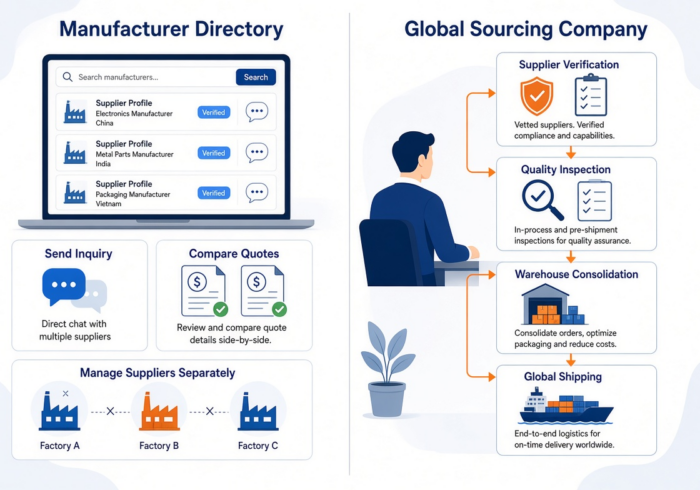
As order volume grows, operational complexity rises quickly. Sellers may need to coordinate several factories, product variations, supplier payments, delivery routes, tracking numbers, quality checks, and customer inquiries.
A sourcing and fulfillment partner can reduce this operational burden by helping you manage the workflow in one place:
– Source products from Chinese suppliers
– Compare product options and quotations
– Purchase products after an order is received
– Check product condition before shipment
– Consolidate products from multiple suppliers
– Add custom packaging or inserts
– Select suitable international shipping methods
– Provide tracking details for customer updates
For Looperbuy users, the goal should be to create a dependable, scalable supply chain—not simply to find the lowest unit cost. A slightly higher product cost may be worthwhile if it produces fewer damaged orders, better packaging, faster fulfillment, and fewer refunds.
Start Small, Learn Fast, and Scale Carefully
Dropshipping is most effective when it is treated as a real retail business rather than a shortcut to instant sales. The store that wins is often not the one with the largest catalog. It is the one that understands its customers, tests products carefully, communicates honestly, and delivers a consistent post-purchase experience.
Start with a focused niche. Test your products. Verify your supplier. Calculate your real margin. Then scale only after your fulfillment process is working reliably.
Ready to source products from China without holding inventory? Explore Looperbuy’s sourcing and dropshipping fulfillment services to simplify procurement, quality inspection, order handling, and global delivery for your online store.
Frequently Asked Questions
1. How much money do I need to start a dropshipping business?
The amount depends on your platform, samples, branding, applications, advertising, and supplier costs. You can begin relatively lean, but you should budget for product samples, store setup, customer-service tools, and a controlled marketing test. Avoid assuming that dropshipping has zero startup cost.
2. Do I need to buy inventory before I start dropshipping?
No. In a standard dropshipping model, you purchase the product from the supplier after a customer places an order. However, ordering product samples before launch is strongly recommended so you can evaluate quality, packaging, and shipping performance.
3. How do I find reliable China dropshipping suppliers?
Look beyond unit price. Compare product quality, processing time, communication speed, shipping options, tracking availability, return procedures, and inventory reliability. A China sourcing and fulfillment partner such as Looperbuy can also help coordinate procurement and global shipment handling.
4. Is dropshipping profitable in 2026?
Dropshipping can be profitable when sellers choose viable products, maintain sufficient margins, control advertising costs, and provide reliable fulfillment. Profitability is not guaranteed; it depends on your product economics, customer-acquisition cost, refund rate, and operational quality.
5. What products are best for dropshipping?
Good dropshipping products usually solve a clear problem, are easy to ship, have enough margin, are visually demonstrable, and carry manageable return risk. Avoid fragile, highly regulated, oversized, or misleading products unless you have a proven supplier and clear operational plan.
6. Should I use one supplier or multiple suppliers?
Start with a primary supplier for each important product, but keep backup sourcing options for high-performing SKUs. Multiple suppliers can reduce stock-out risk, but they can also complicate fulfillment, packaging consistency, and shipping costs.
7. How long does dropshipping shipping take from China?
Delivery time depends on the destination, shipping method, product processing time, customs procedures, and carrier performance. Always test delivery routes to your target market and publish realistic estimates on your store rather than making broad promises.
References
1. [Doba — A Beginner’s Guide to Launching Your First Dropshipping Store]
2. [Shopify — Dropshipping on Shopify: Complete Beginner’s Guide]
3. [eMarketer — Worldwide Ecommerce Benchmarks: Q4 2025]
4. [Ecommerce Atlas — Worldwide E-commerce Market Overview Findings]
5. [Zendrop — How to Dropship on Shopify in 2026]
6. [Build Your Store — Shopify Dropshipping Suppliers: Find, Vet and Connect]