Extensible ecommerce platforms help B2B businesses grow without rebuilding their technology every time the market changes. This article explains how flexibility, integrations, and buyer-focused design improve sourcing, fulfillment, and long-term performance for global commerce teams.
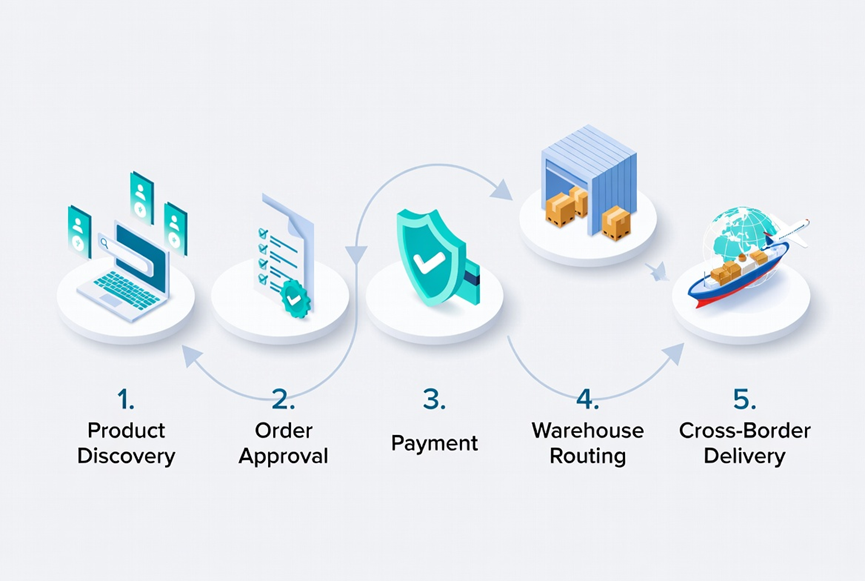
In B2B commerce, the platforms that win are not the ones with the most features on day one. They are the ones that can adapt fast, connect cleanly with other systems, and keep improving as buyer expectations change.
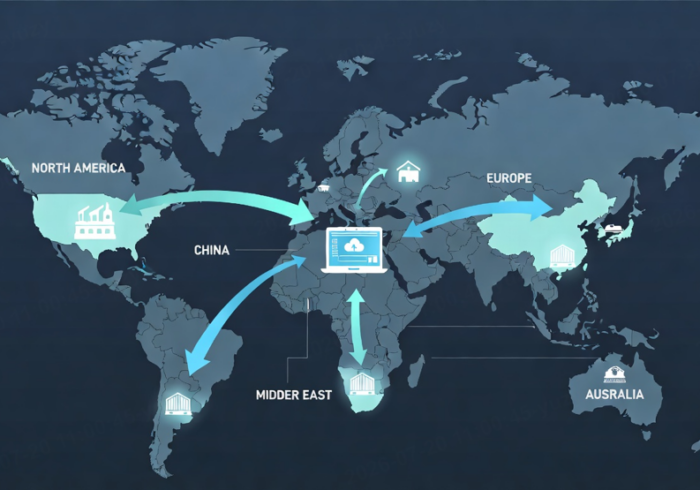
For global sellers, sourcing from China is no longer just about finding a supplier. It is about creating a repeatable operating model for procurement, payment, fulfillment, and customer delivery. That is why an extensible ecommerce platform matters: it lets a business add capabilities without rebuilding the whole system every time the market shifts.
For a platform like Looperbuy, extensibility is especially important because B2B buyers often need different order flows, customized fulfillment logic, and flexible operational support. A rigid platform can slow growth, while an adaptable one can remove friction across the entire buying journey.
Table of Contents
What Extensibility Means
An extensible ecommerce platform is one that can go beyond its built-in functions and support new features, integrations, workflows, and customer experiences without breaking the core system. In practice, this usually means API-first connectivity, modular architecture, and the ability to customize front-end and back-end behavior separately.
This is different from simple scalability. Scalability helps a platform handle more volume; extensibility helps it do more things as the business grows. For B2B buyers, that difference matters because growth often introduces new requirements such as quote requests, tiered pricing, purchase approvals, multi-warehouse fulfillment, and localized payment options.
Why It Matters Now
The B2B ecommerce market is expanding quickly, and current market research shows trillions of dollars in annual online B2B activity, with continued growth forecast through 2031. At the same time, modern buyers increasingly expect faster search, better self-service, and cleaner digital workflows rather than manual back-and-forth.
That creates a clear pressure point: businesses need platforms that can evolve without constant replatforming. In fast-moving sourcing and fulfillment environments, even small delays in quotation, inventory sync, or order routing can create lost revenue and weaker buyer trust.
Business Benefits
An extensible platform gives B2B sellers several practical advantages:
– Faster launch of new features, such as custom checkout steps or quote workflows.
– Lower long-term innovation cost because new capabilities can be added without replacing the entire system.
– Better customer experience through tailored catalogs, pricing, and account-specific purchasing rules.
– Easier expansion into new regions with localized currencies, shipping methods, and compliance settings.
– Stronger operational resilience because integrations with ERP, CRM, and inventory tools can be improved over time.
For Looperbuy, this means the platform can support different types of B2B sellers, from small wholesale brands to cross-border merchants that need sourcing plus dropshipping in one workflow.
Core Platform Capabilities
A strong extensible commerce foundation usually includes these capabilities:
| Capability | Why it matters in B2B |
| API-first design | Connects inventory, pricing, shipping, and buyer data across systems. |
| Modular architecture | Lets teams add or replace functions without disrupting the whole storefront. |
| Headless flexibility | Separates presentation from core commerce logic, making UX changes faster. |
| Advanced search | Helps buyers find products by spec, MOQ, compatibility, or use case. |
| Dynamic pricing | Supports tiered rates, custom quotes, and buyer-specific terms. |
| Multi-market readiness | Supports language, currency, tax, and shipping variation by region. |
These capabilities are especially useful when serving professional buyers who want speed, precision, and less manual communication during sourcing and reorder cycles.
Where Most Platforms Fall Short
Many ecommerce platforms look flexible on the surface, but become difficult when a business wants to add real operational logic. The main problem is usually not the storefront; it is the hidden complexity behind it: pricing rules, order routing, system integration, and upgrade compatibility.
Common weaknesses include:
– Limited customization without heavy engineering work.
– Poor upgradeability after custom changes are added.
– Weak integration with ERP, CRM, or warehouse tools.
– Slow search and filtering for large catalogs.
– Rigid checkout flows that do not fit B2B purchasing behavior.
For B2B sourcing, these limitations are costly because buyers expect accurate product data, stable inventory visibility, and clear fulfillment logic. If a platform cannot support those basics, it becomes a bottleneck instead of a growth engine.
How to Evaluate a Platform
Before adopting or upgrading an ecommerce platform, decision-makers should test whether it can support future business models, not just the current one. A practical evaluation process should include technical and commercial checks.
1. Confirm how easy it is to add new features without rebuilding the core system.
2. Test whether custom changes survive upgrades.
3. Review API quality and documentation.
4. Check integration options for ERP, CRM, PIM, and warehouse systems.
5. Verify whether the platform can handle multiple currencies, languages, and regions.
6. Assess whether search, checkout, and pricing rules can be adapted to B2B use cases.
This is especially important for companies that operate across borders, because cross-border B2B trade often introduces extra requirements around payment methods, customs documentation, and region-specific fulfillment.
Practical Use Case
Consider a sourcing platform that serves international resellers. A buyer may want one catalog for product discovery, but the order flow may need to change depending on destination country, shipping method, and order volume. In that case, the business cannot rely on a one-size-fits-all checkout process.
An extensible system can support:
– Country-based shipping logic.
– Custom MOQ rules.
– Price tiers by buyer type.
– Automated reorder workflows.
– Marketplace-like product aggregation with centralized operations.
That flexibility is what allows a platform to serve both simple and complex buyer journeys without forcing every customer into the same process.
Design and UX Guidance
From a UX perspective, the best B2B commerce experiences reduce friction at every step. Buyers should be able to search, compare, request quotes, and complete orders with minimal effort. The design should favor clarity over decoration, especially on mobile devices where many B2B users now expect fast access to buying functions.
Recommended UX principles:
– Use short product titles and clear spec labels.
– Keep forms short and progressive.
– Show pricing logic clearly whenever possible.
– Make reordering easy for repeat customers.
– Place trust signals near checkout and account steps.
A simple rule helps here: if a buyer needs to ask a sales rep to understand the process, the platform is probably too rigid.
Action Steps
If your goal is to build a platform that supports long-term growth, focus on these moves:
1. Audit your current workflows for hidden friction.
2. List the features you expect to need in the next 12 to 24 months.
3. Prioritize modular, API-driven systems.
4. Test upgrade safety before investing in custom work.
5. Build for cross-border readiness from the start.
6. Align UX, operations, and commerce rules around buyer behavior.
For Looperbuy, this is also a strong brand message: the platform is not just a sourcing channel, but an operating layer that helps global sellers reduce inventory pressure, storage burden, payment complexity, and logistics management costs.
Conclusion
Extensibility is what turns an ecommerce platform from a fixed tool into a growth asset. In B2B sourcing and dropshipping, that flexibility can determine whether a business scales smoothly or gets trapped by technical limits.
For companies serving international buyers, the winning model is clear: build systems that can evolve, integrate, and adapt without constant reinvention. That is the foundation of a stronger customer experience and a more resilient commercial operation.
FAQ
1. What is an extensible ecommerce platform?
It is a platform that can add new features, integrations, and workflows without requiring a full rebuild of the core system.
2. How is extensibility different from scalability?
Scalability helps a system handle more volume, while extensibility helps it support new capabilities and business models.
3. Why is extensibility important for B2B sourcing?
Because B2B sourcing often needs custom pricing, bulk order logic, regional fulfillment, and system integrations that standard platforms may not support well.
4. What features should a B2B platform support?
It should support API integration, modular upgrades, advanced search, dynamic pricing, and multi-region operations.
5. How can a company tell if a platform is truly flexible?
It should test how easily the platform adds new functions, handles upgrades, and connects with ERP, CRM, inventory, and logistics systems.
References
1. Virto Commerce Blog, “How can extensibility of a platform benefit a business” – [hippopilot]
2. Algolia Blog, “B2B commerce digital transformation: How to build a successful B2B ecommerce website…” – [algolia]
3. iWeb, “Building a Scalable Ecommerce Platform for B2B: Key Considerations and Best Practices” – [iweb.co]
4. Mordor Intelligence, “B2B E-commerce Market Size, Share & 2031 Growth Analysis” – [mordorintelligence]
5. U.S. International Trade Administration, “eCommerce Sales & Size Forecast” – [trade]
6. CheckoutChamp, “Scaling Your B2B Ecommerce Store: Strategies for Long-Term Growth” – [checkoutchamp]