If you run a B2B sourcing business, understanding ad networks is no longer optional. It is the difference between reaching global brand owners and wholesalers or staying invisible in a crowded market. As a one-stop B2B sourcing platform connecting international buyers with Chinese suppliers, your growth depends on placing your message in front of the right decision-makers at the right time. Ad networks make that possible at scale.

Table of Contents
What Are Ad Networks?
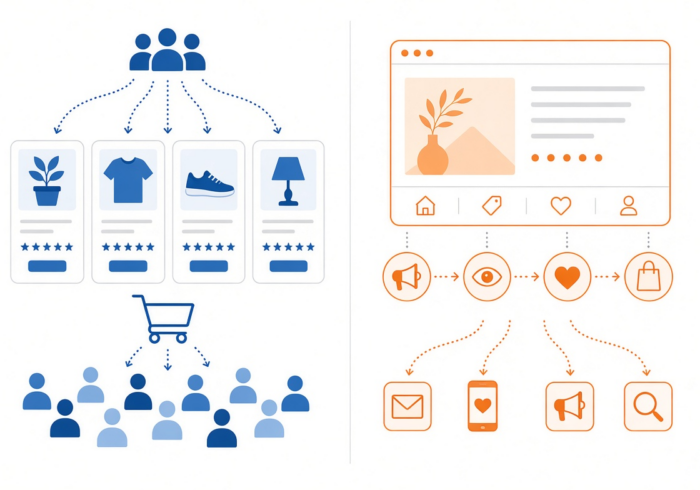
An ad network is a technology platform that acts as an intermediary between publishers who have ad space to sell and advertisers who want to buy that space . Instead of negotiating directly with hundreds of websites or apps, advertisers work with a single ad network that aggregates inventory from many publishers and matches it with advertiser demand .
The core function is simple. Publishers provide available ad slots. Advertisers provide creative assets and budget. The network handles the matching, delivery, and reporting. This aggregation model creates efficiency for both sides.
Modern ad networks do more than simple matching. They offer targeting capabilities, frequency capping, ad sequencing, competitive exclusions, and behavioral targeting based on previous user actions . For B2B platforms like LooperBuy, these features allow precise targeting of wholesale buyers, brand managers, and production manufacturers across different regions.
How Ad Networks Differ from Other Ad Tech
Many people confuse ad networks with ad exchanges and demand-side platforms. The distinction matters for your media strategy.
Ad networks aggregate inventory and resell it at network-set rates. Ad exchanges, by contrast, operate as open marketplaces where buyers and sellers transact in real time through bidding . Demand-side platforms help advertisers buy across multiple exchanges and networks from a single interface .
For a B2B sourcing platform, ad networks offer a simpler entry point. You get access to a curated pool of inventory without managing complex exchange relationships. As your programmatic sophistication grows, you can layer in exchanges and DSPs for broader reach.
The Shift from Aggregation to Curation
The ad network industry is undergoing a fundamental transformation. According to Limelight Inc.’s 2026 report, successful ad networks are moving from aggregation to curation . The previous obsession with volume is being replaced by a quest for quality.
This shift matters for B2B advertisers. Curated networks deliver cleaner supply paths, fewer intermediaries, and better outcomes . For a platform targeting international wholesale buyers, curated inventory means your ads appear in premium business environments rather than low-quality placements that damage brand credibility.
Industry leaders confirm this trend. Jens Haxgart, CEO of Hax Media Partners, notes growing demand for curated marketplaces and first-party data strategies. Networks are now expected to deliver clearly defined, high-intent inventory packages with strong brand-safety and fraud controls .
Pricing Models in Ad Networks
Ad networks typically charge advertisers using one of three primary models .
Cost Per Mille (CPM) charges based on every thousand ad impressions. This model suits brand awareness campaigns where reach matters more than immediate clicks .
Cost Per Click (CPC) charges only when a user clicks the ad. Search engines favor this model because clicks signal genuine interest .
Cost Per Action (CPA) charges when a user completes a specific action such as filling a form or making a purchase. Advertisers prefer CPA for performance campaigns, though publishers often resist it due to implementation challenges .
For B2B sourcing platforms, the right model depends on your funnel stage. CPM works for building brand awareness among global buyers. CPC drives consideration when you want qualified traffic to your product catalog. CPA aligns with actual sourcing inquiries or registrations.
Why Ad Networks Matter for B2B Sourcing Platforms
The B2B sourcing landscape has unique advertising requirements. Your audience is not casual consumers. They are procurement managers, brand owners, and production manufacturers making high-value decisions.
Ad networks provide three critical advantages for platforms like LooperBuy.
First, global reach without infrastructure. You can target buyers in North America, Europe, and Asia-Pacific through a single network relationship. Asia-Pacific is the fastest-growing ad market at a 12.16% CAGR, propelled by mobile-first behavior and surging e-commerce activity .
Second, audience precision. Ad networks offer behavioral targeting based on previous user actions . You can reach decision-makers who have previously searched for Chinese suppliers, wholesale electronics, or custom manufacturing services.
Third, cost efficiency. For mid-sized platforms, ad networks often provide better economics than direct publisher deals. A UK competition authority study found ad networks charge an average 33% fee versus 15% for supply-side platforms, reflecting their dual publisher and advertiser-facing role . This integrated service justifies the premium for advertisers seeking simplicity.
Practical Steps to Start with Ad Networks
If you are ready to incorporate ad networks into your B2B sourcing marketing, follow this structured approach.
Step 1: Define your target audience precisely. Identify your ideal buyer by industry, company size, purchase volume, and geographic region. A European brand owner sourcing consumer electronics has different targeting needs than a Southeast Asian distributor looking for general merchandise.
Step 2: Select networks aligned with B2B audiences. Not all ad networks serve business decision-makers well. Evaluate networks based on their publisher inventory. Business news sites, trade publications, and professional forums are more valuable than general-interest websites.
Step 3: Start with a controlled budget. Allocate 10-20% of your paid advertising budget to programmatic testing through ad networks. This allows you to learn without risking core channels .
Step 4: Set clear measurement criteria. Track return on ad spend, cost per qualified lead, and inquiry-to-order conversion rates. Programmatic campaigns typically require 2-4 weeks to optimize effectively .
Step 5: Optimize based on data. Pause underperforming segments. Scale winning combinations by increasing budgets 25-50% monthly when ROAS exceeds your target threshold .
Conclusion
Ad networks are the connective tissue between publishers with ad space and advertisers seeking audiences. For B2B sourcing platforms targeting global buyers, they offer access, precision, and efficiency that direct deals cannot match alone. As the industry shifts toward curation and quality, the networks that prioritize transparent supply paths and high-intent inventory will deliver the best results for platforms like LooperBuy.
The question is not whether to use ad networks. It is how quickly you can integrate them into your sourcing platform growth strategy.
References
Shopify. Best Advertising Platforms for Launching a Digital Ad Campaign. https://www.shopify.com/za/blog/best-advertising-platforms
Limelight Inc. State of Ad Networks 2026. Reported by Telemedia Magazine. https://www.telemediamagazine.com/ad-networks-move-from-aggregation-to-curation-and-look-beyond-google/
LBBOnline. Limelight Inc.’s Annual Report Charts Ad Networks’ Move from Aggregation to Curation. https://lbbonline.com/news/limelight-Incs-annual-report-charts-ad-networks-move-from-aggregation-to-curation
Madgicx. The Guide to Ad Tech Platforms for Programmatic Advertising. https://madgicx.com/blog/ad-tech-platform-for-programmatic-advertising
Research and Markets. Ad Tech Market Share Analysis, Industry Trends & Statistics. https://www.researchandmarkets.com/reports/5938243/ad-tech-market-share-analysis-industry-trends
Ecommerce Fastlane. Why Choosing The Wrong Ad Network Costs More Than You Think. https://ecommercefastlane.com/why-choosing-the-wrong-ad-network-costs-more-than-you-think/
US Patent 9202248. Ad Network Functions and Processes. https://patentimages.storage.googleapis.com/5e/91/6c/7f3652ab770d17/US9202248.pdf
US Patent 10672040. Ad Network Optimization Systems. https://patentimages.storage.googleapis.com/fe/dc/bd/0c7c32c2c5d6cf/US10672040.pdf
UK Competition and Markets Authority. Online Advertising Market Study Appendix C. https://assets.publishing.service.gov.uk/media/5dfa0748e5274a0910cb6d7e/Appendix_C_Market_Outcomes.pdf
FAQ
What is an ad network in simple terms?
An ad network is a platform that connects advertisers who want to buy ad space with publishers who have ad space to sell. It aggregates inventory from many publishers and matches it with advertiser demand.
How do ad networks differ from Google Ads?
Google Ads is a specific advertising platform. An ad network is a broader category of intermediary that may include Google’s network products like AdSense or AdMob, along with independent networks.
Can B2B companies benefit from ad networks?
Yes. Ad networks allow B2B companies to target business decision-makers across multiple websites and apps through a single relationship, often with lower operational overhead than direct deals.
What is the difference between CPM, CPC, and CPA?
CPM charges per thousand impressions. CPC charges per click. CPA charges per completed action such as a form submission or purchase. Each suits different campaign objectives.
Are ad networks still relevant in 2026?
Yes, but the industry is shifting from volume-based aggregation to quality-focused curation. Networks that prioritize clean supply paths and high-intent inventory are thriving.
Hot tags
ad networks for B2B sourcing, B2B programmatic advertising, global supplier platform marketing, China sourcing ad networks, wholesale buyer targeting, B2B lead generation advertising, international procurement marketing, curated ad networks, programmatic B2B campaigns, cross-border ecommerce advertising