Shenzhen is one of China’s most important manufacturing hubs for global B2B buyers, especially in electronics, smart hardware, and precision components. This expanded guide explains why the city remains competitive, how to evaluate suppliers, and how to build a sourcing workflow that is faster, safer, and more efficient.
Shenzhen is one of the most important manufacturing centers in China, and for many global B2B buyers, it remains a first-choice sourcing destination for electronics, industrial components, smart hardware, and export-ready consumer goods. The city’s real strength is not just production scale. It is the combination of engineering depth, supplier density, fast product iteration, and strong logistics support that helps businesses move from idea to shipment faster than many other manufacturing hubs.
For importers, wholesalers, and online sellers, Shenzhen offers a rare mix of speed and specialization. You can source a simple accessory, a customized industrial component, or a complex OEM/ODM product in the same city, often with multiple factory options within a short distance. That concentration creates efficiency, but it also means buyers must know how to evaluate suppliers carefully, because the right partner is not always the cheapest one.
Table of Contents
Why Shenzhen Still Leads in Manufacturing
Shenzhen has evolved from a classic export city into a modern industrial ecosystem built around innovation, hardware development, and advanced manufacturing. In 2025, Shenzhen’s GDP reached 3.873 trillion yuan, with manufacturing output supported by strong growth in sectors such as general equipment, special equipment, and high-tech products including industrial robots and drones. This matters for buyers because it shows that Shenzhen is not slowing down; it is moving toward higher-value production and more sophisticated industrial capacity.
The city also benefits from its position in the Greater Bay Area, which gives suppliers access to ports, airports, financial services, and a broad talent pool. That ecosystem shortens the time between design, sample, mass production, and export. For B2B buyers, the practical result is faster product development, better access to technical support, and more opportunities to compare suppliers in one market.
Another reason Shenzhen remains strong is its reputation among global brands and technology companies. Public reporting has highlighted Shenzhen’s continued role as a base for major tech and industrial firms, while trade data shows strong export momentum in high-tech and advanced manufacturing categories. In other words, Shenzhen is not just a sourcing destination; it is a city where manufacturing is still expanding, adapting, and upgrading.
Main Manufacturing Strengths
Electronics and smart hardware
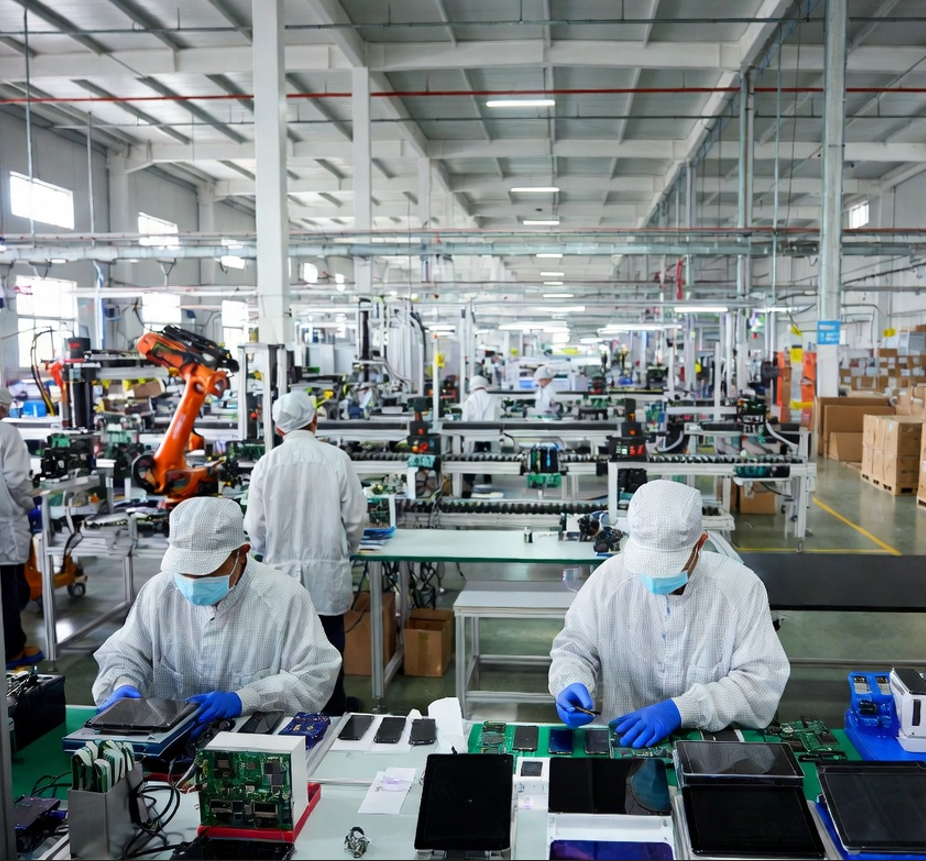
Shenzhen is still the best-known name in Chinese electronics manufacturing. The city has deep supplier networks for PCBA, connectors, charging products, smartwatches, earbuds, speakers, wearables, and a wide range of consumer hardware. For B2B buyers, this means more supplier options, faster sampling, and better access to component sourcing and assembly under one roof.
The real advantage is speed. Many Shenzhen suppliers are used to short development cycles and frequent design changes, which makes the city especially attractive for private label brands, startup hardware teams, and sellers who need to launch quickly. At the same time, buyers should remember that electronics sourcing requires careful testing, specification control, and quality checks, especially when products will be sold in multiple markets.
Advanced manufacturing and industrial technology
Shenzhen is no longer limited to consumer electronics. Recent official data shows strong growth in industrial robots, drones, and specialized equipment manufacturing. Trade reporting has also pointed to export growth in electric vehicles, lithium batteries, solar products, and advanced electronics. This is important because it shows the city is steadily moving into more complex industrial categories.
For buyers, that means Shenzhen suppliers may now offer more than just assembly. Many factories can support design review, engineering input, prototype development, and process optimization. If you are sourcing technical products, Shenzhen can be a strong place to find suppliers with a broader engineering mindset and stronger production discipline.
Precision parts and custom components
Another major strength is precision manufacturing. Shenzhen has many suppliers that handle CNC machining, molds, metal parts, housings, custom enclosures, and other industrial components. These factories are especially useful for buyers who need tight tolerances, fast tooling changes, or smaller custom runs.
Precision suppliers in Shenzhen often serve a wide range of industries, including automation, consumer devices, medical equipment, and industrial systems. Because the city has such a dense supplier base, buyers can often compare capabilities, materials, and pricing faster than in less concentrated manufacturing regions. That is a major advantage when product development timelines are tight.
Overview of Supplier Types
Publicly available supplier lists indicate that Shenzhen is home to companies operating in various sectors, including POS hardware, capacitors, glass products, packaging, smart locks, PCBA, power supplies, and security technology.
Below is a practical view of supplier types buyers often encounter in Shenzhen:
| Supplier type | Typical products | Best use case |
| Electronics OEM/ODM | Earbuds, chargers, smartwatches, tablets | Private label launches and fast product development |
| Precision manufacturing | CNC parts, molds, connectors, hardware components | Custom engineering and tight-spec projects |
| Battery and power suppliers | Power banks, battery packs, chargers, BMS | Portable energy and power solutions |
| Packaging and accessories | Boxes, printed materials, retail packaging | Brand presentation and fulfillment prep |
| Industrial technology suppliers | Sensors, displays, telecom equipment, automation parts | Technical B2B and industrial applications |
This table matters because it shows that Shenzhen is not a single market. It is a layered ecosystem of micro-clusters, each with its own supplier strengths. A buyer sourcing a cosmetic device, for example, should not use the same supplier criteria as a buyer sourcing telecom hardware or CNC hardware.
How To Judge A Good Supplier
A strong Shenzhen supplier is not only defined by price. The best factories usually combine stable production, clear communication, export experience, and consistent quality control. Buyers should also understand whether they are dealing with a direct factory, a trading company, or a hybrid business model, because that affects cost structure, lead time, and control over production.
Use this checklist when screening potential suppliers:
1. Confirm the business type.
2. Ask for licenses, certifications, and recent audit documents.
3. Review samples before discussing bulk orders.
4. Check whether they support OEM, ODM, or standard products only.
5. Ask for production lead times and peak-season capacity.
6. Clarify packaging, labeling, shipping terms, and warranty handling.
7. Understand how they handle defects, replacements, and after-sales support.
A supplier that answers clearly and consistently is usually easier to work with over time. If responses are vague, delayed, or contradictory, treat that as a warning sign even if the quote looks attractive. In sourcing, confusion almost always becomes cost later.
A Better Buyer Workflow
Step 1: Write a detailed product brief
Start with a precise product specification. Include dimensions, materials, required certifications, target market, packaging needs, and expected order volume. If the brief is unclear, supplier comparisons become unreliable because each factory may quote a different interpretation of the product.
Step 2: Create a short supplier list
Do not try to contact dozens of factories at once. Instead, build a shortlist based on capability, not popularity. A factory with strong experience in wearable electronics may be a poor fit for industrial metal parts, even if both are located in Shenzhen.
Step 3: Request samples and compare carefully
Sampling is one of the most important steps in the sourcing process. Ask for production-intent samples whenever possible, not just presentation samples. Then compare performance, finishing, packaging, labeling, and consistency across more than one unit.
Step 4: Negotiate with total cost in mind
Price per unit matters, but it is only one part of landed cost. Also discuss tooling fees, payment terms, inspection costs, packaging changes, IP ownership, and post-sale support. A lower unit price can become expensive if quality is unstable or if the supplier is weak in documentation and delivery.
Step 5: Build logistics into the plan
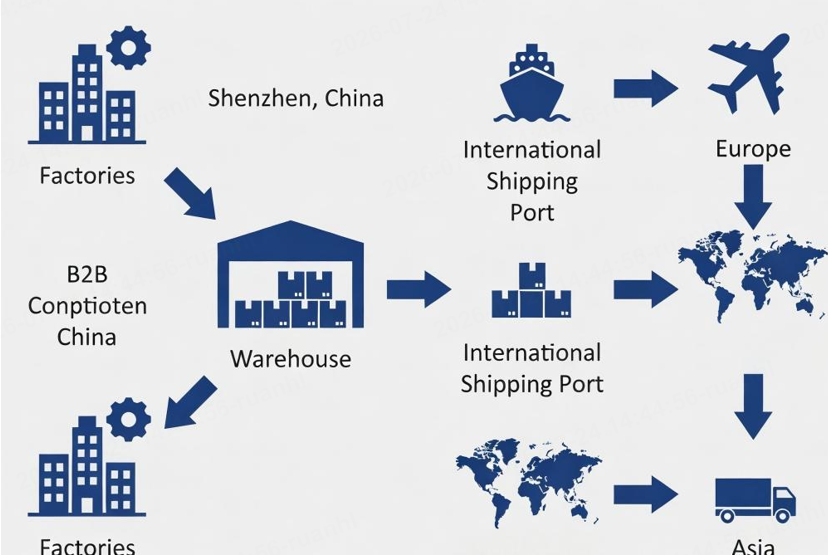
Shipping should not be an afterthought. Many B2B sellers lose money because they source well but fail on packaging, consolidation, or freight planning. If your business model depends on selling into multiple markets, then inventory movement, shipping coordination, and delivery timing should be planned from the start.
Recent Market Shifts In Shenzhen
Shenzhen’s industrial story is changing. It is still a major electronics city, but it is increasingly associated with advanced manufacturing, export growth, and higher-value technology production. That shift is visible in public data showing continued output growth in specialized manufacturing and strong trade performance in high-tech categories.
This evolution matters for buyers because supplier expectations are rising. More factories now support engineering collaboration, better process control, and more structured quality systems. At the same time, the market is becoming more competitive, so buyers that use disciplined supplier screening can often find better partners than buyers who only compare prices.
Another notable trend is the increasing importance of speed-to-market. Many product categories in Shenzhen move quickly, especially in electronics and consumer hardware. For B2B sellers, that means opportunity, but it also means product cycles are shorter and supplier performance can change quickly. A strong sourcing partner helps you keep pace without holding too much stock.
How To Reduce Sourcing Risk
Risk reduction is one of the biggest reasons to work carefully in Shenzhen. The city offers a lot of supplier choice, but more choice also means more variation in quality and reliability. The best buyers reduce risk through process, not guesswork.
Here are the most important controls:
– Use written specifications for every order.
– Ask for photos, videos, and sample confirmation before production.
– Approve packaging and labels before bulk manufacturing.
– Set inspection points for key production stages.
– Keep records of agreements, revisions, and approvals.
– Use a clear replacement policy for defective units.
If your order is large, a third-party inspection step can be worth the cost. It is much cheaper to catch a problem before shipment than to manage a return, refund, or brand damage after goods arrive. For many buyers, this is the difference between a one-time order and a long-term supplier relationship.
How Looperbuy Fits In
For global sellers who want to reduce storage pressure and simplify cross-border operations, a sourcing-and-fulfillment model can be especially useful. Instead of managing procurement, warehousing, and shipping separately, buyers can consolidate those steps into a smoother workflow. That is especially helpful when testing new products, launching in new markets, or running multiple sales channels.
This kind of setup can also reduce the operational burden on small and mid-sized sellers. Rather than holding too much inventory, businesses can move closer to a leaner model with better cash flow and less warehouse dependency. In practical terms, that means more flexibility, fewer fixed costs, and easier scaling.
Conclusion
Shenzhen remains one of the most important places in China for B2B sourcing because it combines manufacturing expertise, supply-chain depth, and strong export support. For buyers, the opportunity is not only to find products, but to build a faster and more flexible sourcing system.
The smartest approach is to choose the right supplier type, test samples early, control quality carefully, and plan logistics from the beginning. If done well, Shenzhen can support both product growth and operational efficiency for global sellers.
FAQ
1. Why do global buyers still source from Shenzhen?
Because Shenzhen combines strong supplier density, rapid prototyping, advanced manufacturing, and export-ready logistics.
2. What product categories are strongest in Shenzhen?
Electronics, smart hardware, industrial components, precision parts, batteries, packaging, and advanced technology products are especially strong.
3. How can I tell if a Shenzhen supplier is reliable?
Check the business type, certifications, samples, communication quality, production consistency, and after-sales support.
4. Is Shenzhen only good for large orders?
No. Many suppliers can support small-batch prototypes, pilot runs, and flexible OEM/ODM projects, especially in electronics and hardware.
5. What is the biggest sourcing mistake buyers make?
The biggest mistake is focusing only on unit price and ignoring quality, lead time, packaging, and logistics costs.
6. How can a sourcing partner help?
A sourcing partner can help coordinate suppliers, consolidate goods, reduce storage pressure, and simplify shipping and payment operations.
References
1. Global Sources. [Top Manufacturers in Shenzhen, China: Your Guide to Quality Production] [globalsources]
2. Shenzhen government. [Shenzhen’s GDP hits ¥3.87T in 2025, up 5.5%] [globalsources]
3. Shenzhen government. [Meilin industrial output surges 32.7% in Q1] [szft.gov]
4. CNBC. [Betting on Shenzhen over Silicon Valley] [cnbc]
5. Macao News. [Shenzhen’s high-tech exports and foreign investment drive first quarter 2026 growth] [macaonews]
6. Made-in-China. [Shenzhen manufacturers and suppliers list] [shenzhen.made-in-china]
7. Made-in-China. [New Companies List of Shenzhen] [shenzhen.made-in-china]
8. Made-in-China. [Recommended Companies List of Shenzhen] [shenzhen.made-in-china]
9. Made-in-China. [Shenzhen manufacturers and suppliers list] [shenzhen.made-in-china]
10. Made-in-China. [Shenzhen manufacturers and suppliers list] [shenzhen.made-in-china]
11. Accio. [Top Manufacturers in Shenzhen China | Verified Supplier Directory] [accio]
12. People’s Daily. [Shenzhen fosters competitive digital industrial clusters] [en.people]