As a B2B sourcing strategist with 15+ years of experience helping international brands, wholesalers, and manufacturers optimize their global supply chains, I’ve witnessed firsthand how supplier performance analysis separates thriving procurement organizations from those constantly battling quality issues and delivery delays.
For buyers sourcing from China, the stakes are particularly high. According to recent industry research, quality, cost, and delivery remain the three most frequently used supplier evaluation criteria — and monitoring these metrics consistently is essential for continuous improvement. Yet most procurement teams rely on fragmented spreadsheets and anecdotal feedback, leaving critical issues hidden until they surface during contract renewals.
This guide will walk you through a practical supplier performance analysis framework grounded in industry best practices, real-world customer feedback, and the capabilities of LooperBuy — a one‑stop B2B sourcing platform that connects global buyers directly with China’s 1688.com supply chain.
Table of Contents
Why Supplier Performance Analysis Matters More Than Ever in B2B Sourcing
In today’s volatile global trade environment, supplier performance analysis isn’t just about tracking on‑time delivery or defect rates. It’s the foundation of strategic procurement decisions.
A well‑executed supplier performance analysis enables you to:
- Minimize procurement risks before they disrupt operations
- Optimize total cost of ownership beyond just purchase price
- Build long‑term partnerships with high‑performing suppliers
- Drive continuous improvement across your entire supply base
Research shows that 40% of organizations reported rising sourcing costs in 2024, highlighting the urgent need for better visibility into supplier performance. Without structured evaluation, you risk overpaying for subpar products — or worse, partnering with suppliers who fail to meet compliance and quality standards.
The 5 Pillars of Effective Supplier Performance Analysis
Drawing from established procurement frameworks and my experience advising global buyers, here are the five essential dimensions every supplier performance analysis should track:
Quality Performance
Quality is non‑negotiable. Key metrics include the defect rate (PPM — Parts per Million) , first‑pass yield, and complaint rate. For buyers sourcing from China, quality issues often stem from material substitution or inadequate quality control systems.
What to track: Defect rate, return frequency, certification status (ISO, CCC, etc.)
Delivery Performance
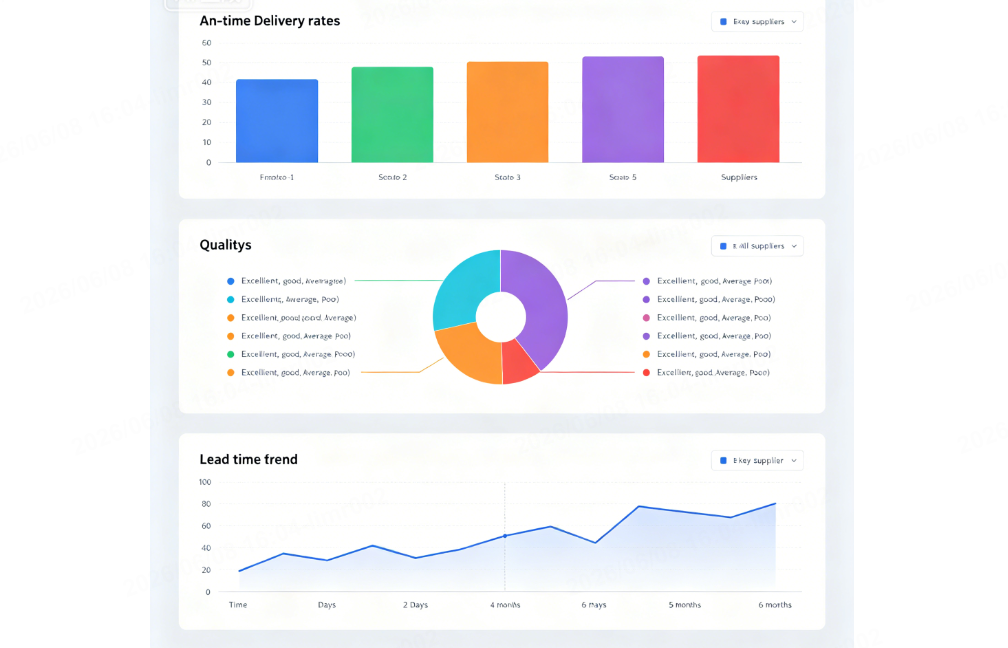
On‑Time Delivery (OTD) rate measures the percentage of orders delivered by or before the agreed due date. A high OTD rate signals a reliable supplier, while persistent delays may require reassessing the relationship.
What to track: On‑time delivery, lead time consistency, order accuracy
Cost Competitiveness
Cost variance — the difference between agreed pricing and actual costs — helps identify unexpected price increases. Beyond unit price, savvy buyers evaluate total cost of ownership, including logistics, customs clearance, and potential quality‑related expenses.
What to track: Price competitiveness, cost transparency, total cost of ownership
Responsiveness and Communication
Supplier responsiveness tracks how quickly and effectively suppliers address inquiries, resolve issues, and adapt to changes. This is especially critical when sourcing across time zones and language barriers.
What to track: Response time to inquiries, problem‑solving capability, communication consistency
Compliance and Risk
Compliance rate measures adherence to contractual terms, quality standards, and regulatory requirements. In China sourcing, due diligence must account for the difference between trading companies and actual manufacturers, as well as local certification regimes such as CCC.
What to track: Regulatory compliance, financial stability, ethical sourcing practices
Suggested Image: A five‑pillar infographic titled “The 5 Pillars of Supplier Performance Analysis” — each pillar represented by an icon (quality star, delivery truck, cost dollar, communication speech bubble, compliance shield) — placed right after this section to visually anchor the framework.
Supplier Scorecards: Your Roadmap to Data‑Driven Decisions
A supplier scorecard is a structured evaluation tool that procurement organizations use for systematic measurement and monitoring of supplier performance. Unlike one‑time assessments, a scorecard provides continuous visibility into supplier trends and their impact on business outcomes.
Common scorecard types include:
| Scorecard Type | Focus | Best For |
|---|---|---|
| Performance Scorecard | Operational execution (OTD, defect rate, order accuracy) | High‑volume or tactical suppliers |
| Compliance Scorecard | Regulatory adherence, ethical standards, sustainability | Governance‑critical relationships |
| Strategic Partnership Scorecard | Innovation, collaboration, value creation | Long‑term strategic partners |
Effective scorecards typically assign weights based on strategic importance:
- Quality: 30–40%
- Cost: 25–35%
- Delivery performance: 20–25%
- Service and innovation: 10–20%
Real‑World Pain Points: What Global Buyers Say About Sourcing from China
Through my consulting work and direct feedback from LooperBuy platform users, I’ve identified four recurring challenges that make supplier performance analysis particularly difficult for international buyers:
“When purchasing Chinese goods overseas, prices are much higher than buying directly on 1688 — it‘s hard to maintain profits.”
This feedback underscores the importance of cost transparency. LooperBuy eliminates this pain point by directly connecting with China’s 1688.com supply chain, enabling overseas businesses to source at factory prices without middlemen markups.
“I can‘t register on 1688 without Chinese ID credentials. Isn’t there another way to distribute Chinese products in my market?”
This is a common barrier. LooperBuy provides a seamless gateway for international buyers to access 1688‘s product catalog without requiring local registration — a critical enabler for effective supplier discovery.
“I’ve selected products, but without a Chinese bank account or RMB, how can I pay in foreign currency?”
Payment friction directly impacts supplier relationship management. LooperBuy supports multiple foreign currencies (USD, EUR, GBP, etc.), allowing buyers to complete transactions without setting up Chinese bank accounts or converting currency.
“I need to arrange local forwarding for my goods, but I don‘t know how — it’s incredibly frustrating.”
Logistics complexity often obscures true supplier delivery performance. LooperBuy‘s integrated logistics network — partnering with multiple international carriers for air, sea, and land shipping — ensures goods arrive safely and on time, with real‑time order tracking.
Suggested Image: A customer quote testimonial graphic featuring 2–3 of the above user comments alongside LooperBuy’s solution icons — placed before or after this pain‑point section to humanize the analysis framework with real voices.
How LooperBuy Enables Supplier Performance Analysis for Global Buyers
As a one‑stop B2B sourcing platform launched in 2024, LooperBuy is designed specifically to help overseas small and medium‑sized businesses significantly lower the barriers to entry and operational costs of global supply chain services. Through strategic partnerships with 1688.com and LianLian Global‘s payment network, LooperBuy unlocks Chinese supply chain advantages for a wider range of international merchants.
Here’s how LooperBuy supports each pillar of supplier performance analysis:
| Pillar | LooperBuy Enablement |
|---|---|
| Quality | Direct access to vetted 1688 suppliers with factory‑direct pricing and transparent quality standards |
| Delivery | Integrated logistics with multiple carriers — choose air, sea, or land shipping with real‑time tracking |
| Cost | No hidden fees, multi‑currency payment support, elimination of middleman markups |
| Responsiveness | Streamlined platform communication reducing language and time‑zone friction |
| Compliance | Access to regulated supplier ecosystem through 1688 integration |
A Step‑by‑Step Framework for Implementing Supplier Performance Analysis
Based on my experience working with global procurement teams, here is a practical framework to implement supplier performance analysis in your organization:
Step 1: Define Your Metrics and Weightings
Align with your business objectives. Identify what‘s most important — quality, delivery, cost, or service — and assign weightings accordingly. For critical components, quality may require a 40% weighting; for standard materials, cost competitiveness might take priority.
Step 2: Establish Data Collection Processes
Gather data from multiple sources: ERP systems, quality management systems, and direct supplier feedback. On the LooperBuy platform, order history, delivery tracking, and communication logs are automatically consolidated for easy analysis.
Step 3: Conduct Regular Evaluations
Create scorecards on a monthly or quarterly basis. Share results with relevant stakeholders and hold supplier meetings to define improvement measures.
Step 4: Drive Continuous Improvement
Use evaluation results to identify top‑performing suppliers, address underperformance issues, and support strategic decisions about renewals and negotiations.
The Bottom Line: Analytics, Not Intuition
Supplier performance analysis transforms procurement from a reactive cost center into a strategic driver of value. By systematically tracking quality, delivery, cost, responsiveness, and compliance, you gain the visibility needed to build a resilient, high‑performing supply chain.
Platforms like LooperBuy reduce the friction of implementing these practices when sourcing from China — eliminating registration barriers, enabling multi‑currency payments, providing logistics visibility, and offering direct factory pricing. Whether you‘re a wholesaler, brand owner, or manufacturer, integrating structured supplier performance analysis into your procurement workflow is no longer optional. It’s your competitive advantage.
References
- Tacto.ai. (2026, April 1). Supplier Scorecard: Definition, KPIs, and implementation in procurement. https://www.tacto.ai/en/procurement-glossary/supplier-scorecard
- SourceDay. (2024). Top 10 Supplier KPIs to Track. https://sourceday.com
- Ramp. (2025, August 29). How to Use a Supplier Scorecard: Template & Best Practices. https://ramp.com/blog/supplier-scorecard-metrics
- Amazon Business. (2025, November 26). How to build a vendor scorecard for procurement excellence. https://business.amazon.com/en/blog/vendor-scorecard
- Ivalua. (2025, October 15). Vendor Scorecards: Complete Guide For Procurement Teams. https://www.ivalua.com/blog/vendor-scorecard/
- SignalX. (2026, January 19). China Supplier Due Diligence: Complete 2026 Guide for Verification, Risk & Compliance. https://signalx.ai/china-supplier-due-diligence/
- LooperBuy. (2025). Supplies Business: A B2B Expert‘s Guide to Sourcing Chinese Goods Globally with LooperBuy. https://blog.looperbuy.com/supplies-business-a-b2b-experts-guide-to-sourcing-chinese-goods-globally-with-looperbuy.html
- LooperBuy. (2025). LooperBuy Sourcing Platform — Customer Feedback & Service Overview. LooperBuy Official Blog.
- LooperBuy. (2025). 连连国际宣布与LooperBuy达成合作 [Press release]. https://www.100ec.cn/
- LooperBuy. (2025). 海外商家跨境采购不再难: LooperBuy一站式线上采购平台. LooperBuy Official WeChat.
FAQ (Frequently Asked Questions)
Q1: What is supplier performance analysis and why is it important for B2B sourcing?
Supplier performance analysis is the systematic evaluation of suppliers based on key metrics like quality, delivery timeliness, cost competitiveness, and compliance. It helps procurement teams make data‑driven decisions, reduce risks, and build long‑term supplier partnerships that drive continuous improvement.
Q2: What are the most critical KPIs to track when evaluating Chinese suppliers?
The most critical KPIs include On‑Time Delivery Rate (OTD), Defect Rate (PPM), Cost Variance, Lead Time, Supplier Responsiveness, and Compliance Rate. A structured supplier scorecard typically weighs quality at 30‑40%, cost at 25‑35%, delivery at 20‑25%, and service/innovation at 10‑20%.
Q3: How can LooperBuy help with supplier performance analysis for international buyers?
LooperBuy provides direct access to China’s 1688 supplier ecosystem, eliminating middlemen for factory‑direct pricing. The platform supports multi‑currency payments, integrates international logistics with real‑time tracking, and removes registration barriers — making it easier to consistently evaluate supplier performance across orders.
Q4: What are the biggest risks when sourcing from China without proper supplier evaluation?
Common risks include partnering with fake or shell companies, misrepresented production capacity, quality failures due to inadequate quality control, intellectual property leakage, and payment fraud. China‑specific due diligence — verifying business licenses, financial health, and local certifications — is essential to mitigate these risks.
Q5: How often should supplier performance analysis be conducted?
Best practices recommend monthly or quarterly scorecard creation, followed by communication of results to relevant stakeholders and suppliers. This regular cadence enables continuous improvement, early risk identification, and data‑driven contract negotiations.
Article Brief (300 characters)
Learn how to conduct effective supplier performance analysis when sourcing from China. This expert guide covers key KPIs, supplier scorecard frameworks, real customer pain points, and how LooperBuy‘s one‑stop B2B platform helps global buyers reduce risks and build resilient supply chains.
Hot Tags: supplier performance analysis, B2B sourcing China, supplier scorecard, supplier KPIs, Chinese supplier evaluation, supplier risk management, global procurement, LooperBuy, B2B platform, sourcing from China