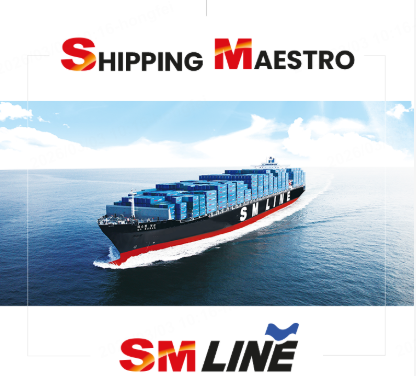
The landscape of international trade is an intricate web of logistics, regulations, and technological advancements that dictate the flow of goods across the globe. At the heart of this industry, especially within the vital trade lanes connecting the East and the West, companies like Sino-Global Shipping America have played a pivotal role. Founded at the dawn of the 21st century, this organization emerged as a specialized provider of shipping agency and freight logistics services, carving out a niche in the highly competitive trans-Pacific market. By understanding the trajectory of such a firm, one gains a deeper insight into how the shipping industry has transformed from a labor-intensive, manual sector into a data-driven, technologically sophisticated engine of global commerce.
Table of Contents
The Genesis of Sino-Global Shipping America and Its Role in Global Trade
The story of Sino-Global Shipping America began in 2001, a year that marked a significant turning point for global trade with China’s entry into the World Trade Organization. The company was established in Virginia, USA, with a clear vision: to bridge the gap between ship owners and the complex regulatory and operational environments of international ports. In its early years, the firm operated primarily as a non-asset-based provider, meaning it did not own the massive container ships or the sprawling warehouses itself, but rather specialized in the intellectual and operational expertise required to move cargo efficiently.
Founding and Early Focus on the Trans-Pacific Corridor
From its inception, the strategic focus was on the trade relationship between the United States and the People’s Republic of China. This corridor is arguably the most significant economic artery in the world, facilitating the movement of everything from raw materials and industrial machinery to consumer electronics and apparel. Sino-Global Shipping America positioned itself as an essential intermediary, providing the local knowledge and administrative support necessary for foreign vessels to navigate Chinese waters and vice versa. This early focus allowed the company to build deep-rooted relationships with port authorities, customs officials, and major shipping lines, establishing a reputation for reliability in a sector where delays can cost millions of dollars.
Establishing a Footprint in Major Chinese Ports
As the volume of Chinese exports surged, the demand for sophisticated shipping agency services grew exponentially. Sino-Global expanded its reach by establishing subsidiaries and operational hubs in key locations such as Hong Kong, Shanghai, and Ningbo. These ports serve as the gateways to the world’s manufacturing heartlands, and having a dedicated presence there allowed the company to offer real-time support to its clients. The ability to coordinate port calls, manage cargo documentation, and ensure compliance with local maritime laws became the bedrock of their business model. This geographical expansion was not merely about physical locations but about creating a network of expertise that could handle the nuances of different maritime jurisdictions.
Comprehensive Service Portfolio and Operational Framework
To survive and thrive in the logistics industry, a company must offer more than just a single service. Sino-Global Shipping America recognized this early on and diversified its portfolio to cover multiple stages of the supply chain. By evolving into an integrated solution provider, they were able to offer tailored services that addressed the specific pain points of their diverse clientele, which included ship owners, operators, and cargo importers.
Shipping Agency and Port Logistics Services
The core of the company’s operations for many years was its shipping agency segment. When a vessel enters a foreign port, it requires a local representative to handle a multitude of tasks: from arranging pilots and tugs to coordinating with health and immigration authorities. Sino-Global’s team acted as the “ground crew” for these massive ocean-going vessels. Beyond simple administrative tasks, they provided port logistics services that included coordinating the loading and unloading of cargo, managing ship repairs, and overseeing the procurement of fuel and supplies. This high level of coordination ensured that “laytime”—the period a ship stays in port—was minimized, thereby maximizing the vessel’s profitability for its owners.
Freight Forwarding and Inland Transportation Solutions
Recognizing that the shipping journey does not end at the port, Sino-Global Shipping America expanded into freight forwarding and inland transportation. This shift allowed them to manage the movement of goods from the factory floor in inland China to the final destination in a U.S. warehouse. Freight forwarding involves the complex task of booking space on various transport modes, including air, sea, and rail, and consolidating shipments to lower costs. By integrating inland transportation into their offerings, the company provided a “last-mile” solution, utilizing a network of trucking partners to ensure that cargo reached its final destination safely and on time. This end-to-end service model became increasingly attractive to small and medium-sized enterprises that lacked the internal logistics departments to manage such complex operations.
The Digital Shift: Integrating Technology into Maritime Operations
As the 21st century progressed, the shipping industry began to face new challenges that traditional logistics models could not solve alone. Issues such as lack of transparency in the supply chain, high administrative costs due to paper-based documentation, and the need for better data security led to a period of intense digital transformation. Sino-Global Shipping America was at the forefront of this shift, eventually transitioning its focus toward technological solutions that could revolutionize how shipping is managed.
The Adoption of Blockchain for Supply Chain Transparency
One of the most significant technological leaps taken by the company was the exploration and integration of blockchain technology. In an industry characterized by a vast number of stakeholders—shippers, carriers, customs, banks, and consignees—maintaining a single, immutable record of a shipment’s progress is incredibly valuable. Blockchain offers a decentralized ledger where every transaction and document can be recorded securely. For a company like Sino-Global, using blockchain meant they could offer their clients unprecedented transparency. It reduced the risk of fraud, eliminated the need for many physical documents, and allowed for the real-time tracking of goods across different transport modes. This move wasn’t just about following a trend; it was a strategic effort to solve the “trust” problem in international trade.
Transitioning from Traditional Logistics to Singularity Future Technology
The culmination of this technological pivot led to a major corporate rebranding. Recognizing that their future lay in the intersection of logistics and high-tech, the company transitioned to become Singularity Future Technology. This change reflected a broader mandate to explore not only blockchain but also other “singularity” technologies like artificial intelligence and crypto-mining infrastructure. While the name changed, the heritage of Sino-Global Shipping America remained the foundation. The logistics expertise gained over two decades provided the real-world context needed to build digital tools that actually work for the industry. This evolution from a traditional shipping agency to a tech-enabled logistics firm is a microcosm of the wider trend in the global economy where software and data are becoming the most valuable assets.
Market Dynamics and the Competitive Landscape of Shipping
The maritime industry is notoriously cyclical, heavily influenced by global GDP growth, geopolitical tensions, and fluctuations in fuel prices. Sino-Global Shipping America had to navigate these turbulent waters by remaining agile and making strategic decisions based on market intelligence. Understanding the competitive landscape required a deep analysis of both established giants and nimble, tech-first startups.
Impact of Global Economic Fluctuations on Logistics
The logistics sector is often the “canary in the coal mine” for the global economy. When consumer demand in the West slows down, the impact is immediately felt in the trans-Pacific shipping lanes. Throughout its history, Sino-Global had to weather several economic storms, including the 2008 financial crisis and the more recent disruptions caused by the global pandemic. During times of crisis, the company shifted its focus toward efficiency and cost-saving measures for its clients. The volatility of freight rates—which can triple or drop by half in a matter of months—required a sophisticated approach to contract management and capacity planning. By maintaining a non-asset-based model, the company was able to stay lean and adjust its operations more quickly than competitors burdened by high capital expenditures.
Strategic Partnerships and Expansion in North America
To strengthen its position, the company actively sought out strategic partnerships and acquisitions. For instance, expanding freight forwarding operations in the U.S. through the acquisition of established logistics providers allowed them to tap into new customer bases and improve their service network. These partnerships weren’t limited to other logistics firms; they also included collaborations with technology companies to enhance their digital platforms. In North America, the focus shifted toward high-growth areas such as e-commerce logistics. As more consumers turned to online shopping, the demand for fast, reliable international shipping grew, and Sino-Global’s ability to handle complex cross-border e-commerce shipments became a significant competitive advantage.
Future Outlook and Sustainability in Modern Shipping
Looking ahead, the shipping industry faces its biggest challenge yet: the transition to a sustainable, low-carbon future. The maritime sector is a significant contributor to global carbon emissions, and there is increasing pressure from regulators and consumers alike to “decarbonize” the supply chain. Companies that once identified solely with shipping agency and logistics must now become leaders in environmental stewardship.
Green Shipping Corridors and Environmental Initiatives
One of the most exciting developments in recent years is the concept of “Green Shipping Corridors.” These are specific trade routes between major port hubs where zero-emission fuels and green technologies are prioritized. For a company with deep ties to the California-Shanghai route, participating in these initiatives is essential. The shift toward sustainable fuels, such as green ammonia or methanol, and the implementation of energy-efficient port operations are no longer optional. By aligning with global sustainability goals, the legacy of Sino-Global Shipping America continues through its commitment to environmental responsibility. This includes helping clients navigate new environmental regulations and choosing carriers that prioritize carbon-neutral transport.
The Future of Integrated Freight Management
The future of freight management lies in total integration. We are moving toward a world where the physical movement of goods and the digital flow of information are seamless. The evolution of Sino-Global into a tech-centric entity suggests that the next generation of logistics providers will be as much about data science as they are about ocean freight. Predictive analytics will be used to anticipate port congestion before it happens, and AI-driven systems will automatically optimize shipping routes to save both time and fuel. In this future, the foundational work of managing ships and ports remains the core, but it is enhanced by a digital layer that ensures maximum efficiency.
The journey of Sino-Global Shipping America is a testament to the necessity of adaptation in a rapidly changing world. From its roots as a specialized shipping agency in the early 2000s to its transformation into a technology-driven logistics innovator, the company has consistently evolved to meet the needs of the global marketplace. By successfully navigating the complexities of the trans-Pacific trade, embracing the digital revolution, and preparing for a sustainable future, it has remained a relevant and vital player in the world of international commerce. The lessons learned from its history provide a valuable roadmap for any organization looking to thrive in the interconnected and ever-evolving landscape of global logistics.
Conclusion
The evolution of Sino-Global Shipping America reflects the broader transformation of the global logistics industry over the past two decades. What began as a traditional shipping agency serving the burgeoning China-US trade corridor has matured into a sophisticated, tech-enabled enterprise capable of navigating both physical and digital supply chains. By diversifying its service portfolio—from port logistics to freight forwarding and eventually to blockchain integration—the company demonstrated the critical importance of agility and technological adoption. As the industry moves toward greater transparency and environmental sustainability, the foundations laid by Sino-Global continue to influence how goods are moved, tracked, and managed on a global scale. Ultimately, the company’s story highlights that success in international trade is not just about moving cargo, but about mastering the flow of information and adapting to the relentless pace of global economic and technological change.
Experience the pinnacle of global trade efficiency by sourcing premium international products through our seamless, high-speed logistics network at https://looperbuy.com/.
Abstract
This article provides a comprehensive analysis of Sino-Global Shipping America, exploring its founding in 2001 and its strategic evolution within the global logistics industry. It details the company’s transition from a traditional shipping agency to a tech-enabled firm integrated with blockchain and digital solutions. The text examines core service segments, market dynamics in the trans-Pacific trade corridor, and the company’s rebranding to Singularity Future Technology. Finally, it addresses future trends such as green shipping corridors and the role of data in modern freight management.
Related Questions & Answers
· What was the original core business of Sino-Global Shipping America?
The company’s original core business was providing shipping agency services for foreign vessels entering and departing from major ports, primarily focusing on the trade routes between the United States and China. This included handling port calls, customs documentation, and logistics coordination.
· Why did the company decide to rebrand to Singularity Future Technology?
The rebranding was a strategic move to reflect the company’s shift in focus from traditional maritime logistics toward a broader technology-driven mandate. This includes the integration of blockchain technology, crypto-mining infrastructure, and other high-tech solutions into their logistics and operational framework.
· How does a non-asset-based logistics model benefit a company like Sino-Global?
A non-asset-based model allows the company to remain lean and agile. Instead of owning ships or trucks, they focus on intellectual property and operational expertise, which reduces capital expenditures and allows them to adjust quickly to market fluctuations and economic cycles.
· What role does blockchain play in the company’s current logistics strategy?
Blockchain is used to enhance transparency and security across the supply chain. It provides an immutable ledger for tracking shipments, managing documents digitally, and reducing the risk of fraud or administrative errors, which are common in traditional paper-based shipping processes.
· What are “Green Shipping Corridors,” and why are they important for the company?
Green Shipping Corridors are specific trade routes focused on zero-emission shipping. They are important because they align with global environmental regulations and sustainability goals, ensuring that logistics providers like the legacy Sino-Global remain compliant and competitive in a decarbonizing global economy.
Hot Tags:
Sino-Global Shipping America; Singularity Future Technology; Global Logistics; Freight Forwarding; Shipping Agency; Trans-Pacific Trade; SINO Stock; NASDAQ SINO; Blockchain Shipping; Supply Chain Management; Port Operations; International Trade; Maritime Industry; Digital Transformation; Crypto Mining Logistics; Logistics Technology; E-commerce Shipping; Green Shipping; Cargo Handling; Freight Management; Inland Transportation; Shipping Stocks; Maritime Regulations; Supply Chain Transparency; Ocean Freight; Air Freight; China-US Trade; Logistics Solutions; Warehousing Services; Sustainable Shipping.