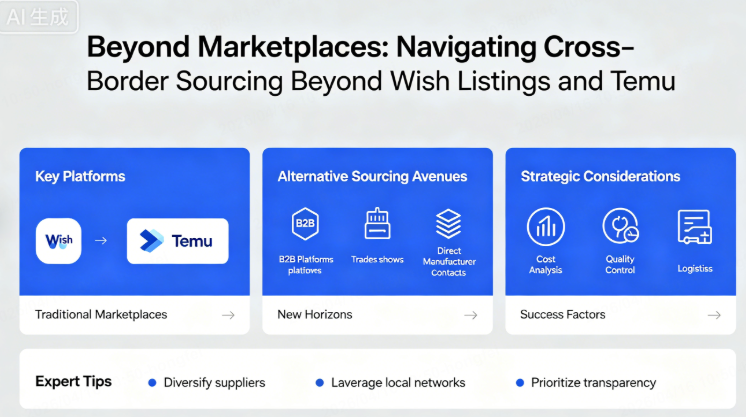
The landscape of global e-commerce has undergone a seismic shift since the early dominance of platforms like Wish [12]. For years, businesses relied on Wish listings to tap into low-cost, direct-to-consumer goods from China. However, as industry experts observe, the model that once favored “thrill-of-discovery” shopping has struggled to maintain profitability and user trust against more agile, infrastructure-led competitors like Temu [10, 15, 17].
For modern B2B professionals, the question is no longer just “which platform is better for retail bargains,” but rather, “how can I reliably source high-quality products at scale for my business?” This guide explores the evolution of these marketplaces, the structural differences in their operations, and why forward-thinking companies are shifting toward professional, one-stop B2B sourcing platforms like LooperBuy.
Table of Contents
The Evolution of Low-Cost Marketplaces: From Wish to Temu
To understand today’s sourcing landscape, we must look at the diverging trajectories of legacy platforms and modern giants [4].
- The Rise and Fall of the Wish Model: Founded in 2010, Wish revolutionized access to Chinese manufacturing for individual consumers [12]. Its growth was fueled by aggressive marketing and ultra-low pricing [12, 17]. However, it faced immense challenges regarding product quality, long shipping times, and inconsistent customer service—critical friction points for professional buyers [12].
- The Temu Disruptor: Temu entered the market with a fundamentally different approach: structural cost dominance [5]. By leveraging Pinduoduo’s massive, profitable infrastructure, Temu implemented loss-leading strategies, highly effective gamified user experiences, and rigorous, algorithmic-driven supply chain management [5, 11, 15].
Comparison: Marketplace Dynamics in 2026
Understanding these differences is vital for any brand or wholesaler mapping out their supply chain.
| Feature | Legacy Models (e.g., Wish) | Modern Models (e.g., Temu) |
|---|---|---|
| Primary Focus | B2C “Discovery” Shopping [12] | B2C Gamified Retail & High Retention [5, 11] |
| Supply Chain | Fragmented, variable quality [12] | Integrated, high-speed, structural focus [5, 16] |
| Target Audience | Individual budget shoppers [12] | Mass-market consumer reach [11] |
| Professional Utility | Low (unreliable consistency) [12] | Moderate (high speed, but B2C-centric) [3, 8] |
The Structural Deficiencies of B2C Platforms for B2B Procurement
While platforms like Temu have improved upon the shipping and quality issues that plagued early Wish listings, they remain optimized for consumer retail, not professional wholesale [3, 16].
1. The Scalability Barrier
Consumer marketplaces are designed for high-frequency, low-volume transactions. When a B2B buyer attempts to scale, they hit significant walls:
- Lack of Bulk Documentation: Export/import documentation required for customs clearance is often missing or insufficient in B2C transactions.
- Limited Negotiation: There is no mechanism to negotiate volume pricing or custom manufacturing specifications.
- Inventory Predictability: B2C platforms are inventory-light, making them unreliable for long-term supply chain planning where stock consistency is paramount.
2. Supply Chain Opacity and Risk
Relying on B2C platforms makes it nearly impossible to audit factory quality or ensure intellectual property protection. When sourcing from a consumer app, the buyer often deals with an intermediary who has no formal relationship with the actual manufacturer. This lack of transparency leads to:
- Quality Drift: Initial samples may look great, but mass production often fails to meet the same standards.
- Compliance Gaps: Failure to meet regional safety, chemical (e.g., REACH, RoHS), or electrical standards can lead to costly customs seizures and legal risks.
3. The Hidden Cost of “Low Prices”
The “low price” seen by consumers often includes high markup buffers or shipping inefficiencies. For a wholesaler, these “B2C discounts” disappear when factored against the cost of return logistics, product failure rates, and the inability to reclaim VAT or import duties effectively.
The LooperBuy Advantage: Professional One-Stop Sourcing
For brand owners, wholesalers, and manufacturers, the transition from consumer apps to a dedicated One-Stop B2B Sourcing Platform like LooperBuy is a strategic necessity. We bridge the gap between global demand and Chinese manufacturing excellence.
Why Global Businesses Choose LooperBuy
- Direct Factory Access: We facilitate a direct connection to verified manufacturers. You bypass the layers of middlemen and the “B2C markup” that inflates costs on consumer-only platforms [5].
- Comprehensive Product Ecosystem: Our platform curates a vast, high-quality catalog ranging from niche technical components to high-demand consumer goods. We ensure a consistent flow of inventory, something traditional consumer apps struggle to maintain.
- Global Logistics Efficiency: Unlike B2C parcel-shipping models, we offer logistics solutions optimized for B2B volume. Whether by sea, air, or rail, we focus on cost-efficiency and supply chain reliability.
- End-to-End Enterprise Support: From initial product discovery to quality assurance inspections and customs brokerage, we provide the full-service ecosystem that professional procurement teams require.
Expert Insight: Mastering Your 2026 Sourcing Strategy
As the cross-border e-commerce market matures, the competitive advantage will not go to those who find the cheapest retail price, but to those who build resilient, cost-efficient supply chains [18, 20].
- Shift From Price-Hunting to Value-Engineering: Instead of scouring Wish listings for the lowest unit cost, focus on the Total Landed Cost. This includes freight, insurance, customs, and—most importantly—the cost of goods that don’t meet your quality standards.
- Demand Full Transparency: A professional buyer must know where their products are made, how they are made, and if the factory adheres to ethical labor and environmental standards.
- Leverage Professional Sourcing Partners: Using a dedicated B2B platform allows you to treat your procurement like a business investment rather than an impulsive purchase.
Navigating Future Trends: AI and Real-Time Sourcing
The next phase of global sourcing is being driven by Artificial Intelligence. Platforms like LooperBuy are integrating AI to predict demand shifts and optimize procurement routes. By analyzing historical data and global trade flows, businesses can now make proactive rather than reactive purchasing decisions. This transition from “static buying” to “dynamic, AI-supported sourcing” is the final frontier in establishing a sustainable advantage in today’s volatile market.
References
- [1] Temu vs. Wish: The Worthy Guide 2026
- [2] Compare AliExpress, Temu, and Wish in 2026 (Slashdot)
- [3] Why Wish Failed While Temu Thrived (Lengow Blog)
- [4] What is the Competitive Landscape of Wish? (Pestel-analysis)
- [5] Business Model of Temu: Strategy & Growth 2026 (Miracuves)
Frequently Asked Questions (FAQ)
1. Is it still worth using Wish listings for sourcing in 2026?
No. Industry experts largely view the legacy models of consumer-focused marketplaces as unreliable for professional B2B sourcing due to inconsistent quality and lack of logistical support [12].
2. Why is Temu faster than the old Wish model?
Temu utilizes integrated, infrastructure-led logistics and algorithmic supply chain management, whereas legacy platforms often relied on fragmented third-party sellers without standardized shipping [5, 16].
3. What makes LooperBuy different from consumer platforms like Temu?
LooperBuy is a dedicated B2B platform designed for wholesalers and brand owners, focusing on direct factory procurement, volume logistics, and enterprise-grade support, unlike B2C platforms [5].
4. How can I ensure product quality when sourcing from China?
The most effective way is to partner with a B2B sourcing platform that offers pre-shipment inspection services and maintains direct, vetted relationships with manufacturers.
5. How does the current “C-commerce” trend affect my business?
The surge in ultra-low-priced goods from platforms like Temu is pressuring the retail market [18]. For B2B businesses, the best response is to focus on quality, brand value, and reliable supply chain infrastructure rather than competing on consumer-level price.
Summary:
This article critically evaluates the transition from legacy consumer marketplaces like Wish to the infrastructure-led models of Temu, highlighting the risks of B2C platforms for B2B procurement. It positions LooperBuy as the professional, comprehensive one-stop solution for reliable B2B sourcing.
Hot tags: B2B sourcing platform, wholesale from China, direct factory procurement, global supply chain management, bulk product sourcing, B2B e-commerce solutions, cross-border trade, manufacturing outsourcing, wholesale distribution services, reliable Chinese suppliers.