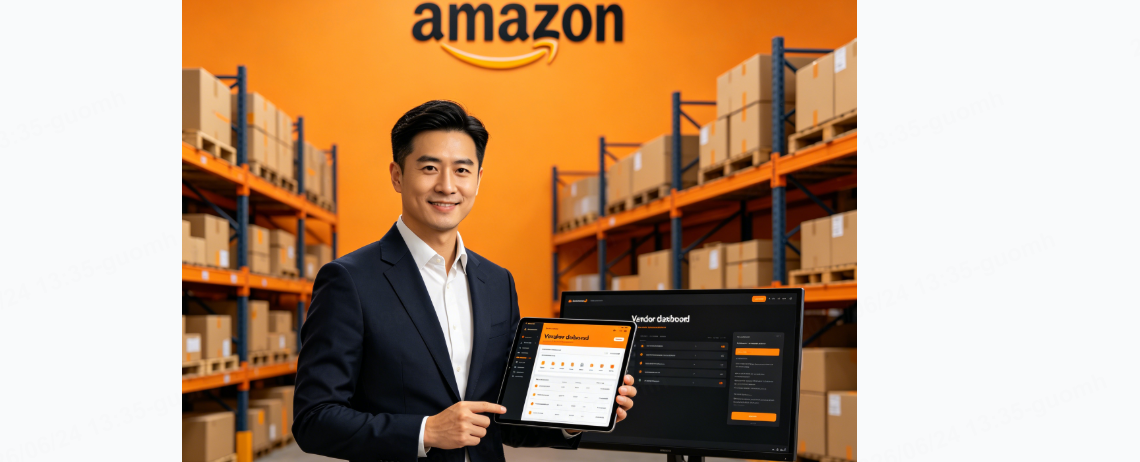
The email arrives on a Tuesday. Amazon wants to buy directly from your brand. For most business owners, the first reaction is a mix of validation and excitement — as if the largest retailer on earth just put your brand on its approved list. But here is the reality that most articles do not tell you: how to become an Amazon vendor is not a question of filling out an application form. There is no URL to visit, no waitlist to join, and no human reviewer waiting for your submission.
After working with dozens of brands navigating the Amazon ecosystem, I have seen too many businesses spend months optimizing their Seller Central listings, hoping Amazon will notice and send the golden invitation. Passive optimization is the slowest possible path to becoming an Amazon vendor — and the one most likely to produce disappointment. This guide, grounded in real data and expert insights, breaks down exactly what it takes to become an Amazon vendor in 2026, whether it is the right move for your business, and how LooperBuy can help you source the products Amazon wants to buy.
Table of Contents
What Does It Actually Mean to Become an Amazon Vendor?
Before discussing how to become an Amazon vendor, let us clarify what the program actually is. Amazon Vendor Central is the platform through which brands and manufacturers sell directly to Amazon — not to consumers. This is the first-party (1P) model. You sell your products wholesale to Amazon at a negotiated price. Amazon then resells them under the “Ships from and sold by Amazon” label, sets the retail price, handles all fulfillment and customer service, and manages returns.
The alternative is Seller Central, the third-party (3P) model, where you sell directly to customers, control your pricing, manage your own inventory (or use FBA), and own the customer relationship.
The core difference is simple: on Seller Central, you are a retailer selling to consumers. On Vendor Central, Amazon is your customer.
Vendor Central vs. Seller Central: The Decision That Changes Everything
Understanding the differences between these two models is essential before you decide how to become an Amazon vendor. Here is what the data shows:
Pricing Control: On Seller Central, you control your retail prices in every marketplace. On Vendor Central, Amazon controls the end-customer price. Amazon can — and does — discount products below your cost of production if it matches a competitor or pursues category growth. You have no veto.
Inventory Risk: In Vendor Central, Amazon absorbs inventory risk. In Seller Central, you hold the inventory until it sells.
Payment Terms: Vendors invoice Amazon and typically wait 60 to 90 days for payment. Sellers receive payments directly from customers much faster.
Profitability: According to industry experts, third-party sellers generally achieve better unit economics thanks to greater control over pricing and fewer wholesale discounts to Amazon. However, larger wholesalers with roughly $15 million or more in Amazon revenue often find the vendor route more viable.
Operational Simplicity: Vendor Central handles fulfillment, customer service, and returns — but you lose control over stock levels and availability.
The bottom line? Seller Central generally offers higher and more controllable margins. Vendor Central has higher volume potential but lower net margins.
How to Become an Amazon Vendor: The Three Real Paths to an Invitation
Vendor Central is invite-only. You cannot simply sign up. But understanding how the invitation system works is the first step in learning how to become an Amazon vendor. Access comes through one of three pathways:
1. Direct Invitation from Your Amazon Account Manager
If you have strong Seller Central history — at least three years, a 4.5-plus star rating, and annual volume exceeding $500,000 — Amazon may reach out directly. This is rare, but when it happens, it is because Amazon sees that your brand generates predictable volume and they want to consolidate you into Vendor.
2. Sponsorship from an Established Brand
A brand or distributor already selling in Vendor can sponsor you. They assume initial risk by vouching for your compliance, document validity, and operational seriousness. Amazon trusts human recommendation more than automated criteria.
3. Proactive Request with Specific Minimums
If your brand has a verified presence outside Amazon — physical storefront, certified web presence, national trademarks registered at WIPO — and you pass solvency checks, Amazon may invite you without a sponsor. This happens in fewer than 1 percent of cases.
What does not work? Filling out forms, contacting Seller Support, or waiting for a notification. Vendor Central is structurally closed to self-registration.
Non-Negotiable Requirements Before You Apply
According to Epinium data, 73 percent of rejected Vendor applications fail due to incomplete documentation or unverifiable sales history. Before you even think about how to become an Amazon vendor, verify these requirements:
- Registered Trademark Verified: You must prove the brand is yours. That means trademark registration at the national office — USPTO for the US, EUIPO for Europe, UKIPO for the UK. Amazon cross-checks your brand name against public WIPO databases.
- Active ASIN with 3-Month Minimum History: If you are coming from Seller Central, you need at least 90 days of verified sales with real ratings and reviews.
- Bank Account in an Eligible Country: Amazon Vendor pays via bank transfer. Payments go directly to an account registered under your company name — the same company on your trademark and tax registration.
- EDI Provider: Most Vendor Central programs require Electronic Data Interchange (EDI) for purchase orders, advance ship notices, and invoices. According to Epinium, 61 percent of brands arrive at registration without an EDI provider identified, delaying first purchase orders by an average of 19 days.
- Predictable Volume: While not strictly required, moving more than $50,000 across the last 90 days in Seller Central with consistent ratings significantly improves your chances.
The 2026 Updates: What Has Changed for Amazon Vendors
If you are researching how to become an Amazon vendor in 2026, you need to understand the recent changes:
Automated Chargebacks: Amazon expanded its automated compliance systems in 2024 and 2025. Catalog errors — missing attributes, invalid GTINs, off-spec images — now trigger chargebacks without human review. Chargebacks quietly erode wholesale margins by an average of 2 to 5 percent.
Hybrid 1P and 3P Strategies Are Now Mainstream: Running Vendor Central and Seller Central simultaneously has become a standard operational strategy. High-volume, margin-thin SKUs go to the 1P channel for Amazon’s logistics scale; premium products with predictable demand stay in 3P for price control. Nearly half of Amazon vendors are now also operating 3P seller accounts.
Annual Vendor Negotiations Are More Margin-Focused: For 2026, Amazon will apply logistics and fulfillment fees at the individual FNSKU level instead of the parent ASIN, meaning each variation you sell will be evaluated on its own.
Smaller Vendor Accounts Are Being Phased Out: Amazon has begun phasing out many smaller Vendor Central accounts. Vendors doing under approximately $5 to $10 million in annual Amazon business have received notifications that their 1P vendor relationship will end.
How LooperBuy Helps You Source Products for Your Amazon Vendor Journey
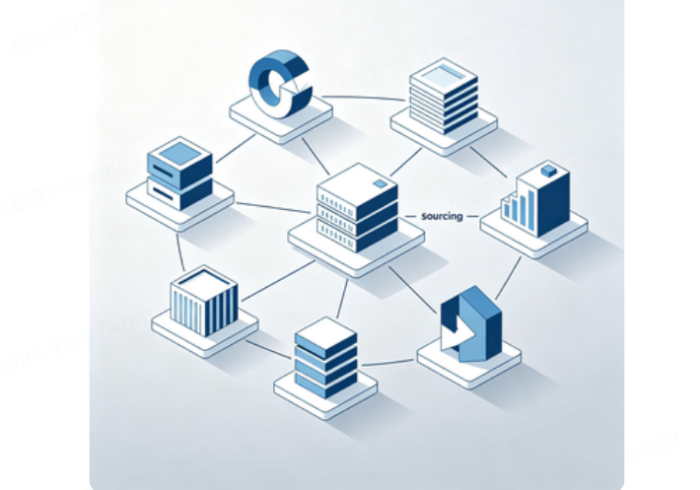
Whether you are already a Vendor Central seller or working toward that invitation, the products you source determine your success. This is where LooperBuy, a one-stop B2B sourcing platform, becomes an essential partner.
LooperBuy is a global B2B sourcing platform established in 2024, focusing on helping global merchants find quality and affordable Chinese products from 1688.com. It helps overseas small and medium-sized businesses significantly lower the entry barriers and operating costs of global supply chain services, enhancing their market competitiveness. For Amazon vendors and aspiring vendors, this means:
- Direct access to millions of Chinese products at competitive wholesale prices
- Global logistics with low shipping costs
- Multi-currency payment support through LianLian Global’s payment network
- No additional fees for sourcing and shipping
- Quality inspection and free warehousing services
Chinese suppliers offer B2B pricing that is 25 to 40 percent lower than European or North American alternatives. For Amazon vendors operating on thin wholesale margins, this cost advantage can be the difference between profitability and losses.
Whether you are sourcing high-volume SKUs for your Vendor Central relationship or testing new products through Seller Central before transitioning them to 1P, LooperBuy helps you discover, source, and ship products directly from China’s largest B2B marketplace.
Step-by-Step: How to Position Your Brand to Become an Amazon Vendor
- Build Seller Central Credibility First — Strong sales performance is the biggest factor. Keep your seller account in good standing, maintain high metrics, win the Buy Box consistently, and build strong reviews and ratings.
- Activate Brand Registry — Register your trademark and enroll in Amazon Brand Registry. This proves brand ownership and signals seriousness to Amazon’s vendor recruitment team.
- Participate in Amazon Programs — Use Fulfillment by Amazon and Amazon Vine to demonstrate your commitment to the ecosystem.
- Proactively Signal Interest — Contact your Amazon account manager if you have one. Express interest in becoming a supplier. Attend trade shows where Amazon representatives scout new vendors.
- Prepare Your Documentation — Have your trademark registration, tax identification number, banking details, and EDI provider ready before any invitation arrives.
- Consider a Hybrid Strategy — Launch new products as a 3P seller to build demand and reviews, then transition successful products to 1P once they have proven themselves.
Final Verdict: Should You Become an Amazon Vendor?
The honest answer is: it depends on your business. If you have stable, high-volume SKUs, the operational infrastructure to meet Amazon’s compliance requirements, and can absorb 60- to 90-day payment terms, Vendor Central can unlock massive scale. The “Sold by Amazon” badge signals trust to customers and can increase conversion rates.
However, if you are a growing brand that values pricing control, direct customer relationships, and faster cash flow, Seller Central is often the stronger long-term choice.
The smartest brands today are not choosing one model over the other — they are running both. A hybrid 1P and 3P strategy allows you to leverage Amazon’s logistics scale for volume SKUs while maintaining control over premium products.
Start building your brand on Seller Central. Source competitively priced products through LooperBuy. And when Amazon comes calling with that Vendor Central invitation, you will be ready.
FAQ
Q1: Can I apply to become an Amazon vendor directly?
No. Amazon Vendor Central is invite-only. There is no application form, no URL to visit, and no waitlist. Amazon must extend an invitation.
Q2: How many followers do I need to become an Amazon vendor?
Follower count is irrelevant for Vendor Central. Amazon evaluates brands based on sales performance, product quality, brand recognition, and supply chain reliability — not social media following.
Q3: What is the difference between Amazon Vendor Central and Seller Central?
Vendor Central (1P) means you sell wholesale to Amazon — Amazon is your customer. Seller Central (3P) means you sell directly to consumers on Amazon’s marketplace. You control pricing and the customer experience in Seller Central.
Q4: How long does it take to get paid as an Amazon vendor?
Vendor payment terms are typically net 30, 60, or 90 days after invoicing, depending on your negotiated agreement.
Q5: Is it better to be an Amazon vendor or a seller?
It depends on your business. Seller Central generally offers higher margins and more control. Vendor Central offers greater volume potential and operational simplicity. Many successful brands use a hybrid of both.
Article Introduction
Wondering how to become an Amazon vendor in 2026? The truth may surprise you. Amazon Vendor Central is invite-only — there is no application form. Success depends on strong Seller Central performance, brand recognition, and supply chain reliability. This guide reveals the real requirements, the three paths to an invitation, the critical differences between Vendor and Seller Central, and how LooperBuy helps you source competitively priced products from China. Whether you are aiming for that golden invitation or already a vendor, learn what actually works.
References
- Epinium. “How to Become an Amazon Vendor: What the Invite Doesn’t Tell You.” Epinium, 20 May 2026. https://epinium.com/en/blog/how-to-become-amazon-vendor/
- Epinium. “How to Join Amazon Vendor Central: Invitation Requirements, Financial Reality, and What to Negotiate.” Epinium, 1 May 2026. https://epinium.com/en/blog/how-to-join-amazon-vendor-central/
- Epinium. “How to Register for Amazon Vendor Central (And What Nobody Tells You Before You Accept).” Epinium, 5 May 2026. https://epinium.com/en/blog/how-to-register-amazon-vendor-central/
- Your Marketing People. “How Do I Get Into Amazon Vendor Central? Complete 2026 Guide.” Your Marketing People, 3 Jan. 2026. https://yourmarketingpeople.com/how-do-i-get-into-amazon-vendor-central-what-it-takes-to-get-invited/
- MerchantSpring. “Amazon Vendor vs. 3P Seller Profitability: How to Choose the Right Model.” MerchantSpring, 2 Apr. 2026. https://merchantspring.io/resources/amazon-vendor-vs-3p-seller-profitability-how-to-choose-the-right-model
- MerchantSpring. “Global Expansion via Vendor Central: Benefits, Risks, How-To.” MerchantSpring, 2 Apr. 2026. https://merchantspring.io/resources/global-expansion-via-vendor-central-benefits-risks-how-to
- PCO Studio. “Amazon Vendor Central: Everything You Need to Know.” PCO Studio, Mar. 2026. https://www.pcostudio.com/en/blog/amazon-vendor-central
- Seller Central. “What’s the Difference? Seller Central vs Vendor Central.” Amazon Seller Central Forums. https://sellercentral.amazon.com/seller-forums/discussions/t/55162f6d-7ecd-4821-9e7c-9115b9a01016
- MerchantSpring. “Why More Amazon Brands Are Rethinking Vendor Central.” MerchantSpring, 25 May 2026. https://merchantspring.io/resources/why-more-amazon-brands-are-rethinking-vendor-central
- LooperBuy. “Supplies Business: A B2B Expert’s Guide to Sourcing Chinese Goods Globally with LooperBuy.” LooperBuy Blog. https://blog.looperbuy.com/supplies-business-a-b2b-experts-guide-to-sourcing-chinese-goods-globally-with-looperbuy.html
Hot Tags
Amazon Vendor Central, become Amazon vendor, Vendor Central requirements, Amazon 1P vs 3P, Amazon Vendor application, Vendor Central invitation, Amazon wholesale supplier, first-party Amazon seller, Amazon Vendor Central 2026, B2B sourcing platform China, LooperBuy, Amazon Vendor vs Seller, Vendor Central chargebacks, hybrid 1P 3P strategy, Amazon brand registry