Traceless dropshipping helps online sellers ship products directly from suppliers without exposing supplier names, wholesale prices, or third-party branding. Learn how it works, what must remain compliant, and how cleaner fulfillment can strengthen customer trust and brand consistency.
Traceless dropshipping is a fulfillment approach in which products are shipped directly from a supplier to the customer without exposing the supplier’s name, marketplace branding, prices, or promotional inserts. The goal is not to hide legally required product or customs information—it is to make the delivery feel like it came directly from the seller’s own brand.
For modern ecommerce businesses, traceless dropshipping can turn a generic supply chain into a more consistent customer experience. It helps sellers protect their sourcing relationships, present a professional brand, and avoid the inventory, warehousing, and fulfillment workload of traditional retail.
> Important clarification: “Traceless” should never mean removing legally required country-of-origin labels, safety information, customs declarations, or accurate product documentation. It means removing unnecessary supplier-facing materials while keeping the shipment compliant.
Table of Contents
What Does Traceless Dropshipping Mean?
Traditional dropshipping allows a retailer to sell products without holding stock. When a customer places an order, the retailer forwards it to a supplier or fulfillment partner, which picks, packs, and ships the order directly to the buyer. describes dropshipping as a model in which the seller does not keep inventory and a third-party supplier fulfills the order.
Traceless dropshipping adds brand-control requirements to that process. The supplier or sourcing agent ships the correct product, but avoids including materials that reveal the upstream source.
A traceless shipment may include:
– A neutral outer parcel or packaging customized with the seller’s brand
– A branded packing slip that shows the seller’s store name and customer-support details
– No supplier invoice, wholesale pricing, factory brochure, or marketplace receipt
– No promotional cards from another retailer or platform
– Product and parcel details that remain accurate for customs, carrier, and regulatory purposes
– Optional branded inserts, thank-you cards, coupons, or product-care instructions
The term is not a formal legal classification. In practice, it describes an operational standard: the customer receives a coherent brand experience rather than evidence of a fragmented supply chain.
Why Traceless Dropshipping Matters for Online Sellers
A customer does not judge an ecommerce business only by the website or advertisements. They judge it at the moment the parcel arrives.
If the package contains a supplier invoice with a much lower price, an unfamiliar company name, or promotional material from another store, the buyer may question the seller’s reliability. That can lead to refund requests, payment disputes, negative reviews, and fewer repeat purchases.
Traceless fulfillment matters because it supports five commercial priorities:
| Business priority | How traceless dropshipping helps |
| Brand consistency | The package, packing slip, and post-purchase experience reflect the seller’s identity |
| Customer trust | Buyers are less likely to be confused by unfamiliar suppliers or conflicting prices |
| Supplier protection | Competitors and customers have fewer clues about the seller’s sourcing route |
| Operational flexibility | Sellers can test products without buying bulk inventory or running a warehouse |
| Repeat purchases | Branded packaging and inserts create a more memorable unboxing experience |
Dropshipping already reduces the need to invest in inventory and warehouse operations. That lets merchants allocate more resources to product selection, customer acquisition, and brand development. Traceless shipping extends that advantage by ensuring fulfillment does not undermine the brand-building work done before checkout.
Traceless vs. Standard vs. Branded Dropshipping
These models can overlap, but they are not identical.
| Model | Packaging and documents | Brand control | Best for |
| Standard dropshipping | Often generic; supplier documents may be included | Low | Early product testing |
| Traceless dropshipping | Supplier identity and wholesale details are excluded | Medium | Sellers protecting customer experience and sourcing relationships |
| Branded dropshipping | Custom packaging, inserts, labels, and documentation | High | Stores building long-term brand equity |
| Private-label fulfillment | Seller-owned branded product, packaging, and positioning | Very high | Established brands with validated demand |
Traceless dropshipping is often the practical bridge between testing a product and building a fully branded ecommerce business.
For example, a seller may begin by shipping a generic kitchen organizer in neutral packaging. Once the product proves demand, the seller can request a branded packing slip, a care card, and a logo sticker. Later, after sales become predictable, they may invest in custom boxes, product inserts, and private-label manufacturing.
Shopify similarly distinguishes branded dropshipping from the basic no-inventory model by emphasizing the added role of brand identity.
What Must Be Removed—and What Must Stay
A reliable fulfillment partner should understand the difference between removing supplier-facing material and concealing required information.
Materials Usually Removed
Ask your supplier or sourcing agent to exclude:
– Supplier invoices and wholesale price lists
– Marketplace receipts or platform-branded paperwork
– Factory catalogs and unsolicited promotional flyers
– Supplier business cards, QR codes, and social-media promotions
– Packaging with another retailer’s logo
– Price tags that conflict with the customer’s paid price
Information That Must Remain Accurate
Do not instruct a supplier to remove, alter, or misstate:
– Customs declarations
– Commercial invoices required for cross-border shipping
– Product safety labels and warnings
– Country-of-origin marking where required
– Accurate product descriptions, values, and HS classifications
– Carrier-required shipment information
– Legally required certifications or compliance documentation
For commercial imports into the United States, goods may need to meet requirements that include country-of-origin marking, depending on the commodity. specifically notes that commercial goods can be subject to such requirements.
This distinction is essential. Professional traceless dropshipping protects brand presentation; it does not justify inaccurate declarations or misleading origin claims.
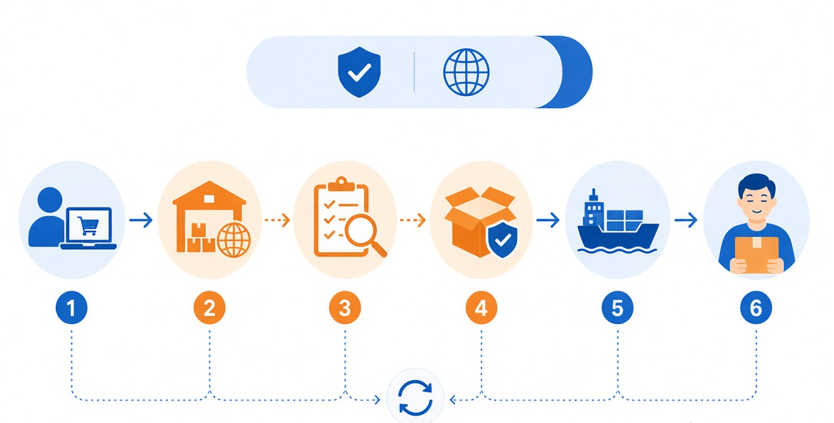
A Practical Traceless Dropshipping Workflow
The strongest programs are not based on a vague instruction such as “Do not include invoices.” They use repeatable procedures.
1. Define Your Packaging Standard
Create a short fulfillment brief before placing orders. Include:
– Whether packaging should be neutral or branded
– Which inserts are approved
– Which documents must never be placed in the parcel
– The exact wording for packing slips
– Whether price tags should be removed
– How fragile, oversized, or multi-item orders should be packed
– Required photos or quality checks before dispatch
A one-page standard reduces mistakes, especially when multiple suppliers or warehouse teams are involved.
2. Use a Branded Packing Slip
A packing slip should help the buyer identify the order without exposing upstream supplier information. Include your brand name, website, support email, order number, purchased items, and a short returns message.
Avoid inserting a document that displays the supplier’s unit cost or a name the customer does not recognize. If you sell through multiple storefronts, make sure every order is matched to the right brand before shipment.
3. Separate Customer Documents From Customs Documents
This is a common source of confusion. A package may need customs documentation attached externally or submitted electronically, while the buyer-facing parcel should contain only the documents needed for the customer experience.
Work with a fulfillment provider that can distinguish between these document flows. Ask how they handle commercial invoices, declared values, country of origin, and destination-specific rules before you launch.
4. Run a Real Test Order
Place sample orders to each major destination you serve. Review the shipment as a customer would:
1. Check the outer label and package condition.
2. Inspect every insert and document in the parcel.
3. Confirm that the product variant, quantity, and color are correct.
4. Compare delivery timing with the promise on your website.
5. Contact customer support to test the returns and communication process.
This step often identifies problems that spreadsheets cannot reveal—such as inconsistent labels, wrong inserts, poor packing, or a supplier’s promotional card left inside the box.
5. Audit Orders Regularly
Do not assume that a one-time instruction will be followed forever. Review random orders after a new product launch, supplier change, warehouse shift, or peak-season surge.
A useful quality-control checklist includes correct product, correct quantity, no supplier materials, appropriate packaging, compliant documentation, and usable tracking.
The Customer-Experience Advantage
From an ecommerce operator’s perspective, traceless fulfillment is not merely a packaging preference. It is a customer-experience control point.
Imagine two buyers who each order the same product online.
– Buyer A receives a plain parcel with an invoice from an unknown company, a lower factory price, and a promotional leaflet for another store.
– Buyer B receives a clean package, a clear packing slip from the store they purchased from, simple care instructions, and a discount code for a future order.
The product may be identical. The perceived professionalism is not.
This difference matters particularly for product categories where trust affects repeat buying: beauty accessories, pet supplies, home organization, fashion accessories, consumer electronics, gifts, and niche hobby products. A consistent arrival experience helps the seller own the customer relationship after the sale.
Risks and Limitations to Manage
Traceless dropshipping can improve the buyer experience, but it does not solve every operational challenge.
Supplier Errors Still Affect Your Brand
Even when the supplier ships directly, the customer sees your store as responsible. Late delivery, damaged goods, wrong variants, and weak packaging remain your problem to resolve.
Choose partners based on more than product price. Evaluate response speed, inventory accuracy, inspection processes, warehouse capability, shipping-line options, and dispute handling.
Branding Adds Cost and Complexity
Neutral packaging is usually easier to implement than custom boxes, printed tissue paper, branded stickers, or unique inserts. Custom materials may require minimum order quantities, storage fees, production lead time, and replenishment planning.
Start with the smallest improvement that creates a clear customer benefit. For many new sellers, a branded packing slip and compliant supplier-free parcel are more valuable than expensive custom packaging.
Legal Compliance Cannot Be Outsourced
Your supplier can help execute fulfillment, but the seller must still understand the compliance rules for target markets and product categories. Country-of-origin claims deserve special care. The U.S. Federal Trade Commission states that an unqualified “Made in USA” claim generally requires a product to be “all or virtually all” made in the United States. also applies to online marketing claims.
Never use “traceless” as a reason to make unsupported origin claims, conceal restricted goods, undervalue shipments, or remove required labels.
When Should You Use Traceless Dropshipping?
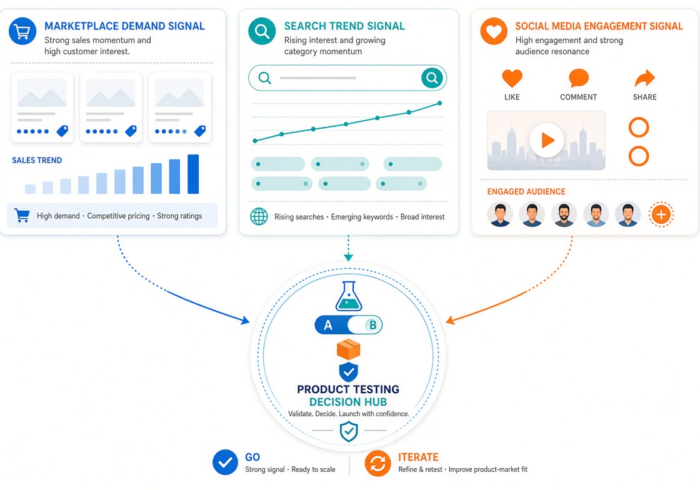
Traceless dropshipping is most useful when you have already found product-market interest and want to improve trust without committing to large inventory purchases.
It is a strong fit when:
– You sell products from more than one Chinese supplier but want one unified brand experience
– You are concerned customers may find wholesale prices or supplier names in the parcel
– You want to reduce inventory risk while validating a new niche
– You need a cleaner post-purchase experience before investing in private labeling
– You sell to markets where product presentation influences giftability or repeat purchase rates
It may be less suitable for highly regulated, customized, fragile, or high-value products unless your fulfillment partner has proven category-specific experience.
How Looperbuy Can Support a Better Fulfillment Experience
For global B2B sellers, the challenge is not simply finding products in China. It is coordinating sourcing, quality checks, packaging requirements, payment, storage, and cross-border delivery without creating unnecessary overhead.
Looperbuy can help sellers build a more controlled workflow by combining China product sourcing with order fulfillment and dropshipping support. Rather than asking each supplier to interpret separate instructions, merchants should establish a standardized fulfillment brief covering product checks, packaging, documents, inserts, and shipping preferences.
Start with a test order, not a large commitment. Define your traceless-shipping requirements, inspect the delivered parcel, and use the findings to refine the process before scaling.
> Ready to protect your customer experience? Contact Looperbuy to discuss product sourcing, supplier coordination, quality inspection, traceless fulfillment requirements, and global dropshipping options for your store.
FAQ
1. Is traceless dropshipping legal?
Yes, when it means excluding unnecessary supplier branding, invoices, and promotional materials while keeping all required customs, safety, product, and origin information accurate. Removing or falsifying required documents or labels is not compliant.
2. Does traceless dropshipping mean the package has no label?
No. Every shipment still needs carrier information, and cross-border orders may require customs information. “Traceless” refers to removing unnecessary supplier-facing clues, not shipping anonymously or without documentation.
3. Can I add my own logo to a traceless dropshipping package?
Yes. You can begin with a branded packing slip, logo sticker, thank-you card, or care insert. Once order volume is stable, consider custom bags, boxes, or private-label packaging.
4. Will traceless dropshipping prevent customers from discovering my supplier?
It reduces obvious exposure, but it cannot guarantee complete secrecy. Customers may still search product images, use reverse-image tools, or recognize products sold elsewhere. Your long-term advantage should come from product selection, service, content, community, and brand experience.
5. Does traceless dropshipping increase delivery time?
Not necessarily. Delivery time depends mainly on product availability, quality-check procedures, warehouse processing, destination, and shipping method. Custom packaging can add preparation time if materials are not already stocked.
6. What should I ask a fulfillment partner before starting?
Ask whether they can remove supplier invoices, use branded packing slips, store custom packaging, perform quality checks, provide parcel photos, support destination-specific shipping methods, and handle compliant customs documentation.
References
1. FedEx. “[What Is Dropshipping? A Comprehensive Guide].”
2. FedEx. “[Pros and Cons of Dropshipping: A Guide for Online Business].”
3. Shopify. “[Branded Dropshipping: What It Is and How To Start].”
4. U.S. Customs and Border Protection. “[Internet Purchases].”
5. U.S. Customs and Border Protection. “[Tips for New Importers and Exporters].”
6. Federal Trade Commission. “[Complying with the Made in USA Standard].”
7. TrueCommerce. “[Drop Ship 101: The Benefits of Drop Ship for Retailers].”