Learn how much money you can realistically make dropshipping in your first year, with data‑backed income ranges, a month‑by‑month roadmap, and expert tips on niches, margins, and B2B suppliers like Looperbuy so you can build a scalable, low‑risk e‑commerce business.
You can realistically make a few thousand dollars in profit in your first dropshipping year if you treat it like a serious business, not a lottery ticket, and platforms like Looperbuy can help you get there faster by removing inventory and logistics headaches. This guide walks through real‑world expectations, profit ranges, and a practical roadmap from a practitioner and industry perspective, so you can set grounded goals instead of chasing hype. [doba]
Table of Contents
What “Realistic” Dropshipping Income Really Means
Most new dropshippers overestimate how fast revenue comes and underestimate the work required. Realistic income is about consistent, defensible profit, not screenshots of peak days. [dropshiplifestyle]
In practice, many beginners see a mix of small wins and losses in the first months, then stabilize once they find a product–market fit and a reliable supplier workflow. Your real advantage comes from lower risk (no inventory), flexible testing, and lean operations, especially when you partner with a B2B sourcing platform like Looperbuy instead of trying to manage everything yourself. [zendrop]
First‑Year Dropshipping Income Benchmarks
There is no single “average,” but there are typical ranges based on effort and execution. [qikify]
Common first‑year outcomes (for serious beginners): [zendrop]
– Side‑hustle mode (5–10 hours/week):
– Net profit after 12 months often falls in the 6,000–25,000 USD range, assuming consistent testing and optimization. [qikify]
– Full‑focus mode (20+ hours/week):
– Some reach low to mid five‑figure monthly revenue by month 6–12 with 20–30% profit margins, if they pick the right niche and channels. [dropshiplifestyle]
– Casual / inconsistent effort:
– Many people stay near break‑even or small losses, especially if they jump between products or quit testing too early. [expertways]
Typical profit margins for dropshipping sit around 20–30%, though some operators report up to 40% on tightly optimized products and niches. [zendrop]
> Key takeaway: Your first year is usually about building the machine, not maximizing profit. Profit appears as a result of disciplined testing, not luck.
Month‑by‑Month: How Earnings Usually Evolve
Instead of a flat number, think of your first year as three distinct phases.
Months 1–3: Setup, Testing, Learning
In this phase you:
– Choose a niche and validate demand
– Set up your store, basic funnels, and tracking
– Test 3–10 products with small ad budgets or organic marketing
Financially, these months are often break‑even or slightly negative because you’re paying for tools, testing ads, and making beginner mistakes. [expertways]
If you’re doing well in this phase:
– You see your first consistent sales
– You start to identify which product and channel combo actually works
Months 4–6: First Consistent Profits
By now you have:
– A product that converts above your breakeven ROAS
– Clear customer feedback from reviews, returns, and support tickets
– A better sense of your target customer and messaging
At this stage, it’s common to see a few hundred to a few thousand dollars per month in profit, assuming active optimization of ads and funnels. [dropshiplifestyle]
Months 7–12: Scaling and Systemization
This is where serious operators pull ahead. You:
– Double down on profitable products and pause weak ones
– Negotiate better terms with suppliers or move to better B2B platforms
– Add upsells, bundles, email flows, and remarketing
Well‑run stores can reach five‑figure monthly revenue with 20–30% profit margins in this period, especially if they focus on higher‑ticket items. [zendrop]
> Realistic expectation: If you treat dropshipping like a real business, a first‑year profit target between 5,000 and 30,000 USD is ambitious but achievable. If you treat it like a lottery ticket, expect to lose money.
Key Factors That Determine Your First‑Year Profit
Whether you end closer to 0 USD or 30,000 USD+ in profit depends on several controllable variables. [doba]
– Niche selection:
– High demand, clear problems, and healthy margins beat crowded, low‑ticket fad products.
– Marketing skill:
– Your ability to acquire traffic cheap enough (ads, SEO, influencers, content) directly dictates profit.
– Supplier and logistics quality:
– Slow shipping, stock issues, or poor quality products destroy both margins and reviews.
– Operational discipline:
– Tracking numbers, improving creative, and killing losers quickly is non‑negotiable.
Platforms like Looperbuy help on the supplier and logistics side by connecting you with reliable Chinese manufacturers and wholesalers, order automation, and direct worldwide shipping, so you can spend more time on marketing and conversion. [shopify]
Why B2B Dropshipping With No Inventory Is So Appealing
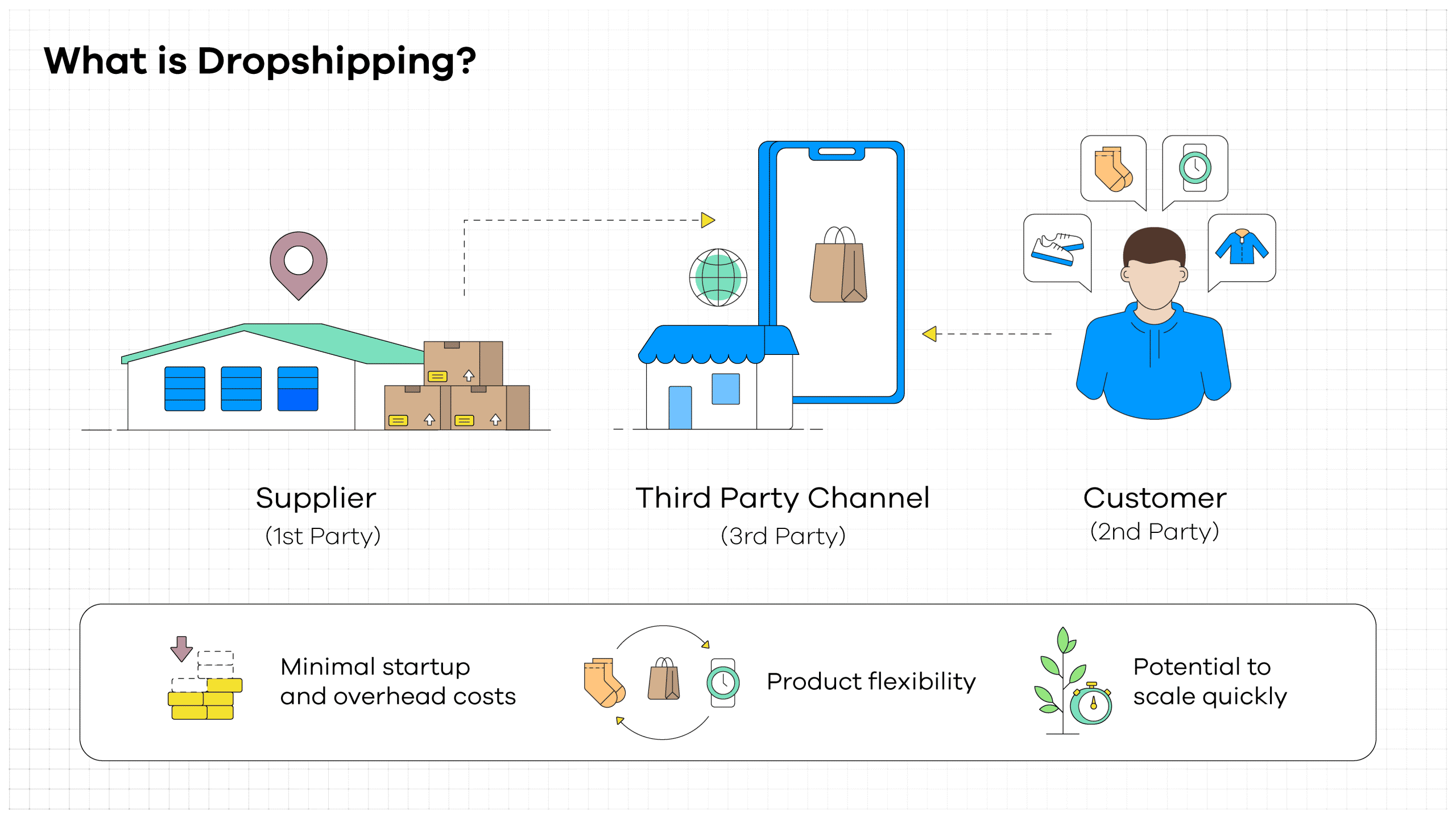
The traditional e‑commerce model requires buying inventory up front, paying for storage, packaging, and logistics, and bearing the risk of unsold stock. [wise]
By contrast, dropshipping with a B2B sourcing platform lets you:
– Launch with minimal capital:
– You pay suppliers only after customers pay you.
– Reduce operational complexity:
– No warehouse, no in‑house fulfillment team, less paperwork.
– Test products quickly:
– List new SKUs inside days, not months, and double down on what sells.
Looperbuy’s proposition fits here: global B2B sellers can source reliable Chinese products and ship orders worldwide without stocking inventory, which significantly reduces cash flow pressure and management overhead in the first year.
New Section: A Data‑Driven Look at First‑Year Dropshipping Profit
From an industry standpoint, the most credible sources converge on similar ranges for beginner dropshippers in 2025–2026: [qikify]
Even with optimistic margins, your net profit after ads, apps, returns, transaction fees and refunds will be lower. That’s why your first year should focus on building repeatable systems, not chasing screenshots.
New Section: An Operator’s Perspective – What I’d Do Differently in Year One
Speaking from a practitioner’s point of view, if I had to restart a first‑year dropshipping business today, I would:
1. Pick a B2B‑friendly niche from day one
– Focus on products that can sell to other businesses (e.g., tools, packaging, office supplies, industrial components), not just impulse‑buy consumer gadgets.
– B2B customers reorder more often and care about reliability, which matches what platforms like Looperbuy specialize in.
2. Partner with 1–2 strong Chinese B2B suppliers instead of 10 random ones
– I’d prioritize suppliers that can:
– Offer stable inventory
– Ship globally with consistent lead times
– Provide clear product data and specs for compliant listings
3. Invest early in conversion and UX, not just traffic
– I’d spend as much time on product pages, FAQs, and post‑purchase communication as on ads, because every extra 1% in conversion rate magnifies profit.
4. Treat every month as an experiment with a clear hypothesis
– Month by month, I’d set specific tests:
– One new creative angle
– One new offer or bundle
– One back‑end process improvement
By documenting these experiments and tracking core metrics (conversion rate, average order value, cost per acquisition), the first year becomes a controlled learning process instead of a random gamble.
Step‑by‑Step Roadmap to Your First Profitable Year
Use this 12‑step roadmap as a practical checklist.
1. Clarify your income goal
– Example: “I want to reach 1,500 USD/month in profit by month 12.”
2. Choose a niche with repeat B2B demand
– Look for industries where customers order frequently and value reliability (e.g., hospitality supplies, workshop tools, electronics accessories).
3. Validate products and margin with suppliers
– Use a B2B platform like Looperbuy to check wholesale price, shipping cost, and suggested retail.
4. Calculate realistic margins
– Use a simple formula:
– Selling price – product cost – shipping – transaction fees – average ad spend per order = gross profit.
– Aim for at least 20–30% gross margin before fixed tools and overhead.
5. Build a clean, conversion‑optimized store
– Fast loading theme, clear product benefits, visible shipping and return policy, trust badges, and B2B‑friendly details (MOQ, lead time, invoice options).
6. Set up essential analytics
– Basic tracking with Google Analytics, Meta Pixel (if using ads), and clear UTM conventions for campaigns.
7. Launch with 3–5 test products, not 50
– Focus on quality of listings and offers, not catalog size.
8. Drive your first traffic with one primary channel
– Example: Meta ads, Google Shopping, niche SEO content, or targeted LinkedIn outreach for B2B buyers.
9. Review numbers weekly, not yearly
– Track revenue, ad spend, conversion rate, ROAS, refund rate, and net profit.
10. Kill losers fast, scale winners gradually
– Pause products that don’t hit your breakeven ROAS after sufficient data and reallocate budget to winners.
11. Negotiate and optimize on the supply side
– Once you see consistent sales, talk to your Looperbuy account or suppliers to improve pricing, packaging, or shipping options.
12. Build repeat business
– Add email flows, remarketing, and loyalty programs to increase lifetime value so you can afford higher acquisition costs.
Follow this roadmap and your first‑year income becomes a function of inputs and decisions, not luck.
How Looperbuy Helps You Hit Your Income Targets Faster
A key limiter in first‑year profits is operational friction: bad suppliers, slow shipping, and messy logistics. Platforms like Looperbuy directly address this.
From a B2B UX and operations perspective, Looperbuy can help you:
– Avoid overstocking and cash flow traps
– You don’t need to buy inventory upfront, so your capital can go into ads, creatives, or tools instead of pallets sitting in a warehouse.
– Reduce fulfillment and coordination workload
– Centralized product sourcing and order forwarding means you don’t spend nights chasing suppliers or tracking parcels manually.
– Access a wide range of Chinese products with B2B‑friendly terms
– You can test more SKUs without heavy risk, then scale into the ones that work.
> For first‑year dropshippers, this kind of infrastructure can be the difference between stalling out at break‑even and compounding profit month after month.
UX Best Practices to Increase Profit per Visitor
Even with the right suppliers, you only make money if your store experience converts visitors into buyers.
Prioritize these UX principles:
– Clarity above all
– Use simple, benefit‑driven headlines on product pages, and avoid jargon.
– Trust and transparency
– Display shipping times, return policies, and supplier origin clearly, especially for B2B buyers who need reliability.
– Mobile‑first design
– A large share of B2B research and purchasing now happens on mobile, so your checkout flow must be smooth and fast. [salsify]
– Social proof and reviews
– Highlight genuine user feedback, especially around product quality and shipping reliability.
Every 0.5–1 percentage point increase in conversion rate directly improves your first‑year income, often more than minor cost cuts.
Turn Realistic Expectations into Real Orders
Knowing how much money you can realistically make dropshipping your first year is only useful if you turn it into action.
If you’re ready to build a low‑risk, inventory‑free e‑commerce business backed by reliable Chinese B2B suppliers, your next step is simple:
> Create your product shortlist, run the numbers on margin, and connect those products to a sourcing and fulfillment partner like Looperbuy so you can focus on marketing, not managing boxes.
The sooner you start testing real offers with real customers, the sooner your first‑year income becomes more than just a projection.
FAQ: First‑Year Dropshipping Income
1. Can you really make money dropshipping in your first year?
Yes, but it depends on focus and execution. Many beginners who treat it as a serious business reach 4–5 figures in annual profit in year one, while casual experimenters often stay near break‑even. [expertways]
2. How much money do I need to start?
You can start with a relatively small budget because you don’t buy inventory upfront. Most operators invest in a store platform, basic tools, and testing ads; a few hundred to a few thousand dollars is typical for the first year, depending on your traffic strategy. [shopify]
3. Is dropshipping passive income?
No. It can become systemized over time, but in your first year you’ll spend significant time on product research, store optimization, customer support, and supplier coordination. Profit follows the work, not the other way around. [doba]
4. What profit margin should I target?
Aim for at least 20–30% gross profit margin after product cost and shipping, knowing that ads, apps, and refunds will reduce your net margin below that. If your margin is too thin, it will be very hard to scale profitably. [qikify]
5. How can a platform like Looperbuy increase my earnings?
By centralizing product sourcing and fulfillment with reliable Chinese B2B suppliers, you reduce logistics errors, shipping delays, and manual work. That means more time for marketing and optimization, higher customer satisfaction, and better chances of hitting your first‑year income targets.
References
1. Doba – *How Much Money Can You Realistically Make Dropshipping Your First Year?* (accessed 2026). [doba]
2. Zendrop – *How Much Do Dropshippers Make in 2026?* (2026). [zendrop]
3. Qikify – *Average Dropshipping Income 2025: What You Need to Know* (2026). [qikify]
4. Dropship Lifestyle – *How Profitable Is Dropshipping for Beginners in 2025?* (2025). [dropshiplifestyle]
5. ExpertWays – *How Much Can You Realistically Make With Dropshipping?* (n.d.). [expertways]
6. Shopify – *Dropshipping Inventory Management Best Practices* (2025). [shopify]
7. Wise – *How to Sell on Amazon Without Inventory* (2025). [wise]
8. Salsify – *B2B E‑Commerce Trends 2026* (2026). [salsify]
9. LinkedIn – *B2B E‑Commerce Trends for 2026: What Every Business Needs to Know* (2025). [linkedin]
10. Shopify – *What Is Dropshipping?* (2024). [shopify]