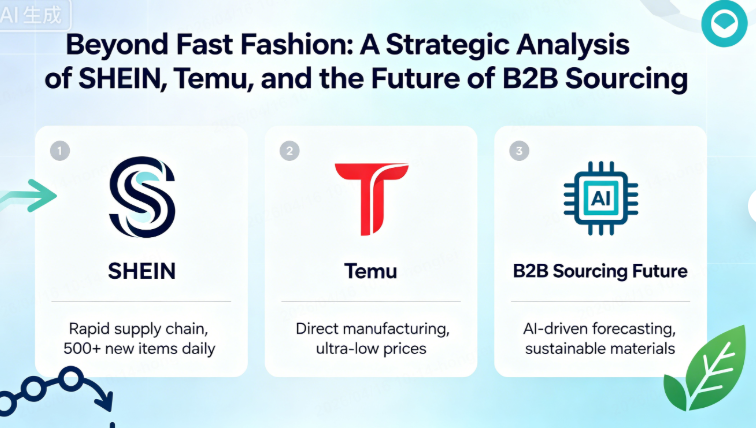
The landscape of global e-commerce has been fundamentally reshaped by two Chinese juggernauts: SHEIN and Temu. Their meteoric rise—characterized by ultra-low prices, lightning-fast trend cycles, and aggressive digital marketing—has captivated consumers worldwide [7, 16]. However, for B2B professionals, brand owners, and wholesalers, these platforms represent more than just retail disruptors; they are case studies in supply chain agility [5, 7].
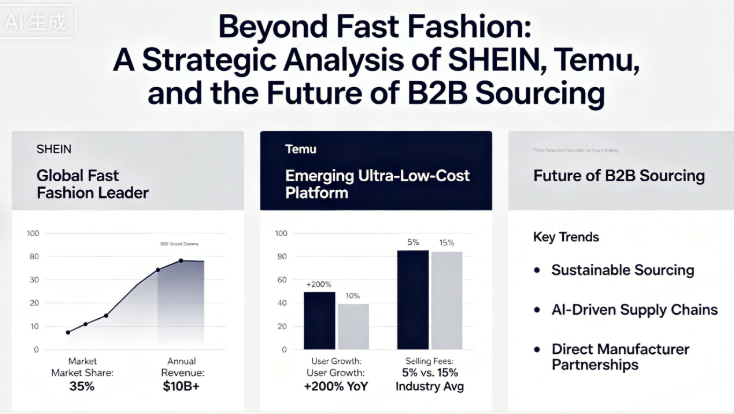
Understanding the dynamics between SHEIN and Temu is crucial for businesses aiming to optimize their own sourcing strategies and navigate the complexities of modern manufacturing [4, 17].
Table of Contents
Understanding the Business Models
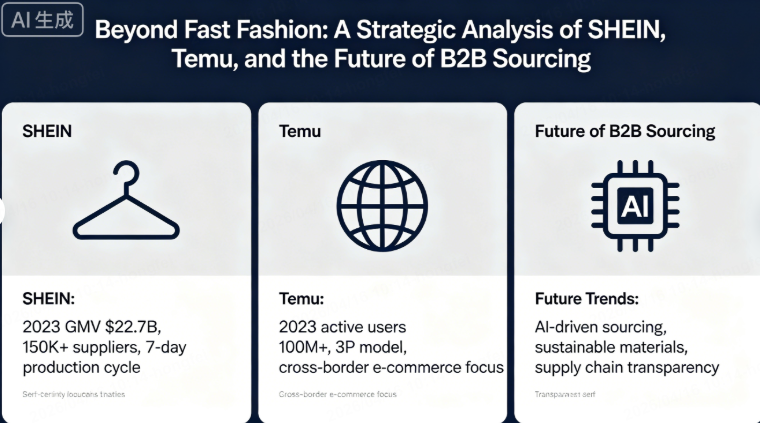
While often grouped together as low-cost retailers, SHEIN and Temu operate with distinct strategic focuses.
SHEIN: The Vertically Integrated Fast-Fashion Powerhouse
Founded in 2008, SHEIN operates as a highly specialized, vertically controlled fast-fashion machine [5].
- Agility: They own the product lifecycle from design to private-label branding, leveraging AI-driven trend forecasting to move from concept to finished product in as little as 3–7 days [5].
- Specialization: Their strength lies in apparel, where they dominate by maintaining a consistent pricing model while keeping fashion relevance high [1, 5, 18].
- Market Expansion: SHEIN has recently introduced marketplace services, signaling an effort to bridge B2C success with B2B trades [2].
Temu: The Aggressive “Megastore” Challenger
Temu, a younger, fast-follower platform, has adopted a different approach [7].
- Scope: It functions more as an online “megastore,” offering a much broader product variety beyond just apparel, spanning electronics, home goods, and more [9, 18].
- Pricing Strategy: Temu focuses heavily on eye-catching, ultra-low prices and frequent, deep-discount promotions to drive high-volume, low-margin sales [1, 14].
Comparative Snapshot: SHEIN vs. Temu
| Feature | SHEIN | Temu |
|---|---|---|
| Primary Focus | Apparel & Fashion [18] | Broad-category “Megastore” [9, 18] |
| Strategy | Vertical Integration/Trend [5] | Price-led/Volume-driven [1, 14] |
| B2B Potential | Emerging (Marketplace) [2] | Limited (Primarily B2C) [4] |
| Core Advantage | Speed-to-Market/Agility [5, 16] | Broad Product Variety [9] |
The “Information Gap”: Why B2B Buyers Need More Than Just Retail Platforms
A critical mistake many businesses make is attempting to use B2C platforms for wholesale or manufacturing needs. While SHEIN and Temu are excellent for product research, demand validation, and price intelligence, they are not optimized for B2B sourcing [4].
- Lack of Customization: Platforms like Temu provide extremely limited or zero options for private-label customization or manufacturing modifications [12].
- Scaling Hurdles: Sourcing directly from these platforms lacks the infrastructure required for bulk wholesale, quality control, or reliable supply chain management for scaling production [4].
Strategic Insights for Global Brands and Wholesalers
For professional buyers, the goal is to leverage the Chinese manufacturing ecosystem that powers these giants, rather than competing with the platforms themselves.
1. Leveraging Data for Sourcing Intelligence
Use SHEIN and Temu to monitor emerging trends and pricing behaviors [5, 16]. If a product is gaining traction on these platforms, it is an early indicator of market demand. Use this data to inform your next product development cycle or inventory selection on a professional B2B platform.
2. The Shift Toward Professional One-Stop Sourcing
Instead of navigating disparate B2C channels, high-volume buyers benefit from One-Stop B2B Sourcing Platforms (e.g., LooperBuy). These platforms offer:
- Direct Access: Streamlined connections to verified manufacturers in China.
- Logistical Efficiency: Lower shipping costs and more reliable global delivery networks designed for B2B requirements.
- Comprehensive Services: Personalized support for production, quality assurance, and bulk procurement that retail-focused platforms cannot match.
3. Operationalizing Supply Chain Agility
The success of SHEIN and Temu hinges on real-time data analysis to replenish inventory and identify trends rapidly [16]. Your business can adopt this by:
- Integrating Data Analytics: Using AI tools to predict demand, reducing inventory risk [5, 16].
- Building Responsive Supplier Networks: Prioritizing manufacturers who can handle smaller, more frequent production runs to test market demand [4].
Expert Insight: Navigating the Future
As the e-commerce environment evolves, the distinction between “low-cost consumer retail” and “professional B2B sourcing” will become more pronounced. Businesses that succeed will not just look for the lowest price; they will focus on reliability, scalability, and efficiency [4, 16].
Are you ready to scale your sourcing strategy?
If you are tired of limited options on B2C platforms and need a direct, reliable bridge to Chinese factories, consider specialized B2B solutions designed for global scale. Partner with LooperBuy today for efficient, professional sourcing that puts your business requirements first.
References
- Globalsources: Temu vs SHEIN – A Comprehensive Comparison
- JustChinaIt: Full Comparison from Shipping to Returns
- Homevolutionchina: B2B Sourcing Platforms Explained
- Harvard Business School: How SHEIN and Temu Conquered Fast Fashion
- Euromonitor: Temu, SHEIN, and TikTok Shop’s Power in US E-Commerce
- NACDS: What Can Retailers Learn from SHEIN and Temu?
FAQ
Q1: Should I source products for my brand from Temu or SHEIN?
A: No. These are B2C retail platforms. They are excellent for product and trend research, but they lack the private-label customization, quality assurance, and bulk pricing required for professional B2B sourcing.
Q2: What is the main difference between SHEIN and Temu?
A: SHEIN is a vertically integrated, fashion-focused machine with rapid design-to-production cycles. Temu is a broader “megastore” that uses a price-led, high-volume, low-margin model across many categories.
Q3: How can I compete with the prices on SHEIN and Temu?
A: You cannot compete solely on price. Instead, compete on brand differentiation, niche product selection, and superior supply chain efficiency by sourcing directly from manufacturers through a professional B2B platform.
Q4: How do I improve my sourcing speed?
A: Partner with manufacturers that offer flexible, shorter production runs and utilize data analytics to forecast demand. A one-stop B2B sourcing platform can help connect you with such partners.
Q5: Are there hidden costs when sourcing from Chinese platforms?
A: Yes, especially with retail platforms. These include potential issues with product quality consistency, lack of logistical support for bulk shipments, and difficulty in resolving post-purchase disputes.
Article Summary:
This article provides a strategic analysis of the B2C retail titans SHEIN and Temu, contrasting their business models—SHEIN’s vertical integration versus Temu’s broad, low-margin “megastore” approach. For B2B professionals, the article highlights why retail platforms are ill-suited for sourcing, offering instead actionable advice on leveraging these platforms for data-driven intelligence, and pivoting to professional, one-stop B2B sourcing platforms to ensure scalability, reliability, and custom-branding success.
Hot tags
B2B sourcing, global wholesale marketplace, China manufacturing supply chain, private label sourcing, bulk procurement solutions, direct from China supplier, cross-border e-commerce wholesale, B2B procurement platform, supply chain agility for business, scalable product sourcing.