Purchasing platforms are now central to modern B2B commerce, especially for global sellers sourcing from China. This article explains what purchasing platforms do, which features matter most, and how businesses can reduce inventory pressure while improving sourcing control, fulfillment speed, and operational flexibility.
In B2B commerce, the right purchasing platform can do much more than place orders. It can help businesses reduce inventory pressure, simplify cross-border buying, improve supplier control, and scale without adding unnecessary operational complexity.
For global sellers, especially those sourcing from China, purchasing is no longer just a procurement function. It is a core part of growth, cash flow, fulfillment, and customer experience. That is why modern purchasing platforms are now judged not only by features, but by how well they support real business outcomes.
Table of Contents
Why Purchasing Platforms Matter Now
Purchasing has moved far beyond a back-office task. In today’s B2B environment, it directly affects sourcing speed, cost control, supply continuity, and delivery reliability. Businesses that still rely on manual communication, scattered spreadsheets, and disconnected suppliers often face delays, pricing inconsistency, and avoidable stock problems.
This shift is especially visible in global trade. Buyers want more visibility. Sellers want faster replenishment. Teams want fewer errors and better approval control. As companies grow, these needs become more urgent, not less.
For businesses that buy from China and sell internationally, the pressure is even higher. They need a purchasing model that supports product sourcing, order management, and fulfillment flexibility without forcing them to hold too much inventory. That is where purchasing platforms become strategically important.
What a Purchasing Platform Does
A purchasing platform is a digital system that helps businesses discover suppliers, compare offers, place orders, manage approvals, and connect purchasing with related workflows such as invoicing, inventory, and shipping.
In a B2B environment, these platforms often include supplier catalogs, negotiated pricing, role-based permissions, and workflow automation. Some platforms are designed for internal procurement teams. Others are built for marketplaces, distributors, and global commerce businesses that need sourcing and fulfillment capabilities in one place.
The value is different depending on the user. For a buyer, the platform provides speed and consistency. For a seller, it improves repeat ordering and operational control. For a sourcing platform like Looperbuy, the platform becomes part of the supply chain itself, helping buyers move from product discovery to delivery with less friction.
Main Platform Types
Not all purchasing platforms are built for the same purpose. A company sourcing components for manufacturing does not need the same system as an export seller fulfilling orders from multiple countries. Choosing the wrong model can create more complexity instead of solving it.
| Platform type | Best for | Core strength |
| Source-to-pay suite | Large enterprises | End-to-end procurement control |
| Mid-market purchasing tool | Smaller teams | Fast setup and easier adoption |
| Commerce platform with buying features | B2B marketplaces and complex catalogs | Catalog, pricing, and workflow flexibility |
| Sourcing and fulfillment platform | Global sellers and importers | Supplier access, fulfillment, and operational support |
The right platform depends on how your business buys, who approves the purchase, how often you reorder, and whether your team needs operational support after the order is placed.
For 2026 and beyond, businesses are focusing less on software alone and more on platform fit. The best solution is the one that reduces manual work, improves visibility, and supports real purchasing outcomes.
Key Features To Evaluate
The best purchasing platform should fit the way your business actually operates. It should support your buying process instead of forcing your team to adapt to a rigid workflow. A strong platform usually includes the following capabilities:
– Supplier discovery and qualification. Can you find reliable suppliers quickly, and can the platform help you assess them before placing orders?
– Catalog management. Can it handle custom pricing, product variations, and repeat buying at scale?
– Approval workflows. Can teams control who buys, what they buy, and when they buy it?
– Integration depth. Does it connect cleanly with ERP, inventory, and finance systems?
– Order visibility. Can your team track order status, exceptions, and fulfillment progress in one place?
– Risk monitoring. Can the platform help you react faster when suppliers, freight routes, or market conditions change?
These features matter because purchasing is not a single event. It is a cycle. The more visibility and control a platform gives you, the easier it becomes to keep that cycle efficient and predictable.
For businesses with larger catalogs or recurring demand, these features also reduce friction across departments. Sales, operations, finance, and procurement all benefit when buying information is centralized and easy to act on.
Why Global Sellers Need a Different Model
A global B2B seller often has a different challenge from a traditional procurement team. The issue is not only how to buy goods, but how to buy the right goods in the right quantities while avoiding excessive inventory and unnecessary warehouse costs.
This is where many conventional purchasing tools fall short. They may support purchase orders and approvals, but they do not always support the broader business model behind global sourcing and fulfillment.
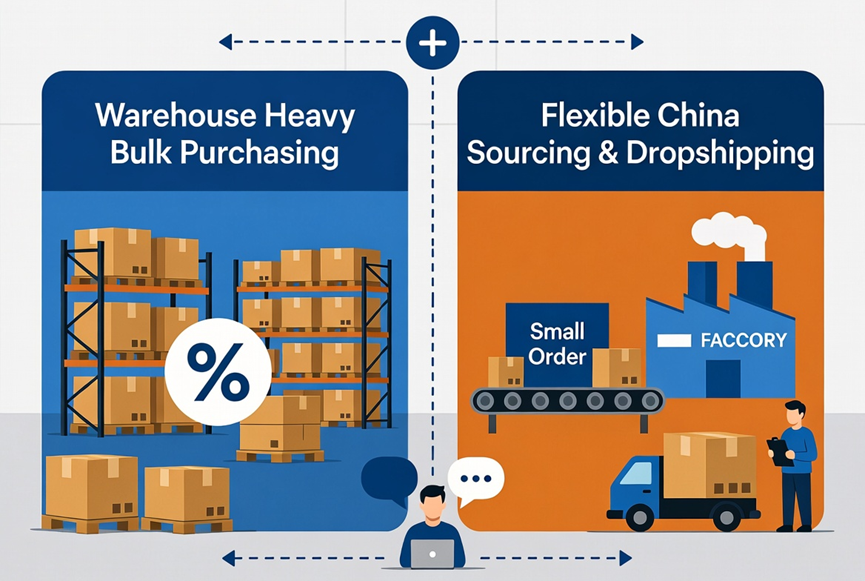
For example, a seller who serves multiple markets may need to respond quickly to changing demand. Holding too much stock creates financial pressure. Holding too little creates missed sales. A platform that supports flexible sourcing and lighter inventory commitment can solve both problems better than a bulk-purchase-only model.
This is especially relevant for businesses buying from China, where access to suppliers is strong but operational coordination still requires discipline. The right platform helps reduce distance between sourcing and fulfillment.
A Better Workflow For Cross-Border Buying
Many businesses still buy in a way that is too reactive. They place large orders, store products for too long, and only later discover that demand has shifted. A better approach is to use a more controlled purchasing workflow that begins with demand and ends with replenishment only when needed.
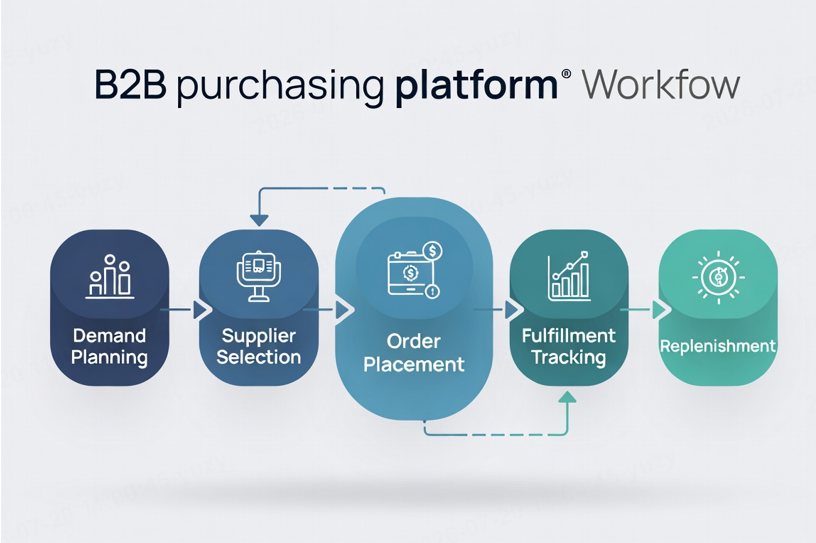
A practical cross-border workflow often looks like this:
1. Identify demand. Track which products or categories are moving consistently.
2. Validate suppliers. Check quality, lead times, communication speed, and reliability.
3. Set purchasing rules. Define approval limits, order thresholds, and stock triggers.
4. Place smaller, smarter orders. Reduce warehouse pressure and dead stock.
5. Monitor fulfillment. Keep visibility on production, shipping, and exceptions.
6. Review performance. Reassess supplier quality, margins, and delivery accuracy regularly.
This workflow is useful because it helps businesses stay lean while still responding quickly to demand. It also reduces the risk of overcommitting capital to slow-moving products.
For companies managing several sales channels, the ability to adjust order size and timing is a major operational advantage. It creates a more stable cash flow and a more responsive supply chain.
How To Choose The Right Platform
The best purchasing platform is not the one with the most features. It is the one that fits your scale, your buying model, and your operational reality.
A small team may prioritize ease of use, supplier access, and fast onboarding. A larger company may need governance, integration, and deeper control over approvals and purchasing logic. Global sellers often need both: flexibility on the front end and structure on the back end.
Ask these questions before choosing a platform:
– Do we need catalog buying, custom sourcing, or both?
– How many users need approval-based purchasing?
– Do we need real-time inventory or just order placement?
– Are we buying for internal operations, resale, or fulfillment?
– Can the platform support international suppliers and cross-border workflows?
– Will it reduce warehouse burden, or simply digitize existing manual work?
If the answer to most of these questions is yes, the platform should be designed around buying efficiency and operational flexibility, not just purchasing administration.
The best choices also scale well. A platform that works today should still support the business as product lines expand, markets diversify, and purchasing volumes grow.
Why Procurement Is Becoming More Strategic
Procurement used to be viewed mainly as a cost-control function. That view is changing. Today, procurement is increasingly tied to growth, resilience, and competitive advantage.
Companies now expect purchasing teams to help manage risk, improve supplier performance, and contribute to business continuity. That means purchasing platforms must do more than automate transactions. They need to support smarter decision-making.
This is particularly important in volatile markets. Shipping conditions change. Supplier capacity shifts. Customer demand can rise or fall quickly. In that environment, a purchasing platform that improves visibility and responsiveness becomes a strategic asset.
The most effective businesses now treat sourcing and purchasing as part of the customer value chain, not just the operational back office.
The Business Case For Looperbuy
Looperbuy is designed for businesses that want reliable China sourcing and dropshipping support without carrying the burden of excess inventory, warehouse overhead, or fragmented logistics management.
That makes it especially valuable for global B2B sellers that want to grow without locking too much capital into stock. Instead of relying on a traditional bulk-buying model, they can use a more flexible sourcing approach that better matches actual demand.
This model supports faster market entry, more efficient order handling, and lower operational risk. For businesses that need agility, that is a meaningful advantage.
Just as important, it helps reduce the hidden costs of purchasing: storage, handling, payment complexity, supplier coordination, and inventory loss from slow-moving goods. Over time, those savings can be just as important as purchase price itself.
Practical Examples Of Platform Use
Different business models use purchasing platforms in different ways. A reseller may use a platform to source trending products in smaller batches. A distributor may use it to maintain continuity across supplier relationships. A brand owner may use it to manage custom products and repeat replenishment.
For example, a business selling home goods across multiple regions might use a sourcing platform to test new products without committing to large volumes. If demand proves strong, orders can be scaled. If a product underperforms, exposure stays low.
Similarly, a company selling industrial accessories might use purchasing workflows to coordinate multiple suppliers, compare lead times, and keep production moving without overstocking. In both cases, the platform helps the business stay flexible while keeping operational control.
If your business wants to source from China more efficiently, reduce inventory pressure, and improve cross-border fulfillment control, Looperbuy should be part of the conversation.
The strongest purchasing platforms do not just process orders. They help businesses buy smarter, move faster, and scale with less operational waste. For global sellers, that can be the difference between constant inventory stress and a more sustainable growth model.
FAQ
1. What is a purchasing platform in B2B commerce?
A purchasing platform is a digital system that helps businesses find suppliers, manage buying workflows, place orders, and track fulfillment more efficiently.
2. How is a purchasing platform different from a sourcing platform?
A purchasing platform focuses on the buying process, while a sourcing platform emphasizes finding, comparing, and qualifying suppliers before purchase.
3. Why are purchasing platforms important for global sellers?
They help reduce stock risk, improve supplier coordination, and support cross-border buying with more control and less manual work.
4. What features should I look for first?
Start with supplier access, catalog management, approval workflows, integration depth, and order visibility.
5. Can a purchasing platform help reduce inventory costs?
Yes. By supporting smarter ordering, better visibility, and more flexible fulfillment, it can reduce the need for heavy upfront stocking.
6. Is a purchasing platform useful for small businesses?
Yes. Small businesses can use it to reduce manual work, improve supplier coordination, and avoid overbuying.
7. What kind of businesses benefit most from Looperbuy?
Global B2B sellers, importers, and eCommerce businesses that want reliable China sourcing with lower inventory pressure benefit most.
References
1. Virto Commerce-B2B Purchasing and Sourcing: Platforms Overview & Explanation[virtocommerce]
2. Deloitte-2025 Global Chief Procurement Officer Survey [deloitte]
3. Deloitte-2025 Global Chief Procurement Officer (CPO) Survey PDF [deloitte]
4. B2Bs.com-B2B Procurement Trends in 2026: What Buyers Need to Know[b2bs]
5. Mordor Intelligence-Procurement Software Market Size, Share & Forecast [mordorintelligence]
6. Looperbuy-Top 10 Global Sourcing Platform in China[looperbuy]