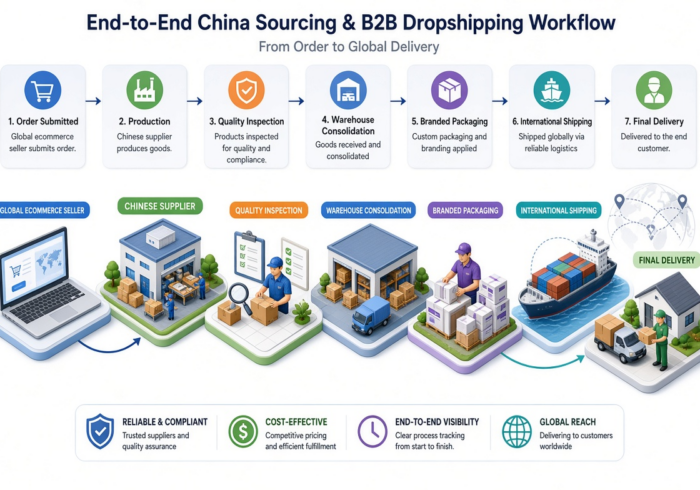
Understand the real difference between a worldwide sourcing company and a freight forwarder, and learn how Looperbuy’s integrated China sourcing and dropshipping model helps global B2B sellers reduce inventory risk, control quality and optimize logistics from factory to customer.
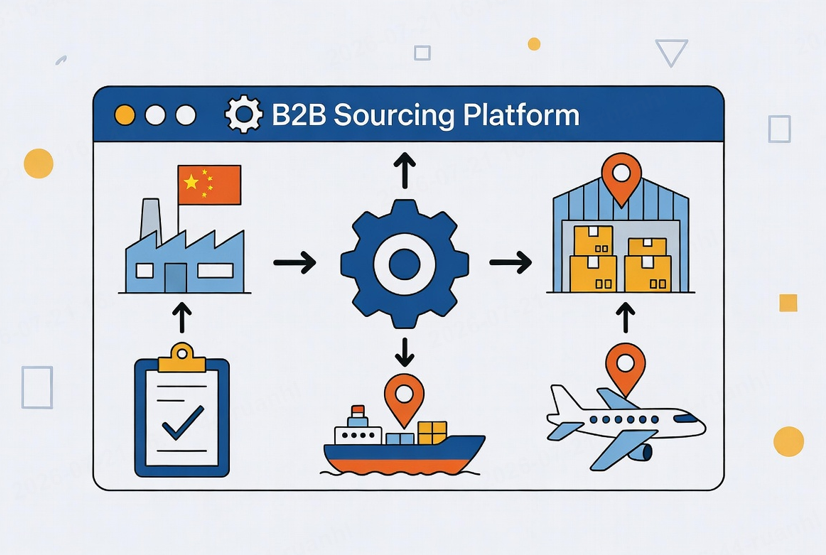
When I advise international B2B sellers sourcing from China, one confusion comes up again and again: “Should I work with a sourcing company or a freight forwarder—or both?” From a practitioner’s standpoint, these two partners solve different problems: sourcing companies like Looperbuy design and manage end‑to‑end product procurement, while freight forwarders primarily move cargo from point A to point B.
Table of Contents
What Each Partner Really Does
What Is a Worldwide Sourcing Company?
A worldwide sourcing company is a procurement and supplier management specialist that helps you find, vet, negotiate and manage manufacturers across multiple categories and regions. In practice, platforms such as Looperbuy combine digital tools with local teams in China to provide product discovery, supplier verification, price benchmarking, quality control, dropshipping, warehousing and coordinated global fulfillment.
Key functions of a sourcing company:
– Supplier discovery and shortlisting across thousands of factories.
– Factory audits, compliance checks and quality inspections.
– Price negotiation and contract support with manufacturers.
– Order management from RFQ to production follow‑up.
– Inventory‑light models such as dropshipping and on‑demand fulfillment.
– Coordination of logistics, often through integrated freight partners.
What Is a Freight Forwarder?
A freight forwarder is a transport and logistics specialist focusing on booking cargo space, consolidating shipments, handling documentation, and moving goods from your supplier’s warehouse to your destination port or door. They don’t usually choose your suppliers or manage your product portfolio; instead, they optimize routes, costs and compliance (customs, duties, Incoterms).
Core responsibilities of a freight forwarder:
– Booking ocean, air or rail freight and arranging consolidation.
– Preparing commercial invoices, packing lists and customs documentation.
– Coordinating export/import clearance and liaising with customs brokers.
– Providing shipment tracking, insurance options and exception handling.
– Advising on Incoterms (FOB, CIF, DDP) and transport risk management.
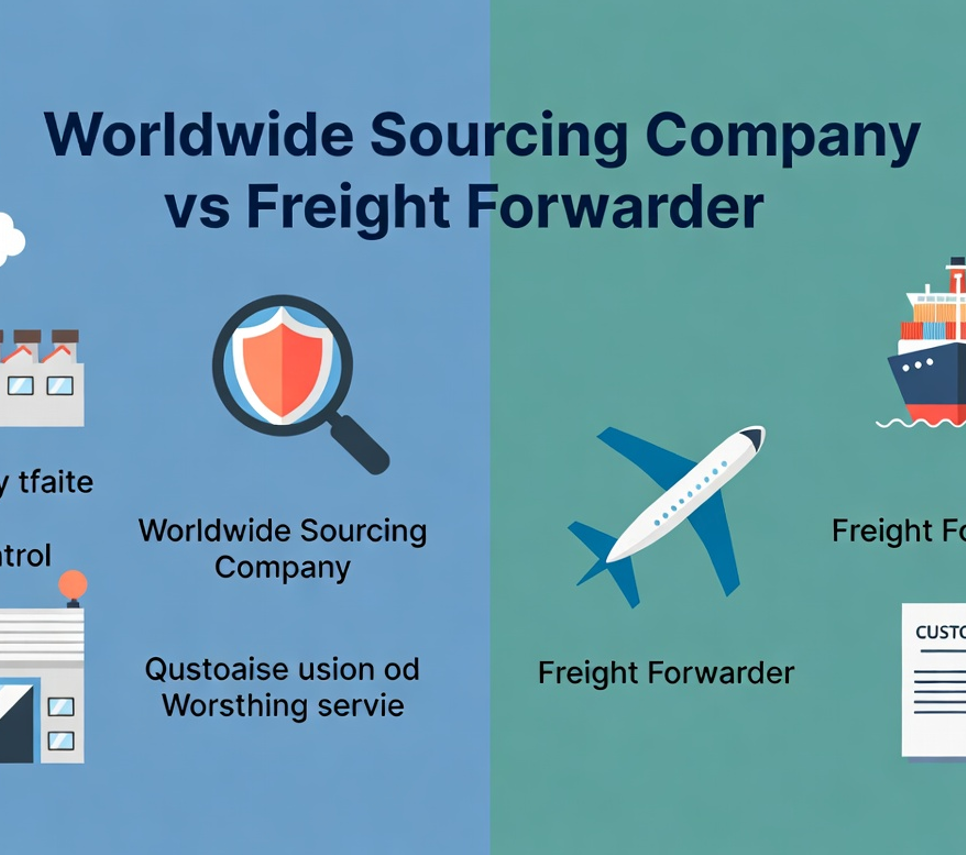
Side‑by‑Side Comparison – Sourcing Company vs Freight Forwarder
From an operational perspective, you can think of a sourcing company as your “product and supplier brain” and a freight forwarder as your “transport engine.”
Core Differences at a Glance
| Aspect | Worldwide Sourcing Company | Freight Forwarder |
| Primary focus | Product sourcing, supplier vetting, procurement strategyblog. | Transport, customs, cargo routing and consolidation |
| Typical starting point | Buyer has a product idea but needs suppliers and cost structure clarifiedblog. | Buyer already has confirmed suppliers and purchase orders |
| Scope of services | Supplier search, audits, negotiation, QC, warehousing, dropshipping, fulfillment | Booking freight, documentation, customs, delivery from port to warehouse |
| Inventory model | Enables low‑inventory or no‑inventory models via dropshipping and flexible MOQs | Focuses on moving whatever inventory you already own |
| Risk profile addressed | Supplier reliability, product quality, compliance, over‑stocking | Transport delays, freight cost volatility, customs risks |
| Ideal for | B2B sellers needing scalable sourcing, SKU expansion and inventory‑light growthblog. | Businesses with stable suppliers and recurring shipment patterns |
How Looperbuy Fits into the Picture
Looperbuy as a Modern Worldwide Sourcing Platform
Looperbuy positions itself as an all‑in‑one B2B China sourcing platform and dropshipping solution, integrating traditional sourcing functions with global logistics and fulfillment. Instead of simply shipping what you already purchased, Looperbuy helps you identify Chinese suppliers, manage production, consolidate orders, and dispatch inventory directly to your customers or fulfillment centers worldwide.
From my experience in B2B procurement, this integrated model is particularly powerful for sellers who want to avoid tying up capital in stock while still expanding into multiple product categories.
Looperbuy’s typical value proposition for global B2B sellers includes:
– Access to 10,000+ vetted suppliers across dozens of product categories.
– Supplier vetting, quality inspection and manufacturing oversight.
– Free or low‑cost warehousing and global dropshipping from China.
– Centralized order management and multi‑channel fulfillment (e‑commerce, B2B).
– Transparent cost visibility for product, logistics and service fees.
Why Looperbuy Is More Than a Freight Forwarder
While Looperbuy cooperates with logistics providers and can arrange freight, it is fundamentally a strategic sourcing company rather than a traditional freight forwarder. Freight forwarders focus on container bookings and customs; Looperbuy focuses on upstream supplier strategy, product portfolio optimization, and downstream fulfillment to reduce the need for your own warehouses.
For B2B sellers, this means Looperbuy not only moves existing orders, but also helps you decide what to order, from whom, at what cost and with what risk profile, before goods ever reach a vessel.
Latest Market Insights – Why the Distinction Matters in 2026
Growing Complexity of Global Freight and Procurement
In 2026, freight forwarders are under pressure from volatile fuel prices, capacity fluctuations and geopolitical disruptions, leading to frequent changes in rates and routes. At the same time, global buyers are pushing sourcing companies to deliver more data‑driven supplier selection, tighter QC and flexible inventory models to remain competitive online.
Industry reports show that leading freight forwarders now rank based on combined metrics of gross revenue, ocean TEUs and air metric tons, underscoring their focus on high‑volume cargo management rather than product strategy or supplier selection. In contrast, top sourcing players in China highlight metrics like vetted supplier counts, defect rate reduction, and average cost savings achieved through supplier optimization.
Case Insight – Inventory‑Light Growth with Integrated Sourcing
From consulting work and published case insights, integrated sourcing models can reduce management time by up to 30%, while cutting procurement costs by around 12% for international buyers who outsource supplier search, negotiation and QC to specialized companies. Some China‑based procurement teams report defect rates below 1% after implementing rigorous supplier management and inspections, significantly lowering claims and returns for overseas buyers.
For fast‑growing B2B e‑commerce brands, pairing a sourcing platform like Looperbuy with freight expertise allows them to launch new SKUs with minimal stock, test demand, and only scale up inventory for proven winners—without adding in‑house procurement headcount or warehouse assets.
Practical Decision Framework – Which Partner Do You Need?
As a supply‑chain advisor, I usually walk clients through a simple decision checklist when they ask whether they should prioritize a worldwide sourcing company or a freight forwarder.
Step‑by‑Step Checklist
1. Define your main pain point.
– If you struggle with finding reliable factories, quality issues, or product margin erosion, start with a sourcing company.
– If your key challenge is shipment delays, customs complications or unpredictable freight costs, engage a strong freight forwarder.
2. Map your current maturity level.
– Early‑stage or asset‑light sellers benefit most from an integrated sourcing platform like Looperbuy that combines supplier management, warehousing and dropshipping.
– Established manufacturers with long‑term supplier relationships but complex export flows often prioritize specialized freight forwarding and 3PL partners.
3. Clarify your inventory strategy.
– If your goal is to reduce stock, avoid large MOQs and scale SKUs quickly, choose a sourcing company designed around flexible inventory models.
– If you already own bulk inventory in China or at origin, focus on freight optimization to protect landed cost and delivery speed.
4. Evaluate long‑term strategic fit.
– Sourcing companies become an extension of your procurement team—ideal for sustained product development and category expansion.
– Freight forwarders become your transport operations hub—ideal for route optimization and compliance across multiple destinations.
Working with Both for Maximum Impact
Building a High‑Performance Supplier–Freight Stack
The most resilient B2B brands don’t choose between sourcing companies and freight forwarders; they orchestrate both. A sourcing platform like Looperbuy manages upstream supplier selection, contract terms and production oversight, then hands off accurate cargo data and documentation to freight forwarders for smooth export, consolidation and delivery.
To make this stack work, ensure:
– Clear data hand‑off between sourcing company and freight partner (SKU details, HS codes, packaging specs).
– Aligned Incoterms so responsibilities and risk are clearly allocated.
– Shared KPIs—such as total landed cost, on‑time delivery rate and defect rate—to avoid siloed optimization.
Common Mistakes to Avoid
From years of supporting cross‑border sourcing projects, I see the same mistakes repeating:
– Treating a freight forwarder as a sourcing consultant, expecting them to pick and manage suppliers.
– Over‑relying on factory suggestions without independent sourcing or audits, leading to hidden quality and compliance risks.
– Ignoring inventory‑light options such as dropshipping from platforms like Looperbuy, resulting in unnecessary warehousing and cash‑flow strain.
Choose the Right Partner for Your Global Growth
If you are a B2B seller or brand owner sourcing from China and you want to reduce inventory risk, simplify procurement and improve logistics visibility, the next step is to align your sourcing and freight strategy. Instead of asking “Do I need a worldwide sourcing company or a freight forwarder?”, start by mapping your business goals and then choose the right combination of partners.
For inventory‑light growth and integrated global dropshipping from China, explore how Looperbuy’s sourcing and fulfillment model can become your virtual procurement arm—while still leveraging specialist freight forwarders when you need large shipments and complex multi‑country delivery.
Assess your current sourcing and logistics setup this week. Identify one product line where you can test an integrated sourcing + dropshipping model with Looperbuy, and compare its cost, lead time and operational load against your traditional freight‑forwarder‑only approach.
FAQs: Worldwide Sourcing Companies vs Freight Forwarders
Q1: Can a worldwide sourcing company replace a freight forwarder entirely?
In most cases, no. A sourcing company may coordinate logistics, but complex, multi‑country freight programs still benefit from dedicated forwarders specializing in route design, consolidation and customs.
Q2: Is Looperbuy a freight forwarder or a sourcing platform?
Looperbuy is primarily a B2B sourcing and dropshipping platform that integrates supplier management, quality control, warehousing and global fulfillment, while partnering with logistics providers for transport.
Q3: When should I engage a worldwide sourcing company first?
Engage sourcing experts when you are uncertain about which factories to use, what realistic target prices look like, or how to control quality and compliance across multiple SKUs and categories.
Q4: How do worldwide sourcing companies charge compared with freight forwarders?
Sourcing companies often use percentage‑of‑purchase or project management fees, reflecting their role in supplier discovery, negotiation and QC, while freight forwarders usually charge based on transport mode, volume and route.
Q5: Can I start small with a sourcing platform like Looperbuy?
Yes. Many platforms and sourcing agencies explicitly support startups and small B2B buyers with flexible MOQs, dropshipping and multi‑supplier consolidation, allowing you to test products without heavy inventory commitments.
References
1. Looperbuy – B2B China Sourcing Platform & Dropshipping Solutions. [looperbuy]
2. Looperbuy – Product Sourcing Companies: A B2B Expert’s Guide to Sourcing Chinese Goods Globally with LooperBuy. [blog.looperbuy]
3. Looperbuy – Management of Global Logistics: A B2B Expert’s Guide to Sourcing from China with Looperbuy. [looperbuy]
4. Looperbuy – Top 10 Strategic Sourcing Company in China. [looperbuy]
5. SHIRONG Logistics – Procurement Solutions and Cost Reduction Data. [shearon]
6. Sourcing‑Visions – Product Sourcing and Procurement Solutions. [sourcing-visions]
7. DocShipper – Procurement & Sourcing Services in China. [china.docshipper]
8. Asiaction – Expert Procurement Services in China. [asiaction]
9. JTL Global Logistics – China B2B Purchasing Agent and Freight Forwarding Services. [jtlgo]
10. CheapBulk – B2B Sourcing and Logistics Services from China. [cheapbulk]
11. Armstrong & Associates – Top 25 Global Freight Forwarders List 2026. [3plogistics]
12. VTK Global Supply – China Sourcing and Procurement Services. [vtkglobalsupply]
13. Looperbuy Blog – Amazon SEO Tips & Logistics Visibility Articles. [looperbuy]