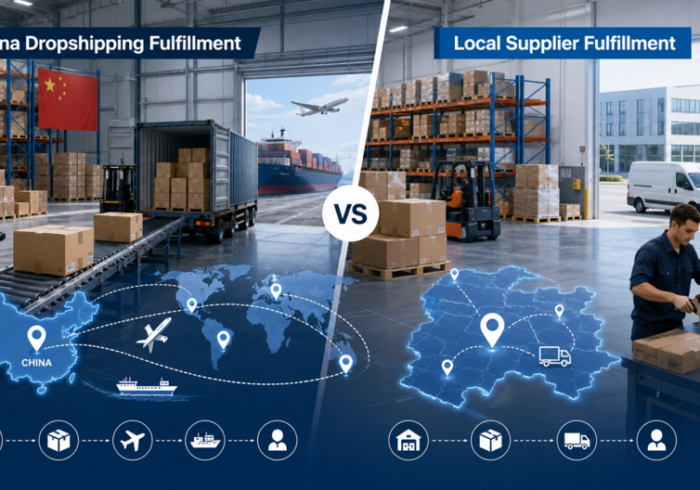
Athletic footwear industrial clusters in China, such as those in Jinjiang, Fujian, are profoundly reshaping their value within the global sports market by strategically transitioning from pure “large-scale manufacturing” to becoming nodes of “intelligent supply chains.”
Table of Contents
I. Upgrading Core Competitiveness: From Capacity to Intelligence
In the past, the competitiveness of industrial clusters like Jinjiang relied on the efficiency advantages brought by a highly concentrated supply chain layout—ranging from raw material supply and mold development to full-shoe manufacturing [1, 9]. Currently, however, relying solely on production capacity is insufficient to support future growth.
- Restructuring Industrial Logic: Faced with the fragmentation of global trade and the demand for “small-batch, high-frequency” orders, industrial clusters are accelerating digital transformation. They are shifting from experience-based models to AI-driven “intelligent hub” operations [7, 11, 13].
- Intelligence in R&D: The design and prototyping phase is shifting from being “experience-driven” to “data-driven.” The construction of structured design databases using AI technology has significantly shortened the lead time from design to mass production [13].
- Full-process Digital Collaboration: The digitization of supply chain links (such as order management, multi-currency payment, and automated warehouse fulfillment) allows global buyers to leverage Chinese manufacturing capabilities as if they were operating locally [7, 9].
II. Market Opportunities and Challenges
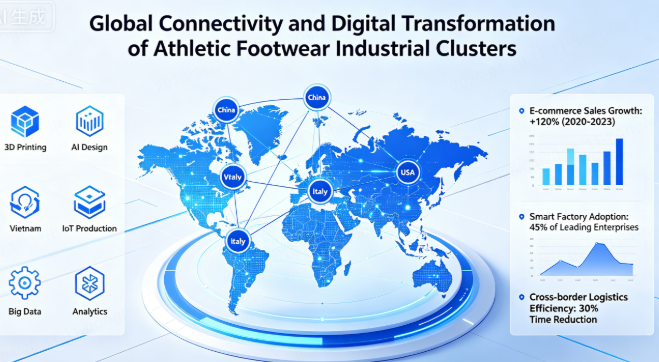
The global athletic footwear market is evolving from “professional/niche” to a “lifestyle necessity,” providing massive space for Chinese industrial clusters while also imposing urgent requirements for high-quality development [6, 10].
| Dimension | Current Status & Characteristics | Key Challenges |
|---|---|---|
| Market Potential | Blurring lines between sports and daily life (commuter, light outdoor), continuous growth [6, 10] | Improving acceptance of high-end products, fierce competition in mid-to-high price bands [10] |
| Competitive Landscape | Domestic brands significantly increasing market share locally [10, 15] | Global inventory surplus pressure, difficulty in traditional retail transformation [9, 10] |
| Core Drivers | Digital tools (AI) reshaping transaction flows, lowering cross-border barriers [7, 10] | Insufficient independent R&D investment, pressure from green/eco-friendly manufacturing costs [10, 16] |
III. Future Strategic Outlook
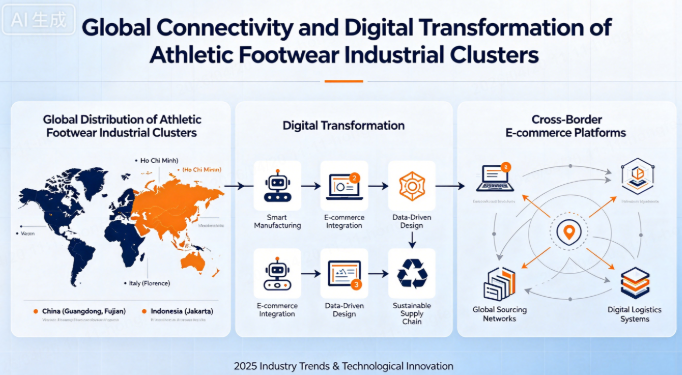
Moving forward, athletic footwear industrial clusters will no longer function merely as “production workshops” but as critical nodes connecting global sports consumption [7, 9].
- “AI-Native” Supply Chains: Clusters are entering the AI-native era. Digital supply chain systems not only improve fulfillment efficiency but also systematically resolve the complexities brought by fragmented supply [7, 11].
- Brand and Value Globalization: Local brands are transitioning from “domestic substitution” to “global competition.” By leveraging certifications, international sports sponsorships, and exporting the “Chinese outdoor lifestyle,” they are elevating their status from manufacturers to brand owners [6, 7].
- Ecological Integration: Competition is no longer about single-product comparisons but the ability to integrate industrial ecosystems—forming a closed loop of technical R&D, green manufacturing, digital platforms, and global warehousing/logistics [6, 10].
In conclusion, China’s athletic footwear industrial clusters have moved beyond extensive growth, entering a cycle of high-quality development driven by user needs, technological innovation, and data-intelligent supply chain foundations [6, 10].
Hot tags: Footwear manufacturing, athletic shoe supply chain, B2B wholesale marketplace, private label footwear, cross-border e-commerce solutions, footwear OEM/ODM services, sports apparel sourcing, digital supply chain management, small batch footwear production, global industrial clusters.