Apparel brands are replacing rigid local-vendor models with China sourcing companies to gain stronger supplier access, customization, production visibility, quality control, inventory flexibility, and global fulfillment support. The most effective strategy focuses on total landed cost, clear product specifications, disciplined inspections, and an integrated path from factory to customer.

Apparel brands are increasingly moving from local vendors to China sourcing companies because today’s market demands more than a nearby factory or a low unit price. Brands need flexible production, broader product access, faster supplier coordination, dependable quality control, and fulfillment models that reduce capital tied up in inventory.
For emerging labels, online sellers, wholesalers, and established fashion businesses, the shift is not simply about buying cheaper garments. It is about building a more responsive sourcing system. A capable China sourcing company can connect a brand with suitable manufacturers, manage sample development, coordinate inspections, consolidate products, and arrange international fulfillment—all while helping the buyer avoid the operational burden of managing multiple vendors independently.
Table of Contents
The Shift: From Local Convenience to Global Sourcing Capability
For years, local apparel vendors offered an obvious advantage: proximity. Buyers could visit a showroom, communicate in the same time zone, and place relatively simple orders without navigating overseas manufacturing.
That model still works for certain businesses. However, local sourcing often becomes restrictive as an apparel brand grows.
A local vendor may rely on a narrow supplier base, fixed catalog, limited customization options, or high minimum order quantities. They may also add multiple layers of markup before products reach the brand. In other cases, “local” suppliers source from overseas anyway, which means the buyer pays more without gaining meaningful visibility into the original factory, production schedule, or product specifications.
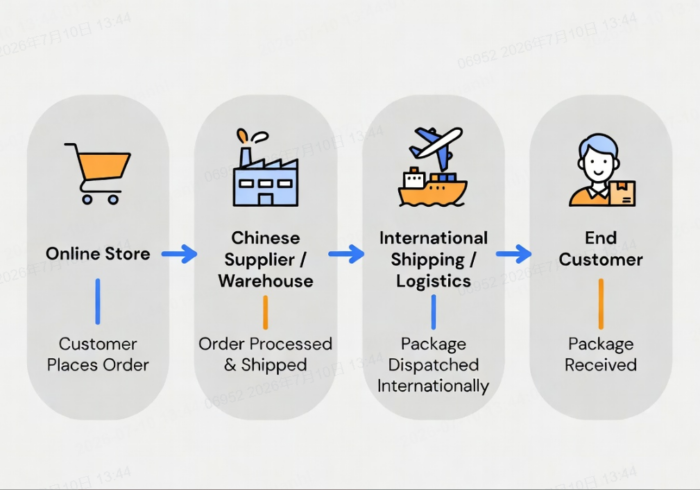
By contrast, a China sourcing company can serve as an operational bridge between global apparel brands and China’s manufacturing ecosystem. Instead of asking a brand to manage supplier discovery, quotations, sample reviews, production follow-up, inspections, warehousing, and shipping alone, the sourcing partner centralizes these steps.
This matters because the apparel market has become less predictable. Seasonal calendars are tighter. Online trends move faster. Smaller brands need the ability to test product ideas before committing to deep inventory. Larger brands need better supplier coordination and more visibility across product categories.
The move toward China sourcing companies reflects a practical business decision:
– Reduce dependence on a single local intermediary
– Access a wider range of garment and textile capabilities
– Develop private-label products with more control
– Test smaller product batches before scaling
– Consolidate multiple product types into one shipment
– Lower the operational cost of supplier management
– Support direct-to-consumer or B2B fulfillment without maintaining large warehouses
China remains a major global textile and apparel supply base, even as many brands diversify country sourcing portfolios. China’s apparel exports reached approximately $151.18 billion in 2025, while yarn, fabric, and textile article exports were about $142.59 billion, illustrating the depth of its upstream and finished-goods supply network.
Why Local Apparel Vendors Are Losing Ground
Local vendors are not necessarily poor partners. The challenge is that many are structured for a slower, more linear retail model. They may be less equipped to help brands launch frequent collections, source specialized trims, coordinate multi-factory production, or fulfill orders across several markets.
Limited Product Range and Supplier Access
A local vendor typically represents a limited network. This can restrict a brand’s choices in fabric, construction, embellishment, printing, fit development, labeling, and packaging.
For apparel businesses, product differentiation often depends on small but important details:
– Fabric composition and weight
– Wash treatments and color consistency
– Embroidery, screen printing, or heat-transfer quality
– Garment measurements and grading rules
– Custom labels, hangtags, and polybags
– Packaging for retail, wholesale, or ecommerce shipping
– Accessory coordination, such as belts, bags, hats, or jewelry
A sourcing company located near manufacturing clusters can compare multiple suppliers and identify factories that match the product requirement. That is especially valuable when a brand sells several categories—for example, activewear, loungewear, accessories, and private-label packaging.
Higher Markups Without Added Transparency
Many local vendors perform useful functions. They may hold stock, provide domestic customer service, or simplify purchasing. But a brand should understand what it is paying for.
If a local intermediary simply resells imported apparel, the buyer may face:
– Less information about the original producer
– Limited ability to customize the product
– Higher landed cost due to additional markups
– Fewer options when a product is discontinued
– Delayed updates when production issues occur
– Little visibility into material sourcing or production timelines
Working with a China sourcing company does not automatically guarantee lower cost. Shipping, duties, product complexity, order quantity, and quality requirements all affect the final landed cost. However, a direct and well-managed sourcing relationship can make the cost structure more visible and easier to control.
Slower Response to Trend and Demand Changes
Fashion brands cannot always forecast demand perfectly. A colorway may sell out unexpectedly. A viral style may require a quick test order. A wholesale buyer may request a revised label, size pack, or packaging format.
Local vendors with fixed assortments may not be able to adapt quickly. A China sourcing partner, on the other hand, can help brands source alternatives, coordinate sample revisions, and expand production after the product proves demand.
The strongest sourcing model is not “produce the most inventory.” It is make better inventory decisions earlier.
What China Sourcing Companies Offer Apparel Brands
A China sourcing company is more than a supplier directory. The right partner acts as an extension of a brand’s sourcing and operations team.
Instead of spending weeks contacting factories, validating quotations, following up on samples, and arranging separate shipments, brands can work through one accountable coordination point.
| Capability | Local Vendor Model | China Sourcing Company Model |
| Supplier options | Often limited to existing catalog or known factories | Access to broader factory and material networks |
| Customization | May be restricted or costly | Can support fabric, fit, logo, label, and packaging customization |
| Product development | Often focused on stocked items | Supports sampling, revisions, and factory matching |
| Quality visibility | Varies; original factory may be unknown | Can arrange pre-production, in-line, and final checks |
| Order management | Usually one vendor or one product line | Can coordinate multiple suppliers and categories |
| Inventory approach | Often requires buying stocked goods in advance | Can support consolidation and more flexible replenishment |
| Fulfillment | Brand may manage warehousing independently | Can include storage, pick-and-pack, and international shipping |
| Communication | Convenient locally, but may be separated from production | Direct coordination closer to production activity |
Access to Specialized Manufacturing Clusters
Apparel production is not one uniform capability. Different regions and factories often specialize in different categories, materials, or processes.
A brand sourcing knitwear, shapewear, denim, performance apparel, children’s wear, bags, or fashion accessories may need different production partners. The ability to locate and compare specialized suppliers is one of the strongest reasons brands choose China sourcing companies.
For example, an activewear brand may need a manufacturer that understands four-way stretch fabrics, flatlock seams, compression fit, moisture-wicking performance, and colorfast sublimation printing. A casual fashion brand may instead prioritize washed cotton, oversized silhouettes, garment dyeing, embroidery, and low-volume seasonal color runs.
A sourcing partner should translate the brand’s product concept into factory-ready requirements rather than forwarding vague requests such as “make something like this.”
Product Development Before Full Production
Strong apparel sourcing starts with a detailed product brief. The brief should include more than a reference photo.
It should cover:
– Target customer and intended use
– Fabric composition, GSM, and desired hand feel
– Measurements and graded size chart
– Construction details and stitch requirements
– Color standards and artwork files
– Logo placement and branding instructions
– Labeling and packaging specifications
– Target price, order quantity, and delivery window
– Mandatory compliance or testing requirements
This process minimizes the most expensive sourcing mistake: approving production before the buyer and factory agree on the actual standard.
A good sourcing company helps turn concept-stage information into a workable sample and production workflow. That may involve factory matching, material swatches, prototype samples, fit samples, pre-production samples, and finally bulk production.
Lower Inventory Risk Through Flexible Fulfillment
The old apparel model encouraged brands to order deeply, store inventory locally, and hope demand matched the forecast. That approach creates expensive risks: slow-moving stock, markdown pressure, warehouse charges, and cash locked into products that may not sell.
Modern apparel brands increasingly use a more flexible approach:
1. Launch a focused product assortment.
2. Test demand through ecommerce, marketplaces, retail partners, or pre-orders.
3. Replenish proven products.
4. Improve or discontinue weak-performing styles.
5. Use overseas storage and fulfillment where appropriate to avoid unnecessary domestic warehousing.
This is where sourcing and fulfillment become connected. A company such as Looperbuy can support global B2B sellers by sourcing products in China, coordinating supplier communication, consolidating orders, storing goods, and arranging delivery to customers or business destinations.
The commercial advantage is straightforward: brands can focus more resources on product, marketing, customer experience, and growth rather than tying up capital in stock management.
The Real Value Is Not Just a Lower Factory Price
Experienced apparel buyers know that the cheapest quotation is not always the lowest-cost decision.
A factory can offer an attractive unit price but create losses through inconsistent sizing, wrong fabric weight, poor finishing, delayed production, high defect rates, or unreliable export coordination. The relevant number is the total landed cost, not the ex-factory price alone.
A useful sourcing evaluation should include the following elements:
| Cost or Risk Area | Questions Apparel Brands Should Ask |
| Product price | Does the quote include all approved materials, trims, labels, and packaging? |
| Quality cost | What inspection process will verify measurements, workmanship, color, and packing? |
| Freight cost | Can goods be consolidated with other SKUs or suppliers? |
| Inventory cost | How much capital will remain tied up after production is complete? |
| Delay risk | What happens if sample approval, fabric delivery, or production dates slip? |
| Defect risk | What is the process for documenting and resolving non-conforming goods? |
| Compliance cost | Which market-specific labeling, testing, or documentation requirements apply? |
| Communication cost | Who owns factory follow-up and provides production updates? |
In my experience reviewing apparel supply workflows, the most successful brands treat sourcing as a disciplined operating system. They do not rely on informal chat messages, incomplete purchase orders, or assumptions based on a sample photograph.
They establish written specifications, approval checkpoints, inspection standards, and clear ownership for each decision.
A Practical Framework for Choosing a China Sourcing Partner
Not every sourcing company is right for every apparel business. A brand selling premium tailored garments has different needs than a seller building a fast-moving accessories catalog. Still, the selection process should be rigorous.
1. Evaluate Category Experience
Ask whether the sourcing partner has handled your apparel category before. Knowledge of general merchandise is not enough if you need technical sportswear, infant garments, denim, lingerie, workwear, or recycled-material products.
Relevant experience should include:
– Familiarity with suitable factories and production methods
– Understanding of common quality failure points
– Knowledge of material and trim sourcing
– Ability to interpret measurement, fit, and construction requirements
– Experience with packaging and shipping needs for your sales model
2. Verify the Supplier and Sampling Process
A trustworthy partner should explain how suppliers are shortlisted and how samples are managed. You should know whether the product is ready stock, factory-developed, modified from an existing style, or fully custom.
Ask direct questions:
– Is this an existing factory style or a new development?
– What are the minimum order quantities for each color and size?
– Which materials are available before bulk production begins?
– How many sample revisions are likely?
– Who confirms size, color, artwork, labels, and packaging?
– What changes can affect price or lead time?
3. Build Quality Control Into the Timeline
Quality control should not be a final-day activity. It should be built into the production calendar.
For apparel, practical checkpoints may include:
– Fabric and trim approval before cutting
– Pre-production sample approval
– In-line inspection during sewing and finishing
– Measurement checks against approved specifications
– Final random inspection before shipping
– Packaging, labeling, carton mark, and quantity verification
The OECD’s garment and footwear due-diligence guidance emphasizes that responsible supply-chain management should be systematic and ongoing, rather than relying only on isolated audits.
4. Confirm Fulfillment and Shipping Capabilities
If you sell globally, product sourcing is only half of the operating model. Confirm what happens after production.
Ask whether the sourcing partner can:
– Consolidate products from several factories
– Store inventory and manage SKU-level stock
– Apply branded packaging or kitting
– Pick and pack individual orders
– Ship bulk cartons to distributors or fulfillment centers
– Arrange cross-border shipping options
– Provide tracking and shipment documentation
– Help coordinate returns or exception handling where available
A platform-based service such as Looperbuy can be particularly useful for sellers who want to combine China sourcing with dropshipping or managed fulfillment, reducing the need to build a separate warehouse and logistics operation from day one.
China Sourcing Does Not Mean Ignoring Diversification
A balanced sourcing strategy does not require an “all-in” decision. Many apparel brands use a multi-country approach, especially when they need to manage tariff exposure, delivery time, capacity constraints, or customer-country requirements.
The market has clearly been diversifying. U.S. apparel imports from China declined sharply in 2025, while sourcing expanded in countries including Vietnam, Bangladesh, Cambodia, and India. Yet China remains strategically important because of its broad manufacturing base, textile ecosystem, product-development speed, and ability to support complex, multi-category product programs.
The better question is not, “Should we source only from China?” It is:
> Which parts of our apparel range benefit most from China’s supplier network, speed, customization capability, and fulfillment infrastructure?
For many brands, China remains especially relevant for:
– Multi-SKU collections that need supplier consolidation
– Private-label accessories and fashion add-ons
– Small-to-medium product tests
– Custom packaging and branded inserts
– Complex product development with multiple trims or processes
– Products requiring rapid iteration
– Ecommerce sellers that want integrated sourcing and fulfillment
Common Mistakes When Moving Away From Local Vendors
Changing sourcing channels can produce major benefits, but only when a brand avoids avoidable errors.
Choosing Based Only on Price
A low quote can hide poor fabric quality, missing components, weak quality control, or unrealistic production promises. Compare quotations against the same technical brief.
Treating Samples as Bulk Production Guarantees
A sample proves possibility, not consistency. Brands should approve materials, measurements, trims, workmanship, labels, and packaging before bulk production begins.
Ignoring Landed Cost
Product cost is only one part of profitability. Include freight, duties, inspection, fulfillment, storage, payment charges, and expected defect exposure in the calculation.
Using Vague Product Instructions
“Make it premium” is not a production specification. Give measurable requirements: fabric weight, measurement tolerances, stitch type, approved color references, print dimensions, label files, and carton standards.
Separating Sourcing From Fulfillment
A brand can save money at the factory but lose it through fragmented shipping, duplicate handling, and unnecessary inventory transfers. Consider the entire path from factory floor to final customer.
Build a More Responsive Apparel Supply Chain
The move from local vendors to China sourcing companies is fundamentally a move toward better coordination. Apparel brands want more than a product catalog. They want access to suppliers, clear specifications, controlled quality, flexible inventory, and fulfillment options that match the pace of modern commerce.
The right sourcing relationship gives brands greater control without forcing them to build an in-house overseas procurement department. It can help a startup test products with less inventory risk, help a growing seller expand its assortment, and help an established brand streamline supplier and logistics workflows.
For apparel businesses that want to source in China while reducing the complexity of vendor management, inventory storage, international payments, and shipping coordination, Looperbuy can provide a practical starting point. Share your product requirements, target market, quantity expectations, and fulfillment needs to explore a sourcing and delivery workflow built around your business model.
Frequently Asked Questions
1. Why are apparel brands moving from local vendors to China sourcing companies?
Apparel brands are looking for broader supplier access, more customization choices, flexible order management, improved visibility into production, and integrated sourcing-to-fulfillment support. A China sourcing company can also help brands reduce the time and expense involved in managing factories, warehouses, and international shipping independently.
2. Can small apparel brands source from China without placing huge orders?
Often, yes, but the answer depends on the product type, fabric, customization level, and factory. Ready-made or lightly customized products may allow smaller orders, while fully custom garments usually require higher minimum quantities. A sourcing company can help identify suppliers that better match a brand’s expected order volume.
3. What should I send a China sourcing company before requesting a quote?
Provide product images or sketches, a tech pack if available, fabric requirements, size chart, color options, logo files, label and packaging needs, expected order quantity, target price, destination country, and required delivery date. More specific information leads to more accurate quotes and fewer production misunderstandings.
4. How can apparel brands reduce quality problems when sourcing from China?
Use written product specifications, approve samples before production, confirm fabric and trim details, set acceptable measurement tolerances, and arrange inspections during and after production. Quality control should cover workmanship, sizing, color, labeling, packing, and quantities.
5. Is China sourcing still useful if my brand is diversifying production to other countries?
Yes. Diversification and China sourcing are not mutually exclusive. A brand may use China for product development, accessories, textiles, packaging, smaller test orders, or categories requiring complex customization while sourcing other products from additional countries.
6. What is the difference between a sourcing company and a dropshipping service?
A sourcing company helps identify and manage suppliers, product development, pricing, production, inspections, and logistics. A dropshipping service focuses on storing, packing, and shipping individual customer orders. Some providers, including Looperbuy, can combine both functions so brands can manage product sourcing and order fulfillment through a more connected workflow.
7. How do I compare a local vendor’s offer with a China sourcing company’s offer?
Compare total landed cost, not just garment unit price. Include product specifications, freight, duties, packaging, quality inspection, storage, fulfillment, payment charges, lead time, minimum order quantities, and the cost of potential defects or delays.
References
1. U.S. International Trade Commission. “[Textile and Apparel Imports from China: Statistical Reports].”
2. OECD. “[Due Diligence Essentials for Responsible Garment and Footwear].”
3. OECD. “[OECD Forum on Due Diligence in the Garment and Footwear Sector].”
4. General Administration of Customs of the People’s Republic of China. “[Statistics].”
5. Modaes. “[China Closes 2025 With a Drop in Fashion Exports, Weighed Down by Garments and Footwear].”
6. Sheng Lu Fashion. “[Patterns of U.S. Apparel Imports].”
7. FDI Intelligence. “[Vietnam Overtakes China as US’s Top Apparel Supplier].”