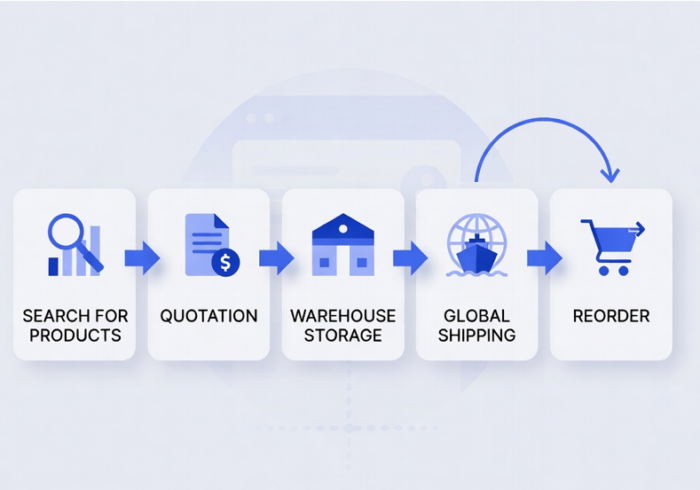
Discover the key differences between single-vendor and multi-vendor marketplaces for B2B sourcing. Learn how each model affects supplier risk, inventory costs, product selection, quality control, dropshipping, and global fulfillment when sourcing products from China.

For global B2B sellers, the choice between a single vendor marketplace and a multi vendor marketplace affects far more than product selection. It determines how much inventory risk you carry, how quickly you can react to demand, how much control you retain over quality, and how efficiently you can serve customers across borders.
At Looperbuy, we work with businesses that want to source products from China without tying up capital in large inventory purchases, managing warehouse space, coordinating separate payments, or handling every shipping task alone. From that perspective, the best marketplace model is not simply the one with more suppliers. It is the model that gives your business the right balance of supplier reliability, catalog breadth, operational visibility, and fulfillment flexibility.
This guide explains the practical differences between single-vendor and multi-vendor marketplace models, with a special focus on B2B sourcing, dropshipping, China procurement, and international fulfillment.
Table of Contents
What Is a Single Vendor Marketplace?
A single vendor marketplace is an ecommerce site where one seller, manufacturer, distributor, or brand offers products directly to many buyers.
In this model, the commercial relationship is relatively simple:
One seller→Multiple buyers
The seller controls the product catalog, pricing logic, stock availability, product information, customer experience, order processing, and often the shipping process. A branded manufacturer website, a direct-to-consumer store, or a wholesale distributor’s private ordering portal can all operate as single-vendor ecommerce stores.
For B2B buyers, the attraction is clear: there is one accountable party. Buyers can often build a stronger long-term relationship, negotiate volume pricing, standardize quality requirements, and simplify purchasing workflows.
However, a single-vendor model also creates dependency. If the supplier has a production delay, raises prices, changes product specifications, runs out of stock, or cannot meet a new compliance requirement, the buyer may have limited alternatives.
How a Single Vendor Model Works in B2B
A typical single-vendor procurement journey looks like this:
1. A B2B seller identifies one supplier or manufacturer.
2. The buyer negotiates pricing, MOQs, specifications, packaging, and lead times.
3. The buyer places orders with that supplier.
4. The supplier produces, stores, and ships goods directly or sends them to the buyer’s warehouse.
5. The buyer manages product availability and customer delivery based on that supplier relationship.
This approach can work especially well for companies with stable demand, highly customized products, exclusive product lines, or strict technical specifications.
Key Benefits of a Single Vendor Marketplace
– Clear accountability: One supplier owns the product and service outcome.
– Consistent product standards: It is easier to maintain consistent materials, packaging, branding, and quality control when working with one vendor.
– Simpler procurement administration: Fewer supplier accounts, invoices, payment processes, and communication channels.
– Potentially stronger pricing: Larger, repeat purchases may create room for negotiated wholesale rates.
– Better integration opportunities: Long-term supplier relationships can support ERP, inventory, order-management, or EDI integration.
Limitations of a Single Vendor Marketplace
The model becomes less attractive when a business needs agility.
– Limited product variety: Buyers can only access the products that one supplier produces or distributes.
– Single-source risk: A disruption at one factory can affect the entire catalog.
– Reduced price comparison: Buyers have less visibility into alternatives and market pricing.
– Inventory pressure: Many suppliers require buyers to purchase in bulk or meet minimum order quantities.
– Slower product testing: Adding a new category often requires finding and onboarding a separate supplier from scratch.
For an online seller testing multiple product categories, the biggest drawback is often capital exposure. Ordering large quantities from a single supplier before proving demand can leave cash tied up in slow-moving stock.
What Is a Multi Vendor Marketplace?
A multi vendor marketplace is a platform where multiple independent sellers or suppliers list products for buyers. The marketplace operator manages the digital infrastructure, while vendors provide products, inventory, pricing, and—in some cases—fulfillment.
The relationship is more complex:
Marketplace operator↔Suppliers↔Buyers
In a B2B environment, a multi-vendor marketplace can bring together manufacturers, wholesalers, exporters, trading companies, logistics providers, and buyers in one procurement ecosystem.
Major marketplaces such as Amazon, eBay, Etsy, and Taobao illustrate the broad consumer version of this model. In B2B, the same concept is applied to industrial supplies, consumer goods, parts, packaging, private-label products, and export-ready inventory. A multi-vendor marketplace not only enriches product selection and distributes responsibility between the platform operator and participating sellers but also places higher demands on vendor management and quality control.
For international sellers sourcing from China, a curated multi-vendor procurement and fulfillment partner can simplify a fragmented supplier landscape. Instead of communicating with many factories, arranging separate payments, storing goods, and coordinating shipment providers independently, businesses can use a single operational layer to manage the process.
Why the Multi Vendor Model Matters for B2B Sourcing
B2B ecommerce is not a niche channel. UNCTAD estimates that business ecommerce sales across 43 economies approached $25 trillion in 2021 and were estimated to rise to almost $27 trillion in 2022. In most of those economies, business-to-business transactions represented the majority of business ecommerce activity.
That scale helps explain why B2B buyers increasingly expect marketplace-style benefits:
– Broader product discovery.
– Faster supplier comparison.
– Flexible sourcing options.
– More transparent order tracking.
– Better access to cross-border suppliers.
– Lower barriers to testing new products.
A multi-vendor platform does not automatically solve every sourcing problem. Its value depends on supplier verification, product-data quality, order coordination, inspection standards, payment security, shipping visibility, and customer support.
Key Benefits of a Multi Vendor Marketplace
– Broader catalog access: Buyers can source across multiple categories and suppliers without leaving one platform.
– Supplier diversification: Businesses can reduce reliance on one factory, exporter, or distributor.
– Competitive comparison: Product specifications, MOQ requirements, lead times, and pricing can be evaluated across suppliers.
– Faster product experimentation: Sellers can test products and niches before committing to deeper inventory positions.
– Potentially lower stock commitments: Marketplace-enabled dropshipping and order-based purchasing can reduce the need to pre-purchase large quantities.
– Scalable category expansion: A seller can add complementary products without building a new supplier network from zero.
– Shared operational infrastructure: The platform may centralize sourcing support, payment handling, warehousing, quality checks, and international shipping.
Challenges of a Multi Vendor Marketplace
A broader supplier base creates additional governance requirements.
– Inconsistent quality: Product quality may vary across vendors unless the platform uses supplier screening and inspection processes.
– More complex order coordination: One customer order may involve several suppliers, products, or shipping timelines.
– Catalog inconsistency: Poor product descriptions, duplicate listings, incorrect specifications, and unclear variant information can hurt purchasing decisions.
– Fulfillment fragmentation: Split shipments can increase delivery complexity and customer confusion.
– Price volatility: Supplier prices, currency conditions, freight costs, and stock levels can change quickly.
– Marketplace competition: Sellers may face similar listings and need stronger product positioning, bundling, branding, or service differentiation.
Single Vendor vs. Multi Vendor Marketplace Comparison
The right model depends on your product strategy and operational maturity. The table below shows how the two options differ for B2B sellers.
| Decision Factor | Single Vendor Marketplace | Multi Vendor Marketplace |
| Supplier structure | One supplier or brand sells to many buyers | Multiple suppliers sell through one platform |
| Product selection | Limited to one supplier’s catalog | Broad, multi-category, and easier to expand |
| Quality consistency | Usually easier to control | Requires stronger supplier vetting and inspection |
| Price comparison | Limited | Easier to compare suppliers and alternatives |
| Supply-chain risk | Higher dependency on one supplier | More options if one supplier fails or delays |
| Inventory approach | Often bulk purchasing or supplier-specific MOQs | Can support smaller test orders and dropshipping workflows |
| Procurement workload | Simple if one supplier meets all needs | Can be simple for buyers if the platform consolidates sourcing and fulfillment |
| Product testing | Slower when new suppliers are needed | Faster access to new categories and products |
| Logistics management | Often handled separately by buyer and supplier | Can be centralized through a sourcing and fulfillment service |
| Best fit | Stable, specialized, high-volume products | Sellers seeking variety, flexibility, and lower inventory exposure |
When a Single Vendor Marketplace Is the Better Choice
A single-vendor model is not outdated. It is often the best commercial choice when consistency matters more than assortment.
Choose a single-vendor approach when:
– You sell a technical, customized, or regulated product.
– You require consistent materials, dimensions, certifications, or branding.
– You have predictable demand and can commit to larger purchase volumes.
– You already have a trusted manufacturer with proven quality.
– You need exclusive designs, tooling, formulations, or private-label development.
– Your procurement team has the capacity to manage a direct factory relationship.
– Your customers value consistency over constant catalog expansion.
For example, a company selling custom industrial packaging may prioritize one qualified manufacturer because exact dimensions, printing quality, material strength, and compliance documentation matter more than having hundreds of supplier options.
The strategic risk is concentration. The OECD notes that import concentration is increasing in some areas as companies source from fewer suppliers than are globally available, making resilience and diversification important considerations for decision-makers.
A practical solution is not always to abandon a trusted primary supplier. Instead, businesses can keep a primary supplier while qualifying backup sources for critical SKUs.
When a Multi Vendor Marketplace Is the Better Choice
A multi-vendor marketplace is especially suitable for sellers operating in fast-moving, category-diverse, or demand-uncertain environments.
Choose a multi-vendor approach when:
– You need access to many product categories or supplier types.
– You want to test products before buying bulk inventory.
– You sell through ecommerce channels with changing trends and short product cycles.
– You need supplier alternatives to reduce disruption risk.
– You are expanding into new countries or customer segments.
– You want to source from China without managing every factory relationship independently.
– You want a unified process for product sourcing, purchasing, warehousing, packing, and shipping.
– You are building a dropshipping or low-inventory ecommerce business.
For many cross-border merchants, the biggest benefit is not merely “more choice.” It is the ability to make smaller, better-informed commitments. Rather than placing a large purchase order based on a supplier’s catalog, sellers can validate demand, monitor product quality, refine listings, and scale successful products more gradually.
At Looperbuy, this is where a managed sourcing and dropshipping service can add practical value. A marketplace-style sourcing workflow can help businesses locate Chinese products, communicate procurement requirements, combine products from different suppliers, arrange warehouse handling, and ship orders internationally—without requiring the seller to operate its own China warehouse.
The Hidden Decision: Marketplace Model vs. Fulfillment Model
Many businesses frame the decision as “one supplier versus many suppliers.” That is important, but it is incomplete.
The more operationally useful question is:
Who manages the work between supplier selection and final delivery?
A seller may use multiple suppliers but still create a poor customer experience if orders are split, tracking is inconsistent, packaging varies, and delays are not communicated. Conversely, a multi-vendor sourcing model can feel simple to the buyer when one partner manages coordination.
A Better B2B Sourcing Framework
Before selecting a marketplace model, evaluate these five operational areas:
1. Supplier reliability
Review factory capabilities, production lead times, product consistency, responsiveness, compliance documentation, and historical order performance.
2. Product-data accuracy
Confirm material details, dimensions, variants, packaging units, carton weights, images, certifications, and country-specific requirements before listing a product.
3. Quality-control process
Define what must be checked before shipment: appearance, quantity, color, dimensions, functionality, packaging, labels, or custom inserts.
4. Inventory and warehouse strategy
Decide whether to use dropshipping, small-batch storage, bulk inventory, or a hybrid approach. The correct choice can differ by SKU.
5. Shipping visibility
Buyers need dependable tracking, realistic delivery expectations, and clear communication when delays occur. The World Bank’s logistics benchmarking work emphasizes tracking, tracing, timeliness, customs processes, and shipment connectivity as core logistics performance factors.
How to Choose the Right Model for Your Business
Use the following decision process before committing resources.
1. Start With Your Product Risk
Ask whether a product is standardized or specialized.
Standardized products—such as common home accessories, basic apparel items, general consumer goods, and non-custom packaging—are usually easier to source through a multi-vendor model.
Specialized products—such as engineered components, custom molds, regulated goods, or branded private-label items—often need a deeper single-supplier relationship.
2. Measure the Cost of Holding Inventory
Inventory is not only the cost of purchasing products. It also includes:
– Warehouse rent.
– Insurance.
– Capital tied up in unsold stock.
– Product obsolescence.
– Damage and shrinkage.
– Handling labor.
– Forecasting errors.
– Return management.
If your sales are uncertain or your catalog changes frequently, using dropshipping or smaller-batch purchasing can reduce exposure. This does not eliminate risk, but it can shift the business from forecasting-heavy purchasing toward demand-led replenishment.
3. Identify Your Supply-Chain Failure Points
List what happens if your supplier:
– Raises prices by 10%.
– Has a three-week production delay.
– Runs out of a key product.
– Changes a material or packaging component.
– Cannot ship to a destination country.
– Fails an inspection.
– Stops responding during a peak sales period.
If one failure could stop your business, you need either backup suppliers or a marketplace partner that can help identify alternatives.
4. Match Fulfillment to Customer Expectations
For many buyers, the product is only part of the experience. Customers also notice delivery speed, tracking quality, packaging, shipping cost, customs delays, and communication.
A multi-vendor sourcing strategy is most effective when it is paired with fulfillment discipline: reliable product checks, consolidated shipments where practical, transparent tracking, and realistic delivery timelines.
5. Build a Hybrid Model When Necessary
The best answer is often not purely single vendor or purely multi vendor.
A hybrid model might include:
– A primary manufacturer for proven, high-volume products.
– Alternative suppliers for business continuity.
– Marketplace sourcing for experimental products and new categories.
– A China warehouse partner for consolidation, inspection, and cross-border fulfillment.
– Dropshipping for long-tail products with uncertain demand.
– Bulk inventory for best-selling products with predictable velocity.
This approach gives sellers both consistency and flexibility.
A Practical Path for Global Sellers
For B2B sellers sourcing from China, the strongest model is often a managed multi-vendor workflow rather than uncontrolled supplier shopping.
Use this process:
1. Define your ideal product profile
Set your target price, expected margin, target market, product requirements, packaging needs, and acceptable delivery window.
2. Source and compare suppliers
Compare not only unit prices, but also MOQ, quality, lead time, communication quality, shipping options, and ability to customize.
3. Order samples or begin with low-risk tests
Validate the product before scaling. Photos alone are rarely enough to assess quality, finish, packaging, or functionality.
4. Set quality standards in writing
Create a simple checklist covering dimensions, quantity, colors, labeling, inserts, packaging, and any product-specific checkpoints.
5. Use warehouse consolidation where appropriate
Combining eligible products before international dispatch can reduce unnecessary split shipments and create a more consistent unboxing experience.
6. Track SKU-level performance
Measure conversion rate, refunds, complaints, delivery time, gross margin, reorder rate, and supplier defect rate.
7. Scale only validated products
Move high-performing SKUs into faster replenishment or selective bulk purchasing once sales data supports the decision.
Final Takeaway
A single vendor marketplace is best when your business depends on deep supplier relationships, stable specifications, controlled quality, and predictable demand. A multi vendor marketplace is better when product variety, sourcing flexibility, lower inventory exposure, and supplier diversification matter most.
For global merchants sourcing from China, the real advantage comes from combining multi-supplier access with reliable operational support. Product discovery is only the first step. Successful cross-border selling also requires supplier coordination, quality checks, payment handling, warehouse services, order consolidation, and international delivery management.
Looperbuy helps B2B sellers build a more flexible sourcing workflow by connecting China product procurement with dropshipping and fulfillment support. Instead of carrying unnecessary inventory or managing every logistics task independently, businesses can focus more resources on product selection, customer acquisition, and growth.
Ready to reduce sourcing complexity and test products with less inventory risk? Explore how Looperbuy can support your China sourcing, purchasing, warehousing, and global dropshipping workflow.
Frequently Asked Questions
1. What is the main difference between a single-vendor and multi-vendor marketplace?
A single-vendor marketplace sells products from one supplier or brand, while a multi-vendor marketplace brings together products from multiple independent suppliers or sellers. The single-vendor model offers greater control and consistency; the multi-vendor model offers more product options and supplier flexibility.
2. Is a multi-vendor marketplace suitable for B2B businesses?
Yes. A multi-vendor marketplace can be highly suitable for B2B companies that need broad catalogs, supplier alternatives, flexible sourcing, or access to new categories. However, it requires reliable supplier vetting, product-data management, quality control, and order coordination.
3. Can a business use both single-vendor and multi-vendor sourcing?
Yes. Many successful businesses use a hybrid sourcing strategy. They may rely on one primary manufacturer for best-selling or customized products while using multi-vendor sourcing to test new items, add complementary products, or reduce supply-chain dependency.
4. Does dropshipping eliminate inventory risk?
No. Dropshipping can reduce the need to pre-purchase and store inventory, but it does not eliminate risk. Sellers still need to manage supplier quality, stock accuracy, delivery expectations, customer support, returns, and product compliance.
5. How can I reduce quality risks when sourcing from multiple China suppliers?
Use a structured process: verify suppliers, order samples, document product requirements, establish quality-control checkpoints, inspect products before dispatch when appropriate, and monitor customer feedback at the SKU and supplier level.
6. Why is warehouse consolidation important for cross-border ecommerce?
Warehouse consolidation can combine eligible products from different suppliers into fewer shipments. This may reduce shipping complexity, improve packaging consistency, simplify tracking, and help create a better end-customer experience.
7. Which marketplace model is better for new ecommerce sellers?
A multi-vendor sourcing model is often more practical for new sellers because it enables product comparison and smaller-scale testing. Once a product demonstrates consistent demand, the seller may negotiate deeper relationships or bulk pricing with a preferred supplier.
References
1. Virto Commerce. “[Multi Vendor Marketplace vs. Single Vendor Marketplace: What’s Best for Your Business?]”
2. United Nations Conference on Trade and Development (UNCTAD). “[Business E-commerce Sales and the Role of Online Platforms].”
3. Organisation for Economic Co-operation and Development (OECD). “[OECD Supply Chain Resilience Review].”
4. World Bank. “[Logistics Performance Index].”
5. World Bank DataBank. “[Logistics Performance Index: Efficiency of Customs Clearance Process].”
6. World Trade Organization. “[B2B E-Commerce Marketplaces and MSMEs].”