The global logistics landscape has undergone a radical transformation over the past two decades, driven by shifting geopolitical alliances, technological breakthroughs, and the ever-increasing demand for efficiency. At the center of this evolution sits Sino Global Shipping, a firm that began as a specialized shipping agency and has since navigated the turbulent waters of corporate restructuring and digital diversification. Founded with a vision to bridge the logistical gap between the East and the West, the company has grown from a regional player into a multifaceted enterprise that exemplifies the modern corporate pivot. By examining its history, core services, and strategic shift into high-tech sectors like blockchain, one can gain a deeper understanding of how traditional industries are adapting to a digital-first economy.
Table of Contents
The Foundations of Sino Global Shipping in the Global Supply Chain
Sino Global Shipping America, Ltd. was established in 2001, a time when China was rapidly integrating into the World Trade Organization (WTO) and becoming the world’s manufacturing hub. Recognizing the immense need for reliable intermediaries to handle the surge in maritime traffic, the company positioned itself as a critical link in the trans-Pacific trade route. Headquartered in New York but with deep operational roots in China, it offered a unique proposition: Western corporate governance paired with intimate local knowledge of Chinese port operations and regulatory environments.
In its early years, the company focused on providing a comprehensive suite of shipping agency services. These were not merely administrative tasks; they involved the complex coordination of vessel arrivals, departures, customs clearance, and cargo handling. By acting as the eyes and ears of ship owners in foreign ports, Sino Global Shipping ensured that multi-million dollar vessels spent as little time as possible at berth, thereby maximizing profitability for its clients. This operational excellence allowed the company to list on the NASDAQ, providing it with the capital needed to expand its footprint into other major maritime hubs, including Australia, Canada, and Hong Kong.
Core Maritime Services and Operational Footprint
The strength of Sino Global Shipping has historically resided in its vertically integrated platform of services. While many competitors focused on a single niche, this company sought to control multiple touchpoints in the supply chain. This included freight forwarding, which is the “travel agency” of the shipping world. As a freight forwarder, the company didn’t just move goods; it designed the most efficient routes, negotiated rates with carriers, and managed the intricate documentation required for international trade.
Beyond forwarding, the company’s chartering services became a cornerstone of its business model. Chartering involves the matching of available ships with cargo owners who need to transport large quantities of bulk commodities like iron ore, coal, or grain. In a volatile market where shipping rates can fluctuate wildly based on weather, fuel costs, and global demand, Sino Global Shipping’s ability to secure favorable terms for its clients solidified its reputation. This expertise in bulk shipping was particularly relevant during the mid-2010s, as China’s hunger for raw materials drove unprecedented demand for dry bulk carriers.
Navigating the Complexity of International Logistics
To understand the trajectory of Sino Global Shipping, one must understand the US-China trade corridor. This is arguably the most important economic artery in the world, yet it is also one of the most fraught with tension. For a company with its name literally bridging these two regions, the shifting tides of trade policy, tariffs, and maritime law have been both a challenge and an opportunity. Sino Global Shipping had to become adept at navigating “grey zones”—areas where regulations were either evolving or being interpreted differently across borders.
The company’s strategic location in New York provided it with direct access to the financial heart of the world, while its offices in major Chinese ports like Ningbo and Shanghai allowed it to maintain a pulse on the ground. This dual presence was vital for its Non-Vessel Operating Common Carrier (NVOCC) operations. As an NVOCC, the company could issue its own bills of lading and act as a carrier without actually owning the ships. This asset-light model allowed for greater flexibility, enabling the firm to scale its operations up or down depending on market conditions without the heavy overhead of maintaining a massive fleet of vessels.
Freight Forwarding and Supply Chain Optimization
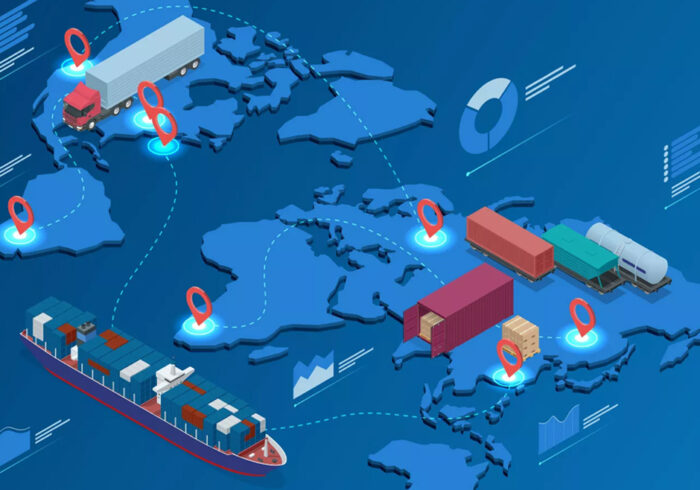
As the shipping industry matured, the focus shifted from simple transportation to sophisticated supply chain optimization. Sino Global Shipping responded by investing in proprietary logistics software. The goal was to provide “door-to-door” visibility, allowing clients to track their cargo from a factory in inland China to a warehouse in the American Midwest. This required the integration of various modes of transport—trucking, rail, and sea—into a single, cohesive workflow.
The company’s logistics management services expanded to include value-added offerings such as warehousing, distribution, and inventory management. By offering these services, Sino Global Shipping moved beyond being a mere service provider to becoming a strategic partner for its clients. In an era where “Just-In-Time” manufacturing was the norm, the precision and reliability provided by the company’s logistical network became a competitive advantage. This period of the company’s history was marked by steady growth and a consolidation of its position as a preferred agency for some of the world’s largest shipping lines.
A Digital Metamorphosis: The Strategic Pivot into Blockchain
Perhaps the most discussed chapter in the history of Sino Global Shipping is its 2021 pivot into the world of blockchain and cryptocurrency mining. To many traditionalists, this seemed like a radical departure from the world of steel containers and salty air. However, from a corporate strategy perspective, it was a bold attempt to capture value in the high-growth “Web3” economy. The company recognized that the same principles that governed logistics—efficiency, transparency, and the secure movement of value—were also the bedrock of blockchain technology.
This pivot was catalyzed by a leadership change and a recognition that the traditional shipping agency market was becoming increasingly commoditized. By expanding into Bitcoin mining and the development of proprietary mining hardware, the company sought to diversify its revenue streams and leverage its global infrastructure. The move was met with significant market interest, as investors looked for publicly traded vehicles to gain exposure to the crypto space. Sino Global Shipping began acquiring mining rigs and exploring the establishment of data centers, positioning itself as a bridge between the physical world of trade and the digital world of decentralized finance.
Rationalizing the Shift to Cryptocurrency Mining
The rationale behind the blockchain pivot was multi-faceted. First, there was the aspect of financial hedging. The shipping industry is notoriously cyclical, often suffering during global economic downturns. In contrast, digital assets were seen (at the time) as a potential hedge or a source of high-alpha returns. Second, the company saw a technological synergy. Blockchain has the potential to revolutionize maritime logistics by creating immutable records of cargo ownership, streamlining customs processes, and reducing the massive amount of paperwork currently required for international shipping.
By entering the crypto space, Sino Global Shipping wasn’t just mining coins; it was building the technical expertise that could eventually be applied back to its core logistics business. For example, the use of Smart Contracts could automate payments between shippers, carriers, and ports, triggering transfers only when certain logistical milestones are met. This convergence of “Old World” logistics and “New World” tech became the company’s new North Star, eventually leading to its rebranding and a shift in its primary focus toward future technologies.
Corporate Resiliency and the Modern Competitive Landscape
The transition from a pure-play shipping agency to a technology-focused enterprise was not without its hurdles. The company faced intense scrutiny from regulators and market analysts, particularly regarding its internal controls and the transparency of its new ventures. This is a common challenge for micro-cap companies undergoing “radical transformations.” To address these concerns, Sino Global Shipping underwent a series of rebranding efforts, eventually changing its name to Singularity Future Technology Ltd. to better reflect its broad-based ambitions in the tech sector.
Despite the name change, the legacy of its shipping operations remained a vital part of its identity. The company had to balance the high-risk, high-reward nature of its blockchain investments with the steady, reliable cash flow of its traditional logistics services. This “dual-track” strategy required a delicate touch. The company expanded its operations in the United States, establishing subsidiaries like Cullinan Global Logistics to bolster its freight services while simultaneously pursuing joint ventures in the manufacturing of Bitcoin mining equipment.
Challenges and Regulatory Navigations
The road to transformation was also marked by legal and regulatory challenges. Like many companies in the blockchain space, Singularity (formerly Sino Global Shipping) had to navigate a landscape where rules were being written in real-time. Issues ranging from environmental concerns over the energy consumption of mining to the legal status of digital assets in different jurisdictions required constant vigilance. Furthermore, the company faced class-action lawsuits and short-seller reports that questioned the viability of its business model.
Resiliency, however, has been a hallmark of the company’s journey. By maintaining its NASDAQ listing and continuing to report financial results, it demonstrated a commitment to staying in the public eye and answering to shareholders. The company’s ability to survive the “crypto winter” and continue its operations suggests a level of institutional durability that many of its more ephemeral competitors lacked. It serves as a case study for how a small-cap company can use its public status to reinvent itself, even if that reinvention involves taking significant risks.
The Future Outlook: Synergizing Logistics with Emerging Technologies
Looking ahead, the future of the entity formerly known as Sino Global Shipping lies in the successful integration of its two halves. The maritime industry is currently facing a “perfect storm” of challenges: the need for decarbonization, the demand for greater supply chain resilience, and the rapid adoption of Artificial Intelligence. A company that understands both the physical movement of goods and the digital movement of data is uniquely positioned to thrive in this environment.
Sustainability is becoming a non-negotiable factor in global trade. “Green shipping” initiatives are forcing companies to rethink their fuel sources and operational efficiency. Here, the company’s background in technology can play a role. Data-driven optimization can reduce fuel consumption by planning better routes and minimizing “idle time” at sea. While the company may have pivoted toward blockchain, the skills developed in managing complex data centers and high-tech hardware are directly transferable to the next generation of “smart” shipping containers and automated ports.
Decentralized Finance and the Next Era of Trade
The ultimate goal for a forward-thinking firm in this space is the creation of a seamless “Trade-Fi” ecosystem—where trade and finance are inextricably linked via decentralized protocols. Imagine a world where a small business in Southeast Asia can ship a container to the US, and the financing for that shipment is automatically secured and settled via a blockchain-based platform, with Sino Global’s (or its successor’s) infrastructure facilitating every step of the journey.
This vision remains the “holy grail” of the industry. While the company has faced many ups and downs, its journey reflects the broader spirit of innovation that defines the 21st-century economy. It is no longer enough to be a good shipping agent; one must also be a data analyst, a technologist, and a visionary. The story of Sino Global Shipping is a reminder that in the world of global commerce, the only constant is change, and those who are willing to navigate the unknown are the ones who will ultimately define the future.
In conclusion, the trajectory of Sino Global Shipping provides a fascinating window into the evolution of global business. From its humble beginnings as a specialized agency in 2001 to its ambitious pivot into the blockchain space two decades later, the company has consistently sought to position itself at the intersection of critical economic trends. While the path has been characterized by significant volatility and corporate restructuring, the core mission of facilitating global trade through innovation remains intact. As the world continues to move toward a more integrated and digital future, the lessons learned from this company’s transformation will likely resonate across the logistics and technology sectors for years to come.
Harness the power of world-class global logistics and smart innovation to secure premium products at exceptional value by visiting https://looperbuy.com/.
Summary:
This article explores the transformation of Sino Global Shipping from a traditional maritime logistics provider into a technology-driven enterprise. It covers the company’s early roots in the US-China trade corridor, its core shipping services, and its strategic pivot into blockchain and cryptocurrency mining.
Related Questions & Answers
· What was the original core business of Sino Global Shipping?
The company’s original core business was providing shipping agency services, freight forwarding, and logistics management, primarily focusing on the trade routes between China and the United States. They acted as a vital intermediary for ship owners and cargo holders, managing customs, chartering, and port operations.
· Why did the company pivot into blockchain and cryptocurrency?
The pivot was a strategic move to diversify revenue and capitalize on the high-growth potential of digital assets. The company aimed to leverage its global infrastructure and logistical expertise to enter the Bitcoin mining sector and develop blockchain-based solutions that could eventually modernize the shipping industry.
· What is the current name of the company formerly known as Sino Global Shipping?
Following its rebranding to reflect its new focus on technology and digital assets, the company changed its name to Singularity Future Technology Ltd. and continues to trade on the NASDAQ under the ticker SGLY (formerly SINO).
· Does the company still operate in the shipping industry?
Yes, despite its significant pivot into technology and blockchain, the company has maintained its roots in the freight and shipping business. It operates a “dual-track” strategy, utilizing subsidiaries to continue providing logistics and freight forwarding services while simultaneously expanding its tech portfolio.
· Where are the primary offices of the company located?
The company is headquartered in New York, USA, but it maintains a significant operational presence in China, with offices in major port cities. It also has an international footprint with branches or operations in Australia, Canada, and Hong Kong.
Hot Tags:
Sino Global Shipping; Singularity Future Technology; Maritime Logistics; Freight Forwarding; Blockchain Technology; Bitcoin Mining; NASDAQ SINO; NASDAQ SGLY; US-China Trade; Shipping Agency; Supply Chain Management; Cryptocurrency Pivot; Digital Assets; International Trade; Logistics Software; NVOCC; Ship Chartering; Global Transportation; Trade Finance; Maritime Innovation; Corporate Rebranding; Dry Bulk Shipping; Port Operations; Tech Diversification; Freight Logistics; Strategic Pivot; Maritime Industry Trends; Crypto Mining Rigs; Global Supply Chain; Singularity Future.