Build a high-performing dropshipping business on marketplaces like eBay with reliable China-based fulfilment. Learn how to drive targeted traffic, optimise listings for conversion, use data to refine your catalog, and plug B2B platforms like Looperbuy into a scalable selling system.
If you want to grow a profitable dropshipping business on marketplaces like eBay while sourcing reliably from China, you need a traffic strategy that goes beyond “listing and waiting”, and a conversion journey that feels trustworthy from the first click to the final payment. Drawing on my experience optimising B2B dropshipping stores and the latest marketplace best practices, this guide shows you how to build a high-performing sales engine and plug it into a China-based fulfilment partner like Looperbuy.
Table of Contents
How modern eBay-style sellers really win
Most sellers struggle with two invisible bottlenecks: weak traffic and low conversion. They upload dozens of products, but only a handful ever get meaningful views or sales. In my consulting work with marketplace sellers, the most successful stores treat their business like a system: clear traffic sources, predictable listing optimisation, and a fulfilment workflow that can scale without stock risk. [doba]
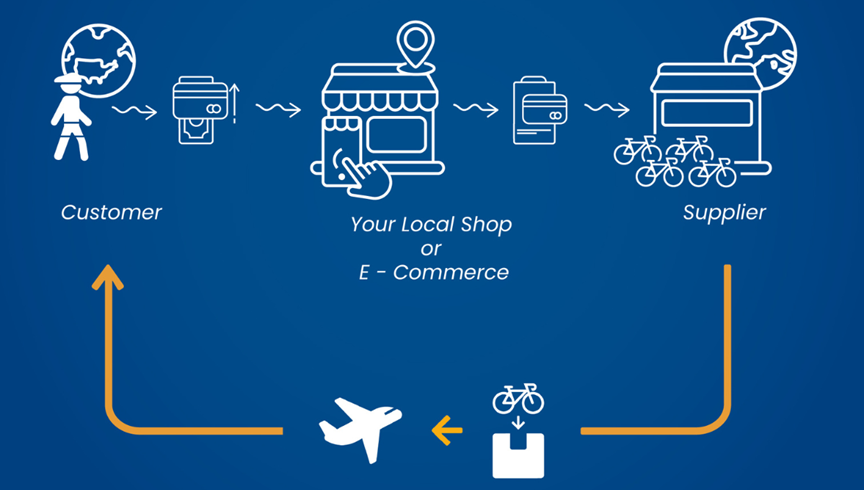
When you connect that system to a B2B dropshipping platform in China, you can test more products, react faster to trends, and avoid locking cash into inventory you may never sell. That combination—smart traffic plus asset-light fulfilment—is what separates casual sellers from consistently profitable brands.
Discover the right traffic sources (not just “more traffic”)
The first shift is to map where your buyers actually come from. On eBay-like platforms, four traffic engines tend to drive most of the sales. [veeqo]
Platform search and recommendations
Marketplace search and “Best Match” style ranking still account for the majority of high-intent buyers. To tap into this: [frooition]
– Use descriptive product titles that mirror how buyers search: product type, key feature, material, size and use case. [frooition]
– Write concise but specific bullets in the listing so buyers can scan benefits in seconds. [frooition]
– Keep images consistent in aspect ratio and style so your portfolio looks like a real brand, not a random collection. [frooition]
When you source from China via a B2B platform like Looperbuy, insist on product data that includes clear specs, good images and accurate dimensions; this makes your listings easier to optimise and reduces returns.
Social media and content-driven traffic
Social platforms are ideal for driving highly targeted traffic to your marketplace store. Over the last few years I’ve seen three tactics work repeatedly: [doba]
– Short-form video showing the product in use, with a strong benefit hook in the first three seconds. [youtube]
– Story-style posts that explain *why* you selected a particular supplier or manufacturing process, reinforcing trust.
– Pinterest-style visual boards for niches like home decor, fitness accessories or gadgets, each linking back to your marketplace listings.
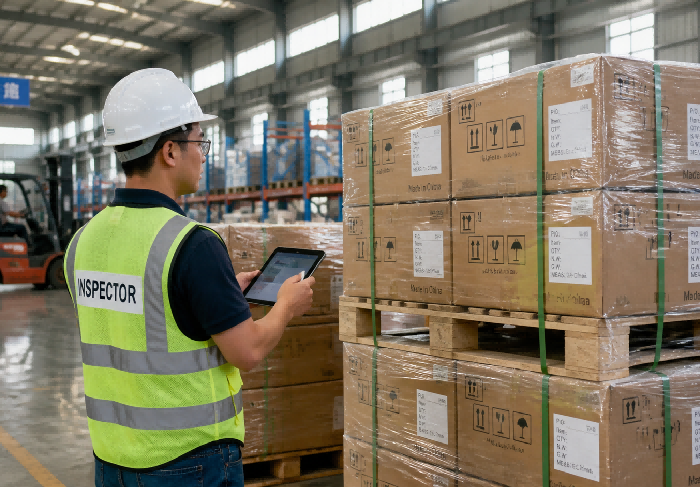
If your inventory comes from China via Looperbuy, you can build behind-the-scenes content: warehouse footage, QC checks and packing workflows. This reassures buyers who are wary of long-distance fulfilment.
Organic and paid search outside the marketplace
Search engines remain a powerful external traffic source for marketplace listings, especially when combined with shopping feeds and clear product data. You can: [doba]
– Submit product feeds to Google Shopping and ensure titles, descriptions and images meet feed quality guidelines.
– Publish helpful blog posts on your own site (for example, “How to choose a durable kitchen organizer”) and link to your marketplace listings as the recommended products. [veeqo]
– Tag external links with UTM parameters so you can track which articles or campaigns actually generate sales.
Influencer and affiliate partnerships
Influencers and niche publishers compress trust-building. When they vouch for your product, buyers skip several mental steps and move closer to purchase. Practical moves: [doba]
– Offer a curated bundle of bestsellers rather than a single SKU, so influencers have more to show and you lift average order value.
– Provide a simple commission structure and a unique tracking link for each partner.
– Share your Looperbuy-backed fulfilment story—fast processing, consolidated shipping and quality checks—as part of the pitch. B2B creators care about process as much as products.
Turn views into sales with conversion-focused listings
Getting traffic is only half of the journey; the harder part is turning interested visitors into paying customers. On marketplaces like eBay, minor changes in listing quality can move conversion rates by double-digit percentages. [frooition]
Fast, clean pages and sharp visuals
Buyers abandon listings when pages feel slow or cluttered. While you can’t control every aspect of marketplace performance, you *can* influence how heavy your content is and how clean it looks. [frooition]
– Keep images high resolution but properly compressed so they load quickly.
– Use clean backgrounds and multiple angles to show function and scale. [frooition]
– Avoid busy collages or heavy overlays; they may look “creative” but often reduce clarity.
When pulling assets from your China-based supplier, ask for unedited, high-resolution images. You can then crop or brand them consistently before uploading to your store.
Titles and descriptions that answer real questions
Strong titles and descriptions match buyer intent and remove friction. In practice:
– Put the core product type and main benefit at the start of the title, followed by key attributes like size or material. [frooition]
– Use short bullets to cover essentials: use cases, compatibility, durability, care instructions and what’s included in the box.
– Steer clear of copy-pasted factory blurbs; they look generic and often omit information buyers care about most.
Working with dropshipping platforms that maintain detailed product feeds—specs, usage notes, packaging details—helps you build these descriptions quickly without sacrificing accuracy. [doba]
Trust signals and social proof
Marketplace buyers often scan ratings and reviews before they seriously evaluate your offer. You can strengthen this part of the journey by: [frooition]
– Following up each order with a short, personal message and a polite review request.
– Featuring snippets of strong recent reviews in the top part of your description (where allowed).
– Highlighting badges like Top Rated Seller, response times and return windows so buyers know what to expect.
For cross-border dropshipping from China, clear disclosure about shipping times, tracking and return handling is critical. It’s better to set realistic expectations than to overpromise and create a wave of disputes.
Simple offers that motivate action
Time-sensitive and value-focused offers help move hesitant buyers to purchase. [doba]
– Use limited-time discounts or quantity-based price breaks to reward larger orders.
– Offer free or reduced shipping above a threshold, which works well for sellers consolidating shipments through a B2B partner like Looperbuy.
– Where the marketplace allows it, send friendly cart reminders or messages when buyers watch but don’t purchase.
This is where a reliable Chinese fulfilment partner matters: you can design more aggressive offers when you know your logistics costs and lead times are stable.
Data-driven optimisation with marketplace and analytics tools
Sustainable marketplace growth comes from *measurement*, not guesswork. Sellers who track traffic, conversion and product-level performance make better decisions about what to scale up, keep stable or quietly retire. [veeqo]
Using marketplace analytics
Tools like eBay’s Seller Hub give you visibility into impressions, click-through rates, conversion and repeat purchase behaviour. [frooition]
– Identify high-traffic, low-conversion listings and treat them as optimisation priority.
– Track which traffic sources (native search, promoted listings, external links) consistently lead to sales.
– Monitor cancellation and return reasons to spot hidden issues in descriptions or product quality.
If you import and list products via a B2B platform, build a simple dashboard that cross-references marketplace performance with supplier-level data (product category, manufacturer, MOQ, defect rates). This helps you phase out underperforming SKUs before they damage your profile.
Tracking external campaigns
When you drive traffic from paid ads, email sequences or content, you need attribution to see what actually works. [doba]
– Attach UTM tags to every external link pointing to marketplace listings.
– Build a report that ties those tags to order IDs and revenue.
– Learn which channels bring buyers who not only purchase but also leave positive feedback and place repeat orders.
Over time, this will show whether your best customers discover you via social content, search, influencers or marketplace browsing—valuable insight for budget allocation.
Lightweight A/B testing
Marketplace environments limit classic A/B testing, but you can still experiment safely. [frooition]
– Test alternative titles by switching structure and measuring click-through over a fixed period.
– Rotate main images (for example, lifestyle vs. plain product) and observe impact on engagement. [frooition]
– Compare different bundles or offers on otherwise similar SKUs.
Because B2B dropshipping platforms like Looperbuy make it easy to add or remove products without inventory risk, you can test more variations and aggressively refine your catalog.
Choosing and using B2B dropshipping platforms in China
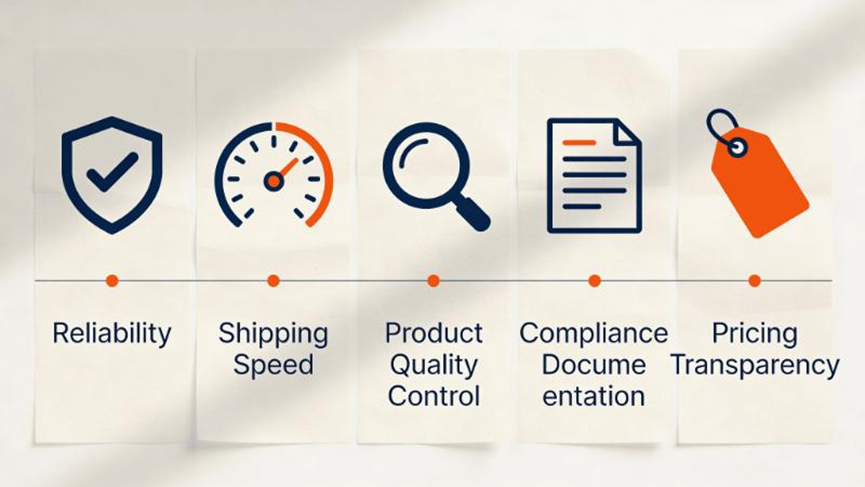
For global sellers, the fulfilment partner is as strategic as the marketplace itself. Reliable B2B dropshipping from China affects margin, delivery times, defect rates and ultimately buyer trust. [minea]
What matters in a China-based partner
From an operator’s perspective, the key capabilities are:
– Access to a wide, verified supplier network with transparent product data.
– Consolidated warehousing and packing, so you can ship multi-item orders efficiently.
– Clear shipping options to major markets, with realistic transit times and tracking.
– Support for branding elements such as custom inserts or packaging when you’re ready to position as a brand rather than a generic reseller.
Platforms that specialise in cross-border B2B dropshipping help you align marketplace promises with operational reality. This alignment is what keeps ratings high and customer service manageable.
Plugging Looperbuy-style fulfilment into your marketplace strategy
When you connect a B2B platform like Looperbuy to an eBay-style selling model:
– You reduce or eliminate the need to hold stock, which makes it easier to test new niches and respond to trends.
– You gain centralised control over quality checks and packaging, rather than relying on disparate individual suppliers.
– You can coordinate shipping and returns through a single operational framework, simplifying customer communication.
This backbone lets you focus more on traffic, offer design and brand storytelling—the parts of the business that move the revenue needle.
How tactics differ across major selling channels
Multi-channel sellers often ask whether marketplace tactics translate to their independent stores. In reality, each channel has its own emphasis. [frooition]
| Channel type | Core focus for success | Typical buyer expectation |
| eBay-style marketplace | Strong titles, clean images, competitive pricing, fast messaging and clear policies.frooition | Ready-to-buy shoppers comparing multiple listings quickly. |
| Independent store (e.g. Shopify) | Fast site, branded experience, email flows, remarketing and long-form content. | Buyers willing to explore your brand but needing trust indicators. |
| Large marketplace (e.g. Amazon) | Rich product pages, bullet-led feature lists and aggressive sponsored product use. | Buyers expecting high reliability and detailed information. |
Understanding these differences helps you tailor how you present China-sourced products in each environment while using the same underlying fulfilment network.
UX enhancements that keep buyers engaged
Beyond strategy and logistics, the way your listing *feels* to a buyer strongly influences sales. Clear structure, readable text and helpful visuals make decision-making easier. [frooition]
Layout, readability and visual prompts
– Use short paragraphs and clear subheadings so buyers can scan benefits fast.
– Break complex information (compatibility, sizing, installation steps) into bullets or simple numbered lists.
– Add comparison tables when you sell multiple variants, highlighting key differences in size, material or features.
For visual assets, consider:
– Hero image: main product on a clean background, clearly showing shape and size.
– Context image: product in use within a realistic environment (kitchen, office, car).
– Detail image: close-up of texture, connectors or key functional parts.
Every strong listing and every article about marketplace selling should lead the reader toward a concrete action. In this context, that can be:
– Selecting 3–5 products to test on eBay with clearly defined titles and images.
– Connecting your store to a B2B dropshipping platform like Looperbuy to remove inventory risk.
– Setting up simple tracking (marketplace analytics plus UTM tags) so you can measure what works.
When you put all of these elements in place, your selling system becomes more predictable—and far easier to scale.
Frequently asked questions (FAQ)
1. How many products should I start with when using a B2B dropshipping platform from China?
For most sellers, starting with 20–50 carefully selected SKUs gives enough variety to test demand without overwhelming operations. Focus on clear niches and proven demand signals rather than sheer volume.
2. What is the best way to handle longer shipping times from China on marketplaces like eBay?
Be transparent about estimated delivery windows, provide tracking on every parcel and proactively message buyers when parcels pass key checkpoints. Realistic expectations reduce complaints and protect your ratings.
3. How can I avoid low-quality products when sourcing from Chinese suppliers?
Work with platforms that vet suppliers, review sample units before listing, and watch early customer feedback closely. Remove or replace any SKU that shows repeated quality issues.
4. Is it better to sell under my own brand or as a generic seller when dropshipping from China?
Starting as a generic seller can be faster, but over time building a coherent micro-brand with consistent visuals and messaging usually improves buyer trust and repeat purchase rates. [minea]
5. Which metrics should I watch weekly to keep my marketplace business healthy?
At minimum, track impressions, click-through rate, conversion rate, average order value, return rate and the share of orders coming from repeat buyers. These numbers reveal whether your traffic and fulfilment strategies are working together. [veeqo]
References
– Doba. “7 Proven Strategies to Boost Traffic and Sales on Selling Websites Like eBay.”[doba]
– Frooition. “Increase Your eBay Sales in 7 Easy Steps.” [frooition]
– Veeqo. “7 Tips to Increase Organic Traffic to Your eBay Store.” [veeqo]
– Minea. “Best B2B E-Commerce Platforms in 2026 for Scalable Growth.” [minea]