Direct sourcing company vs Alibaba suppliers: discover which option is safer for beginners. Compare supplier verification, Trade Assurance, product quality control, payment protection, logistics, inventory risk, and fulfillment support. Learn how to source from China with more confidence using a practical risk-control checklist.
For a first-time buyer, the safer choice is not automatically a direct sourcing company or Alibaba suppliers—it depends on how much verification, coordination, and risk control you can personally manage. Alibaba can be an efficient way to discover factories and compare products, while a reliable direct sourcing company can reduce the operational burden by handling supplier screening, quality checks, consolidation, and fulfillment.
This guide compares direct sourcing company vs Alibaba suppliers from a beginner’s perspective. It explains the real safety differences behind supplier verification, payment, product quality, logistics, intellectual property, and inventory risk—so you can choose a sourcing model that fits your budget, product complexity, and growth stage.
Table of Contents
What Is the Difference Between a Direct Sourcing Company and Alibaba Suppliers?
Before comparing safety, it is important to understand that these options do different jobs.
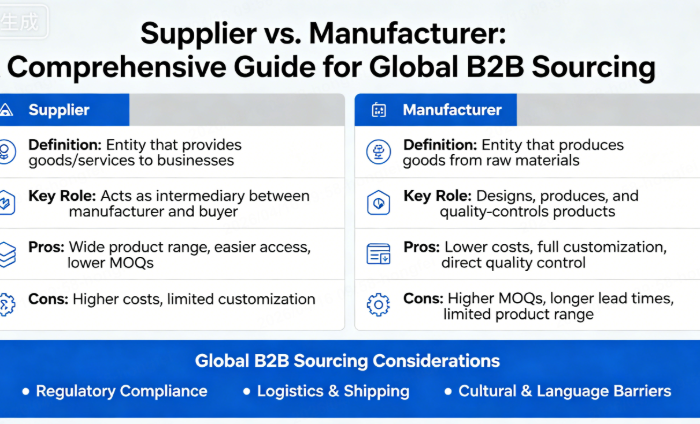
Alibaba suppliers are individual sellers, manufacturers, trading companies, wholesalers, or exporters that list products on Alibaba.com. Alibaba is a B2B marketplace, not the factory itself. Buyers search listings, contact suppliers, negotiate, order samples, arrange payments, and often manage freight independently.
A direct sourcing company is an intermediary that helps buyers source from China. Depending on its business model, it may identify factories, negotiate pricing, verify suppliers, manage samples, perform quality checks, consolidate orders, arrange storage, and coordinate international shipping or dropshipping.
For example, a sourcing and fulfillment platform such as Looperbuy can support global B2B sellers that want to source products from China without taking on the full burden of inventory storage, fragmented supplier communication, payment coordination, or cross-border logistics management.
Core operating difference
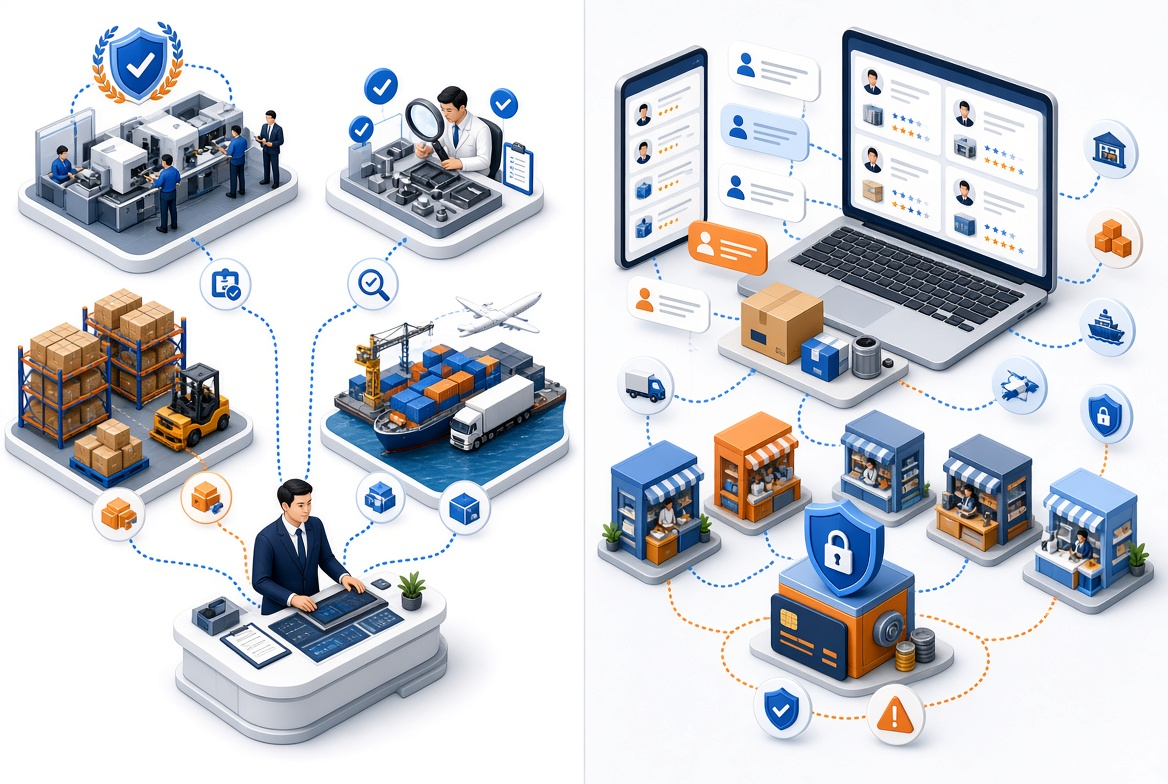
| Area | Direct Sourcing Company | Alibaba Suppliers |
| Main role | Sourcing partner and coordinator | Individual supplier or seller found through a marketplace |
| Supplier search | The company may shortlist and verify suppliers for you | You search, compare, message, and verify suppliers yourself |
| Product range | Often can source across many factories and categories | Usually limited to each supplier’s own catalog or network |
| Quality control | May coordinate inspections, sample reviews, and production follow-up | Buyer must arrange QC or rely on supplier and third-party services |
| Order consolidation | Often available | Usually requires separate coordination |
| Logistics | May offer freight, warehousing, fulfillment, or dropshipping | Buyer commonly manages logistics separately |
| Best for | Buyers needing hands-on support | Buyers comfortable managing supplier communication directly |
| Main risk | Choosing an opaque or unverified agent | Choosing an unverified or unsuitable supplier |
Important: Neither route is inherently risk-free. The safest option is the one with the clearest evidence, transparent pricing, documented responsibilities, and a purchasing process you can realistically control.
Direct Sourcing Company vs Alibaba Suppliers: Safety Comparison
When beginners ask, “Is Alibaba safe?” the better question is: What specific risk am I trying to control?
A marketplace may offer transaction protection, but it does not automatically solve every sourcing issue. Likewise, a sourcing company may reduce operational complexity, but only if it is legitimate, transparent, and accountable.
Supplier legitimacy and factory verification
Alibaba offers supplier profile information and badges. Its buyer guidance explains that a Verified Supplier is a Gold Supplier that has had aspects of its company profile, management, production capability, products, or processes assessed, certified, or inspected by third-party institutions. However, buyers should still review the actual assessment details and independently validate whether the supplier is appropriate for their product and order requirements.
A direct sourcing company can offer a stronger practical layer of supplier verification if it performs and documents checks such as:
– Chinese business license review
– Unified Social Credit Code verification
– Factory address confirmation
– Manufacturing capability review
– Export history or customer-reference checks
– Product certification verification
– Sample evaluation
– Production capacity review
– Pre-shipment quality inspection
New Zealand Trade and Enterprise recommends a staged process: begin with 20–30 leads, narrow the list to 5–10 vetted candidates, and select 2–3 finalists for pilot production. It also advises buyers to verify a supplier’s Chinese business license, assess financial and operational conditions, and use factory visits or third-party audits when possible.
Beginner verdict: A transparent direct sourcing company can be safer if you do not know how to validate Chinese business records, analyze factory claims, or conduct supplier due diligence. But ask the company for proof of its process—not just promises.
Payment security and dispute protection
Alibaba’s strongest safety advantage is its built-in Trade Assurance program. The program applies when buyers place and pay for an eligible order through Alibaba.com. According to Alibaba, it can provide support when the supplier does not ship on time or when product quality differs from the agreement in the online order. Buyers may request a refund within 30 days after delivery if they are dissatisfied with product quality.
This is useful, but there are conditions:
– Your agreement must be documented in the Alibaba online order.
– Payment generally needs to be made through Alibaba’s approved process.
– Product specifications must be clear and measurable.
– Communications should remain in Alibaba’s Message Center.
– The dispute process does not replace pre-shipment inspection or sample approval.
A direct sourcing company may use different payment structures. Some charge a sourcing fee, while others earn through supplier pricing, service bundles, logistics margins, or a combination of these. That does not automatically make the model unsafe. However, beginners should avoid agencies that demand unexplained payments to personal accounts, refuse written terms, or will not disclose who receives the funds.
Safer payment rule: Never send money solely because a supplier or agent says, “This is our standard process.” Ask for the legal company name, invoice, bank-account match, payment schedule, product specification, and written responsibility for defects or delays.
Product quality control
Product quality is usually where inexperienced buyers lose the most money.
With Alibaba suppliers, you can request samples and use inspections. Alibaba itself recommends detailed purchase orders, samples, and production monitoring or inspection services to better protect orders. Yet the buyer remains responsible for creating a meaningful specification and deciding whether the goods meet it.
A good direct sourcing company can be valuable because it may coordinate:
– Factory sample requests
– Photo and video confirmation
– Packaging checks
– Labeling checks
– Product-function testing
– Quantity verification
– Consolidation checks
– Pre-shipment inspection
– Rework or replacement coordination
However, “we inspect every product” is not enough. You should ask:
1. What inspection standard do you use?
2. Do you inspect before or after final payment?
3. Will I receive inspection photos, videos, and reports?
4. What happens if goods fail inspection?
5. Who pays for rework, replacement, or re-inspection?
6. Can I approve the sample before production begins?
Logistics, warehousing, and inventory risk
For many global sellers, sourcing safety is not only about avoiding fraud. It is also about preventing cash from being trapped in unsold inventory, excessive storage costs, and complicated international logistics.
U.S. retail e-commerce sales reached an estimated $340.2 billion in the second quarter of 2026, up 12.4% from the same quarter in 2025, according to the U.S. Census Bureau. This growth creates opportunity, but it also makes fulfillment speed, stock planning, and supplier reliability more important for merchants competing online.
Alibaba suppliers can ship directly or help arrange freight, but each supplier may use a different process, packaging standard, lead time, and shipping partner. If you buy from several suppliers, you may need to consolidate inventory yourself or pay separate shipping charges.
A direct sourcing company may be safer for beginners when it can combine several functions:
– Source products from multiple factories
– Consolidate products into one shipment
– Verify packaging and quantities
– Store inventory temporarily
– Ship bulk goods to a warehouse
– Support order fulfillment or dropshipping
– Provide shipping updates and documentation
For Looperbuy’s target users, this is a practical advantage. Instead of committing to large factory minimum order quantities and managing separate supplier relationships, B2B sellers can potentially test products with lower operational complexity and reduce the burden of inventory, storage, payments, and logistics coordination.
Which Option Is Safer for Different Beginners?
There is no universal winner. The safest sourcing path depends on the buyer’s capability and product risk.
| Buyer situation | Usually safer option | Why |
| Testing a simple, non-regulated product | Alibaba supplier with Trade Assurance and samples | Easy supplier comparison and lower-cost market research |
| Buying one product from one established factory | Alibaba supplier or direct sourcing company | Either can work if verification and terms are clear |
| Sourcing from multiple product categories | Direct sourcing company | Can reduce fragmented communication and shipment complexity |
| Launching a private-label product | Direct sourcing company with QC support | Branding, packaging, specifications, and inspections need closer coordination |
| Selling regulated or safety-sensitive goods | Specialist sourcing company plus independent compliance verification | Requires deeper checks for certifications, testing, and traceability |
| Running dropshipping or fulfillment operations | Direct sourcing and fulfillment partner | Useful for order consolidation, inventory visibility, and delivery coordination |
| Experienced buyer with a strong QC system | Alibaba suppliers | Experienced teams may source directly and negotiate better control |
The real safety threshold is not the platform. It is your ability to verify, document, inspect, and enforce the transaction.
A Practical Beginner Sourcing Framework
Whether you choose Alibaba suppliers or a direct sourcing company, use this seven-step process before placing a significant order.
1. Define the product specification first
Do not begin with “I need a cheap version of this product.”
Create a product requirement sheet that includes:
– Product name and intended use
– Material, dimensions, color, and finish
– Target quality level
– Packaging requirements
– Branding or logo requirements
– Compliance requirements
– Quantity and target budget
– Required delivery date
– Destination market
– Acceptable defect level
A vague request produces vague quality expectations. A detailed request gives you evidence to use if the product is wrong.
2. Compare at least three candidates
Do not select the first supplier that responds quickly.
Compare:
– Unit price
– Minimum order quantity
– Sample cost
– Lead time
– Production capacity
– Payment terms
– Quality certifications
– Packaging options
– Export experience
– Communication quality
– Willingness to document commitments
A low quotation may hide lower-quality materials, incomplete accessories, weak packaging, or shipping exclusions.
3. Verify legal identity
Ask for the supplier’s or sourcing company’s:
– Full registered Chinese company name
– Business license
– Unified Social Credit Code
– Registered address
– Bank beneficiary name
– Main contact and official email domain
Supplier due diligence guides consistently recommend confirming that the legal entity, business scope, and payment recipient match the company you are contracting with.
4. Order samples before bulk production
A sample is not just a product test. It is a communication test.
Evaluate:
– Product quality
– Material accuracy
– Dimensions
– Color consistency
– Functionality
– Packaging
– Branding placement
– Shipping speed
– Supplier responsiveness
For private-label products, approve a “golden sample” in writing. This becomes the reference standard for production inspection.
5. Put all critical terms in writing
Your purchase order or service agreement should state:
– Exact product specifications
– Quantity
– Unit price and total value
– Incoterms or shipping responsibility
– Production timeline
– Packaging requirements
– Inspection requirements
– Defect handling process
– Refund or replacement terms
– Intellectual-property protections
– Payment milestones
Avoid relying on chat messages scattered across WhatsApp, WeChat, email, and platform messages.
6. Inspect before final release
For higher-value orders, use an inspection process before final shipment.
An inspection should verify:
– Quantity
– Workmanship
– Functionality
– Branding and labels
– Packaging
– Carton marks
– Barcode accuracy
– Shipping marks
– Product consistency against the approved sample
7. Start with a pilot order
Do not treat your first supplier relationship as a final commitment.
Start with a controlled order, learn where defects or delays occur, measure actual delivery performance, and improve your specification before scaling.
Red Flags to Avoid
The following warning signs apply to both Alibaba suppliers and direct sourcing companies:
– They push you to pay outside the protected platform without a clear commercial reason.
– They request payment to a personal bank account.
– Their business name, invoice name, and bank beneficiary do not match.
– They refuse to provide a business license or legal registration information.
– They avoid sending samples.
– They offer prices dramatically below every other quotation.
– They pressure you to place a large order immediately.
– They cannot explain their inspection process.
– They refuse written quality standards or delivery commitments.
– They claim to be a factory but cannot provide credible production evidence.
– They insist that certificates are “available” but will not share verifiable documents.
– They cannot identify who is responsible when goods fail inspection.
A credible sourcing partner should welcome reasonable verification. If transparency is treated as an inconvenience, consider it a commercial risk.
How Looperbuy Can Reduce Beginner Sourcing Risk
For global B2B sellers, sourcing success depends on more than finding a low unit price. It requires a process that connects product sourcing, supplier coordination, inventory management, payments, consolidation, and international fulfillment.
Looperbuy can position itself as a practical alternative for merchants who want China sourcing support without building an in-house procurement team. Its strongest value proposition is not simply “finding cheap products.” It is helping sellers reduce the operational friction that can make direct supplier sourcing difficult.
A beginner-friendly sourcing and fulfillment workflow can include:
– Product sourcing based on clear requirements
– Supplier comparison and communication support
– Sample coordination
– Quality-check visibility
– Multi-supplier order consolidation
– Flexible storage support
– Cross-border shipping coordination
– Dropshipping or fulfillment support
– Ongoing order-management assistance
If you want to source Chinese products without managing every supplier, warehouse, payment, and shipping detail alone, contact Looperbuy to discuss your product requirements, sourcing goals, and fulfillment needs before placing your next order.
FAQ
1. Is Alibaba safe for beginners?
Alibaba can be safe for beginners when buyers use Trade Assurance, keep communication and payment on the platform, order samples, create detailed product specifications, and verify suppliers. Alibaba’s protections are valuable, but they do not remove the need for due diligence and quality inspection.
2. Is a direct sourcing company safer than Alibaba?
A reliable direct sourcing company can be safer for beginners who need help verifying factories, managing quality control, consolidating products, and coordinating logistics. However, the sourcing company itself must also be verified through legal registration, references, transparent fees, and written service terms.
3. How do I verify an Alibaba supplier?
Check the supplier’s profile, verify its legal business identity, request a business license, order a sample, review certificates, ask for production evidence, use Trade Assurance, and consider a third-party inspection before shipment. Verified badges are useful signals, but they are not substitutes for product-specific due diligence.
4. What is the safest way to pay a Chinese supplier?
For Alibaba orders, use the platform’s eligible Trade Assurance payment process and document the exact specifications in the online order. For off-platform transactions, use payment terms that match verified legal entities, written agreements, staged milestones, and inspection requirements. Avoid personal accounts and undocumented payment requests.
5. Should I use a sourcing agent for dropshipping?
A sourcing agent or sourcing-and-fulfillment company can be useful for dropshipping if it can source products, check quality, consolidate orders, manage inventory, and provide reliable shipping options. Ask how it handles stock accuracy, packaging, shipping times, returned orders, and replacement requests before committing.
6. Can Alibaba suppliers handle private labeling?
Many Alibaba suppliers offer private labeling, but the buyer must confirm logo methods, packaging requirements, minimum order quantities, intellectual-property protections, sample approval, and quality standards. For complex branding projects, a sourcing company may provide more coordination support.
7. What should I inspect before shipping from China?
Inspect product quantity, product appearance, functionality, measurements, materials, branding, labels, barcodes, packaging, carton marks, and consistency against the approved sample. For regulated products, also verify that the relevant testing and compliance documentation matches the actual product and destination market.
References
1. [U.S. Census Bureau — Quarterly Retail E-Commerce Sales Report]
2. [Alibaba.com Buyer Central — Trade Assurance Protection]
3. [Alibaba.com Buyer Central — How Sourcing on Alibaba.com Works]
4. [New Zealand Trade and Enterprise — Find and Verify Suppliers in China]
5. [ForeignGo — China Sourcing Due Diligence: 7 Checks Before You Commit]
6. [Sinospect — Supplier Due Diligence in China: Buyer Checklist]