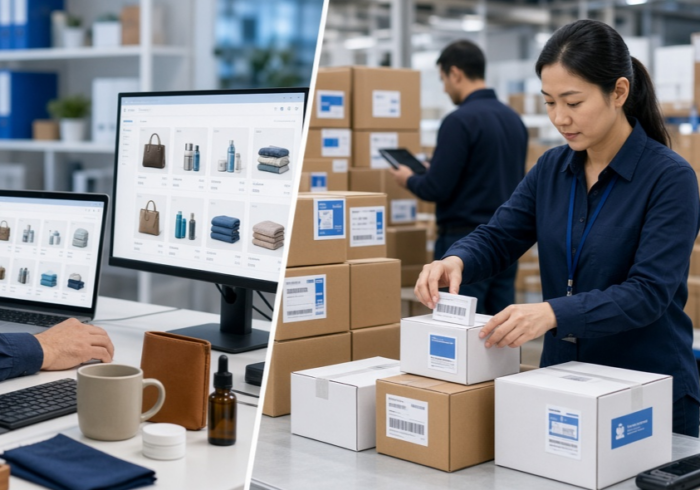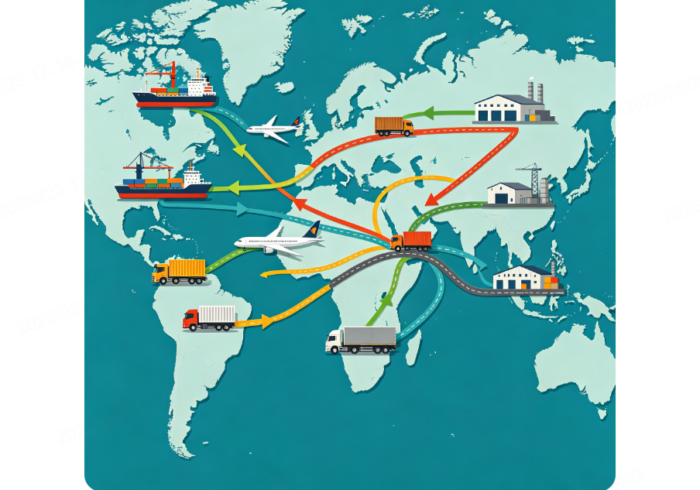
Discover how traceless dropshipping helps global e-commerce sellers source products from China, protect brand identity, reduce inventory risk, improve packaging control, and manage cross-border fulfillment. Learn practical workflows, compliance priorities, quality-control steps, and scalable strategies for building a reliable global store.
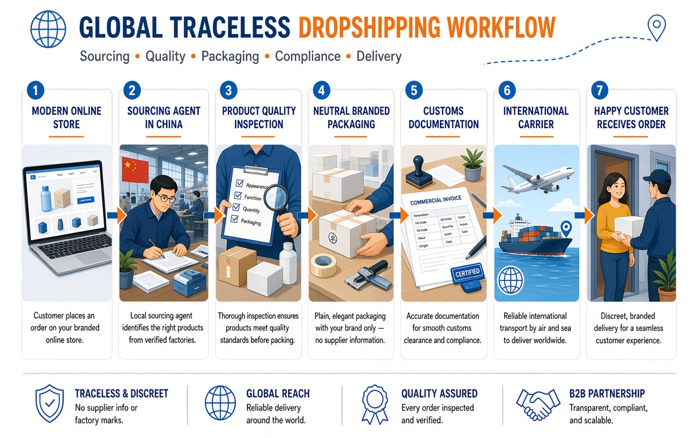
Traceless dropshipping is becoming a defining fulfillment strategy for global e-commerce brands that want to sell internationally without holding inventory, exposing supplier details, or sending customers a confusing mix of third-party packaging and invoices. Instead of simply forwarding orders from a supplier to a buyer, the model combines product sourcing, quality control, neutral or branded packaging, order fulfillment, and cross-border delivery under the seller’s customer-facing brand.
For B2B sellers, online retailers, marketplace operators, and social-commerce merchants, this shift is significant. Modern buyers do not judge a store only by its product price. They judge it by delivery clarity, packaging quality, tracking visibility, product consistency, after-sales support, and whether the order feels like it came from the brand they chose to buy from.
Global online retail continues to expand. Shopify estimates worldwide e-commerce sales could reach approximately $6.88 trillion in 2026, while U.S. e-commerce sales reached an adjusted $340.2 billion in the second quarter of 2026 alone. In this environment, sellers need a fulfillment model that supports fast product testing while also protecting customer trust and brand identity.
This is where traceless dropshipping from China is gaining attention.
Table of Contents
What Is Traceless Dropshipping?
Traceless dropshipping is a fulfillment approach in which a supplier or sourcing partner ships orders directly to customers while minimizing or removing third-party seller information from the customer experience.
The word “traceless” can be misunderstood. It does not mean hiding product origin, bypassing customs, avoiding tax, or avoiding legal obligations. Responsible traceless dropshipping means keeping the supply chain operationally transparent while presenting the right customer-facing identity on packaging, invoices, tracking updates, and inserts.
In practice, the seller remains accountable for the customer relationship.
A reliable traceless dropshipping workflow may include:
– Neutral packaging without a factory name, unrelated retailer name, or marketplace branding.
– Custom branded packaging such as printed boxes, mailers, stickers, tissue paper, thank-you cards, and inserts.
– Seller-branded packing slips that identify the merchant as the seller of record where required.
– Quality inspection before fulfillment, especially for high-return or technical products.
– Inventory synchronization between the storefront, sourcing platform, warehouse, and shipping provider.
– Order consolidation when buyers purchase multiple products from different suppliers.
– Accurate shipping tracking and proactive exception handling.
– Compliance documentation for categories or markets that require it.
The objective is not secrecy. The objective is a more consistent brand experience.
Traceless vs. Traditional Dropshipping
| Area | Traditional Dropshipping | Traceless Dropshipping |
| Packaging | Supplier packaging may be used | Neutral or seller-branded packaging is planned |
| Packing slips | May show supplier or another retailer | Designed to show the seller correctly |
| Product sourcing | Often based on a public catalog | Can include supplier discovery and sourcing support |
| Quality control | Frequently limited or absent | Can include pre-shipment inspection |
| Multi-supplier orders | May arrive as separate parcels | Can be consolidated in a warehouse |
| Brand experience | Inconsistent | More controlled and repeatable |
| Customer trust | Can be damaged by mismatched information | Improved through a coherent order journey |
| Seller responsibility | Sometimes underestimated | Explicitly managed through policies and processes |
For a new seller, basic dropshipping can be a low-capital way to test demand. For a growing merchant, however, generic supplier fulfillment often creates problems: inconsistent product quality, unexplained package differences, fragmented deliveries, inaccurate delivery promises, and avoidable customer-service tickets.
Traceless fulfillment addresses those gaps.
Why Global Merchants Are Adopting It
The rise of traceless dropshipping is driven by a simple commercial reality: product discovery is easier than brand differentiation.
A seller can find similar products across many marketplaces. What customers remember is the complete experience—from the product page to the parcel at their door.
Brand Protection Matters More Than Ever
When an order arrives with another company’s invoice, supplier label, unfamiliar promotional card, or retail price, a customer may question the authenticity of the store. This can reduce repeat purchases and trigger refund requests.
On some marketplaces, seller identity is not optional. Amazon’s drop-shipping policy states that sellers must be the seller of record and must not allow another seller’s name or contact information to appear on packing slips, invoices, external packaging, or other materials sent with the order.
For merchants selling through their own storefronts, the same principle still applies commercially: the package should match the promise made on the website.
Inventory-Light Expansion Reduces Risk
International expansion used to require purchasing stock in advance, booking warehouse space, negotiating freight contracts, and forecasting demand market by market. Those commitments can be difficult for smaller brands or B2B sellers testing new product categories.
With a managed dropshipping model, sellers can:
– Test product-market fit before placing bulk purchase orders.
– Launch more product variations without buying every SKU upfront.
– Enter additional markets with less inventory exposure.
– Shift toward bulk purchasing only after demand becomes predictable.
– Keep capital available for advertising, content, customer service, and product development.
This is particularly useful for long-tail catalogs, seasonal items, accessories, replacement parts, promotional goods, niche hobby products, and rapidly changing trend-driven products.
Cross-Border Fulfillment Has Become More Complex
Selling internationally is no longer only about finding low-cost shipping. Sellers must manage customs information, taxes and duties, product safety, prohibited items, tracking performance, and customer communication.
The United States has suspended duty-free de minimis treatment for low-value imports, which means low-value shipments may face applicable duties, taxes, and entry requirements. Businesses should verify the requirements for each product and destination rather than relying on previous assumptions.
For European markets, the EU’s General Product Safety Regulation applies to consumer products sold online and requires clear safety and traceability information. For products within its scope, there must also be a responsible economic operator in the EU.
The practical implication is clear: a professional fulfillment partner should support visibility, not just parcel dispatch.
The Operational Model Behind Reliable Fulfillment
High-quality traceless dropshipping is not one action. It is a chain of connected controls.
When even one link fails, the customer feels the result. A wrong color variant, missing accessory, supplier-branded invoice, inaccurate tracking number, or delayed dispatch can all harm the seller’s reputation.
Step 1: Product Sourcing and Supplier Verification
The first task is not merely choosing the lowest listed price. It is verifying whether the product can be supplied consistently.
A sourcing process should examine:
– Product specifications, materials, dimensions, and variations.
– Supplier production capability and stock stability.
– Unit price at small and larger order volumes.
– Minimum order quantity for customization.
– Packaging requirements and carton dimensions.
– Required certifications, test reports, warning labels, or instructions.
– Product restrictions for target markets.
– Realistic processing and shipping lead times.
For B2B merchants, it is often worth ordering samples before launching a product. A sample reveals information that a product listing cannot: material feel, assembly quality, color accuracy, packaging protection, accessory completeness, and actual size.
Step 2: Quality Control Before Shipment
A well-designed quality-control process prevents a large share of avoidable returns.
At minimum, inspection should confirm:
1. The correct SKU, color, size, and quantity.
2. No obvious cosmetic defects, cracks, scratches, stains, or damage.
3. Key functions work as expected for electronics, tools, lighting, or mechanical items.
4. Accessories, manuals, chargers, fittings, or spare parts are present.
5. Packaging protects the item during international transport.
6. Branding materials match the approved design and are inserted correctly.
For higher-value products, sellers can develop a simple inspection checklist with pass/fail criteria. This is especially valuable for private-label products and technical goods, where one defective shipment can lead to chargebacks, negative reviews, and costly replacements.
Step 3: Neutral or Branded Packaging
Packaging is where traceless dropshipping becomes visible to the customer.
A merchant can normally choose among three levels:
| Packaging Level | Best For | Typical Elements |
| Neutral | Product testing and early-stage stores | Plain mailer or carton, no supplier branding |
| Light branding | Growing stores | Branded sticker, card, insert, or thank-you note |
| Full brand experience | Established brands and repeat-purchase products | Custom box, printed mailer, tissue paper, product insert, QR code, care guide |
Custom packaging should be practical, not excessive. A luxurious box may look impressive, but if it increases parcel dimensions significantly, shipping costs can rise sharply. The best packaging balances appearance, protection, sustainability, and dimensional-weight efficiency.
A useful rule is this: invest in the elements the customer touches and remembers, while avoiding unnecessary bulk.
Step 4: Shipping Choice and Delivery Communication
The shipping method should reflect the product value, customer location, order urgency, and margin—not just the lowest available rate.
A practical shipping strategy may include:
– Economy tracked shipping for low-cost, non-urgent products.
– Standard express lines for core products and predictable delivery.
– Premium courier services for high-value, time-sensitive, or B2B orders.
– Local warehouse fulfillment for proven high-volume SKUs.
– Consolidated shipping for multi-item orders.
Delivery expectations must be honest. The U.S. Federal Trade Commission requires sellers to have a reasonable basis for advertised shipping timeframes; when no shipping timeframe is stated, sellers generally need a reasonable basis to expect shipment within 30 days. If a seller cannot ship on time, the seller must obtain consent for the delay or refund the unshipped merchandise.
That is why product pages should clearly separate:
– Processing time
– Estimated transit time
– Destination-specific delivery ranges
– Tracking availability
– Potential customs or duty responsibility
– Actions customers can take if a parcel is delayed
Clear communication reduces “Where is my order?” inquiries and protects trust when carrier disruptions occur.
A Practical Traceless Dropshipping Framework
For sellers building a global store, the following framework is more reliable than launching dozens of untested products at once.
Phase 1: Validate Before Scaling
Start with a focused product group rather than a broad, unfocused catalog.
Choose products that are:
– Easy to explain visually.
– Durable enough for cross-border transport.
– Unlikely to create sizing disputes.
– Not heavily regulated in target markets.
– Differentiable through bundles, content, instructions, or branding.
– Able to maintain margin after shipping, duties, fees, refunds, and advertising.
Before running paid campaigns, calculate a complete landed-cost model:
Contribution Margin=Selling Price−(Product Cost+Packaging+Fulfillment+Shipping+Duties/Taxes+Payment Fees+Expected Returns)
Do not treat shipping as an afterthought. It is part of the product offer.
Phase 2: Build a Supplier-to-Customer Checklist
Create a written checklist before accepting customer orders. It should cover:
– Approved product sample.
– Confirmed supplier and backup supplier.
– SKU mapping between store and warehouse.
– Product photos and descriptions checked for accuracy.
– Neutral packaging or brand assets approved.
– Packing-slip format verified.
– Shipping methods mapped by destination.
– Customer delivery wording published.
– Return and refund policy prepared.
– Product compliance documents stored where applicable.
– Exception process defined for lost, delayed, damaged, or incorrect orders.
This is the operational discipline that separates a scalable direct-to-consumer store from a short-lived product-testing experiment.
Phase 3: Measure the Metrics That Protect Growth
Revenue alone does not show whether a fulfillment system is healthy.
Track these operational metrics each week:
| Metric | Why It Matters |
| Order processing time | Shows how quickly paid orders enter fulfillment |
| On-time dispatch rate | Tests whether promised handling times are realistic |
| Tracking activation rate | Identifies missing or unusable tracking numbers |
| Delivery success rate | Measures carrier and address-quality performance |
| Refund rate | Reveals product, expectation, or delivery problems |
| Defect rate | Shows product quality and packing issues |
| Customer-service contacts per 100 orders | Measures friction in the purchase journey |
| Repeat purchase rate | Indicates whether the product and delivery experience create trust |
| Contribution margin by destination | Shows whether international growth is truly profitable |
Expert Perspective: The Best Model Is Hybrid
In practice, the strongest businesses rarely remain purely dropship-only forever.
A mature model often looks like this:
– Use dropshipping to test products and markets.
– Identify consistently profitable winners.
– Purchase small batches of proven SKUs.
– Place inventory in regional warehouses where demand justifies it.
– Retain dropshipping for experimental, seasonal, long-tail, or low-volume products.
This hybrid approach preserves flexibility while improving delivery speed and unit economics for top-performing products.
Common Risks and How to Avoid Them
Traceless dropshipping can improve the customer experience, but it does not eliminate seller responsibility.
Mistake 1: Confusing “Traceless” With Non-Compliance
Never hide or falsify customs values, country-of-origin information, product composition, product safety details, or commercial documentation.
For EU consumer products, sellers must provide product safety and traceability information, and a responsible economic operator in the EU may be required.
A seller should work with experienced customs, tax, and legal professionals for market-specific obligations.
Mistake 2: Launching Before Testing Product Quality
Supplier photos can be misleading. Product variations can change. Packaging may not survive international transit.
Order samples, document approved specifications, and inspect early orders. This is particularly important for fragile items, electronics, children’s products, cosmetics, batteries, food-contact goods, and products with safety claims.
Mistake 3: Promising Unrealistic Delivery Times
A “fast shipping” statement without operational evidence creates risk. Use real historical data from the selected shipping line and destination.
If tracking shows repeated delays to a region, revise the delivery estimate, change the line, or offer a local-warehouse option for popular items.
Mistake 4: Treating Returns as Someone Else’s Problem
Customers purchased from the merchant, not the factory. A clear return policy, responsive support process, and reasonable resolution path are essential.
For low-cost items, a replacement or refund may sometimes cost less than international return shipping. For higher-value goods, consider a regional returns address, pre-approved return workflows, and diagnostic support before issuing a return label.
How Looperbuy Supports Global Sellers
Looperbuy can help B2B sellers move beyond basic catalog-based fulfillment by connecting product sourcing, supplier coordination, quality checks, packaging options, warehousing, and cross-border order fulfillment.
For merchants that want to reduce inventory pressure, the practical value lies in creating a more controlled workflow:
– Source products from China based on defined product requirements.
– Compare supplier options beyond publicly listed catalog prices.
– Verify samples and product details before scaling.
– Use neutral packaging for initial product testing.
– Add branded inserts or customized packaging as sales grow.
– Consolidate items from different suppliers into one shipment where feasible.
– Ship directly to global customers with trackable delivery options.
– Build an operational path from testing to scalable inventory planning.
The goal is not simply to send parcels. It is to help merchants build a fulfillment process that customers can trust and that operators can manage efficiently.
Ready to make your fulfillment experience more consistent? Start by sending Looperbuy your product link, target market, estimated order volume, packaging needs, and delivery expectations. A detailed sourcing and fulfillment discussion before launch can prevent expensive customer-service and logistics problems later.
FAQs
1. What does traceless dropshipping mean?
Traceless dropshipping means orders are shipped directly from a supplier or fulfillment partner to the end customer without exposing unrelated supplier, retailer, or marketplace branding. It usually includes neutral packaging, custom packaging, seller-branded packing materials, and a more controlled customer experience.
2. Is traceless dropshipping legal?
It can be legal when sellers comply with customs rules, tax obligations, product safety standards, consumer-protection requirements, marketplace policies, and truthful product disclosures. It should never involve concealing product origin, falsifying shipment values, or misleading customers.
3. Can I add my own branding to dropshipping orders?
Yes. Common options include branded stickers, thank-you cards, inserts, QR-code cards, custom packing slips, tissue paper, mailers, and printed boxes. The available options usually depend on order volume, product type, production time, and packaging minimum order quantities.
4. Does traceless dropshipping reduce delivery time?
Not automatically. It improves brand consistency and fulfillment control, but delivery time depends on product processing, warehouse location, destination, carrier service, customs procedures, and seasonal shipping conditions. Sellers should use tracked shipping and publish realistic delivery windows.
5. Do I need to inspect products before dropshipping?
For serious sellers, yes. Product inspection is particularly important when selling higher-value, fragile, technical, customized, branded, or regulated goods. It helps prevent incorrect variants, missing accessories, damaged products, and packaging failures.
6. Is traceless dropshipping suitable for Amazon sellers?
It may be suitable only when the fulfillment process meets Amazon’s seller-of-record requirements. Amazon says that shipment materials must not identify another seller on packing slips, invoices, external packaging, or related information.
7. When should a seller move from dropshipping to warehouse inventory?
Consider moving proven products into local or regional inventory when demand is stable, delivery time is limiting conversions, shipping costs are too high, or customer expectations require faster fulfillment. Many successful merchants use a hybrid model: dropshipping for testing and long-tail items, warehousing for high-volume winners.
References
1. U.S. Census Bureau. “[Quarterly Retail E-Commerce Sales Report].”
2. Shopify. “[Global Ecommerce Sales Growth Report].”
3. U.S. Customs and Border Protection. “[CBP Modernizes Low-Value Shipment Processing].”
4. Federal Trade Commission. “[Mail, Internet, or Telephone Order Merchandise Rule].”
5. Federal Trade Commission. “[Business Guide to the FTC’s Mail, Internet, or Telephone Order Merchandise Rule].”
6. European Union, EUR-Lex. “[General Product Safety Regulation (2023)].”
7. European Commission. “[Consumer Protection in Virtual Worlds: Product Safety].”
8. Amazon Seller Central. “[Important: Drop Shipping Policy Update].”