Discover the best Chinese knife brands and learn how to source reliable kitchen knives from China. Compare cleavers, chef knives, steels, quality controls, private-label options, compliance considerations, packaging, and fulfillment steps for global B2B sellers.

China has become a major destination for B2B buyers looking for private-label kitchen knives, Chinese cleavers, chef knives, utility knives, and knife sets. The opportunity is real: buyers can access broad product selection, flexible customization, and competitive manufacturing costs. However, successful sourcing depends far more on evaluating steel, heat treatment, factory controls, packaging, and delivery reliability than on choosing the lowest quotation.
As a sourcing professional, I would not treat “Chinese knives” as one uniform product category. A traditional Chinese cleaver from an established Yangjiang producer, a budget Amazon-style knife set, and a premium VG-10 Damascus-pattern chef knife may all be made in China—but they serve very different customer segments, price points, and quality expectations.
This guide compares notable Chinese knife brands, explains the main knife categories, and provides a practical sourcing framework for importers, distributors, online sellers, restaurant-supply buyers, and private-label brands.
Table of Contents
Why China Is Important for Kitchen Knife Sourcing
China’s knife-making sector combines traditional blade-making knowledge with large-scale manufacturing capacity. Yangjiang, Guangdong, is particularly well known as a knife-and-scissors production center. The city has developed from traditional forging activities into a mature cluster covering blade production, handles, polishing, packaging, assembly, and export-oriented supply chains. Recent reporting describes Yangjiang as a major knife-and-scissors manufacturing base, while industry sources indicate the region supports thousands of knife and scissors product types.
For B2B buyers, this concentration matters because it can reduce coordination time. Instead of sourcing blades, handles, packaging, and assembly from separate regions, buyers can often find manufacturers that manage most or all of the production process.
What Global Buyers Can Source
Chinese suppliers offer products across almost every kitchen-cutlery segment:
– Traditional Chinese cleavers and vegetable knives
– Western-style chef knives
– Santoku knives and utility knives
– Paring knives and steak knife sets
– Boning knives and slicing knives
– Bread knives with serrated edges
– Forged and stamped knife collections
– Knife blocks, magnetic holders, and packaging sets
– Private-label kitchen knife sets for e-commerce brands
– Restaurant and hospitality knife solutions
– Gift-boxed promotional knife products
The key advantage is not simply low cost. It is the ability to build a product range around a defined market position: entry-level household knives, mid-range retail sets, professional kitchen tools, or visually distinctive gift products.
Top Chinese Kitchen Knife Brands
The following brands are frequently discussed in the Chinese knife market. Their product lines, specifications, and quality levels can vary, so buyers should assess the exact SKU, factory, and production batch rather than relying only on the brand name.
| Brand | Typical Positioning | Common Product Focus | Best Fit for Buyers |
| Shibazi | Traditional and value-focused | Chinese cleavers, chef knives, household knives | Buyers seeking established Chinese culinary styles |
| Deng Knives | Mass-market to mid-range | Stainless-steel kitchen knives, knife sets | Retail and wholesale programs requiring broad selection |
| TUO Cutlery | Mid-range and design-led | Western-style knives, giftable knife sets | Online sellers and lifestyle-oriented brands |
| Xinzuo | Higher visual appeal | Damascus-pattern knives, premium handles | Premium retail and gift-market positioning |
| Shi Ba Zi Zuo | Traditional Chinese kitchen tools | Cleavers, slicing knives, vegetable knives | Chinese cuisine and specialist kitchenware markets |
| XYJ | Affordable and trend-oriented | Budget knives and modern-looking sets | Entry-level e-commerce sellers |
| Findking | Colorful, consumer-facing designs | Knife sets and decorative handles | Gift, lifestyle, and social-commerce channels |
| BIGSUN | Broad manufacturing capability | Chinese and Western knife styles | Buyers needing varied OEM or wholesale options |
| Shan Zu | Value-to-mid-range | Kitchen knife sets and chef knives | Buyers looking for marketable designs at accessible prices |
| Keemake | Style-forward products | Distinctive, unconventional knife designs | Brands targeting design-conscious customers |
Shibazi is one of the more established names associated with Chinese kitchen knives and is especially known for practical cleavers and everyday cutting tools. Deng Knives, produced by the Yangjiang Deng Knives Group, has also developed a large-scale presence in stainless-steel knife manufacturing. More recent consumer-facing brands such as TUO, Xinzuo, Findking, and XYJ have gained visibility through online marketplaces and design-oriented product positioning.
A Practical Brand Warning
A brand can be useful as a starting point, but it should not replace product verification.
For example, two knives advertised as “VG-10 Damascus chef knives” may have very different real-world performance because of differences in:
– Core steel authenticity
– Blade thickness and geometry
– Heat-treatment consistency
– Final hardness target
– Edge angle
– Grind quality
– Handle construction
– Quality-control process
– Packaging and transport protection
A strong product page is not proof of a strong product. Ask for a sample, inspect the blade, and test it against the standard you intend to sell.
Traditional Chinese Knives vs Western-Style Knives
Understanding knife types helps buyers build a better assortment and avoid importing products that do not match customer expectations.
Chinese Cleaver: The Most Recognizable Chinese Kitchen Knife
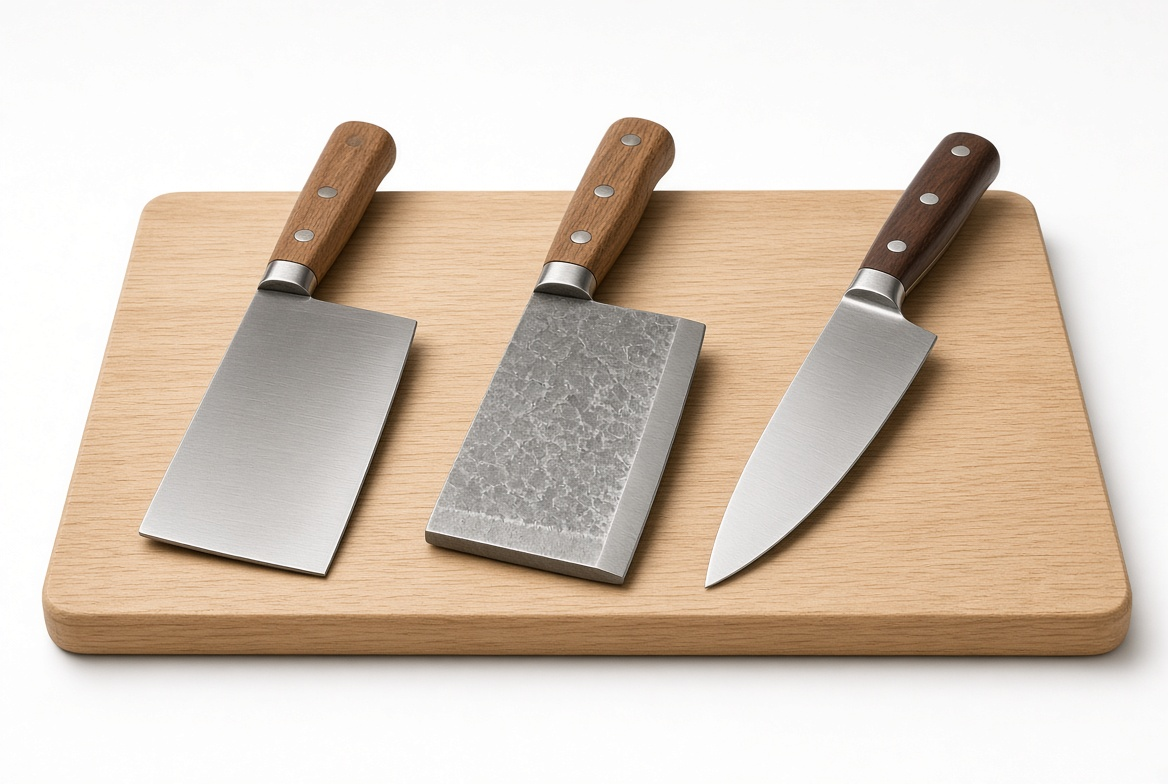
A Chinese cleaver is often misunderstood by overseas buyers. It is not automatically a bone chopper. Many Chinese cleavers are thin, relatively light vegetable and meat-preparation knives designed for slicing, shredding, mincing, and transferring ingredients from a cutting board to a wok.
The broad blade can perform several functions:
– Slice vegetables quickly
– Mince garlic, ginger, and herbs
– Portion boneless meat
– Scoop prepared ingredients
– Provide knuckle clearance
– Support Chinese cooking techniques built around fast prep
For a B2B retailer, it is important to distinguish between a thin slicing cleaver, a general-purpose Chinese chef knife, and a heavy-duty bone cleaver. Mixing these categories in product listings can cause misuse, returns, poor reviews, and safety complaints.
Western Chef Knife
The Western-style chef knife is usually the safest starting product for international markets. It is familiar to customers in North America, Europe, Australia, and many other regions.
A typical chef knife is:
– Approximately 6 to 10 inches long
– Curved for a rocking-cut motion
– Suitable for vegetables, boneless meat, herbs, and general prep
– Often sold individually or in multi-piece sets
For private-label sellers, an 8-inch chef knife combined with a 3.5-inch paring knife, 5-inch utility knife, kitchen shears, and a branded storage block remains a highly commercial product format.
Santoku and Vegetable Knives
Santoku knives appeal to buyers who want a lighter, more compact alternative to a Western chef knife. Vegetable knives, including square-tipped designs, are often positioned around precise chopping and produce preparation.
These models can help a brand create a more complete collection, but they should be marketed by use case rather than simply as “Japanese-style” or “professional” products.
How to Evaluate Chinese Knife Quality Before You Buy
A knife’s appearance may influence clicks, but repeat purchases and customer reviews depend on performance. Buyers should develop a written product specification before requesting quotations.
1. Confirm the Steel Grade
Steel designations are useful, but they are only the starting point.
Common steel names in the Chinese kitchen-knife market include:
| Steel Type | Typical Market Position | General Sourcing Consideration |
| 3Cr13 | Low-cost stainless steel | Suitable for basic utility products; limited edge retention |
| 5Cr15MoV | Entry-to-mid-range stainless steel | Common for household kitchen knives |
| 7Cr17MoV | Budget stainless steel | Often used in affordable knife sets |
| 8Cr13MoV | Value-oriented stainless steel | Can perform well when properly heat treated |
| 9Cr18MoV | Mid-to-higher-grade stainless steel | Often used for stronger corrosion resistance and hardness potential |
| X50CrMoV15 | Common German-style knife steel | Widely used for durable, easy-maintenance kitchen knives |
| AUS-10 | Higher-performance stainless steel | Often used for premium consumer knife lines |
| VG-10 | Premium stainless steel | Requires credible sourcing and controlled heat treatment |
Do not assume that a steel name automatically guarantees quality. The same steel can perform differently depending on blade geometry and heat treatment.
Ask the supplier:
1. What is the declared blade steel grade?
2. Can you provide material documentation or mill certificates?
3. What hardness range is targeted after heat treatment?
4. Is hardness tested on every batch or by sampling?
5. What is the blade thickness at the spine?
6. What is the final edge angle?
7. Is the blade forged, stamped, or laser-cut?
8. How is corrosion resistance assessed?
2. Review Heat Treatment and Hardness
Heat treatment is one of the most important and least visible parts of knife manufacturing. It affects edge retention, toughness, corrosion resistance, and the likelihood of chipping or rolling.
A knife that is too soft may lose sharpness quickly. A knife that is too hard may become more brittle and prone to chipping. The best target depends on the steel type, intended user, blade design, and selling price.
For many mainstream stainless kitchen knives, a buyer may see hardness claims around the mid-to-high 50s on the Rockwell C scale. The correct specification should be determined by the selected steel and product application—not copied from a competitor’s listing.
3. Inspect the Grind and Edge
Request close-up images and physical samples. Look for:
– Symmetrical edge bevels
– Smooth blade surface finishing
– Consistent grinding lines
– No visible burrs near the cutting edge
– No deep polishing scratches
– Straight blade alignment
– Stable and comfortable handle attachment
A sharp out-of-box edge matters, but it is not enough. The blade should also retain its edge through normal household or professional use.
4. Check Handle Construction
Handle materials commonly include pakkawood, ABS, polypropylene, stainless steel, G10, resin, and natural wood.
For export projects, focus on:
– Handle-to-blade fit
– Rivet quality, where applicable
– Resistance to loosening
– Moisture resistance
– Ergonomic grip
– Surface finish
– Color consistency across production batches
Wood-look handles can be attractive, but they must be appropriately sealed and checked for cracking, roughness, and moisture-related movement.
A Better Sourcing Workflow for B2B Buyers
The most effective knife buyers do not jump directly from quotation to container order. They create a process that reduces quality and commercial risk before scaling.
Step 1: Define the Product and Customer
Start with a clear commercial brief:
– Target market and sales channel
– Target retail price
– Product category and blade size
– Core customer: home cook, restaurant, gift buyer, or professional chef
– Required certifications or compliance documents
– Packaging style and language requirements
– Expected order quantity
– Target delivery window
For example, a $25 e-commerce chef knife has very different material, packaging, testing, and margin requirements than a $120 premium gift-set product.
Step 2: Create a Detailed Specification Sheet
Your specification should include:
– Blade length, width, and thickness
– Steel type and required hardness range
– Blade finish: satin, polished, hammered, or patterned
– Edge geometry and sharpening requirements
– Handle material and color
– Logo method: laser engraving, etching, printing, or embossing
– Packaging dimensions and drop-protection requirements
– Barcode, warning labels, inserts, and carton marks
– Acceptable quality level and inspection criteria
This document reduces misunderstandings and makes supplier quotations easier to compare.
Step 3: Order and Test Samples
Do not approve a sample based solely on product photos. Test it in conditions similar to your end users’ experience.
A useful sample-review checklist includes:
– Initial sharpness
– Comfort during extended cutting
– Edge stability after repeated use
– Blade straightness
– Handle security
– Rust or staining resistance after washing and drying
– Packaging appearance
– Protection against shipping damage
– Accuracy of branding and printed information
If you are building a premium brand, compare the sample directly against a benchmark knife in your target market.
Step 4: Verify Food-Contact Compliance
Kitchen knives are food-contact articles. Requirements vary by destination market, material, and product construction.
In the European Union, Regulation (EC) No 1935/2004 establishes general safety principles for food-contact materials, including the principle that materials should not transfer constituents into food at levels that could endanger health, unacceptably alter food composition, or harm food characteristics.
For metal food-contact products, buyers should discuss relevant testing and documentation with their importer, legal adviser, compliance partner, and supplier. Stainless-steel composition, migration testing, coatings, inks, handles, and packaging materials may all require attention depending on the market and product design.
Step 5: Use Pre-Shipment Inspection
For larger orders, arrange inspection before the supplier ships the goods.
An effective inspection can cover:
– Quantity verification
– Blade dimensions
– Branding accuracy
– Surface defects
– Handle fit and finish
– Sharpness sampling
– Rust or corrosion checks
– Packaging compliance
– Carton condition
– Drop-test readiness
– Randomized sampling against agreed acceptance criteria
The goal is not to expect zero defects. It is to identify whether the production batch meets the agreed standard before international shipping makes correction expensive.
Private Label, Packaging, and Fulfillment
A knife is not merely a blade. For online sellers, it is a complete customer experience: product photography, branded packaging, safety instructions, barcode labels, insertion cards, carton protection, and reliable delivery.
Private-Label Options to Discuss With Suppliers
Many Chinese knife manufacturers can support customization such as:
– Laser-engraved logo on blade
– Logo on handle or end cap
– Custom colorways
– Bespoke handle materials
– Customized blade finish
– Branded gift box
– Private-label knife block
– Instruction leaflet
– Barcode and FNSKU labeling
– Custom master cartons
– Retail-ready packaging
However, every customized element can affect minimum order quantities, tooling charges, sampling timelines, unit pricing, and replacement-part availability. Confirm these points in writing before committing.
Why Fulfillment Planning Matters
For global B2B sellers, inventory risk often begins after manufacturing—not before it. A product can be well made but still become costly if it is overstocked, poorly labeled, delayed at the warehouse, or sent to the wrong fulfillment destination.
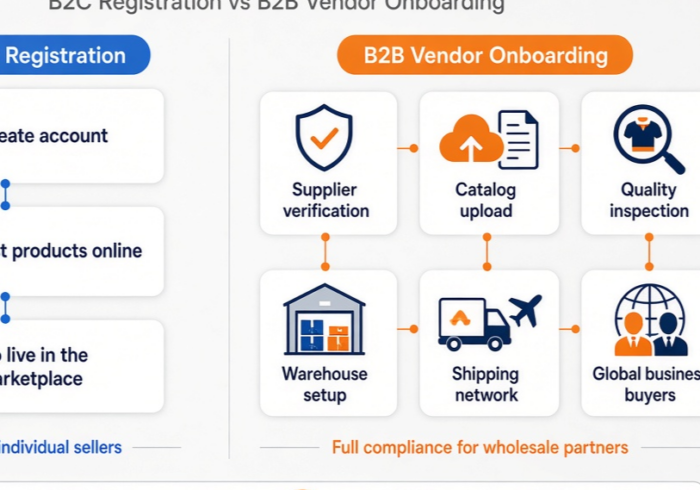
Looperbuy can support merchants that want to source Chinese goods while reducing the operational burden of holding inventory, arranging warehouse storage, handling payment coordination, and managing shipping logistics. For knife sellers, a practical workflow can include factory sourcing, sample approval, packaging review, quality inspection, consolidation, labeling, and order fulfillment planning.
This is especially valuable for sellers testing a new kitchen-knife category before making a large inventory commitment.
Common Sourcing Mistakes to Avoid
– Choosing a supplier solely because of the lowest unit price
– Accepting vague claims such as “German steel” without a grade or documentation
– Confusing decorative Damascus patterns with performance evidence
– Ordering without approving a physical production sample
– Failing to define blade dimensions and tolerances
– Ignoring packaging drop protection for sharp products
– Using a thin cleaver for bone chopping
– Skipping compliance discussions for food-contact products
– Assuming every batch will match the first sample
– Shipping bulk inventory before confirming marketplace labels and destination requirements
A strong sourcing decision balances price, performance, risk, packaging, and operational readiness.
Final Recommendation
The best Chinese knife brand or manufacturer is not necessarily the most famous one. It is the supplier that can consistently produce the exact knife your customers expect, document the materials and quality controls you require, protect the product in transit, and support a reliable fulfillment plan.
For a first order, begin with a tightly defined product range—such as an 8-inch chef knife, Chinese vegetable cleaver, or three-piece starter set. Approve samples, document every specification, inspect production, and scale only after the product earns positive customer feedback.
Ready to source kitchen knives from China without taking on unnecessary inventory and logistics pressure? Contact Looperbuy to discuss supplier matching, product sourcing, quality-control coordination, private-label packaging, and flexible fulfillment support for your B2B business.
Frequently Asked Questions
1. Are Chinese kitchen knives good quality?
Chinese kitchen knives range from basic low-cost products to well-made mid-range and premium tools. Quality depends on the individual manufacturer, steel, heat treatment, blade geometry, grinding, handle construction, and quality-control process. Buyers should assess samples and specifications rather than judging only by country of origin.
2. What are the best Chinese knife brands?
Frequently discussed Chinese brands include Shibazi, Deng Knives, TUO Cutlery, Xinzuo, Shi Ba Zi Zuo, XYJ, Findking, BIGSUN, Shan Zu, and Keemake. Each serves different segments, so the best choice depends on your desired price level, knife type, design direction, and target customer.
3. Is a Chinese cleaver suitable for bones?
Not always. Thin Chinese vegetable cleavers are primarily designed for slicing vegetables, boneless meat, and herbs. Heavy-duty bone cleavers use thicker, heavier blade construction. Buyers and users should confirm the intended use before chopping through bones or frozen food.
4. What should I ask a Chinese knife supplier?
Ask for the blade steel grade, hardness range, blade dimensions, heat-treatment process, handle material, production capacity, minimum order quantity, sample lead time, packaging options, food-contact documentation, inspection process, and export experience. Also request a physical sample before approving volume production.
5. Are Damascus kitchen knives from China authentic?
“Damascus” can refer to genuine pattern-welded layered steel, but it can also describe an acid-etched visual pattern. The patterned appearance alone does not prove premium materials or cutting performance. Ask suppliers whether the blade is layered steel, whether it has a core steel, and how the pattern is produced.
6. What steel is best for a private-label kitchen knife?
The right steel depends on the retail position. X50CrMoV15 and 5Cr15MoV are common choices for durable, easy-maintenance mainstream products. 9Cr18MoV, AUS-10, and VG-10 may suit higher-performance products when sourcing and heat treatment are properly controlled. The finished knife’s performance depends on more than the steel name alone.
7. Do imported kitchen knives need food-contact compliance documents?
Requirements differ by country and product construction. In the EU, food-contact materials are subject to the general principles of Regulation (EC) No 1935/2004. Buyers should work with qualified compliance specialists and import professionals to identify the documents and testing relevant to their sales market.
8. Can I create my own branded kitchen knife set in China?
Yes. Many manufacturers offer OEM and ODM services, including blade logo engraving, custom handles, branded boxes, product inserts, barcodes, and retail-ready packaging. Confirm minimum order quantities, tooling fees, sample approval procedures, and final quality requirements before placing a production order.
References
1. Global Sources. “[Top Chinese Knife Brands: From Budget Blades to Premium Cutlery].”
2. NewsGD. “[Knife and scissors industry in Yangjiang in China’s Guangdong].”
3. Sourcing Nova. “[Cut to the Quick – China’s Knife Industry in Yangjiang City].”
4. European Commission framework summarized by K&L Gates. “[Overview of Food-Contact Material Regulations in Europe].”
5. SGS. “[Food Contact Material Regulations – Europe].”
6. Cefic Food Contact Additives. “[Food Contact Materials].”
7. Nickel Institute. “[Nickel and Food Contact Materials Policy].”