Find reliable dropshipping suppliers for high-ticket products with a practical guide to supplier verification, samples, quality control, shipping, returns, compliance, and fulfillment. Learn how to build a safer premium product supply chain with Looperbuy.
Reliable dropshipping suppliers for high-ticket products are the foundation of a sustainable premium e-commerce business. When a customer spends hundreds or thousands of dollars on furniture, fitness equipment, home appliances, commercial tools, or premium lifestyle products, they are not only buying the item—they are trusting your store to deliver quality, accurate information, safe payment, dependable shipping, and responsive after-sales support.
High-ticket dropshipping allows merchants to sell higher-value products without pre-purchasing inventory or operating their own warehouse. However, the model also creates greater operational responsibility. A damaged $25 accessory may be frustrating. A damaged $1,200 treadmill, incomplete sauna shipment, or delayed commercial espresso machine can become an expensive refund, chargeback, and reputation problem.
For this reason, the best high-ticket dropshipping suppliers are not simply the suppliers with the lowest unit price. They are partners that can provide consistent product quality, verifiable inventory, clear shipping commitments, professional packaging, traceable logistics, and written return and warranty processes.
The opportunity remains significant. U.S. retail e-commerce sales were estimated at $326.7 billion in the first quarter of 2026, according to the U.S. Census Bureau, reflecting continued growth in online purchasing behavior.
Table of Contents
What Are High-Ticket Dropshipping Products?
High-ticket dropshipping products are relatively expensive items sold online while a supplier, manufacturer, distributor, or fulfillment partner ships the order directly to the end customer.
There is no universal price threshold. In practical terms, many merchants classify products priced from $300 to $2,000+ as high-ticket products. In specialized categories such as industrial equipment, commercial furniture, medical-adjacent equipment, or professional tools, individual orders can be considerably higher.
Popular high-ticket dropshipping categories include:
– Home furniture and modular storage systems
– Ergonomic office chairs and standing desks
– Outdoor furniture and patio equipment
– Home fitness equipment
– Electric fireplaces and heating products
– Pet furniture and premium pet equipment
– Kitchen appliances and specialty cooking equipment
– Commercial display fixtures
– Beauty equipment and salon furniture
– Smart home devices and premium electronics
– Camping trailers, rooftop tents, and outdoor equipment
– Industrial tools, workshop equipment, and business supplies
The appeal is straightforward: a merchant may need fewer orders to generate meaningful gross profit. Yet higher order values also raise expectations around product information, delivery quality, warranty support, and returns.
> High-ticket dropshipping is not a shortcut to easy profit. It is a trust-and-operations business.
Why Supplier Reliability Matters More for Premium Products
With low-cost products, a merchant may be able to resolve a defect with a replacement or partial refund. With expensive products, mistakes compound quickly.
A single unreliable supplier can create:
– High refund and replacement costs
– Freight damage claims
– Customer complaints and payment disputes
– Negative product reviews
– Long customer-service cycles
– Inventory overselling
– Customs or compliance issues
– Warranty conflicts between the seller and manufacturer
– Lost advertising spend on orders that cannot be fulfilled
For premium products, a supplier must be evaluated across the entire customer journey—not only at the point of purchase.
| Supplier capability | Why it matters for high-ticket dropshipping |
| Product quality control | Expensive items must arrive functional, complete, and consistent with the listing |
| Real-time or frequent stock updates | Prevents merchants from selling products that are unavailable |
| Secure packaging | Reduces breakage, scratches, missing parts, and freight damage |
| Accurate processing times | Helps merchants publish realistic delivery expectations |
| Trackable shipping methods | Gives customers visibility and reduces “Where is my order?” requests |
| Return merchandise authorization process | Makes damage, defect, and buyer-remorse cases manageable |
| Warranty documentation | Clarifies repair, replacement, spare parts, and labor responsibilities |
| Responsive account management | Speeds up resolution when an order has a problem |
| Compliance documentation | Helps reduce regulatory, marketplace, and customer-safety risk |
Shopify advises merchants to order products from a supplier before selecting them, so they can evaluate processing time, shipping speed, and actual delivery experience. It also states that merchants should clearly communicate shipping times and any additional charges before checkout.
How to Find Reliable High-Ticket Dropshipping Suppliers
The best supplier source depends on your product category, target market, delivery expectations, and brand model. For many high-ticket stores, using more than one sourcing channel reduces risk.
1. Work With Manufacturers Directly
Direct manufacturers can offer stronger pricing, customization opportunities, and more control over product specifications. This approach is especially useful for furniture, home goods, outdoor products, equipment, and selected private-label categories.
Ask manufacturers whether they can support:
– Single-unit order fulfillment
– Neutral or branded packaging
– Product customization
– Quality inspection before shipment
– Export documentation
– Spare-parts availability
– Warranty support
– Dedicated order communication
– Inventory reporting
– International shipping or overseas warehouse fulfillment
A direct factory relationship can be valuable, but it requires proper verification. A supplier may have manufacturing capabilities but limited experience handling individual B2C orders, customer returns, or overseas freight claims.
2. Use Authorized Distributors and Dealer Programs
Authorized distributors are often a strong choice for branded high-ticket products. They may already have established warranties, product documentation, domestic inventory, and systems for dealer pricing.
This model can be particularly suitable for categories such as:
– Premium appliances
– Fitness equipment
– Outdoor equipment
– Fireplaces
– Lighting
– Furniture brands
– Specialty tools
– Commercial products
Before listing branded products, confirm in writing that the supplier permits online resale, marketplace sales if relevant, and dropshipping fulfillment. Never assume that wholesale access automatically includes permission to sell on every channel.
3. Partner With a China Sourcing and Fulfillment Platform
For merchants sourcing from China, a reliable procurement and fulfillment platform can serve as an operational layer between the store and multiple suppliers.
A platform such as Looperbuy can help B2B sellers reduce the burden of holding stock, managing multiple supplier communications, consolidating products, arranging quality checks, and coordinating international fulfillment. This is especially valuable when a business wants product flexibility without building its own China-based sourcing team.
The right partner should help you create a more controlled workflow:
1. Source and compare suitable suppliers.
2. Confirm specifications and commercial terms.
3. Order samples for evaluation.
4. Check product quality and packaging.
5. Store or consolidate goods when needed.
6. Fulfill orders to customers or business buyers.
7. Provide shipment tracking and logistics coordination.
8. Support issue handling when products are delayed, damaged, or defective.
For higher-value products, this workflow is often more reliable than placing every order with a different unverified supplier.
4. Use Vetted Supplier Directories Carefully
Supplier directories can accelerate early research, but they should not replace your own due diligence. Supplier badges, verification labels, and payment programs are useful starting points—not final proof of quality or operational capability.
For example, Alibaba’s Trade Assurance program is designed to protect eligible payments against failures such as late shipment or product quality problems under covered transaction terms. However, it should not be treated as a complete substitute for supplier verification.
A reliable process combines platform-level screening with document verification, samples, live communication, quality checks, and written operating terms.
A 10-Point Supplier Verification Checklist
Before you add a high-ticket product to your store, assess suppliers with the following checklist.
1. Verify the Legal Business Identity
Request the company’s legal name, business registration details, factory or warehouse address, primary contact person, and export history.
If the supplier claims to be a manufacturer, ask directly:
– Which products do you manufacture in-house?
– Which components are outsourced?
– Can you provide a live video walkthrough?
– What is your normal production capacity?
– Where is the final quality inspection performed?
A factory may outsource certain processes. That is not automatically a problem. The key issue is whether the supplier is transparent and can consistently control product quality.
2. Order a Real Sample
Do not evaluate an expensive product using only catalog images, supplier videos, or marketplace reviews.
Order a sample to test:
– Product appearance and material quality
– Functionality and assembly process
– Packaging strength
– Included accessories and manuals
– Delivery time
– Tracking quality
– Communication responsiveness
– Damage risk during transit
Shopify’s supplier guidance recommends requesting samples or prototypes before committing, and evaluating supplier capacity, quality control, delivery, returns, defects, and customer complaints.
3. Request Product Specifications in Writing
For high-ticket products, vague product descriptions create disputes. Ask for a detailed specification sheet that includes:
– Materials
– Dimensions
– Weight
– Colors and available variations
– Voltage or plug standards where applicable
– Load capacity
– Included accessories
– Assembly requirements
– Warranty period
– Safety warnings
– Packaging dimensions
– Carton weight
– Country of origin
Use this document to create accurate product pages. Never copy specifications without checking whether they apply to the exact model you plan to sell.
4. Check Inventory Accuracy
Ask how inventory is updated and how often the supplier can confirm available stock. Inventory accuracy is essential because high-ticket buyers may purchase only after extensive research, comparison, and consultation.
A supplier should be able to answer:
– Is stock held in a factory, warehouse, or overseas fulfillment center?
– How frequently is inventory updated?
– Are items reserved after an order is placed?
– What happens if an item becomes unavailable?
– Is there an inventory feed, spreadsheet, API, or manual confirmation process?
5. Test Supplier Communication
Send detailed questions before placing an order. Good suppliers answer specifically, acknowledge unknowns, and provide evidence when requested.
Warning signs include:
– Extremely fast but generic responses
– Refusal to provide product details
– Inconsistent pricing
– Unclear shipping timelines
– Pressure to pay outside protected channels
– Unwillingness to discuss returns
– Product certificates that cannot be verified
– Reused photos across unrelated product listings
6. Review Quality-Control Procedures
Ask where and how inspection occurs. For premium products, a basic “we check everything” answer is not enough.
Request details such as:
– Inspection checklist
– Functional testing procedure
– Packaging inspection standards
– Photograph or video evidence
– Defect reporting process
– Acceptable quality limit standards, if available
– Rework or replacement policy before shipment
For complex items, request an inspection report that includes serial numbers, packaging photos, and functional testing evidence.
7. Confirm Shipping and Freight Capability
Large, heavy, fragile, or high-value items require more than a cheap shipping quote. Confirm the actual delivery terms before listing the product.
Ask:
– Which shipping methods are available?
– Is tracking included?
– What is the estimated processing time?
– What is the delivery range by destination?
– Is delivery curbside, doorstep, or inside delivery?
– Is a liftgate required for residential freight?
– Who pays duties, taxes, and customs fees?
– Who is responsible if the shipment is lost or damaged?
– How are freight claims submitted?
For U.S. sellers, the Federal Trade Commission states that if an order cannot ship as promised, merchants must provide appropriate delay notification and, in situations where consent cannot be obtained, promptly refund the customer for unshipped merchandise.
8. Align Return and Refund Rules
A merchant’s store policy should never promise more than the supplier can operationally support.
Confirm:
– Return window
– Return address
– Restocking fee
– Return freight responsibility
– Damage claim deadline
– Photo or video evidence requirements
– Replacement versus refund rules
– Warranty claim process
– Spare-parts availability
– Refund processing time
Shopify notes that stores should provide a current and publicly accessible refund policy that explains return timing, return address, return costs, refund timing, and customer contact information.
9. Check Compliance and Product Safety
Product compliance is especially important for electrical products, children’s items, beauty devices, heating products, batteries, and goods that make health or performance claims.
If you sell to the European Economic Area, importers must ensure products meet applicable EU safety, health, and environmental requirements before placing them on the market. Importers must also ensure relevant documentation, including the EU Declaration of Conformity and technical documentation, is available when required.
Do not rely solely on a supplier’s statement that a product is “CE certified,” “FCC approved,” or “FDA compliant.” Ask for the exact test report, certificate number, issuing organization, product model, and document date. Then verify that the documentation matches the product you are actually selling.
10. Put Operating Terms in Writing
For a promising supplier, create a practical operating agreement or supplier scorecard. It does not need to be overly complicated, but it should define:
– Product model and specification
– Unit price and currency
– Processing time
– Inventory update process
– Shipping method
– Packaging requirement
– Inspection standard
– Warranty terms
– Return responsibilities
– Replacement process
– Dispute escalation contact
– Confidentiality and branding expectations
The High-Ticket Supplier Scorecard
A scorecard helps your team compare suppliers objectively instead of choosing based on price or first impressions.
| Evaluation area | Weight | What to assess |
| Product quality | 20% | Sample quality, materials, functionality, consistency |
| Shipping reliability | 15% | Processing time, tracking, delivery performance, freight options |
| Return and warranty support | 15% | Written policies, replacement speed, spare parts, claims process |
| Inventory transparency | 10% | Stock updates, warehouse location, overselling prevention |
| Communication | 10% | Response speed, accuracy, problem-solving ability |
| Pricing and margin | 10% | Landed cost, payment terms, volume potential |
| Compliance readiness | 10% | Certificates, test reports, labeling, documentation |
| Packaging quality | 5% | Protective materials, carton strength, damage prevention |
| Branding flexibility | 5% | Neutral shipping, inserts, packaging, private label options |
A supplier that offers the lowest product price but performs poorly on returns, packaging, or communication can cost far more over time.
Example: Comparing Two Furniture Suppliers
Imagine you are selling a $950 ergonomic office chair.
Supplier A offers a $420 unit cost. Supplier B offers a $470 unit cost.
At first glance, Supplier A appears more profitable. But after testing both suppliers:
| Factor | Supplier A | Supplier B |
| Sample quality | Acceptable | Excellent |
| Packaging | Thin carton, weak corner protection | Double-wall carton and foam protection |
| Processing time | 8–12 days | 2–4 days |
| Tracking | Delayed updates | Reliable tracking |
| Return policy | No clear process | Written RMA process |
| Spare parts | Not available | Available within 72 hours |
| Customer communication | Generic replies | Dedicated account manager |
Supplier B may generate lower gross margin per order, but it is likely to produce fewer damaged shipments, fewer refunds, and stronger customer reviews. For high-ticket products, operational reliability often protects profit more effectively than a lower purchase price.
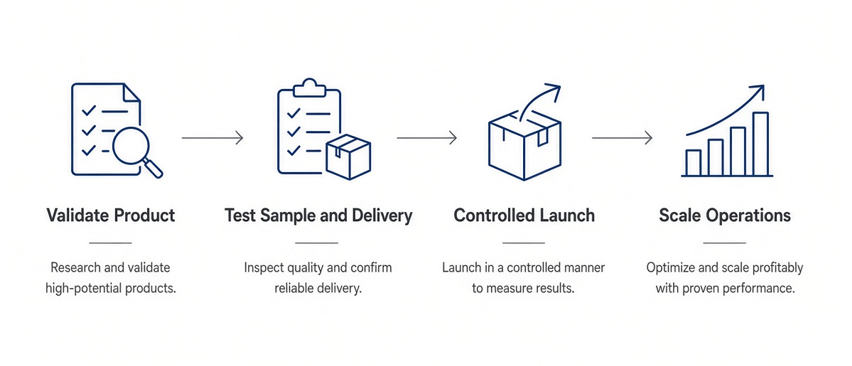
Build a Safer Product Launch Process
Before launching a premium product, use a staged approach instead of scaling immediately.
Phase 1: Validate the Product
Review competing stores, customer reviews, pricing, common complaints, and delivery expectations. Focus on products with clear customer value rather than products that only look visually impressive.
Questions to ask:
– Does the product solve a meaningful problem?
– Is there a clear reason for a customer to pay a premium price?
– What do negative reviews reveal about competitors?
– Can your supplier address those weaknesses?
– Is the product difficult to damage during shipping?
– Will customers need installation, assembly, or technical support?
Phase 2: Test the Full Customer Experience
Place a sample order using the same workflow that a real customer would experience. Test the product page, confirmation message, supplier handoff, processing time, tracking, delivery, packaging, product quality, and warranty information.
Document every issue before scaling.
Phase 3: Launch With Controlled Volume
Begin with a limited ad budget and a manageable number of products. Track:
– Conversion rate
– Average order value
– Shipping delay rate
– Damage rate
– Refund rate
– Chargeback rate
– Customer-service response time
– Warranty claim rate
– Supplier response time
Phase 4: Scale Only After Stability
Scale advertising after the supplier has proven that it can fulfill orders accurately and resolve problems consistently. A high-ticket store can grow quickly, but weak fulfillment systems can collapse just as quickly.
How Looperbuy Supports High-Ticket Dropshipping Operations
For global B2B sellers sourcing from China, Looperbuy can help simplify the operational complexity behind high-ticket dropshipping.
Rather than requiring merchants to manage every supplier, payment, stock update, quality check, warehouse handoff, and shipping arrangement independently, a sourcing and fulfillment partner can create a more coordinated workflow.
Looperbuy can be particularly relevant when your business needs to:
– Source Chinese products without holding large amounts of inventory
– Compare supplier pricing and capabilities
– Purchase products on behalf of international merchants
– Consolidate orders from multiple suppliers
– Arrange quality checks before shipment
– Support product storage and fulfillment
– Coordinate international logistics
– Reduce supplier communication and payment friction
– Create a more scalable order-management process
This model can help merchants focus more attention on customer experience, product positioning, customer acquisition, and brand development—while maintaining stronger visibility over sourcing and fulfillment.
The goal is not simply to find a supplier. The goal is to build a dependable supply chain that can support repeat business.
Final Takeaway
Reliable dropshipping suppliers for high-ticket products are selected through evidence, not assumptions. The right partner should prove product quality through samples, explain inventory and shipping processes clearly, provide written return and warranty policies, and communicate professionally when something goes wrong.
Start with product testing. Verify suppliers carefully. Document every operational requirement. Protect your customer experience before investing heavily in paid traffic.
If you want to source high-ticket products from China while reducing inventory, warehouse, payment, and fulfillment complexity, contact Looperbuy to discuss a tailored sourcing and dropshipping fulfillment workflow for your business.
Frequently Asked Questions
1. What is considered a high-ticket dropshipping product?
High-ticket dropshipping products are generally higher-priced items that generate larger revenue per order. Many merchants consider products priced from approximately $300 to $2,000 or more to be high-ticket, although the threshold depends on the industry and target customer.
2. How do I know whether a dropshipping supplier is reliable?
Verify the supplier’s legal identity, order samples, request product specifications, assess packaging, test communication, confirm inventory procedures, review return and warranty policies, and check shipping performance. Do not rely only on supplier badges or low prices.
3. Should I order samples before selling high-ticket products?
Yes. A sample allows you to inspect product quality, packaging, delivery speed, instructions, accessories, and the overall customer experience. It is one of the most effective ways to reduce risk before launching a premium product.
4. Can I dropship high-ticket products from China?
Yes, but success depends on supplier verification, quality-control processes, shipping options, customs planning, compliance documentation, and clear delivery expectations. A sourcing and fulfillment partner can help coordinate these areas.
5. What should I ask a high-ticket dropshipping supplier?
Ask about unit pricing, stock availability, processing time, shipping methods, tracking, packaging, quality inspection, return rules, warranty coverage, spare parts, product certificates, branding options, and how they handle damaged or lost shipments.
6. How much profit margin should I target for high-ticket dropshipping?
There is no single ideal margin. Your pricing must cover product cost, shipping, payment fees, advertising, returns, replacements, customer service, taxes, and potential chargebacks. Focus on contribution margin after operational costs, not only the difference between retail price and supplier price.
7. Are supplier verification badges enough to trust a supplier?
No. Verification badges and payment-protection programs can be useful initial filters, but they do not guarantee product quality, fulfillment capacity, or after-sales service. You should still conduct your own sample testing and operational review.
References
1. U.S. Census Bureau. “[Quarterly Retail E-Commerce Sales Report].”
2. Shopify Help Center. “[Dropshipping: Legal and Compliance Considerations].”
3. Shopify. “[Product Sourcing Guide: How to Get Started].”
4. Federal Trade Commission. “[Business Guide to the FTC’s Mail, Internet, or Telephone Order Merchandise Rule].”
5. European Commission. “[Importers and Distributors: CE Marking Responsibilities].”
6. Guided Imports. “[Alibaba Trade Assurance Explained: Pros and Limitations].”
7. U.S. Consumer Product Safety Commission. “[Business and Manufacturing Resources].”