Global B2B marketplaces differ from consumer platforms in order volume, pricing, product data, payments, logistics, and risk. Learn how a China‑focused sourcing and dropshipping platform like Looperbuy can build trust, integrate with buyer workflows, and support long‑term partnerships.
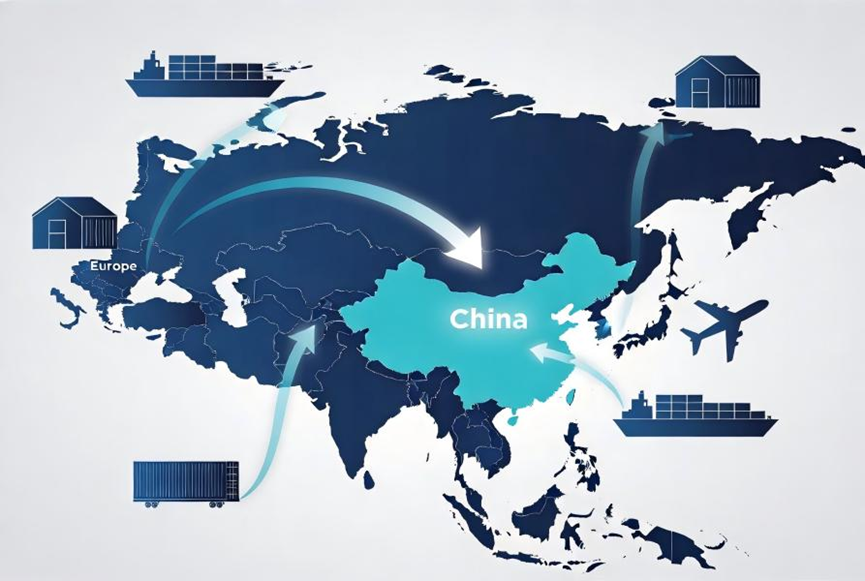
Table of Contents
What Really Distinguishes B2B Marketplaces Today
When I advise global buyers and sellers, I always start with one simple truth: B2B marketplaces are built for complex, recurring relationships, while B2C marketplaces are built for one‑time, simple transactions. This difference shapes everything from product data to payment flows and logistics. [virtocommerce]
Unlike consumer platforms that optimize for impulse purchases, a professional buyer comes with detailed specifications, approval workflows, and contractual commitments. They expect the marketplace to fit into their existing processes instead of forcing them to adapt. That’s why the “under the hood” architecture of a B2B marketplace is much more demanding than most people realize. [virtocommerce]
For a platform like Looperbuy, which connects global B2B sellers with reliable Chinese sourcing and dropshipping, this means designing every feature around high‑volume, repeat orders, multi‑stakeholder decision‑making, and end‑to‑end risk control. [virtocommerce]
In this article, I’m writing directly for B2B sellers, procurement managers, and marketplace operators who want to understand what makes a B2B marketplace successful – and how a platform like Looperbuy can support their business model.
1. High Order Volume and Bulk Procurement
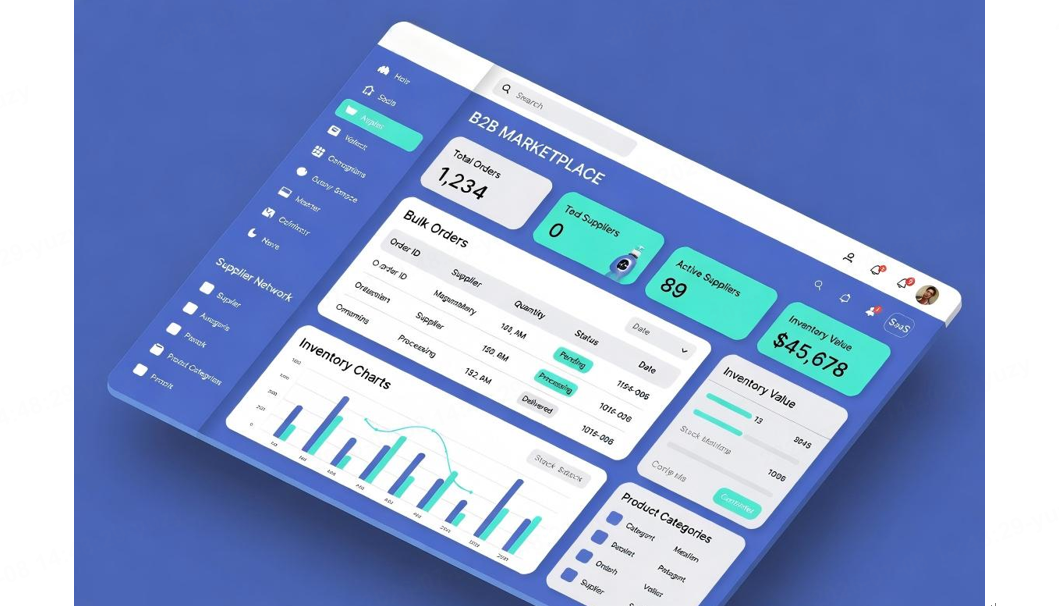
The first reality every marketplace operator faces is order volume. B2B transactions are larger, more frequent, and usually tied to production or resale plans. A single buyer can place a bulk order that equals thousands of consumer purchases. [virtocommerce]
For a China‑focused sourcing and dropshipping platform, this has several practical implications:
– Systems must handle bulk orders without slowing down.
– Inventory visibility has to be accurate at scale.
– Suppliers must be able to manage wholesale quantities and lead times.
From a buyer’s perspective, a good B2B marketplace makes bulk ordering feel as effortless as a normal checkout, while quietly managing complex stock, consolidation, and shipment behind the scenes. [virtocommerce]
2. Flexible, Relationship‑Based Pricing
In consumer marketplaces, pricing is mostly public and static. In B2B, pricing is a negotiation. It reflects order size, contract duration, delivery timing, and relationship history. [virtocommerce]
A robust B2B marketplace should support:
– Tiered and volume‑based pricing.
– Customer‑specific price lists and discounts.
– Negotiated quotes and counter‑offers.
For Looperbuy, this flexibility is especially important when dealing with OEM/ODM projects or mixed product assortments from multiple Chinese suppliers. The platform needs to let sellers configure granular price rules per customer, while giving buyers a clear, trustworthy view of landed cost and margins. [virtocommerce]
3. Deep Product Taxonomy and Technical Data
Professional buyers don’t search for “phone case”; they search for “TPU phone case, 1.5mm thickness, MagSafe compatible, SGS‑tested.” This is why detailed product taxonomy is one of the defining features of a B2B marketplace. [virtocommerce]
Compared with B2C catalogs, B2B product data must provide:
– Structured technical attributes (materials, tolerances, standards, certifications). [virtocommerce]
– Industry‑specific fields, such as HS codes or compliance notes.
– Advanced filtering and comparison capabilities.
Vertical or niche marketplaces – for example, industrial parts or packaging – usually go even deeper, because they can design data structures tailored to a specific category. For Looperbuy, this means building catalog templates that can handle everything from precision components to consumer goods, while still supporting standardized sourcing workflows. [virtocommerce]
4. Payment Models Built Around Trust and Credit
Most consumer platforms simply charge the card and ship. In B2B, buyers often expect post‑delivery payment, credit terms, and multiple payment options. They also want visibility into credit limits, outstanding invoices, and approval status. [virtocommerce]
A strong B2B marketplace should support:
– Pay‑on‑invoice and pay‑after‑delivery models.
– Credit lines per account, with dynamic limits.
– Multiple payment methods, including bank transfer and embedded finance solutions. [elogic]
When sourcing from China, credit and trust become even more critical. A platform like Looperbuy can lower risk by combining supplier vetting, escrow‑like flows, and staged payment milestones tied to production and shipment events.
5. Customer Credibility and Onboarding Controls
Another key difference from open consumer marketplaces is customer credibility. B2B platforms are not usually open to everyone; buyers must pass checks to confirm their legal identity and ability to meet payment obligations. [virtocommerce]
A well‑designed marketplace onboarding process should include:
– Business verification (licenses, tax IDs, company documentation). [virtocommerce]
– Trade risk screening and credit evaluation.
– Role‑based access and permissions for different employees. [virtocommerce]
For a global procurement platform like Looperbuy, robust onboarding increases confidence on both sides: Chinese suppliers get assurance that buyers are serious, while buyers know they’re trading in a controlled environment rather than a random supplier directory.
6. Delivery Timing – Not Just Speed
Consumer platforms compete on speed: “same‑day,” “next‑day,” “two‑day shipping.” In B2B, the real priority is delivery timing and predictability. Late or early delivery can both cause real business losses, from production stops to excess warehousing. [virtocommerce]
A B2B marketplace needs to:
– Let buyers specify required delivery windows. [virtocommerce]
– Coordinate suppliers and logistics partners to hit those windows.
– Provide proactive notifications when risks or delays appear.
For international dropshipping from China, timing becomes a strategic advantage. If Looperbuy can help buyers plan regular replenishment cycles and pre‑book logistics capacity, it will be far more valuable than a marketplace that just shows “estimated delivery time” at checkout.
7. Checkout Process and Document Flow
Behind every B2B order is a trail of documents, approvals, and internal workflows. Compared to a consumer “one‑click checkout,” B2B checkout must support: [virtocommerce]
– Request for quotation (RFQ) and formal quotes.
– Purchase orders (POs), contracts, and framework agreements.
– Invoices, packing lists, and compliance documentation.
A good marketplace will integrate these steps into one coherent flow, so that buyers can move from RFQ → negotiation → PO → shipment → invoice → payment without leaving the platform. For a sourcing solution like Looperbuy, digitizing this entire process is the fastest way to remove friction and errors in cross‑border trade. [virtocommerce]
8. Buyer Lifecycle and Long‑Term Relationships
In consumer marketplaces, success is measured in new customer acquisition. In B2B, success depends on customer retention and expansion. The marketplace must support long‑term relationships, not one‑off purchases. [virtocommerce]
Key lifecycle capabilities include:
– Detailed transaction, communication, and search history for each account. [virtocommerce]
– Easy repeat ordering and reorder templates. [virtocommerce]
– Personalized assortments and recommendations based on past behavior. [elasticpath]
For a platform like Looperbuy, the best outcome is when a buyer treats the marketplace as their default procurement cockpit for Chinese sourcing – logging in to repeat orders, launch new RFQs, and manage supplier performance over months and years.
9. Managing Complex Human Relations
No matter how automated the system, B2B buying still involves people talking to people. Sometimes buyers need direct discussion with sellers to clarify complex specifications, negotiate terms, or resolve issues. [virtocommerce]
A B2B marketplace should therefore:
– Facilitate direct, traceable communication channels (messages, email, calls).
– Keep a transparent record of interactions to protect all parties. [virtocommerce]
– Accept that some deals will partially move off‑platform, and design policies accordingly.
From my perspective, platforms that embrace this reality – instead of trying to force every action into a rigid UI – build deeper trust. Looperbuy can differentiate itself by offering structured communication tools that support collaboration, not just transactions.
10. Vertical and Regional Specialization
Many successful B2B marketplaces are vertical or regional, rather than generic and global. Vertical focus makes it easier to design precise product taxonomies and workflows for a specific industry. Regional focus supports local logistics, regulations, and business culture. [virtocommerce]
For Looperbuy, the regional specialization is clear: reliable sourcing and dropshipping from China for global B2B sellers. This creates opportunities such as:
– Curated supplier networks in key manufacturing hubs.
– Category‑specific micro‑marketplaces (e.g., packaging, tools, consumer electronics).
– Tailored logistics routes and warehouse strategies for different regions.
By going deep instead of broad, Looperbuy can deliver a richer, more predictable service than generic “global marketplaces.”
11. Logistics and Dropshipping as a Strategic Service
Traditional B2B marketplaces often leave logistics to sellers. But in modern cross‑border commerce, integrated logistics and dropshipping is itself a competitive advantage. [ossisto]
For global B2B sellers who want to avoid inventory risk and complex warehousing, a platform like Looperbuy can:
– Offer end‑to‑end dropshipping from Chinese suppliers to global buyers.
– Consolidate orders from multiple suppliers into optimized shipments.
– Provide tracking and exception management across all legs of the journey. [ossisto]
This is where Looperbuy’s mission – helping merchants reduce stockholding, warehousing, payment, and logistics management costs – becomes very concrete. The marketplace is not just a catalog; it is a logistics and risk‑management partner.
12. Multi‑User Accounts and Role‑Based Access
Corporate buying involves multiple roles: buyers, approvers, finance, operations. A consumer “single user” model cannot handle this reality. B2B marketplaces must provide multi‑user accounts with role‑based permissions. [virtocommerce]
Typical roles include:
– Requesters who create carts and RFQs.
– Approvers who validate budgets and compliance.
– Finance users who manage invoices and payments.
By supporting these structures, platforms like Looperbuy help companies keep control over spending while still giving individual teams the flexibility to manage day‑to‑day procurement. [virtocommerce]
13. Software Services for Both Sides of the Market
In B2B, both buyers and sellers are businesses with existing systems and processes. A modern marketplace should therefore offer digital services to both sides.
On the seller side:
– Tools for catalog management, pricing, stock updates, and order handling. [virtocommerce]
– Dashboards for performance, returns, and customer feedback.
On the buyer side:
– Procurement automation (approval flows, budgets, and category controls). [virtocommerce]
– Reporting on spend, supplier performance, and delivery reliability.
For Looperbuy, this means becoming more than a listing site – instead, acting as a control tower for Chinese sourcing, integrated with the systems buyers and sellers already use.
14. Extensive API Usage and Composable Architecture
One of the most important technical distinctions between modern B2B and B2C marketplaces is the breadth of API usage. Buyers and sellers need to integrate catalogs, orders, invoices, and logistics directly into their ERPs and other tools. [virtocommerce]
Recent industry trends show a strong move toward composable commerce and API‑first architecture in B2B platforms, allowing companies to connect specialized modules via APIs instead of relying on monolithic systems. This approach supports faster adaptation and integration across complex ecosystems. [ecomwise]
For Looperbuy, investing in robust APIs will:
– Let larger buyers automate order placement and data sync.
– Help sellers update stock and pricing in real time.
– Make it easier to plug the marketplace into external logistics and payment providers. [elogic]
15. Higher Risk of Failure – and the Need for Reliability
Because B2B deals involve larger order volumes and fewer customers, each failure hurts far more than in B2C. A single failed shipment or broken promise can cause the buyer to leave the platform entirely.
This risk forces marketplace operators to take:
– Security and data protection extremely seriously.
– Quality assurance and testing as core disciplines, not afterthoughts.
– Customer support and issue resolution as strategic investments.
For cross‑border sourcing, reliability is the foundation of trust. Looperbuy’s long‑term success depends on making every transaction feel safe, transparent, and predictable, especially for overseas buyers who may be new to working with Chinese suppliers.
2026 B2B Marketplace Trends You Can’t Ignore
Beyond the classic differences between B2B and B2C, several trends in 2026 are reshaping how marketplaces operate:
– AI‑driven co‑pilots: Many B2B platforms now embed intelligent assistants that help buyers search, compare, and configure orders, while guiding sellers through catalog optimization and quoting. [ecomwise]
– Self‑service portals: More than half of business purchasing is shifting to self‑service channels, where buyers prefer managing orders without sales rep intervention for repeat or routine tasks. [elasticpath]
– Composable and API‑first platforms: Over 60% of new B2B platforms are being built on modular architectures that let companies mix and match services via APIs, replacing slow legacy monoliths. [ecomwise]
By aligning with these trends, Looperbuy position itself as a future‑ready procurement and dropshipping platform, not just another marketplace.
Practical Steps for Building a Successful B2B Marketplace Like Looperbuy
From a practitioner’s standpoint, there are three practical pillars to focus on:
1. Design for procurement, not just shopping.
Map real buyer workflows, from RFQ to payment, and reflect them in the interface and data model. [ossisto]
2. Make logistics and risk visible and manageable.
Provide clear delivery windows, tracking, consolidation options, and contingency plans for cross‑border shipments. [ossisto]
3. Invest in integration and data quality.
Use structured product data, robust APIs, and composable services so that your marketplace can plug into the broader B2B ecosystem easily. [elogic]
This is the path for Looperbuy to become a preferred partner for global B2B sellers who rely on Chinese manufacturing and dropshipping to grow.
Key B2B vs B2C Marketplace Features
| Feature | B2B Marketplace Focus | B2C Marketplace Focus |
| Order volume | High, bulk and recurring orders | Low, individual orders |
| Pricing | Negotiated, tiered, customer‑specific | Public, mostly fixed |
| Product data | Deep taxonomy, technical specs | Simple descriptions |
| Payment model | Credit terms, multiple methods | Pre‑paid, card/wallet |
| Logistics | Timing and predictability | Speed and convenience |
| User accounts | Multi‑user, role‑based | Single user |
| Integration | Extensive APIs, composable stack | Limited APIs |
| Risk profile | High – few large customers | Lower – many small orders |
If you’re a B2B seller or buyer exploring sourcing and dropshipping from China, the most impactful next step is to map your current procurement process and identify where a marketplace like Looperbuy can remove friction – from supplier discovery to payment and logistics.
Once you have this map, you can test how well Looperbuy supports your workflow with a pilot order, and then scale from there.
Frequently Asked Questions
Q1: Why do B2B marketplaces need more complex product data than B2C platforms?
Because professional buyers rely on detailed specifications, compliance attributes, and technical comparison to make purchase decisions, which require structured fields rather than simple descriptions. [virtocommerce]
Q2: How do credit terms work on a B2B marketplace?
Buyers may receive individual credit limits based on their credibility and transaction history, enabling post‑delivery payment while the platform monitors exposure and invoices. [virtocommerce]
Q3: What makes logistics different for B2B dropshipping from China?
B2B logistics must coordinate delivery timing, consolidation of bulk orders, customs, and long‑distance shipping, with clear visibility and risk management throughout. [ossisto]
Q4: Why is API integration so important in B2B marketplaces?
Buyers and sellers already use ERPs and other systems, so APIs allow automatic sync of catalogs, orders, invoices, and shipment data, reducing manual work and errors. [ecomwise]
Q5: How can a marketplace like Looperbuy reduce warehousing and stock risk?
By offering dropshipping and supplier‑managed inventory, buyers can fulfill orders directly from Chinese suppliers without holding large stocks, cutting warehousing and capital lock‑in. [ossisto]
References
1. Virto Commerce – *15 Features that Distinguish a B2B Marketplace from B2C* (2021). [virtocommerce]
2. Ecomwise – *4 trends in B2B e-commerce in 2026* (2026). [ecomwise]
3. Elastic Path – *B2B eCommerce Trends 2026* (2026). [elasticpath]
4. Elogic – *Top B2B eCommerce Trends 2026* (2026). [elogic]
5. Ossisto – *B2B Procurement Platform Guide for Efficient Sourcing* (2025). [ossisto]