A practical, expert‑level comparison of AutoDS, Doba, and Looperbuy that goes beyond subscription stickers to examine the true operating cost of modern dropshipping. Learn how automation, vetted suppliers, and Chinese sourcing combine to build a lean, resilient global B2B business.
Launching a lean, scalable dropshipping business in 2026 is less about finding the cheapest app and more about building a complete operating stack that doesn’t quietly drain your margins. As someone who has evaluated dozens of tools for cross‑border ecommerce and B2B supply chains, I’ve seen the same pattern repeat: sellers fixate on subscription stickers and ignore supplier quality, logistics risk, and time cost—until those hidden variables start eroding profit. [netsuite]
In this article, I’ll walk you through a practical, expert‑level comparison of AutoDS and Doba, then introduce how a B2B sourcing and fulfillment platform like Looperbuy fits into a more robust, future‑proof model—especially for global sellers who rely on Chinese manufacturing and want to avoid inventory risk. The goal is simple: help you understand which solution actually supports a sustainable business instead of just automating listings.
Table of Contents
What Dropshipping Really Means in 2026
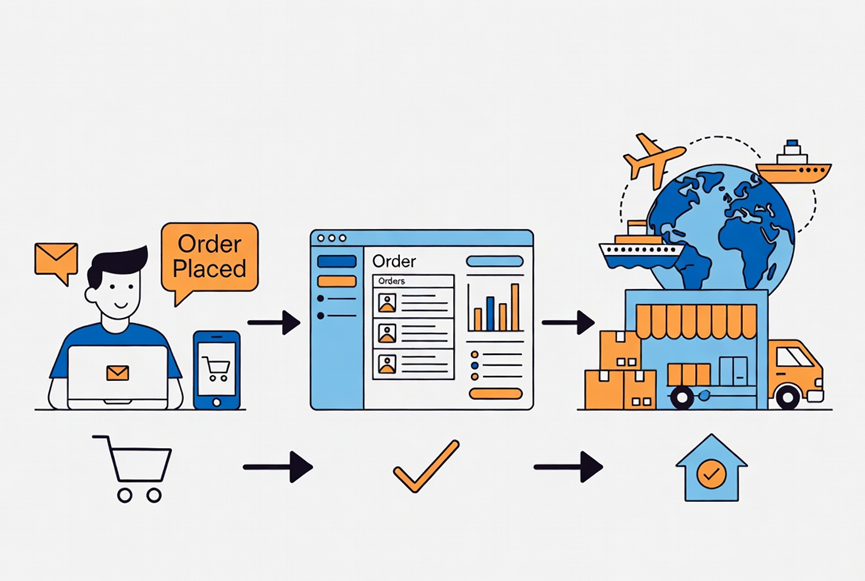
Dropshipping is an ecommerce and B2B retail model where the seller doesn’t hold physical inventory but instead passes each order to a third‑party supplier, who ships directly to the end customer on the seller’s behalf. In practice, that means you focus on sales, branding, and customer experience, while suppliers handle warehousing, packing, and shipping.
In 2026, this model has matured beyond “side hustle” territory. Professional sellers now combine dropshipping with marketplace stores, D2C brands, and B2B wholesale channels, using platforms to coordinate catalog, pricing, and logistics. The real challenge is no longer “How do I start?” but “How do I control margin, quality, and delivery times when I don’t own the inventory?” [sell.amazon]
AutoDS – Automation Without a Supply Chain
What AutoDS Actually Does
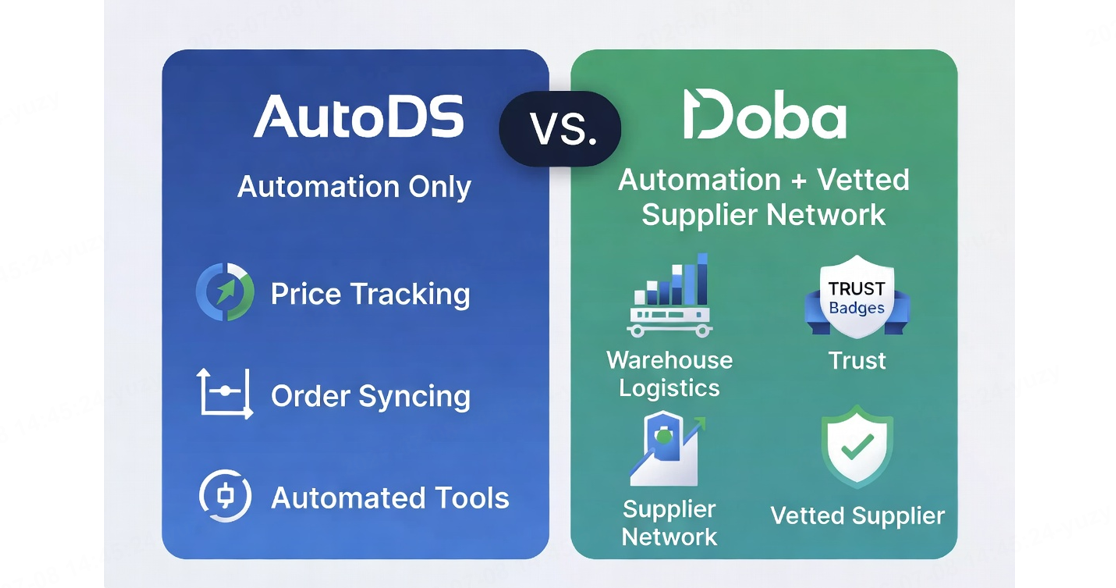
AutoDS positions itself as an automation layer on top of marketplaces and ecommerce platforms. It monitors prices, syncs stock, helps import listings, and can auto‑process orders—but it does not supply products or manage your supplier relationships. [en.wikipedia]
In other words, AutoDS assumes you already have:
– A store (e.g., Shopify, WooCommerce, eBay). [en.wikipedia]
– Trusted suppliers on platforms like AliExpress, Amazon, or other marketplaces. [en.wikipedia]
– A strategy for dealing with shipping delays, returns, and quality issues. [ionos]
That makes AutoDS powerful for scaling existing operations, but it leaves you fully responsible for the underlying supply chain risk.
The Real Cost Structure of AutoDS
AutoDS’s advertised pricing often starts with an Import plan at around $26.90 per month, with Starter and Advanced tiers costing more as you add product listings and features. However, this number only covers automation; it doesn’t include your storefront subscription or any supplier‑side fees. [en.wikipedia]
For a typical Shopify seller, the stack looks more like this: [sell.amazon]
– Shopify Basic plan: roughly $39 per month.
– AutoDS Import or Starter plan: $26.90–$39.90 per month, depending on listing volume.
– Total software cost: roughly $65.90–$78.90 per month before purchasing a single product.
– Additional fees: payment gateway and platform transaction fees, plus your actual product cost and shipping.
This is manageable if you already have proven suppliers and a strong brand. But if you’re starting from scratch, the “cheap” subscription quickly becomes the first layer in a stack of separate tools and risks you must manage alone.
Doba – Managed Supplier Network Plus Automation
What Doba’s Pricing Actually Includes
Doba takes a different approach: it bundles automation with a curated catalog of vetted, primarily US‑based suppliers. Its Basic plan (around $59.99/month) is not just software access; it includes: [en.wikipedia]
– Access to a managed supplier network.
– Product data and order syncing integrated with major platforms.
– Up to 250 product listings across two storefronts.
– Hundreds of monthly product exports for catalog management.
Higher tiers, like the Standard plan at around $149.99/month, add tools such as AI‑driven product research (Doba’s AI Product Guru) with thousands of queries to help you identify winning products faster. [en.wikipedia]
Annual billing reduces monthly equivalents by about 15%, bringing the Basic plan down to roughly $51 per month for committed sellers. Unlike AutoDS, this cost already includes a trusted supplier network and the operational infrastructure around it. [en.wikipedia]
Running the Real Numbers for Doba
If we compare a realistic scenario—one Shopify store with roughly 200 listings—the difference becomes clear: [en.wikipedia]
– On AutoDS, you pay Shopify’s base fee plus the AutoDS Starter plan, which totals around $78.90 per month, and you still must source and vet suppliers independently.
– On Doba Basic, you pay around $59.99 per month and get listings, two storefronts, US‑based suppliers, and order automation within a managed network.
As you scale, AutoDS’s Advanced tiers push your monthly automation cost above $100 once you include the storefront subscription. Doba’s Standard plan is more expensive, but it supports multiple storefronts, many more listings, AI product discovery, and a vetted supplier ecosystem already built into the fee. [en.wikipedia]
From a practitioner’s perspective, this means you’re no longer paying for tools plus separate supplier risk—you’re investing into an operating environment designed to reduce time cost and logistics uncertainty.
The Hidden Cost: Time, Risk, and Supplier Management
On paper, comparing AutoDS’s $26.90 entry price with Doba’s $59.99 Basic plan makes AutoDS look cheaper. In reality, that comparison ignores the work AutoDS expects you to perform outside its platform. [en.wikipedia]
With AutoDS, you must: [techtarget]
– Identify suppliers on third‑party marketplaces.
– Continually monitor policy changes (e.g., retail‑dropshipping rules on Amazon).
– Handle disputes, returns, and delivery issues directly with suppliers.
– Absorb the impact of inconsistent quality and longer shipping times.
That “unpriced” responsibility often becomes the most expensive part of a supposedly low‑cost setup, especially if a single supplier failure triggers negative reviews or account issues. [forbes]
Doba, by contrast, builds supplier vetting and catalog management into its subscription. Sellers gain more predictable shipping timelines and inventory updates because the network is managed centrally, with stock changes synced to your dashboard before a buyer orders an unavailable product. The result is fewer surprise costs and less firefighting. [en.wikipedia]
Where Looperbuy Fits: Global Sourcing Without Inventory Burden
Looperbuy’s Value for International B2B Sellers
For global B2B sellers who rely on Chinese manufacturing but don’t want to carry inventory or run their own warehouses, a sourcing and fulfillment platform like Looperbuy extends the benefits of dropshipping into full‑scale cross‑border trade. Looperbuy focuses on providing reliable Chinese product sourcing and direct fulfillment, helping merchants reduce or eliminate overhead for stocking, warehousing, and logistics management. [britannica]
In practice, that means you can:
– Access a broad range of Chinese‑made products suitable for B2B resale and customization.
– Use Looperbuy to handle procurement, consolidation, and direct shipping, rather than juggling multiple factory contacts and freight providers. [netsuite]
– Reduce working capital tied up in inventory while still meeting global buyer expectations. [ionos]
From a business‑builder perspective, Looperbuy isn’t “just another app”; it is part of your global supply chain architecture.
Complementing Platforms like AutoDS and Doba
AutoDS and Doba primarily serve ecommerce and marketplace sellers, with Doba leaning towards US‑based fulfillment and AutoDS specializing in automation. Looperbuy complements this picture in three key ways: [sell.amazon]
– China‑centric sourcing for B2B: Leveraging Chinese manufacturing depth for international sellers who need OEM/ODM capabilities or specialized product categories. [britannica]
– Dropship‑style fulfillment: Shipping directly to end buyers or regional hubs, letting merchants avoid local warehousing and bulk purchasing. [netsuite]
– Cost reduction across logistics: Lower need for inventory financing, storage contracts, and complex freight management. [techtarget]
For example, a European or US seller might use Shopify or a marketplace for the front‑end, Doba for select US inventory, and Looperbuy to tap into competitive Chinese supply for categories where flexibility and product breadth matter more than domestic location.
Choosing the Right Model for Your Business
When AutoDS Makes Sense
AutoDS is a strong fit when you already have:
– Established stores and marketplaces with proven traffic. [forbes]
– Reliable suppliers you trust outside the platform. [techtarget]
– A team or process ready to manage logistics and supplier risk. [ionos]
In that context, AutoDS gives you powerful automation to scale listings, pricing, and order handling without re‑architecting your supply chain.
When Doba Is the Better Option
Doba is more appropriate when you want:
– A managed supplier network with vetted product sources. [en.wikipedia]
– Integrated catalog, inventory, and order routing in one subscription.
– Support for multiple storefronts without building your own supply network.
If you value predictable shipping, centralized inventory updates, and AI‑assisted product discovery, the higher monthly fee often translates into lower operational stress and fewer hidden costs.
When Looperbuy Adds Strategic Advantage
Looperbuy comes into play when your growth depends on:
– Accessing Chinese manufacturing at scale without owning inventory. [britannica]
– Serving global buyers who need competitive pricing, flexible product selection, and reliable fulfillment. [netsuite]
– Reducing warehouse, staffing, and logistics management overhead. [ionos]
Instead of piecing together factories, freight forwarders, and local warehouses, Looperbuy offers a consolidated path to sourcing and dropship‑style delivery, particularly valuable for B2B sellers and brands expanding into new regions.
Practical Steps to Evaluate Your Total Cost
Step‑by‑Step Cost Evaluation
To understand which platform truly fits your business, walk through these five practical steps:
1. Map your current stack – List your storefront subscriptions, automation tools, supplier contracts, and logistics providers. [netsuite]
2. Calculate baseline monthly software costs – Include ecommerce platforms, automation apps, and product research tools. [en.wikipedia]
3. Estimate supplier and logistics overhead – Add margins, shipping fees, storage costs, and returns processing. [techtarget]
4. Account for time cost – Consider how many hours per month you or your team spend sourcing, vetting, and troubleshooting.
5. Compare complete operating scenarios – Model AutoDS‑based, Doba‑based, and Looperbuy‑supported setups to see which one delivers the best balance of margin, reliability, and growth capacity. [forbes]
By treating platforms as components in an end‑to‑end operating system rather than isolated apps, you avoid being misled by sticker prices and can focus on long‑term sustainability.
UX and Content Enhancements for Your Own Dropshipping Pages
From a user experience standpoint, the way you present cost comparisons and platform choices will directly influence conversion. To make your own content more digestible and persuasive: [forbes]
– Use short paragraphs and highlight critical numbers or decisions in bold to guide scanning.
– Incorporate lists and tables to present complex pricing or feature differences.
– Place visual explanations—flowcharts, product journey diagrams, or screenshots—near sections that describe workflows or cost stacks.
Feature Overview Table: AutoDS, Doba, and Looperbuy
| Platform | Core Role | Supplier Model | Typical Monthly Cost Context | Best For |
| AutoDS | Automation layer for listings and orders | External marketplaces (AliExpress, Amazon, etc.) managed by seller | Storefront fee plus AutoDS plan, often $65–$100+ combined | Sellers with existing suppliers and strong in‑house ops |
| Doba | Managed supplier network plus automation | Vetted, primarily US‑based suppliers within platform | Single subscription, $51–$150+ depending on tier | Sellers wanting integrated catalog and logistics |
| Looperbuy | B2B sourcing and dropship‑style fulfillment | Chinese manufacturers and suppliers coordinated centrally | Platform‑based sourcing and fulfillment, focused on lowering inventory overhead | Global B2B merchants leveraging Chinese supply chains |
Start Your Dropshipping Business
When you look beyond sticker prices and focus on the true operating cost of your dropshipping business, the right platform choice becomes much clearer. AutoDS excels as an automation layer if you already own your supplier ecosystem; Doba simplifies life by bundling vetted suppliers, automation, and product discovery into one environment; Looperbuy adds a global sourcing and fulfillment backbone for merchants who want to tap into Chinese manufacturing without tying up capital in stock. [britannica]
If you’re serious about building a resilient cross‑border business with minimal inventory risk, it’s time to audit your current stack and explore how a platform like Looperbuy can help you source reliably from China, ship directly to global buyers, and keep your overhead under control. Start by mapping your costs, then test Looperbuy alongside your existing tools to see the impact on margin, delivery performance, and operational workload. [techtarget]
Review your current dropshipping setup today and connect Looperbuy to your store or marketplace so you can transform fragmented sourcing into a streamlined, global B2B fulfillment engine.
FAQ
Q1: Is AutoDS cheaper than Doba in real‑world use?
AutoDS’s entry price looks lower, but once you add storefront fees and the cost of independently managing suppliers, many sellers end up paying similar or higher monthly totals than with Doba’s integrated plans. [netsuite]
Q2: Why would a seller choose Doba over AutoDS?
A seller might choose Doba because it combines automation with a vetted supplier network and integrated catalog management, reducing the time and risk involved in sourcing and logistics. [techtarget]
Q3: How does Looperbuy help with Chinese sourcing?
Looperbuy connects global B2B sellers with reliable Chinese suppliers and manages procurement and fulfillment so merchants can access manufacturing capacity without tied‑up inventory or complex logistics arrangements. [britannica]
Q4: Can I use Looperbuy together with Shopify or other platforms?
Yes, Looperbuy is designed to support online sellers by integrating sourcing and dropship‑style fulfillment with existing ecommerce platforms, allowing stores to offer Chinese‑made products globally without holding stock. [sell.amazon]
Q5: What’s the main risk if I only focus on subscription prices?
If you only compare subscription prices, you may underestimate the hidden cost of supplier management, logistics failures, inconsistent delivery times, and the hours spent fixing those issues—costs that can easily outweigh small differences in monthly plan fees. [ionos]
References
– Doba. “AutoDS vs Doba: Sticker Price vs Real Cost.” [en.wikipedia]
– Forbes Advisor. “What Is Dropshipping? Everything You Need To Know.” [forbes]
– NetSuite. “What Is Dropshipping & How Does It Work? Updated for 2025.” [netsuite]
– TechTarget. “What Is Dropshipping?” [techtarget]
– Britannica. “Dropshipping | Definition, Facts, Advantages, & …” [britannica]
– Amazon Seller Resources. “What Is Dropshipping? How does it work in 2026?” [sell.amazon]
– IONOS Digital Guide. “How does dropshipping work and is it right for your business?” [ionos]