Discover whether a China sourcing company or U.S. distributor is more profitable for modern B2B sellers. Learn how platforms like Looperbuy reshape costs, margins, and inventory risk, and get expert guidance on choosing the best procurement model for global ecommerce growth.
China sourcing companies can be more profitable than U.S. distributors for global B2B sellers when you leverage dropshipping-style procurement, reduce inventory risk, and tap into China’s cost advantages via a specialized platform like Looperbuy. However, in certain scenarios—especially low-volume, time-sensitive, or highly regulated categories—a domestic U.S. distributor can still outperform on total cost and margin stability.
Table of Contents
Understanding the Two Profit Models
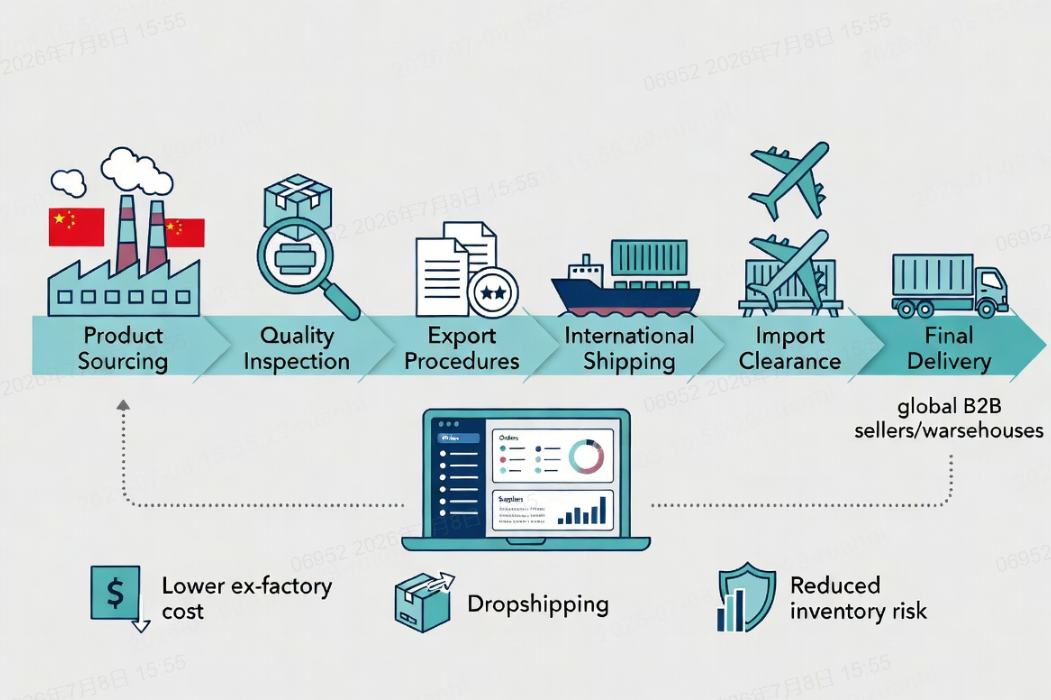
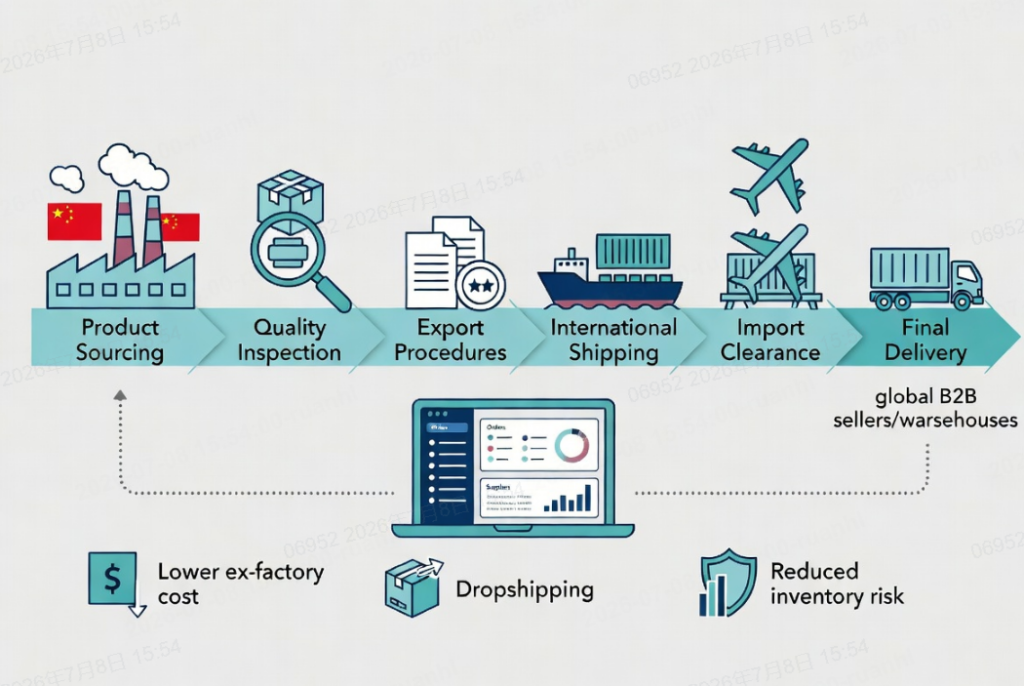
China sourcing company in this article refers to a specialist that connects global B2B sellers with Chinese factories and trading companies, often combining sourcing, quality control, and logistics support into one solution. Platforms like Looperbuy are a modern version of this model, operating as a digital B2B procurement and dropshipping partner. [linkedin]
A U.S. distributor typically purchases products in bulk, holds inventory in domestic warehouses, and resells to retailers, wholesalers, and industrial buyers under pre-defined price lists and contracts. From a profitability angle, the core differences lie in where the margin is created—at the production level (China sourcing) versus at the inventory and service level (U.S. distribution). [linkedin]
Profitability Factors: China Sourcing Company vs U.S. Distributor
Landing Cost Structure
China sourcing company model
– Lower ex-factory prices thanks to China’s manufacturing scale and labor cost advantages. [looperbuy]
– Additional costs: international freight, duties, tariffs, and longer lead times that often require larger batch orders. [china-briefing]
– When managed via a digital B2B procurement platform, many of these costs can be optimized through consolidated shipping, negotiated freight rates, and better supplier selection. [looperbuy]
U.S. distributor model
– Higher unit prices because distributors add a margin on top of domestic manufacturing or import costs. [smartbuy.alibaba]
– Lower complexity for buyers: shorter shipping times, simpler customs, and predictable local freight with fewer surprise surcharges. [raconteur]
– Typically better suited for smaller or irregular orders where buyers cannot commit to container-level sourcing.
Expert insight: A case study comparing a U.S. manufacturer and a Chinese manufacturer found total landed costs could be 64% higher with the Chinese source once freight, tariffs, cash flow timing, and inventory carrying costs were fully included. This illustrates that “China cheaper” is not automatic; profit depends on how professionally the sourcing and logistics are executed. [linkedin]
Inventory Risk and Cash Flow
From a profitability perspective, inventory risk is one of the biggest hidden cost drivers in global trade. [looperbuy]
China sourcing company (with dropshipping / lean inventory):
– You can work with made-to-order or small-batch production, often combined with platform-enabled dropshipping, to avoid large warehouse commitments. [looperbuy]
– Cash flow improves when you move from buying container loads up front to smaller, more frequent orders aligned with real demand. [looperbuy]
– Platforms like Looperbuy help synchronize orders, production, and shipment, turning traditional inventory cost into a more flexible variable expense. [looperbuy]
U.S. distributor:
– Distributors carry inventory and pass part of that cost into their price, but buyers enjoy immediate availability with short lead times. [linkedin]
– Cash flow is more predictable for buyers because payment terms are often net-30 or net-60, versus large prepayments for overseas manufacturing in some cases. [linkedin]
– For categories with highly volatile demand, the distributor’s margin can be the price buyers pay to offload inventory risk.
If your primary profit lever is cash-efficient scaling and you are comfortable working with a sourcing partner, the China sourcing model tends to offer more upside, especially when dropshipping is integrated. [looperbuy]
Margin Control and Price Flexibility
China sourcing company:
– As a global seller, you’re closer to the manufacturing cost baseline, giving you more room for aggressive pricing or higher margins. [dragonsourcing]
– You can negotiate custom specs, packaging, and bundled services, creating differentiated offers that justify better per-unit profits. [china-briefing]
– With a platform like Looperbuy, you can source from multiple vetted suppliers and adjust product mixes without rebuilding your entire supply chain. [looperbuy]
U.S. distributor:
– Margins are narrower because a portion of the profit is captured by the distributor, who may also control pricing tiers and discounts. [linkedin]
– It is harder to build unique product propositions when you rely on standard stock from domestic catalogues that many competitors can access. [raconteur]
– Distributors can offer volume discounts, but the strategic margin leverage stays primarily with them, not with you.
For global B2B sellers aiming to own their margin, the China sourcing route tends to be structurally more profitable—provided you can handle the operational complexity or delegate it to a specialist platform. [looperbuy]
Operational Complexity and Risk
Profit must always be viewed through the lens of risk-adjusted return.
China sourcing company model:
– Higher exposure to currency fluctuations, regulatory changes, and geopolitical risk. [dragonsourcing]
– Requires stronger capabilities in quality control, supplier vetting, and logistics coordination. [looperbuy]
– Sourcing platforms and marketplaces are mitigating these risks by offering pre-vetted supplier networks, integrated logistics, and digital documentation workflows. [smartbuy.alibaba]
U.S. distributor model:
– Lower cross-border risk: most complexity around customs and international transport is absorbed upstream. [smartbuy.alibaba]
– Better fit for businesses that prioritize speed, simplicity, and local support over maximum margin. [raconteur]
– Risk-adjusted, the U.S. distributor model can be “more profitable” for small teams that would otherwise waste significant time and resources managing overseas operations.
Where China Sourcing Companies Win on Profit
Scenario 1: Scaling Global B2B Ecommerce
For digital-first sellers, marketplaces, and B2B ecommerce brands, the strongest profit gains typically come from combining China sourcing with platform-enabled automation. [looperbuy]
Key advantages include:
– Lower sourcing cost per unit on scalable, standardized product lines. [dragonsourcing]
– Automated RFQs, order management, and shipment tracking via a B2B procurement platform. [fujitsu]
– Ability to add and test new SKUs quickly without extensive warehouse investment.
Looperbuy, for example, positions itself as a one-stop B2B sourcing e-platform that connects global merchants with reliable, high-quality Chinese products while reducing logistics and inventory overhead. This creates a profit engine based on speed, product diversity, and lean operations. [linkedin]
Scenario 2: OEM/ODM and Private Label
If your business relies on OEM/ODM and private label manufacturing, China sourcing offers clear profit advantages:
– Custom design, tooling, and branding can be embedded directly at the factory level, creating products that justify higher price points. [china-briefing]
– You can build exclusive product lines, locking in margin and reducing direct competition on the same SKU. [dragonsourcing]
– Integration with dropshipping or lean fulfillment via a platform lowers the upstream capital you need to bring new lines to market. [looperbuy]
Domestic distributors rarely offer this level of deep product customization; they are optimized for reselling existing SKUs with limited modifications. [smartbuy.alibaba]
Where U.S. Distributors Can Be More Profitable
Scenario 3: Time-Sensitive, Heavy, or Regulated Goods
In sectors such as industrial consumables, safety equipment, or regulated components, domestic distributors can deliver higher risk-adjusted profit, even if unit prices are higher. [smartbuy.alibaba]
Reasons include:
– Faster delivery and simplified returns, reducing lost sales due to stock-outs. [raconteur]
– Lower administrative overhead: less documentation, simpler compliance, and local customer service. [raconteur]
– Reduced exposure to tariffs and sudden regulatory changes.
For example, the cable tie case mentioned earlier showed how freight, tariffs, and inventory timing could make Chinese sourcing more expensive overall than domestic supply, despite lower ex-factory pricing. In such categories, buying from a U.S. distributor can protect margins by avoiding unexpected costs and operational disruptions. [linkedin]
How Platforms like Looperbuy Shift the Profit Equation
From both my personal experience advising B2B brands and the broader industry data, modern B2B procurement platforms have fundamentally changed what “China sourcing” looks like in practice. [looperbuy]
Key profit enhancers of a platform-based China sourcing model:
– Consolidated supplier access: A curated network of verified Chinese factories and trading companies reduces sourcing time and quality risk. [linkedin]
– Integrated logistics and dropshipping: Coordinated shipping, warehousing, and potential direct-to-buyer fulfillment minimize inventory and handling costs. [looperbuy]
– Data visibility: Real-time analytics on prices, lead times, and supplier performance help you make precise margin decisions. [fujitsu]
In effect, Looperbuy and similar platforms combine the cost advantage of China sourcing with the operational clarity and control usually associated with domestic distribution. For many global B2B sellers, that combination becomes the most profitable hybrid model. [looperbuy]
Practical Steps: Choosing the More Profitable Model for Your Business
Step 1: Map Your True Landing Cost
1. List all cost elements for each model:
– China sourcing company: factory price, tooling, freight, insurance, customs clearance, duties, tariffs, documentation, platform fees.
– U.S. distributor: list price, discounts, domestic freight, handling fees, payment terms.
2. Include cash flow timing and inventory carrying costs over a realistic period (e.g., 6–12 months). [looperbuy]
3. Compare margin per unit and margin per order cycle rather than only ex-factory prices.
Step 2: Assess Operational Capability
– If your team is lean and sales are still proving out, consider using a China sourcing platform that handles supplier curation and logistics on your behalf. [looperbuy]
– If your category is heavily regulated or local presence is critical, evaluate distributors or hybrid models where key items remain domestic while standard goods are sourced from China.
Step 3: Align with Your Growth Strategy
– Aggressive global expansion with ecommerce and marketplaces: China sourcing via a platform and dropshipping is usually more profitable. [looperbuy]
– Regional, high-touch industrial accounts with complex service needs: U.S. distributors may offer better long-term profitability through stability and customer loyalty.
Data Comparison
| Aspect | China Sourcing Company (e.g., via Looperbuy) | U.S. Distributor |
| Core Profit Lever | Lower manufacturing cost, flexible logistics, lean inventory. | Higher resale margin on local stock, service and support.! |
| Inventory Model | Dropshipping or low inventory, just-in-time sourcing. | Bulk purchasing, warehouse-based stock. |
| Cash Flow Impact | Better when orders align with demand; prepayments sometimes required. | More predictable terms (e.g., net-30), but baked-in inventory costs. |
| Risk Profile | Higher cross-border and quality risk; mitigated by platforms. | Lower logistics and regulatory risk; higher dependency on distributor pricing. |
| Customization Potential | Strong OEM/ODM and private label capabilities. | Limited customization; mainly standard SKUs. |
| Best Use Cases | Global ecommerce, marketplace sellers, OEM/ODM brands, multichannel B2B. | Time-critical industrial supply, regulated categories, local service-intensive accounts. |
FAQs: China Sourcing Company vs U.S. Distributor Profitability
Q1: Is a China sourcing company always cheaper than a U.S. distributor?
Not always. While ex-factory prices from China are usually lower, freight, tariffs, cash flow timing, and inventory costs can sometimes make the total landed cost higher than buying from a U.S. distributor, especially for heavy or low-volume items. [china-briefing]
Q2: When does a U.S. distributor offer better profit potential?
If your business relies on fast replenishment, local compliance, and low internal sourcing capacity, a U.S. distributor can protect margins by reducing operational risk and avoiding unexpected cross-border costs, even at higher unit prices. [raconteur]
Q3: How do platforms like Looperbuy improve the China sourcing profit model?
They centralize supplier discovery, quality control, and logistics, provide data visibility on costs and lead times, and support dropshipping or lean inventory strategies, helping global sellers unlock higher margins without building complex internal sourcing teams. [linkedin]
Q4: Which model works best for marketplace sellers and B2B ecommerce brands?
For digital-first sellers, the most profitable path is often China sourcing through a specialized B2B procurement platform, combining lower product cost, broader assortment, and scalable logistics that match marketplace-driven demand. [looperbuy]
Q5: Can I mix both models for optimal profit?
Yes. Many modern B2B companies source standardized, high-volume SKUs via China (often through platforms) while using domestic distributors for critical or time-sensitive items, achieving a balanced, more profitable hybrid supply chain. [smartbuy.alibaba]
References
1. Looperbuy Blog – *Choosing the Right Ecommerce Business Model for Global B2B Growth* (2026-06-23). [looperbuy]
2. Looperbuy Blog – *B2B Companies: The Complete Guide to Global Sourcing from China with LooperBuy’s One-Stop Platform* (2026-04-27). [looperbuy]
3. Looperbuy Blog – *The Strategic Advantage of Using a Modern B2B Procurement Platform* (2026-05-07). [looperbuy]
4. Looperbuy LinkedIn – Company Profile. [linkedin]
5. Raconteur – *B2B Procurement Embraces the Marketplace Model* (2023-10-25).[raconteur]
6. Robert Sires – *The Hidden Costs of Global Supply Chains—and How Repatriating Saves Money* (2021-02-07). [linkedin]
7. China Briefing – *Comparison: Sourcing Model Options in China.*[china-briefing]
8. Dragon Sourcing – *China vs India vs Mexico: Best Product Sourcing.*[dragonsourcing]
9. Alibaba SmartBuy – *What Is a B2B Exchange and What Benefits Do They Offer for Global Procurement?* [smartbuy.alibaba]
10. Fujitsu – *Advanced B2B Procurement on the Internet* (Technical Paper). [fujitsu]