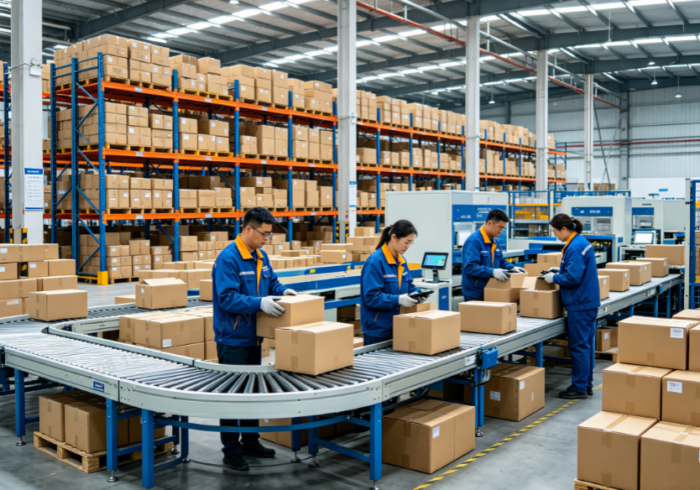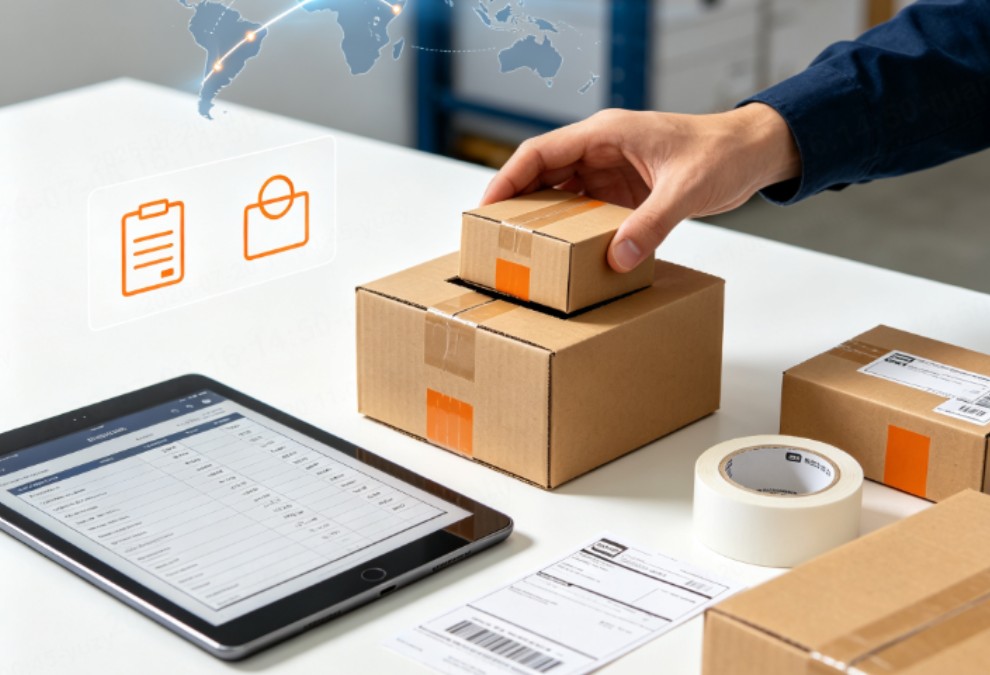
When Amazon announced the launch of Amazon Supply Chain Services (ASCS) in May 2026, UPS shares tumbled 9.4% and FedEx slid 8.5% in a single day. But for B2B buyers who rely on cross-border sourcing from China, this market reaction signals something far more important than Wall Street volatility. It marks a fundamental shift in global logistics – one that directly impacts how you source products, manage supply chains, and control costs.
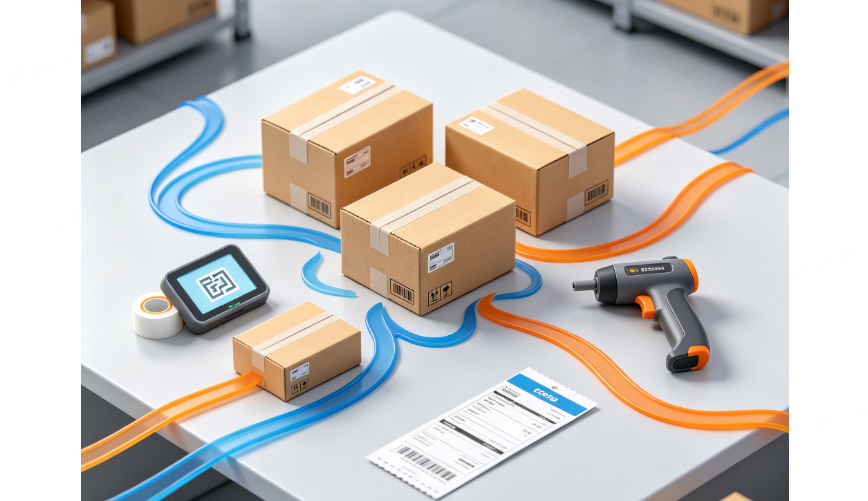
I have spent years helping international brands navigate Chinese manufacturing and logistics, and I can tell you this: the traditional model of relying solely on UPS or FedEx for your China-US supply chain is no longer the default option. Let me break down what this means for your business and why a diversified sourcing strategy is more critical than ever.
Table of Contents
The Amazon Supply Chain Services Launch: More Than Just Another Logistics Option
Amazon’s move to open its entire logistics network to all businesses – from healthcare to automotive to retail – represents a direct challenge to the established order. The service consolidates air and ocean freight, trucking, and last-mile delivery into a unified offering, with companies like Procter & Gamble and 3M already on board.
The key insight? Amazon built this network originally for its own operations, reducing reliance on partners who “were not prepared for Amazon’s enormous growth”. Now, that same infrastructure is available to you. As one seller on Amazon’s forums noted, the real value would come from using “Amazon’s international shipping rates to move inventory from China directly to a seller’s own U.S. warehouse or 3PL”.
However, let me offer some perspective from the sourcing front. While Amazon’s entry into logistics services is disruptive, Bloomberg Intelligence analysts described it as “more incremental than disruptive” for UPS and FedEx – at least for now. For international B2B buyers, this means you have more options, but you still need to carefully evaluate which partner works best for your specific sourcing needs.
The UPS Pickup Reality Every B2B Buyer Needs to Know
Here is something many sellers discover the hard way. If you are an FBA seller expecting UPS to handle everything, the reality is different. UPS does not offer free home pickup in the US. There are fees associated with their pickup services through options like On-Call Pickup, Smart Pickup, or Daily Pickup.
The most cost-effective strategy? Drop off your packages at no charge at any UPS Access Point or The UPS Store. But what if your sourcing operation requires bulk shipping directly from Chinese factories? This is where a platform like LooperBuy changes the game entirely.
The LooperBuy Advantage: Global Sourcing Without the Logistics Headaches
As the B2B sourcing landscape evolves, platforms that integrate sourcing, payment, and logistics have become essential. LooperBuy, a one-stop B2B sourcing platform, addresses the pain points that Amazon and UPS alone cannot solve for international buyers.
According to LooperBuy’s partnership announcement with LianLian Global, the platform solves four critical challenges for global buyers: getting good products directly from Chinese factories at competitive prices, making payments in multiple currencies without needing a Chinese bank account, accessing reliable logistics to destinations worldwide, and receiving one-on-one support for customized orders.
One verified user on LooperBuy’s platform shared: “I have no Chinese bank account and no RMB. I have already selected products, but how can I directly purchase Chinese goods with foreign currency?” LooperBuy solves this with multi-currency payment solutions. Another buyer noted: “From Yiwu to Jakarta, it is not that far, but I encountered several issues with logistics providers before. Finding the right logistics partner is really not easy”.
This is the real value proposition. Instead of managing individual logistics providers and payment gateways, LooperBuy integrates everything through partnerships with leading logistics providers and payment platforms like LianLian Global, which serves over 4.9 million merchants across 100+ countries.
Why Global Brands Are Returning to Chinese Manufacturing in 2026
The logistics conversation cannot be separated from the manufacturing reality. In 2025 and 2026, a significant shift occurred. Global brands that shifted production out of China are now returning. Steve Madden, the US footwear brand, began diversifying production in late 2024 but shifted some production back to China for autumn 2025 because the company found it “difficult to ensure on-time delivery, appropriate product quality and/or reasonable pricing if we sourced elsewhere”.
The Swiss sporting goods retailer Intersport is also pivoting back to China, seeing an opportunity to tap into the country’s unrivaled supply chain efficiency. Bai Ming from the Chinese Academy of International Trade and Economic Cooperation notes that “China’s end-to-end supply chain enables brands to go from design to mass production in weeks”.
This is not just about large corporations. For B2B buyers of all sizes, China’s manufacturing advantages remain compelling. The Shenzhen Toys Industry Association reports that manufacturers still keep 70-80% of their capacity in China because Southeast Asian markets now have labor costs 5-10% higher while lacking the same rapid supply-chain response.
Sourcing Diversification: The Smart Strategy for 2026 and Beyond
Amazon dropping UPS as its primary logistics partner (at least in terms of market perception) and the return of global brands to Chinese manufacturing point to one clear conclusion: diversification is the winning strategy.
What does this mean for your business? Rather than relying on a single carrier or sourcing channel, consider:
Multi-carrier logistics strategy – Use Amazon Supply Chain Services for certain shipments, UPS or FedEx for others based on cost, speed, and reliability.
Platform-based sourcing – Leverage platforms like LooperBuy that integrate multiple logistics options and handle payment complexities.
Factory-direct relationships – Work directly with Chinese manufacturers while using platforms to handle logistics and payments.
Inventory buffer – With multiple options available, maintain some inventory buffer to account for shipping variability across carriers.
Data from Rio Tinto, the mining giant, shows the power of a diversified Chinese supply chain. In 2025, Rio Tinto spent a record $4.3 billion with Chinese suppliers, recognizing that “the capabilities of Chinese suppliers in terms of rapid response and fast-paced innovation are unique on a global scale”.
Key Takeaways for International B2B Buyers
The logistics landscape is shifting, but the fundamentals of smart sourcing remain the same: find quality products at competitive prices, ensure reliable delivery, and manage costs effectively. Amazon’s entry into logistics services and the return of global brands to Chinese manufacturing reinforce that China remains central to global supply chains.
For B2B buyers, the question is not whether to source from China but how to do it most efficiently. Platforms like LooperBuy offer a practical solution by integrating sourcing, payment, and logistics into a single streamlined experience. Whether you are a brand owner, wholesaler, or manufacturer, the ability to source globally at competitive prices while managing logistics seamlessly has never been more accessible.
Frequently Asked Questions
Q: Is Amazon Supply Chain Services replacing UPS for cross-border shipping?
A: Not entirely. Amazon is offering a competitive alternative that consolidates freight, distribution, and delivery services. While Amazon’s entry caused a market reaction, UPS and FedEx continue to serve the market. Many businesses will likely use a mix of carriers based on cost and specific needs.
Q: Can I still use UPS for shipping from Chinese factories to my US warehouse?
A: Yes. However, for FBA sellers in the US, UPS pickups from home typically involve fees unless you drop off at a UPS Access Point or store. The Amazon Partnered Carrier Program offers discounted shipping rates, but pickup fees are separate from the shipping rate.
Q: How does LooperBuy help with logistics and sourcing from China?
A: LooperBuy connects buyers directly with Chinese factories, handles multi-currency payments (including direct foreign currency settlement), and partners with leading logistics providers for global delivery. They also offer one-on-one customer support for customized orders.
Q: Why are global brands like Steve Madden returning to China for manufacturing?
A: Brands are returning because China offers on-time delivery, consistent product quality, and reasonable pricing that competitors in Southeast Asia cannot match. China’s end-to-end supply chain enables rapid design-to-production timelines unmatched elsewhere.
Q: Is it cheaper to source from China or Southeast Asia in 2026?
A: Despite tariff considerations, many manufacturers find China remains cost-competitive because labor costs in Southeast Asia are 5-10% higher and supply-chain response times are slower. China maintains strong supply capacity and manufacturing infrastructure advantages.
Article Summary
Amazon’s launch of Supply Chain Services in May 2026 disrupted the logistics industry, sending UPS and FedEx stocks lower. For international B2B buyers sourcing from China, this shift presents both opportunities and challenges. This article explains why global brands are returning to Chinese manufacturing, how platforms like LooperBuy solve sourcing, payment, and logistics pain points, and what strategies smart buyers should adopt. With China’s manufacturing advantages and new logistics options, a diversified sourcing approach combining platform-based solutions and multi-carrier logistics offers the best path forward for 2026 and beyond.
References
- CNBC TV18. (2026, May 4). Amazon shipping services repackage sparks UPS, FedEx selloff. https://www.cnbctv18.com/market/amazon-shipping-services-repackage-sparks-ups-fedex-selloff-ws-l-19898604.htm
- Amazon Seller Central. (2026, May 26). UPS Pickup Fees and Options for FBA Sellers. https://sellercentral.amazon.co.uk/seller-forums/discussions/t/fa1fe6a3-4e3c-42fb-82ec-083cadf97d71
- LianLian Global. (2024, September 13). LianLian Global Partners with LooperBuy to Unlock Cross-Border B2B Sourcing. https://global.lianlianpay.com/article/MTE1NjM2LDE1Ng.html
- China Daily. (2025, August 22). Foreign brands turning back to China for edge in manufacturing. https://www.chinadaily.com.cn/a/202508/22/WS68a7cd50a310851ffdb4f81c.html
- Ecns.cn. (2026, February 5). Rio Tinto bags Chinese supplies for global mining. http://www.ecns.cn/m/news/economy/2026-02-05/detail-iheznyiy1140062.shtml
- Yahoo Finance. (2026, May 3). Amazon opens up its global logistics network to all businesses. https://finance.yahoo.com/sectors/technology/articles/amazon-opens-global-logistics-network-141353261.html
Hot tags
Amazon Supply Chain Services, B2B sourcing China, international logistics 2026, LooperBuy platform, China manufacturing advantages, cross-border e-commerce shipping, B2B payment solutions, global supply chain diversification, UPS pickup fees FBA, sourcing from China for brands