In the fast-paced world of international trade, clarity is your greatest asset. Whether you are a growing brand, a wholesale distributor, or a manufacturer, understanding the nuances of your procurement documentation is critical to protecting your business interests. A common confusion arises when distinguishing between a Purchase Order vs. Purchase Agreement—two pillars of B2B procurement that serve distinct, yet complementary roles.
At LooperBuy, we understand that global sourcing is not just about finding products; it is about establishing robust, reliable supply chain relationships. This guide clarifies these essential documents to help you streamline your procurement process effectively.
Table of Contents
Understanding the Basics: What Defines Your Procurement Documents?
Before diving into the differences, it is vital to define what these documents represent in a legal and operational context.
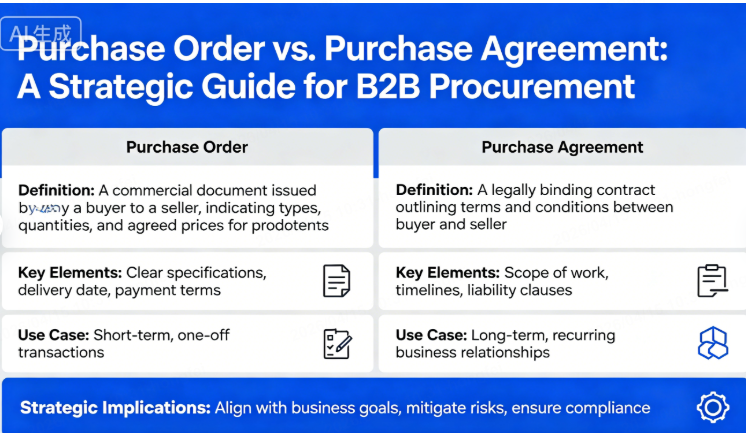
- Purchase Order (PO): An official, legally binding document issued by a buyer to a seller. It serves as a specific offer to purchase predefined goods or services at a set price, quantity, and delivery timeline usnh, chargebee.
- Purchase Agreement (PA): A comprehensive legal contract signed by both parties. It outlines the overarching terms, conditions, rights, and duties governing a long-term business relationship or complex, high-value transactions digitalpurchaseorder, asiabridgelaw.
Key Differences: Purchase Order vs. Purchase Agreement
To make informed decisions, you must recognize when to use one over the other.
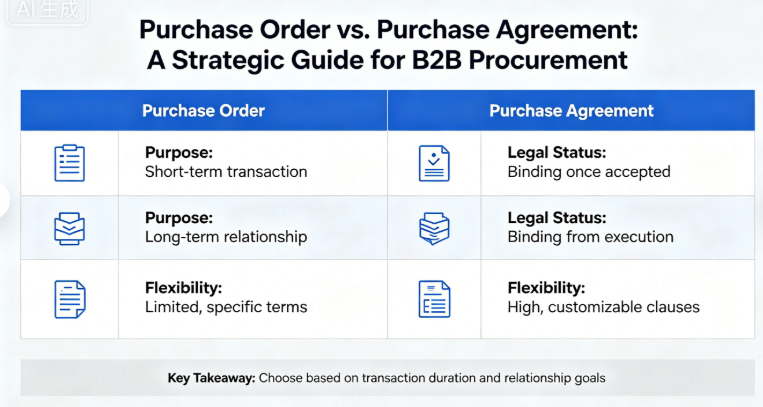
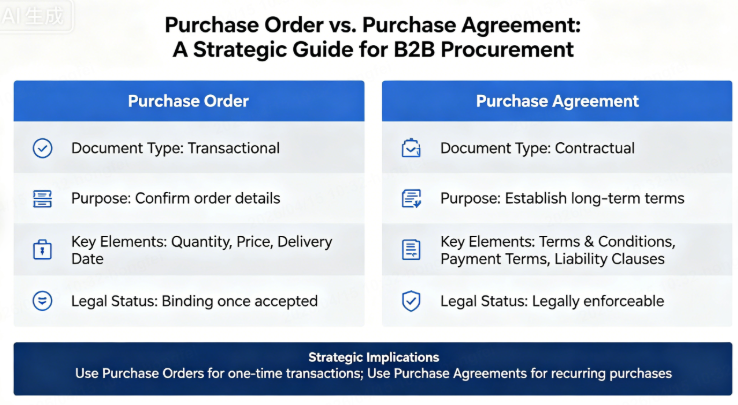
| Feature | Purchase Order (PO) | Purchase Agreement (PA) |
|---|---|---|
| Primary Purpose | Authorize specific transactions chargebee | Define the legal relationship/terms asiabridgelaw |
| Duration | Typically short-term/one-time invoicetemple | Long-term/ongoing cooperation globalsources |
| Complexity | Simple, transactional controlhub | Complex, high-risk/value ironcladapp, invoicetemple |
| Signature | Usually signed by the buyer digitalpurchaseorder | Signed by both buyer and seller digitalpurchaseorder, asiabridgelaw |
When to Use Each Document: Expert Insights
When to Utilize a Purchase Order
A Purchase Order is the industry standard for routine, transactional procurement. It is perfect for:
- One-time purchases: When you need a specific set of items delivered quickly controlhub.
- Standardized orders: When the terms and conditions are straightforward and non-negotiable controlhub.
- Efficiency: Streamlining the procurement workflow and ensuring clear, auditable documentation for your finance team chargebee.
When to Utilize a Purchase Agreement
A Purchase Agreement is essential for high-stakes business environments. Use a PA when:
- Managing long-term supply: You require a stable supply chain, consistent pricing, or priority service over a long period globalsources.
- High-value deals: The transaction involves significant financial risk that warrants detailed contractual protection invoicetemple.
- Complex requirements: The business relationship involves multifaceted legal nuances, such as intellectual property rights, non-disclosure agreements, or complex service-level agreements (SLAs) pandadoc.
Strategic Procurement: Integrating Both for Success
In professional B2B sourcing, these documents are not mutually exclusive; they are often used in tandem. Industry experts frequently recommend using a Master Service Agreement (MSA) or a Purchase Agreement to set the “rules of the road” for your entire relationship with a supplier pandadoc. Once that foundation is established, you can issue individual Purchase Orders that operate under the umbrella of that primary agreement pandadoc. This combination offers the best of both worlds: legal protection and operational efficiency.
(Insert Graphic: “The Procurement Lifecycle Table” here, illustrating the flow from initial agreement to PO generation, shipment, and final payment.)
Why Global Sourcing Demands Greater Attention to Detail
When sourcing from global markets, such as China, relying solely on informal communications is a major risk.
- Protect Your Interests: A written, enforceable Purchase Agreement ensures that terms regarding quality, manufacturing standards, and dispute resolution are clearly defined asiabridgelaw.
- Scalability: As your brand grows, moving from ad-hoc ordering to structured purchasing processes is necessary to maintain profitability and supplier compliance ramp, tipalti.
- Leverage: A formal Purchase Agreement allows you to secure better bulk pricing and preferential terms, which are vital for maintaining competitiveness in international markets globalsources, controlhub.
Conclusion
Mastering the difference between Purchase Order vs. Purchase Agreement is a hallmark of a mature, successful procurement strategy. Use Purchase Orders for daily transactional efficiency and Purchase Agreements to secure your long-term strategic relationships. By combining the clarity of POs with the protection of PAs, you can confidently navigate the complexities of global sourcing.
Ready to streamline your global sourcing process? Partner with LooperBuy to access a one-stop B2B sourcing platform that simplifies procurement, ensures reliable global logistics, and keeps your costs low. [Start your sourcing journey with LooperBuy today!]
References
- [1] Digital Purchase Order: Differences Between Purchase Orders and Purchase Agreements
- [2] Global Sources: Purchase Agreements vs. Purchase Orders
- [4] Ramp: Purchase Request vs. Purchase Order: Key Differences
- [5] Ironclad: Purchase Orders, Purchase Agreements, & Contracts
- [7] PandaDoc: Purchase Orders vs Contracts: Differences and Similarities
- [10] AsiaBridge Law: Purchase Agreements vs. Purchase Orders
- [12] Invoice Temple: Contract Versus Purchase Order: Key Differences in Business
- [13] University of New Hampshire: PO vs. Contract
- [16] ControlHub: 4 Types of Purchase Orders and Their Differences
- [17] Chargebee: Purchase Order: Definition, Process, and Templates Explained
FAQ
- Q: Is a purchase order a legally binding contract?
A: Yes, once a supplier confirms or begins fulfilling the purchase order, it becomes a binding legal agreement based on the terms specified within it usnh. - Q: Can I use both a purchase agreement and a purchase order?
A: Absolutely. It is best practice to have a overarching Purchase Agreement for long-term terms and use Purchase Orders for individual transactional requests pandadoc. - Q: Which document is better for bulk purchasing?
A: A Purchase Agreement is better for bulk or long-term cooperation, as it allows you to secure stable supply, pricing, and volume-based discounts globalsources, controlhub. - Q: Does a purchase order need to be signed by both parties?
A: While a PO is typically issued and signed by the buyer, it becomes enforceable when the supplier accepts it or begins providing goods or services digitalpurchaseorder, usnh. - Q: When should I choose a contract over a purchase order?
A: Choose a formal contract when the engagement is long-term, high-risk, involves complex deliverables, or requires detailed clauses regarding liability and legal protection pandadoc, invoicetemple.
Article Summary :
Navigate B2B procurement with confidence. This guide analyzes the essential differences between Purchase Orders and Purchase Agreements. Learn when to use each to protect your business interests, ensure legal compliance, and streamline international sourcing with LooperBuy’s expert insights.
Hot tags: B2B procurement, international sourcing, global supply chain, purchase order vs, purchase agreement template, B2B wholesale platform, cross-border trade, manufacturing procurement, supplier management, logistics optimization.