White label dropshipping vs OEM manufacturing: which model actually scales better? Learn the real trade‑offs in cost, speed, margin, and brand control, and see how to start lean with white label then graduate winners into OEM using a China‑based B2B sourcing partner like Looperbuy.
White label dropshipping is usually the fastest and lowest-risk way to start and test products at scale, while OEM manufacturing becomes the better choice once you have proven demand, clear product differentiation needs, and the capital to invest in custom development. For a global sourcing platform like Looperbuy, the winning strategy is often to start with white label dropshipping to validate markets and graduate selected winners into OEM manufacturing to build long‑term brand equity and higher margins. [sourcy]
What This Article Covers
In this guide, I’ll look at White Label Dropshipping vs OEM Manufacturing from both a practical operator’s perspective (what it’s like to run each model day to day) and an industry strategist’s perspective (margin, valuation, and long‑term scalability). The angle is tailored for global B2B sellers using Chinese supply chains and agent services like Looperbuy.
Table of Contents
Defining the Two Models
What Is White Label Dropshipping?
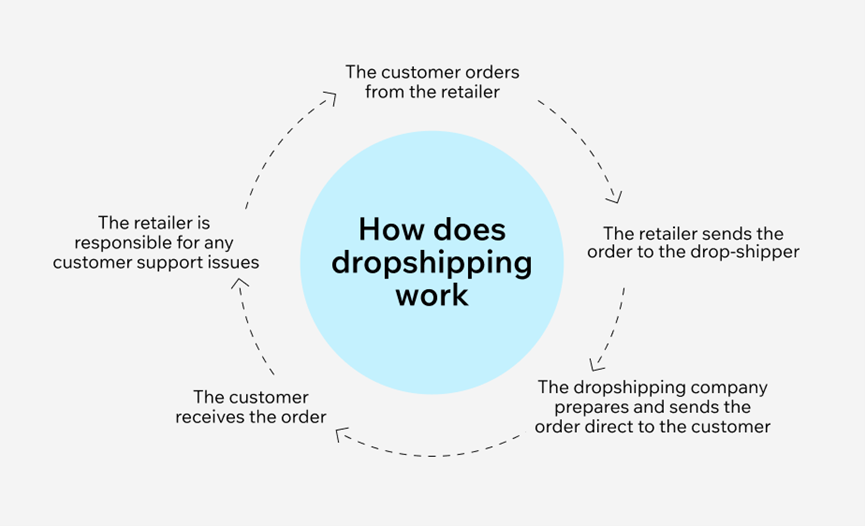
At its core, white label dropshipping means you sell generic products produced by a manufacturer, rebrand them as your own, and let a third party handle fulfillment directly to your customer. [microlit]
Key characteristics:
– Products are standardized and not exclusive to you. Multiple brands can sell the same base item under different labels. [centricsoftware]
– You mainly customize branding, packaging, and marketing, not the actual product formulation or design. [contrado.co]
– Inventory, warehousing, and shipping are typically handled by your supplier or a dropshipping agent, reducing your upfront investment and operational complexity. [dropified]
For B2B sellers, white label dropshipping is an efficient way to quickly extend product lines and test new verticals with minimal capital risk. [microlit]
What Is OEM Manufacturing?
OEM (Original Equipment Manufacturer) manufacturing is when you work with a factory to develop and produce a product to your own specifications, usually under your brand, with a higher degree of customization. [sourcy]
Key characteristics:
– You can influence product design, features, materials, and performance, not just the logo. [sourcy]
– Products are typically exclusive or semi‑exclusive, giving you stronger differentiation. [boxhero]
– OEM involves higher minimum order quantities (MOQs), longer lead times, and more complex quality and supply chain management. [boxhero]
For scaling brands, OEM is how you build proprietary product advantages and protect your margins once your market is validated. [microlit]
White Label vs OEM: At‑a‑Glance Comparison
Scaling Focus: Speed vs Control
From an operator’s point of view, the real trade‑off is simple: white label dropshipping optimizes for speed, while OEM manufacturing optimizes for control and uniqueness. [boxhero]
Key differences for scaling:
| Dimension | White Label Dropshipping | OEM Manufacturing |
| Time to market | Very fast – products are ready‑made and can be listed as soon as branding is set. | Slower – requires development, sampling, and tooling before mass production. |
| Upfront cost | Low – no product development; often no inventory commitment at the start. | High – design, molds, certification, and larger MOQs drive upfront investment. |
| Product uniqueness | Low – other brands can sell similar or identical items. | High – products can be tailored and exclusive to your brand. |
| Operational complexity | Lower – fulfillment is handled by suppliers/agents; good for lean teams. | Higher – you must manage production, quality, compliance, and logistics. |
| Brand building | Moderate – branding is mostly on packaging and marketing. | Strong – product itself becomes part of your brand equity. |
| Risk profile | Lower – flexible product testing with smaller commitments. | Higher – mistakes in product design or demand forecasting are expensive. |
How Each Model Impacts Scaling
Scaling with White Label Dropshipping
From a growth operator’s lens, white label dropshipping is a powerful tool for rapid testing and horizontal scaling – adding more SKUs and categories to the same audience. [dropified]
Advantages for scaling:
– Speed of iteration: You can launch new SKUs in days, not months, which is critical for trend‑driven segments (e.g., beauty gadgets, lifestyle accessories). [centricsoftware]
– Capital efficiency: You avoid heavy inventory and tooling costs, so you can allocate more budget to performance marketing and CRO instead of sunk production costs. [microlit]
– Operational leverage through agents: Using a sourcing and fulfillment agent reduces the need to build in‑house logistics capabilities, allowing you to automate bulk ordering and multi‑supplier management. [shopify]
Scaling challenges:
– Margin pressure: If many competitors sell similar white label products, price competition erodes margin quickly. [centricsoftware]
– Limited product moat: It’s harder to justify premium pricing or defend your position when the product itself is generic. [sourcy]
– Supplier dependence: If you scale a winner and your supplier has stockouts or quality issues, your growth can stall. [dropified]
For Looperbuy specifically, this model aligns with helping global sellers reduce warehousing and logistics complexity while still expanding their catalog aggressively.
Scaling with OEM Manufacturing
With OEM manufacturing, you’re trading setup complexity for long‑term strategic advantage. [sourcy]
Advantages for scaling:
– Stronger margins & pricing power: Custom, differentiated products support premium pricing, especially in B2B niches that prioritize performance, compliance, or reliability. [boxhero]
– Brand defensibility: OEM products can be tied to exclusive features, certifications, or IP that competitors cannot easily copy. [microlit]
– Strategic partnerships: Long‑term OEM relationships can stabilize supply, support co‑development, and improve cost structure at higher volumes. [sourcy]
Scaling challenges:
– Slow testing cycles: A bad product bet can lock up capital in inventory and tooling for months. [boxhero]
– Higher operational load: You must manage product development, sampling, QC, and often compliance for multiple markets (e.g., CE, FCC, FDA‑related requirements). [microlit]
– Cash flow stress: Larger MOQs and longer production cycles require more cash and more sophisticated financing. [dropified]
For a B2B platform like Looperbuy, OEM is where you help mature clients consolidate suppliers, optimize landed cost, and build proprietary product lines once their market is proven.
When White Label Dropshipping Wins
Best Scenarios for White Label Dropshipping
From my work with scaling eCommerce and B2B brands, white label dropshipping is usually the better choice when:
1. You are validating a new market or niche.
– You don’t yet know which SKUs will become your “winners.”
– You need fast feedback from multiple countries or segments before committing to large orders. [centricsoftware]
2. You prioritize cash‑light growth.
– You want to allocate more budget to ads, content, and funnel optimization instead of inventory. [dropified]
3. Your differentiation is more about brand, service, and content than the product itself.
– For many lifestyle, gifting, or decor categories, the story, content, and positioning matter more than micro‑level product customization. [centricsoftware]
4. You’re building a data‑driven product roadmap.
– You can use white label SKUs as live experiments to discover which features, price points, and form factors warrant OEM investment later. [dropified]
Practical Checklist: Are You Ready for OEM or Still in White Label Mode?
Choose white label dropshipping if most of these are true:
– You have limited capital and must stay cash‑light. [boxhero]
– You’re still unsure which 3–5 products will be your long‑term core line.
– Your main constraint is marketing capacity, not manufacturing or logistics. [dropified]
– Your customers care more about fast delivery, reliable supply, and competitive pricing than unique features. [centricsoftware]
When OEM Manufacturing Wins
Best Scenarios for OEM Manufacturing
OEM becomes more attractive once you have proof of demand and a clear gap in the market, especially in B2B segments. [sourcy]
OEM is often the better option when:
1. You have one or more “hero products” with stable demand.
– You already know the core SKUs that generate the majority of your revenue.
– You want to improve margin and control over those SKUs through custom production. [boxhero]
2. Your buyers value specification‑level differentiation.
– In industrial, medical, or technical verticals, small differences in performance, certification, or durability can justify higher prices. [microlit]
3. You are building a long‑term brand and catalog.
– OEM helps you lock in exclusive features and make your product line central to your brand identity. [sourcy]
4. You have the capital and team to handle the complexity.
– You can support MOQs, quality audits, and multi‑country compliance. [microlit]
Personal Take: The “Graduation” Strategy
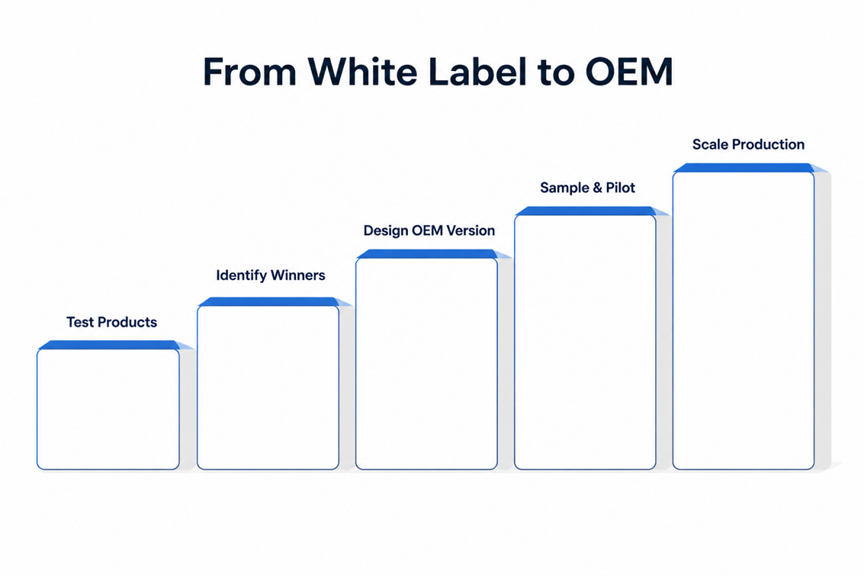
From a scaling strategy standpoint, the most resilient brands rarely choose only white label or only OEM. Instead, they:
– Start with white label dropshipping for broad idea testing and demand mapping. [contrado.co]
– Identify winners by data (conversion rates, reorder frequency, margins). [dropified]
– Gradually shift winners into OEM production, adding features and exclusivity while keeping long‑tail catalog products in white label. [sourcy]
This “graduation” approach fits perfectly with a platform like Looperbuy: you use white label and dropshipping to discover opportunity, then leverage OEM to deepen that opportunity over time.
How Looperbuy Can Support Both Paths
For White Label Dropshipping
A B2B sourcing and fulfillment platform like Looperbuy adds value by:
– Curating reliable, white label‑friendly factories in China that already produce export‑ready SKUs. [shopify]
– Handling agent‑style tasks: supplier vetting, price negotiation, sample coordination, and order consolidation. [shopify]
– Providing dropshipping‑oriented services: order routing, bulk fulfillment, and multi‑warehouse logistics to reduce stockouts and improve lead time stability. [shopify]
For OEM Manufacturing
On the OEM side, Looperbuy can act as a local execution partner:
– Helping you translate product specs into factory language, aligning technical drawings, materials, and quality standards. [microlit]
– Coordinating prototyping, sampling, and pilot runs across different factories to optimize cost and quality. [sourcy]
– Managing quality inspection, shipment consolidation, and export documentation, which are critical as volumes grow. [shopify]
Step‑by‑Step: Moving from White Label to OEM
1. Use White Label Dropshipping to Build a Data Baseline
– Launch multiple SKUs across categories using low‑risk white label products. [contrado.co]
– Track unit economics (CPA, contribution margin, return rate) and demand stability over at least 3–6 months. [dropified]
2. Identify OEM Candidates
Shortlist SKUs that:
– Show high repeat purchase or subscription potential.
– Suffer from margin pressure due to competition, but where your brand and audience are strong. [centricsoftware]
– Have clear customer feedback suggesting feature improvements (e.g., durability, sizing, materials).
3. Design Your OEM Version
– Work with your sourcing partner to translate customer feedback into product requirements (materials, tolerances, certifications). [microlit]
– Decide which improvements justify higher production cost and OEM complexity.
4. Validate with Samples and Small Batches
– Request samples from 2–3 OEM‑capable factories rather than committing to one immediately. [sourcy]
– Use a small production run to test both actual product performance and customer willingness to pay more.
5. Scale Production with Process and Redundancy
– Once OEM product‑market fit is confirmed, scale with clear SOPs, multiple suppliers, and robust QC, so production can grow without collapsing under demand spikes. [dropified]
What Should a Scaling B2B Seller Do Next?
If you’re a B2B seller or brand owner planning to scale, don’t force a binary choice between white label dropshipping and OEM manufacturing. Use white label to test broadly and protect your cash, then upgrade your proven winners into OEM with a sourcing partner that can manage China‑side complexity for you. [microlit]
If you want to explore this “test first, customize later” approach, consider using Looperbuy to:
– Quickly source and dropship white label products from reliable Chinese manufacturers, and
– Design a roadmap toward OEM production for your top‑performing SKUs once the data supports deeper investment.
FAQs
1. Is white label dropshipping still viable in 2026?
Yes, white label dropshipping remains viable, especially when paired with strong brand positioning, niche focus, and reliable suppliers or agents who can ensure quality and reasonable shipping times. [contrado.co]
2. Is OEM manufacturing only for big brands?
No. OEM is increasingly accessible to smaller brands that can meet MOQs and have a clear product concept, particularly when they work with sourcing platforms that aggregate demand and negotiate on their behalf. [sourcy]
3. Can I mix white label and OEM in the same store?
Absolutely. Many successful brands keep a wide white label catalog for testing and long‑tail demand while using OEM for a smaller set of highly differentiated flagship products. [boxhero]
4. How do I reduce risk when moving into OEM?
Reduce risk by starting with small test runs, using multiple sample rounds, and choosing OEM only for SKUs with proven demand and clear customer‑driven improvement opportunities. [microlit]
5. Why work with a sourcing platform instead of going directly to factories?
A sourcing platform or agent can help with supplier vetting, negotiation, quality control, logistics, and dispute handling, which is critical when you are scaling across multiple factories and markets. [shopify]
References
– Sourcy.ai – “OEM vs Private Label: Complete Sourcing Strategy”[sourcy]
– Microlit – “OEM and White Label Explained: Their Definitions and Operational Mechanisms”[microlit]
– BoxHero – “Private Label vs. White Label: Pros and Cons Explained”[boxhero]
– Contrado – “White & Private Label Dropshipping – Your Ultimate Guide”[contrado.co]
– Dropified Blog – “The Importance of Scaling Your eCommerce Business”[dropified]
– Xiaoman – “B2B 跨境电商本地化运营全攻略”[xiaoman]
– Shopify 中文博客 – “如何为电商业务选择代发货代理?” [shopify]