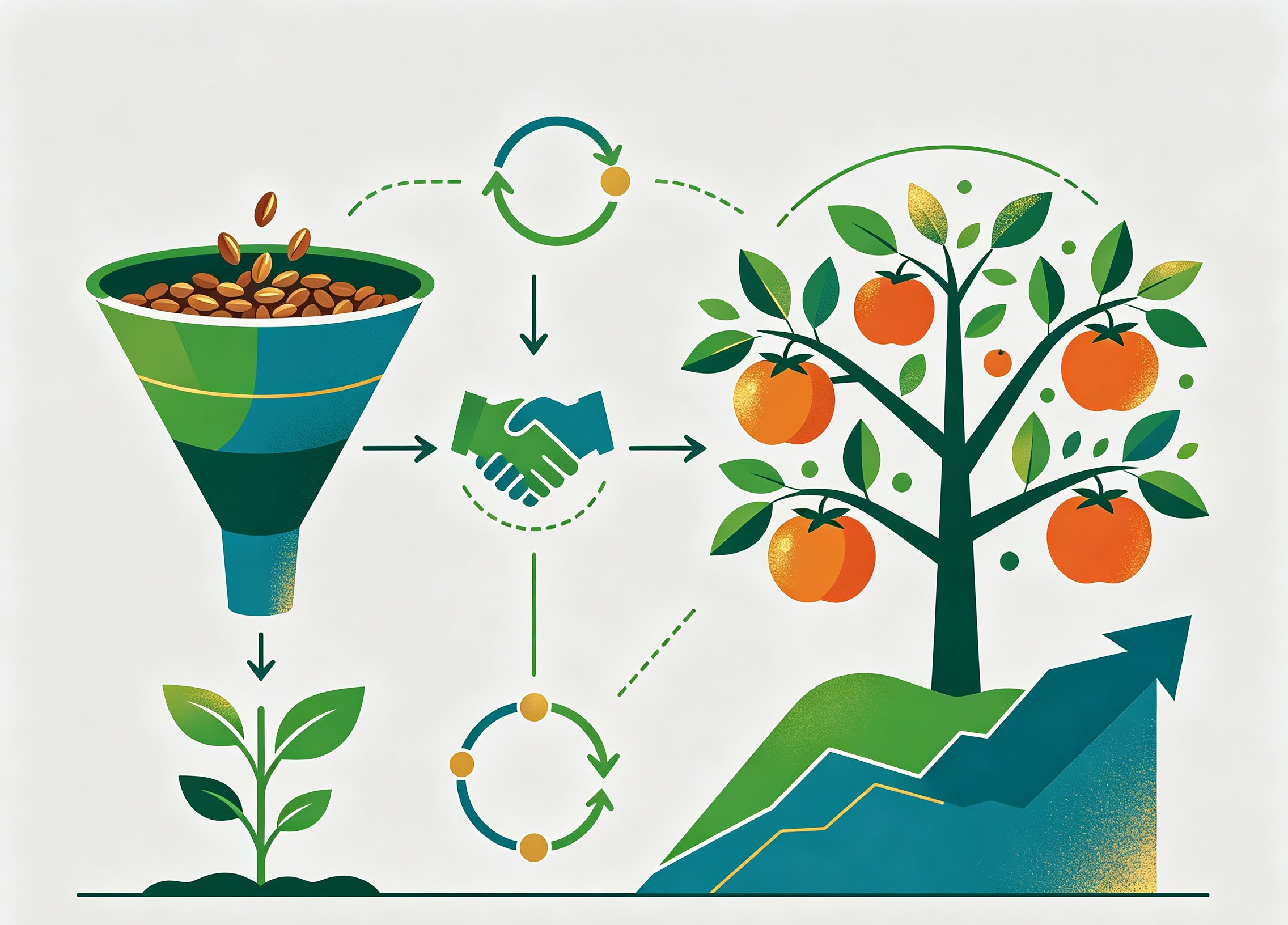
Ask any experienced B2B sales leader what separates a thriving pipeline from a barren one, and you will hear a version of the same answer: the best deals are planted long before anyone picks up the phone. That is the essence of seeding in sales. As a B2B sourcing strategist who has spent over a decade helping international brand owners, wholesalers, and manufacturers build resilient supply chains, I have watched this principle transform how companies approach procurement partnerships. Seeding is not about pitching. It is about planting the seed of your product or service with a prospect through education, value, and relationship-building so that when the buying moment arrives, you are already the trusted choice.
Table of Contents
What Is Seeding in Sales and Why It Matters for B2B Growth
Seeding in sales is a long-term growth strategy where you cultivate awareness and trust with potential buyers before they have an active need. Unlike demand capture, which targets prospects already searching for a solution, seeding focuses on creating demand among buyers who are not yet shopping. The distinction matters enormously. Most B2B companies allocate roughly 70% of their marketing budgets to short-term demand capture because it is easier to measure and easier to show ROI. But as industry analysts have repeatedly pointed out, if you are not planting, you will not have any demand left to harvest.
In practical terms, seeding in sales for B2B operates on a simple premise: prepare the soil before you plant the seed. The seed is the solution you offer. The soil is the buyer’s receptivity, their emotional readiness to engage, consider, and change. If the soil is not fertile, even the strongest pitch will not take root.
For global sourcing professionals, seeding takes on a particularly strategic dimension. When you are introducing a new supply chain partner or a sourcing platform to a brand owner or manufacturer, the decision cycle can span months. Seeding allows you to build credibility during that window through consistent, value-driven touchpoints rather than aggressive sales pressure.
Seeding vs Demand Generation: Understanding the Strategic Difference
A common misconception is that seeding and demand generation are interchangeable. They are not. Demand generation creates awareness and interest among buyers who are not yet in the market. Demand capture converts buyers who are already actively looking for a solution.
Seeding sits at the very front of this spectrum. It is the practice of getting your product or service into the hands of the right people, often without any immediate transactional expectation. A classic example is a retailer offering free in-person style consultations. The stated goal is to help you understand your personal style, but the underlying purpose is to plant the idea that this retailer’s offerings could fulfill your needs. The moment of purchase comes later, organically.
In B2B sourcing, seeding might look like providing a free market analysis to a prospective brand owner, sharing a curated product catalog relevant to their category, or facilitating a sample order without obligation. Each of these actions plants a seed. When that brand owner later decides to diversify their supplier base, your platform is already the familiar, trusted option.
5 Practical Seeding Tactics for B2B Sourcing Professionals
Understanding the concept is one thing. Executing it effectively requires a disciplined approach. Here are five tactics that have proven effective for B2B sourcing and sales teams.
1. Identify Your Seed Accounts with Precision
Not every prospect deserves the same level of seeding investment. The most successful cold-start strategies focus on finding the most sensitive points, using highly concentrated energy to penetrate and unlock the broader network. Prioritize accounts that show clear signals of sourcing need: recent product line expansions, public sustainability commitments, or supply chain diversification announcements. These are your highest-potential seed accounts.
2. Lead with Value, Not with a Pitch
Seeding campaigns succeed when they subtly build brand affinity by offering customers value and meeting them where they are. Instead of opening with a sales deck, share a market insight. Offer a free sourcing consultation. Provide a comparison of product categories that align with their business. The goal is to educate, not to close.
3. Use Multi-Channel Touchpoints Consistently
Seeding is not a one-time email. It is a sustained cadence of friendly, non-intrusive touchpoints across email, LinkedIn, industry events, and content. Research on B2B sales development shows that multi-channel outreach campaigns that combine personalized email sequences, phone outreach, and dedicated landing pages consistently outperform single-channel approaches.
4. Seed Through Content and Community
Account seeding through role-specific content, free use cases, templates, and community engagement is one of the most efficient ways to get individual contributors inside target companies to discover and adopt your offering. For a B2B sourcing platform, this could mean publishing category-specific sourcing guides, hosting webinars on cross-border logistics, or creating a resource library that wholesale buyers can access freely.
5. Measure Receptivity, Not Just Activity
The most common mistake in seeding is confusing polite engagement with genuine openness. Train your team to recognize the difference. In post-call debriefs, ask a simple question: was the prospect leaning in or leaning out? Receptivity is the precondition for advancing the relationship, and it must be tracked as rigorously as any pipeline metric.
How LooperBuy Turns Seeding into Sourcing Results
For global brand owners, wholesalers, and manufacturers, the challenge is rarely finding Chinese suppliers. It is connecting with legitimate, vetted ones and managing the complex logistics of cross-border procurement. This is precisely where a one-stop B2B sourcing platform like LooperBuy changes the equation.
LooperBuy provides direct access to a massive range of Chinese premium products, with no additional fees for sourcing and shipping, and cross-border payment support in multiple currencies. For a brand owner evaluating sourcing options, the seeding value is immediate: a single platform that eliminates middlemen, streamlines logistics, and delivers end-to-end transparency.
The strategic implication is significant. When a sourcing platform seeds the market by making access frictionless, it does not need to pitch. The platform itself becomes the proof. A wholesale buyer who explores LooperBuy’s catalog and experiences the ease of cross-border procurement is already sold on the concept. The seeding has done its work.
China’s manufacturing ecosystem covers approximately 90% of global B2B supply categories, and Chinese suppliers offer B2B pricing that is 25-40% lower than European or North American alternatives. The barrier is not the product quality or the price. It is the perceived complexity of cross-border sourcing. A platform that seeds trust by simplifying every step of that process converts skepticism into long-term partnership.
Common Seeding Mistakes to Avoid in B2B Sales
Even experienced sales teams fall into predictable traps when implementing seeding strategies.
Pushing too early. The single biggest seeding mistake is treating a relationship-building touchpoint as a sales opportunity. Pressure triggers emotional resistance. Customers feel pushed and instinctively shut down.
Scaling before the soil is ready. In marketplace and platform contexts, buyer acquisition should wait until supply density is sufficient to deliver a genuine first experience. Launching buyer outreach into an underdeveloped segment generates traffic with no second visit.
Measuring the wrong metrics. Seeding success is not measured by immediate conversions. It is measured by engagement depth, content consumption, community participation, and the gradual shift from stranger to familiar contact.
Treating seeding as a campaign rather than a system. Seeding is not a one-quarter initiative. It is an always-on discipline that feeds your pipeline continuously. The companies that excel at it build seeding into their standard operating rhythm.
Frequently Asked Questions About Seeding in Sales
What does seeding mean in a sales context?
Seeding in sales is the practice of planting the seed of your product or service with a prospect through education and value-driven engagement, building familiarity and trust well before the buyer is ready to make a purchase decision.
How is seeding different from lead generation?
Lead generation captures existing interest and contact information. Seeding creates interest where none yet exists, focusing on relationship-building and brand affinity rather than immediate lead conversion.
Does seeding work for B2B sourcing platforms?
Absolutely. For platforms like LooperBuy, seeding is arguably more important than for traditional SaaS products because the trust threshold in cross-border procurement is higher. Free consultations, sample facilitation, and market intelligence sharing are effective seeding tactics.
How long does a typical seeding cycle take in B2B?
Seeding timelines vary by industry and deal size. In B2B sourcing and procurement, a seeding cycle of three to six months is common before meaningful buying signals emerge. Patience and consistency are essential.
Can seeding be measured?
Seeding is measured through leading indicators such as engagement rates, content consumption depth, community participation, and the volume of inbound inquiries from previously seeded accounts. It requires a shift from conversion-focused metrics to relationship-focused ones.
Hot Tags
Seeding in sales B2B definition and strategy, seeding vs demand generation B2B, B2B sourcing platform China, wholesale supplier seeding tactics, account seeding B2B pipeline, LooperBuy one-stop sourcing platform, demand generation vs demand capture 2026, product seeding for B2B buyers, cross-border sourcing strategy global, B2B sales seeding best practices.
References
- Shopify. Seeding in Sales: What It Is and Benefits for Your Business. https://www.shopify.com/ie/blog/seeding-sales
- Content Marketing Institute. B2B Demand Generation is Broken. Here is How To Fix It. https://contentmarketinginstitute.com/strategy-planning/b2b-marketing-demand-generation
- Propel Growth. Why B2B Demand Generation Is Failing: The Founder Brand Fix. https://www.learning.propelgrowth.com/blog/why-b2b-demand-generation-is-failing-and-how-a-founder-brand-fixes-it
- Aslan Training. When Account Growth Stalls, Smart Leaders Focus on Receptivity First. https://aslantraining.com/blog/when-account-growth-stalls-smart-leaders-focus-on-receptivity-first
- CIENCE. Sales Development Case Studies. https://www.cience.com
- Forbes / Forrester. The Five Steps To Drive Customer Growth With Product-Led Growth. https://www.forbes.com/sites/forrester/2024/12/27/the-five-steps-to-drive-customer-growth-with-product-led-growth
- Abmatic AI. ABM for B2B Marketplaces: 2026 Strategy Guide. https://abmatic.ai/blog/abm-for-b2b-marketplaces-2026
- FTA Global. How Bottom-Up Adoption Becomes Top-Down Enterprise Revenue. https://www.ftaglobal.in/marketing-funnel/how-bottom-up-adoption-becomes-top-down-enterprise-revenue
- LooperBuy Blog. Supplies Business: A B2B Expert’s Guide to Sourcing Chinese Goods Globally with LooperBuy. https://blog.looperbuy.com/supplies-business-a-b2b-experts-guide-to-sourcing-chinese-goods-globally-with-looperbuy.html
- LianLian Global. LooperBuy One-Stop Sourcing E-Platform. https://global.lianlianpay.com
- Springer. Optimal marketing strategy for information products in the presence of network effects. https://link.springer.com/article/10.1007/s44176-026-00061-w
Article Summary
Seeding in sales is the B2B strategy of cultivating buyer trust before they are ready to purchase. This guide explains how seeding differs from demand generation, provides five actionable tactics for B2B sourcing professionals, and shows how LooperBuy’s one-stop platform turns seeding into tangible procurement results for global brand owners, wholesalers, and manufacturers.