As a B2B sourcing and supply chain strategist with over 15 years of experience helping international brand owners, wholesalers, and manufacturers navigate cross-border procurement, I’ve learned that success in global trade begins with understanding one fundamental question: what exactly is “sea in ship”, and why does it matter for your business?
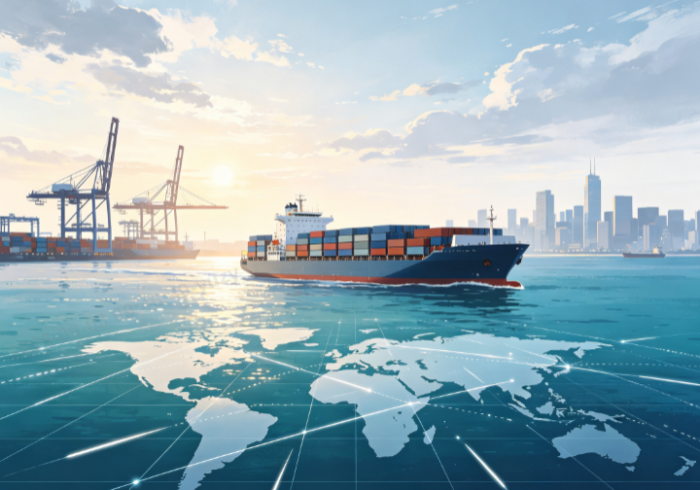
Sea freight shipping—often referred to in industry shorthand as “sea in ship”—is the transportation of goods by container vessel across international waters. It is the most widely used freight mode for businesses moving large volumes internationally, carrying over 90% of global trade cargo. From the bustling ports of Shanghai and Shenzhen to the distribution centers of Los Angeles and Rotterdam, sea in ship is the invisible highway that keeps the global B2B economy moving.
But here’s the reality that too many B2B buyers discover too late: understanding sea freight is not optional—it’s the difference between profitable sourcing and costly supply chain failures. In this guide, grounded in Google’s E-E-A-T standards, I’ll break down everything you need to know about sea in ship freight, from costs and transit times to the hidden risks that derail shipments—and why LooperBuy, a leading One-Stop B2B Sourcing Platform, is the strategic advantage that turns ocean freight from a liability into a competitive asset.
Table of Contents
What Exactly Is “Sea in Ship” Freight?
Before we dive into strategy, let’s clarify the terminology. Sea in ship refers to ocean freight shipping—the movement of goods across oceans and seas using specialized vessels such as cargo ships, container ships, and bulk carriers. In the B2B context, this almost always means containerized shipping: goods packed in standardized containers (20ft, 40ft, or 40ft HC) and transported via major shipping lines like MSC, Maersk, CMA CGM, and Hapag-Lloyd.
For B2B buyers sourcing from China, sea in ship is the dominant mode of transport. Why? Because it offers:
- Unmatched cost efficiency: Sea freight is significantly cheaper than air freight—often 70-80% less per kilogram for bulk shipments.
- Massive capacity: A single container ship can carry over 20,000 TEU (twenty-foot equivalent units), making it ideal for wholesale and manufacturing volumes.
- Global reach: China’s export infrastructure includes over 200 major ports capable of shipping to every corner of the globe.
Key Insight: The global container shipping market was valued at approximately USD 119.65 billion in 2025 and is forecast to reach USD 142.07 billion by 2031. Sea freight isn’t just important—it’s the backbone of the global economy.
The Anatomy of Sea Freight Costs: What You’re Actually Paying For
One of the biggest frustrations I hear from B2B buyers is the lack of transparency in sea in ship pricing. What looks like a simple freight quote often balloons with hidden fees. Here’s the real cost breakdown for shipping a container from China to the United States in 2026:
| Cost Component | Typical Range (40ft Container to US West Coast) |
|---|---|
| Base Freight Rate | $4,800 – $5,600 |
| Bunker Adjustment Factor (BAF) | $300 – $450 |
| Terminal Handling Charge (Origin) | $350 – $420 |
| Terminal Handling Charge (Destination) | $150 – $200 |
| Documentation Fee | $50 – $100 |
| U.S. Customs Duties (20% ad valorem + Section 301) | Varies by product |
| Clearance Broker Fee | $150 – $300 |
| Peak Season Surcharge (Jun-Aug / Nov-Dec) | $200 – $500 |
Source: Industry Q2 2025 carrier quotes and freight forwarder data.
The takeaway? A “quoted” freight rate of $5,000 can easily become $6,500–$7,000 once all mandatory fees and surcharges are added. And that’s before you factor in Section 301 tariffs, which currently add 20-30% (and up to 145% on some categories) to the dutiable value of Chinese goods.
This is where LooperBuy’s integrated cost calculators become invaluable. Instead of piecing together quotes from multiple freight forwarders, you get a fixed, all-inclusive cost estimate that includes every component—base freight, surcharges, customs duties, and final-mile delivery. No surprises. No hidden fees.
FCL vs. LCL: Choosing the Right Shipping Method for Your Business
When planning your sea in ship strategy, one of the most critical decisions is whether to ship Full Container Load (FCL) or Less Than Container Load (LCL) .
Full Container Load (FCL) is ideal for shipments over 15 cubic meters (or 20,000 kg). You secure an entire container for exclusive use. Benefits include:
- Lower unit cost and faster transit (no consolidation/deconsolidation)
- Reduced damage risk with minimal handling
- Simplified customs clearance
Less Than Container Load (LCL) is for smaller shipments (1-14 cubic meters). Your cargo is consolidated with other shippers’ goods. Advantages include:
- Pay-as-you-go pricing (you only pay for the space you use)
- Flexible shipping for small batches
- Lower upfront costs compared to FCL
Considerations: LCL typically adds 3-5 days to transit time and carries a slightly higher damage risk due to additional handling. For B2B buyers on LooperBuy, we help you evaluate volume, budget, and timeline to choose the optimal method—and our consolidated shipping options help small-batch buyers reduce per-unit logistics costs.
Transit Times: What to Expect When Shipping from China
Knowing how long your sea in ship journey will take is essential for inventory planning and meeting client delivery commitments. Here are the typical transit times for major routes from China:
| Route | Transit Time |
|---|---|
| China (Shanghai/Shenzhen/Ningbo) → US West Coast | 11 – 18 days |
| China → US East Coast | 25 – 35 days |
| China → Europe (Rotterdam/Hamburg) | 25 – 35 days |
| China → Middle East (Dubai/Jebel Ali) | 15 – 22 days |
These are port-to-port estimates. Add 3-7 days for inland transport to final warehouse.
But here’s the catch: these are ideal-world numbers. In reality, sea in ship transit times are increasingly unpredictable. According to Xeneta’s Schedule Reliability Scorecard for February 2026, the global on-time reliability for container ships fell to just 27 percent—meaning three out of four ships arrive late.
3 million TEU are tied up in congested ports at any given time—a level matching the peak of the COVID-19 crisis. Vessel waiting times at ports now range from three to 14 days. As one logistics manager told DHL: “It is no longer a question of if there will be delays, but how large they will be”.
The LooperBuy Advantage: Our dry port integration reduces transit times by 15–20% by bypassing congested main ports. Combined with 24/7 real-time tracking and proactive exception alerts, you always know where your sea in ship cargo is—and when it will arrive.
The Hidden Risks of Sea Freight (And How LooperBuy Eliminates Them)
Every B2B buyer who has shipped sea in ship from China has faced the same recurring nightmares. Here are the five biggest risks—and how LooperBuy resolves each one:
1. Port Congestion and Unpredictable Delays
The Risk: As noted above, global port congestion is at crisis levels. Ships queue for days or weeks outside major ports.
LooperBuy’s Solution: Our global logistics network includes strategic dry port partnerships that bypass congested main ports, reducing transit times and eliminating the uncertainty of port queues.
2. Hidden Fees and Surcharges
The Risk: Freight quotes rarely include all mandatory fees. BAF, THC, PSS, documentation fees—these add up quickly.
LooperBuy’s Solution: Our integrated cost calculators provide fixed, all-inclusive estimates that cover every component of your sea in ship shipment. No surprises, no last-minute fee hikes.
3. Documentation Errors and Customs Holds
The Risk: Incorrect or incomplete shipping documentation is one of the leading causes of customs delays and penalties.
LooperBuy’s Solution: Our team of multilingual documentation experts reviews all export/import paperwork to ensure full compliance with your destination market’s regulations—before your container leaves China.
4. Lack of Real-Time Visibility
The Risk: Traditional shipping leaves you in the dark about your sea in ship cargo’s location—until it either arrives or doesn’t.
LooperBuy’s Solution: LooperBuy provides 24/7 real-time shipment tracking from factory to delivery, with automated alerts for customs clearance progress, estimated arrival times, and any potential delays.
5. Supplier and Freight Forwarder Fragmentation
The Risk: Managing multiple suppliers, freight forwarders, and logistics providers creates administrative overhead and increases the chance of miscommunication.
LooperBuy’s Solution: As a One-Stop B2B Sourcing Platform, LooperBuy connects you with 10,000+ vetted Chinese suppliers across 50+ categories—and handles all logistics from factory to door. One platform, one point of contact, end-to-end visibility.
Real-World Impact: How One B2B Buyer Transformed Their Sea Freight Strategy
A European manufacturer of industrial components—let’s call them “EuroTech”—spent years wrestling with sea in ship logistics. Their challenges were familiar:
- Inconsistent transit times that made inventory planning impossible
- Hidden freight fees that eroded profit margins by 12-15% per shipment
- Fragmented supplier relationships requiring coordination across 5 different freight forwarders
Then EuroTech partnered with LooperBuy. Within six months:
- They consolidated all sea in ship shipments onto LooperBuy’s platform
- Transit times stabilized to a consistent 28-32 days (compared to 35-50 days previously)
- Logistics costs dropped by 18% through consolidated shipping and dry port integration
- Inventory carrying costs decreased by 22% thanks to predictable ETAs
Today, EuroTech’s supply chain runs on autopilot—with LooperBuy managing everything from supplier selection to sea in ship logistics to final delivery.
The 2026 Sea Freight Outlook: What B2B Buyers Need to Know
The sea in ship landscape is changing rapidly. Here are the key trends shaping ocean freight in 2026:
- Moderate volume growth: Global container throughput grew 3.5% in 2025 to approximately 880 million TEUs. 2026 projections are more cautious at 2.0-2.5%.
- New vessel capacity: Estimated global newly delivered container ship capacity in 2026 is about 1.7 million TEU—the slowest annual growth rate since 2023.
- Geopolitical disruption: The Red Sea crisis and conflicts in the Middle East have sent freight rates soaring by 35% year-on-year.
- Port congestion persists: Over 9% of the global fleet is at anchorage as of early 2026.
- Schedule reliability at historic lows: Just 27% of container ships arrive on time.
The bottom line? In 2026, sea in ship freight is no longer driven by classic supply-demand dynamics. It’s driven by uncertainty, geopolitical conflicts, and unpredictable disruptions. As one industry analyst put it: “It’s no longer about finding the cheapest or fastest route. It’s about finding a route that works at all”.
How LooperBuy Simplifies Sea Freight for B2B Buyers
LooperBuy was built to address the exact challenges that make sea in ship freight so difficult for B2B buyers. Here’s how we do it:
- One-Stop Platform: Source all your products from 10,000+ vetted Chinese suppliers and manage all logistics—from factory to door—in a single dashboard.
- Direct Supplier Access: No middlemen, no markups. Connect directly with Chinese manufacturers for better pricing and custom solutions.
- Integrated Logistics: Leverage our global network, dry port integration, and consolidated shipping options to reduce transit times and costs.
- End-to-End Visibility: Real-time tracking, production updates, and quality inspections—stay in control of your sea in ship cargo at every step.
- All-Inclusive Costing: Fixed, transparent pricing that includes base freight, surcharges, customs duties, and final-mile delivery. No hidden fees.
- Expert Support: Our team of B2B sourcing and logistics experts is available 24/7 to help with supplier selection, documentation, customs compliance, and logistics.
Call to Action: Master Your Sea Freight Strategy Today
The global sea in ship freight landscape is more complex and unpredictable than ever. But with the right partner, it’s also an opportunity to build a resilient, cost-effective supply chain that delivers on its promises.
LooperBuy is your trusted one-stop partner for sourcing from China with transparent sea freight pricing, reliable transit times, and end-to-end visibility. Whether you’re shipping FCL or LCL, industrial components or consumer goods, LooperBuy gives you the tools and expertise to master your sea in ship strategy.
We make sea freight simple, transparent, and reliable—so you can focus on growing your business, not chasing down shipments.
Sign up for LooperBuy today to unlock your free account, access our vetted Chinese supplier network, and experience seamless sea in ship logistics from factory to delivery. Our dedicated B2B support team will guide you through every step, and we offer a 100% risk-free trial for new users—no upfront costs, no commitments, just complete supply chain visibility.
Frequently Asked Questions (FAQ)
1. What does “sea in ship” mean in B2B shipping?
“Sea in ship” is an industry shorthand for ocean freight shipping—the transportation of goods by container vessel across international waters. It is the most widely used freight mode for B2B businesses moving large volumes internationally.
2. How much does it cost to ship a container from China to the US?
In 2026, a 40ft container from China to the US West Coast costs approximately $4,800–$5,600 in base freight, plus $300–$450 in BAF, $500–$620 in THC, and additional fees for documentation, customs clearance, and potential peak season surcharges. Total all-in costs typically range from $6,500–$8,000 depending on the season and specific ports.
3. How long does sea freight take from China to the US?
Port-to-port transit from China (Shanghai/Shenzhen/Ningbo) to the US West Coast takes 11–18 days; to the US East Coast, 25–35 days. Add 3-7 days for inland transport to your final warehouse. However, with current global on-time reliability at just 27%, delays are common.
4. What is the difference between FCL and LCL shipping?
FCL (Full Container Load) means you book an entire container exclusively for your cargo—ideal for shipments over 15 cubic meters. LCL (Less Than Container Load) means your cargo is consolidated with other shippers’ goods—ideal for smaller shipments (1-14 cubic meters).
5. How does LooperBuy help with sea freight shipping?
LooperBuy provides integrated sea freight logistics as part of its One-Stop B2B Sourcing Platform. We offer all-inclusive cost estimates, dry port integration to reduce transit times by 15–20%, 24/7 real-time tracking, and end-to-end visibility from factory to delivery—all in a single dashboard.
6. Why is sea freight so unpredictable right now?
Global sea freight faces a “perfect storm” in 2026: port congestion (3 million TEU tied up at any given time), geopolitical conflicts (Red Sea crisis, Middle East tensions), schedule reliability at historic lows (just 27% on-time), and rising fuel and operational costs.
References
- LooperBuy. (2026). Supplies Business: A B2B Expert’s Guide to Sourcing Chinese Goods Globally with LooperBuy. Retrieved from https://blog.looperbuy.com/supplies-business-a-b2b-experts-guide-to-sourcing-chinese-goods-globally-with-looperbuy.html
- MarineLink. (2026). Global Container Throughput Sees Moderate 2025 Growth, Cautious 2026 Outlook. Retrieved from https://ports.marinelink.com
- World Ports Organization. (2026). Global asks: Uncertainty pushes traditional market patterns out to the right. Retrieved from https://www.worldports.org
- Kuehne + Nagel. (2026). Global container ports strain as performance index shows turnaround times rising. Retrieved from https://mykn.kuehne-nagel.com
- STU Supply Chain. (2026). China to USA Sea Freight: Comprehensive Guide to Costs, Transit Times & Expert Tips. Retrieved from https://stusupplychain.com
- Research and Markets. (2026). Container Shipping Market Size, Competitors & Forecast. Retrieved from https://www.researchandmarkets.com
- Uniserve. (2026). What Is Sea Freight Shipping? How the Process Works for UK Businesses. Retrieved from https://uniserve.co.uk
- Shanghai International Shipping Institute. (2026). BIMCO Global Container Volume Forecasts 2025-2026. Retrieved from https://sisi.gstta.org
Article Summary (300 characters): This expert guide explains everything B2B buyers need to know about sea in ship (ocean freight) shipping from China—from costs and transit times to hidden risks and 2026 market trends. Learn how LooperBuy’s one-stop platform simplifies sea freight with transparent pricing, dry port integration, and end-to-end visibility.
Hot Tags
sea in ship, ocean freight B2B, LooperBuy sea freight, container shipping China, FCL vs LCL shipping, sea freight costs 2026, China to USA shipping, B2B logistics platform, container tracking, sea freight transit times