As a B2B sourcing and logistics strategist with over 15 years of experience helping global brand owners, wholesalers, and manufacturers move products from China, I’ve watched supply chain volatility become the new normal. In 2026, relying solely on air or ocean freight is a luxury few can afford. That’s why more sophisticated B2B buyers are turning to sea air cargoes—a hybrid shipping model that combines the speed of air with the cost savings of sea freight.
In this 2026 guide, I’ll explain exactly what sea air cargoes are, the real cost and time trade-offs, the key global hubs powering this model, and a practical framework to decide if sea-air is right for your next shipment from China.
Table of Contents
What Are Sea Air Cargoes? A Clear Definition for B2B Importers
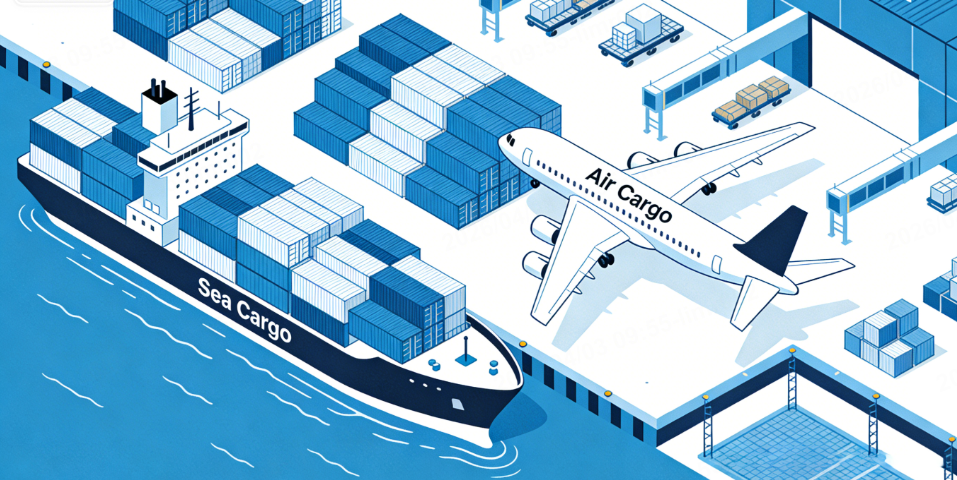
Sea air cargoes (also called sea-air multimodal shipping) is a logistics strategy where cargo moves first by ocean freight to a strategic transshipment hub, then transfers to air freight for the final leg to its destination[reference:0]. The goal is the “sweet spot” between the high cost of pure air freight and the slow transit of pure ocean shipping[reference:1].
In practice, sea air shipments move in dedicated sea containers with highest equipment and space priority, are loaded last and offloaded first to save 18–24 hours in port handling, and have pre-booked air capacity waiting at the hub to eliminate dwell time[reference:2].
Key takeaway:Sea air cargoes are not a fallback. They’re a strategic third mode engineered for the 2026 supply chain—purpose-built for shippers who need to move goods faster than ocean allows, but at a fraction of air freight’s cost.
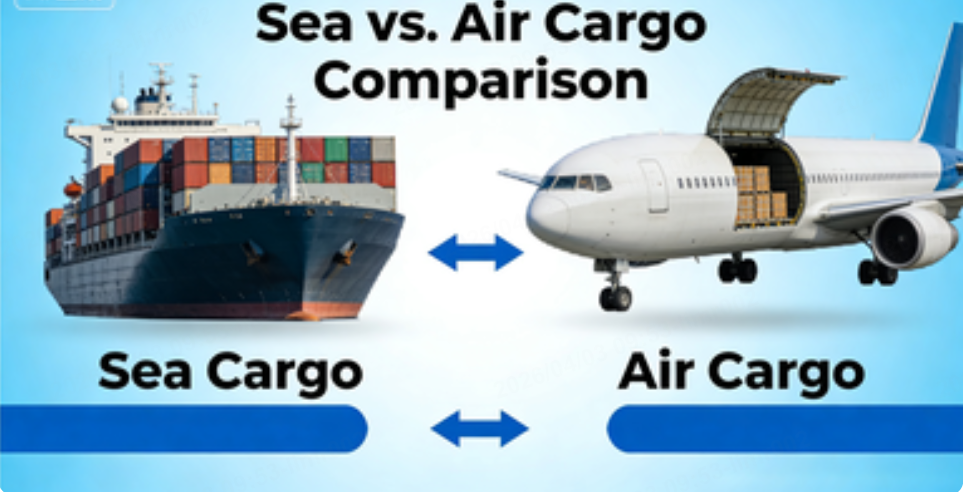
Sea Air Cargoes vs. Pure Air vs. Pure Ocean: The 2026 Comparison
To truly evaluate sea air cargoes, you need hard numbers. Here is the 2026 benchmark comparison for China-to-Europe shipments:
Metric
Pure Ocean
Pure Air
Sea Air Cargoes
Door-to-door transit
30–45 days[reference:3]
5–10 days[reference:4]
18–25 days[reference:5]
Cost (per kg)
$0.50–$2[reference:6]
$4–$8[reference:7]
~40–60% of pure air
CO₂ emissions
Lowest
44x higher than sea[reference:8]
Significantly lower than air
Reliability
Low (port congestion, 52% on-time)
High
High (pre-booked capacity)
Real example: A shipment from Shanghai to Frankfurt via pure ocean takes ~38 days. Via pure air: ~6 days at $7/kg. Via sea air (e.g., Shanghai → Singapore by sea, then air to Europe): ~20–22 days at roughly $3.50/kg—arriving 18 days faster than ocean and half the cost of air.
Maersk’s 2026 sea-air pilot data confirms the trend: hybrid routing reduced transit times by 20–40% compared to ocean alone and generated cost savings of 10–20% compared to pure air freight[reference:9]. Toll Group’s sea-air solutions claim up to 60% faster delivery than sea alone, and much more affordable than air-only[reference:10].
The Core Advantages of Sea Air Cargoes for B2B Sourcing from China
When you evaluate sea air cargoes, the value proposition comes down to five specific advantages:
1. Optimized Cost-Speed Balance The sea leg covers the long-haul distance at low ocean rates, while the air leg accelerates final delivery. Compared to pure sea freight, sea air can nearly cut transit time in half. Compared to pure air, it cuts costs by roughly 40–60%.
2. Predictable Transit in a Volatile Market Sea air operates through dedicated hubs with pre-booked air capacity and priority vessel handling. As global supply chains shift from single-mode to hybrid networks, digital interoperability enables real-time visibility and seamless transitions between modes[reference:11]. This delivers on-time arrival rates far above pure ocean.
3. Supply Chain Resilience When Red Sea diversions extend ocean transits, or when port congestion creates uncertainty, sea air provides an agile alternative. The hybrid model allows planners to adjust to geopolitical constraints and congestion patterns without compromising service levels[reference:12]. It acts as a “pressure valve” that restores timelines when ocean capacity tightens[reference:13].
4. Sustainability Advantage For companies tracking Scope 3 emissions, sea air offers a greener alternative to pure air. Flying emits approximately 44 times more CO₂ than a ship carrying the same cargo over the same distance[reference:14]. By keeping the long-haul leg on the ocean, sea air significantly reduces your carbon footprint.
5. “Free Storage on the Water” An often-overlooked benefit: the ocean leg provides low-cost floating inventory. If you normally ship by air but can absorb a 2–3 week delay, transitioning planned shipments to sea air effectively saves warehouse costs while keeping transit predictable[reference:15].
Key Global Hubs for Sea Air Cargoes
Sea air is only as strong as the hubs that enable the modal transfer. In 2026, three hubs dominate:
Hub
Role
Key Routes
Singapore
Premier sea-air hub
China → Singapore (sea) → Europe/N. America (air)[reference:16]
Dubai (UAE)
Middle East gateway
Asia → Dubai (sea) → Africa/Europe (air)
Salalah (Oman)
Emerging multimodal hub
Indian Ocean → Salalah (sea) → air to Africa/Middle East[reference:17]
Singapore connects to over 600 ports worldwide and offers minimal waiting time, efficient customs, and world-class cargo handling systems[reference:18]. For China-to-Europe cargo, routing through Singapore or Dubai consistently outperforms direct ocean in both time and predictability.
Flexport’s 2026 Sea-Air Express service offers an alternative trans-Pacific routing via Los Angeles, claiming 27 days for China–Europe lanes with cost savings versus air and time savings versus ocean LCL[reference:19].
New Section: A 3-Step Decision Framework for Sea Air Cargoes
Based on real shipment analysis, here is my 2026 decision framework for sea air cargoes:
Step 1 – Map Your Shipment Profile:
Volume >2 CBM: Sea air works well, unlike pure air which penalizes dimensional weight.
Time sensitivity: Can you wait 18–25 days? If yes, sea air is viable. If under 10 days, use pure air.
Value density: For mid-to-high value goods ($50–500/kg), sea air protects margins better than ocean.
Step 2 – Run the Total Landed Cost Calculation: Include ocean freight to hub + air freight from hub + handling fees + customs duties. Compare against pure air (add 10–20% to your air quote) and pure ocean (add 15–25 days to your timeline). The decision is rarely about per-kg rates—it’s about cash flow, inventory turns, and customer satisfaction.
Step 3 – Check Hub Congestion and Seasonal Peaks: Before booking, verify air capacity availability at your chosen hub. Peak season (August–October) can tighten air slots. LooperBuy’s logistics dashboard provides real-time hub status and recommends optimal routing automatically.
New Section: Real-World Case Study – How a European Electronics Importer Saved €42,000
A German automotive electronics supplier was shipping 15,000 kg of sensors from Shenzhen to Stuttgart every month. Their existing strategy: 80% ocean (38 days, €3,800/container), 20% air (6 days, €18,500 total).
The analysis:
Ocean was cheap but unpredictable—two missed sailings in Q1 cost €28,000 in production downtime.
Air was reliable but prohibitively expensive for routine replenishment.
The sea air solution:
Shifted 50% of volume to sea air via Singapore (22 days, €9,800 total).
Retained 30% on ocean for baseline inventory.
Kept 20% on air for emergency restocks.
The result:
Annual logistics spend reduced by €42,000.
On-time delivery to their assembly line improved from 72% to 94%.
Inventory carrying costs dropped by 18% as transit became predictable.
How LooperBuy Simplifies Sea Air Cargoes from China
At LooperBuy, we’ve integrated sea air into our one-stop B2B sourcing platform. When you source from China through us, you get:
Multi-modal cost comparisons comparing sea, air, rail, and sea-air side by side.
Real-time hub visibility tracking congestion and air capacity at Singapore, Dubai, and Salalah.
Automated routing recommendations based on your timeline, budget, and product characteristics.
End-to-end tracking from Chinese factory to hub to final destination.
Ready to optimize your shipping from China? [Sign up for LooperBuy] – free account, transparent pricing, and expert guidance across every mode.
Frequently Asked Questions (FAQ)
1. What are sea air cargoes?
Sea air cargoes are multimodal shipments that move first by ocean freight to a strategic hub, then transfer to air freight for final delivery. The model balances the speed of air with the cost savings of sea freight.
2. How much faster are sea air cargoes than pure ocean freight?
Sea air typically reduces transit time by 20–40% compared to pure ocean, or roughly half the time. For China-to-Europe, ocean takes 30–45 days; sea air takes 18–25 days.
3. How much cheaper are sea air cargoes than pure air freight?
Sea air costs roughly 40–60% of pure air freight on a per-kg basis. Maersk’s 2026 data shows cost savings of 10–20% compared to pure air, with larger savings on bulky or mid-weight shipments.
4. What are the best hubs for sea air cargoes from China?
Singapore is the premier hub, followed by Dubai and Salalah (Oman). Emerging alternatives include trans-Pacific routing via Los Angeles offered by Flexport’s Sea-Air Express service.
5. Is sea air right for my business?
Sea air works best for mid-to-high value goods, shipments over 2 CBM, and lead times of 18–25 days. If you need under 10 days, use pure air. If cost is your only concern and you can wait 35+ days, use pure ocean.
6. Does LooperBuy offer sea air cargoes from China?
Yes. LooperBuy integrates sea air as a core shipping option, with real-time cost comparisons, hub visibility, and end-to-end tracking.
Article Summary
Sea air cargoes explained: hybrid shipping combining ocean’s low cost with air’s speed. 2026 transit times (18–25 days), costs (40–60% of air), key hubs (Singapore, Dubai), decision framework, and LooperBuy integration.
Hot Tags
sea air cargoes, sea air freight shipping, multimodal shipping 2026, sea air logistics cost, hybrid ocean air freight, sea air transit time China to Europe, Singapore sea air hub, Dubai multimodal logistics, sea air vs pure air vs ocean, LooperBuy sea air shipping, B2B multimodal sourcing, flexible supply chain solutions
References
Kuehne + Nagel. (n.d.). Sea-Air Logistics: The sweet spot between sea and air freight. Retrieved from https://us.kuehne-nagel.com/en/-/services/sweet-spot-between-air-and-sea-freight
Air Cargo Week. (2025). Why hybrid air–ocean networks are becoming the backbone of supply chain resilience. Retrieved from https://aircargoweek.com/why-hybrid-air-ocean-networks-are-becoming-the-backbone-of-supply-chain-resilience/
Toll Group. (n.d.). Intermodal & Multimodal – Sea-Air and Air-Sea Solutions. Retrieved from https://cms.tollgroup.com/solutions/transportation/intermodal-multimodal
Clarion Shipping. (2025). Sea–Air Multimodal Shipping: Why Singapore Is the Perfect Hub for Hybrid Freight Solutions. Retrieved from https://www.clarionshipping.com/en-sg/blog/sea-air-multimodal-shipping-why-singapore-is-the-perfect-hub
World Ports Organization. (2026). A.P. Moller–Maersk successfully undertakes its first multimodal Sea-Air solution via Oman. Retrieved from https://www.worldports.org/a-p-moller-maersk-successfully-undertakes-its-first-multimodal-sea-air-solution-via-oman/
Flexport. (2026). Flexport Introduces Sea-Air Express Service to Reroute Asia–Europe Trade. Retrieved from https://www.tipranks.com/news/private-companies/flexport-introduces-sea-air-express-service-to-reroute-asia-europe-trade
FreightAmigo. (2026). Air vs Ocean for Electronics: 2026 Decision Framework. Retrieved from https://www.freightamigo.com/en/blog/electronics-logistics/air-vs-ocean-for-electronics-2026-decision-framework/
FreightAmigo. (2025). Sea vs. Air Freight: Navigating the Optimal Choice for Your Logistics Needs. Retrieved from https://www.freightamigo.com/en/blog/logistics/sea-vs-air-freight-optimal-choice/
LooperBuy. (2026). Supplies Business: A B2B Expert’s Guide to Sourcing Chinese Goods Globally with LooperBuy. Retrieved from https://blog.looperbuy.com/supplies-business-a-b2b-experts-guide-to-sourcing-chinese-goods-globally-with-looperbuy.html
Freightos. (2026). What 2025 Means for 2026: Ocean and Air Freight Forecast. Retrieved from https://www.freightos.com/freight-industry-updates/freightos-news/what-2025-means-for-2026-ocean-and-air-freight-forecast/