In the rapidly evolving digital landscape, the distinction between B2C and B2B eCommerce is blurring. Today’s wholesale buyers demand the same seamless, user-friendly experiences they enjoy as individual consumers. A prime example of this transformation is the case of cycling accessories brand Lezyne, which successfully leveraged modern technology to triple their B2B customer engagement .
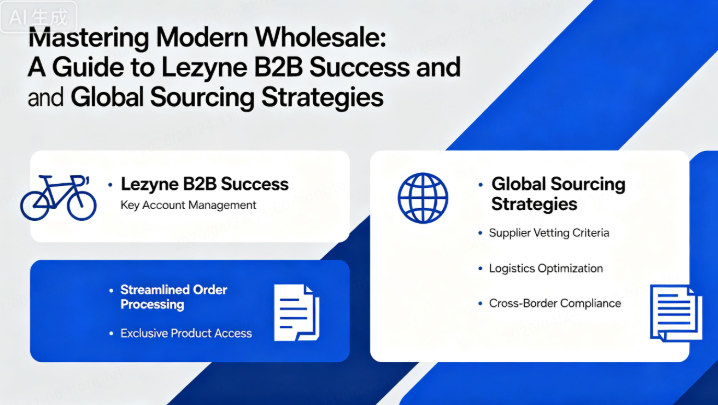
For brands, wholesalers, and manufacturers looking to replicate this level of B2B growth, understanding how to modernize your operations—while optimizing your global sourcing chain—is critical.
Table of Contents
The Lezyne B2B Blueprint: Lessons in Digital Transformation
Lezyne, known for their high-quality, performance-driven cycling gear, faced a common challenge in 2022: they needed to modernize their wholesale offering to be more efficient, accessible, and user-friendly .
Core Challenges in Traditional B2B
Before their digital shift, many brands struggled with several operational bottlenecks:
- Manual Order Entry: Relying on sales reps to manually input orders, leading to human error and high operational costs.
- Pricing Complexity: Difficulty in managing tiered, customer-specific, or promotional pricing at scale across diverse global markets.
- Inaccessible Data: B2B customers lacking visibility into order history, real-time availability, or self-service options, forcing them to wait for sales rep responses.
The Strategic Solution
Lezyne implemented a dedicated B2B channel integrated with their existing commerce infrastructure. This transition allowed for fully self-service ordering 24/7, enabling customers to manage accounts, track orders, and execute repeat purchases without intervention .
Integrating Global Sourcing: The One-Stop Advantage
While Lezyne utilized a specific technology stack to solve their internal ordering issues, global brands must also master the upstream supply chain. For a business to thrive in the modern wholesale ecosystem, it is not enough to have a great B2B website; you must also possess a reliable, efficient, and cost-effective sourcing strategy.
This is where a One-Stop B2B Sourcing Platform like LooperBuy changes the game for international brand owners and wholesalers. By centralizing the procurement process, businesses can bridge the gap between digital ordering and physical manufacturing excellence.
Why Global Sourcing Needs a Unified Approach
- Direct Access to Chinese Manufacturing: Bypassing unnecessary middlemen reduces costs and increases profit margins for brands. China remains a premier manufacturing hub due to its robust infrastructure and diverse supplier base .
- Product Diversity & Scalability: A one-stop platform provides access to a massive inventory range, allowing wholesalers to quickly diversify their product mix without dealing with dozens of disparate suppliers.
- Logistical Efficiency: Lowering the barrier to global entry requires integrated, reliable shipping solutions that can handle everything from small-batch testing to high-volume manufacturing .
| Feature | Traditional Sourcing | Modern One-Stop Platform (e.g., LooperBuy) |
|---|---|---|
| Supplier Discovery | Slow, fragmented, high risk | Centralized, vetted, high-speed |
| Communication | Complex, multi-channel | Unified, direct-to-manufacturer |
| Logistics | Manual, expensive, opaque | Automated, low-cost, transparent |
Expert Insights: Scaling Your B2B Operation
To achieve the results seen in the Lezyne case—tripling B2B customers in just two months post-deployment—you must look beyond just “setting up a store” . Success requires a holistic approach to technology and strategy.
1. Empowering Your Sales Team
Even in a digital-first world, your sales reps are your most valuable asset. The goal is not to replace them but to supercharge them. By providing your reps with digital tools to place orders on behalf of clients, view real-time inventory, and access customer-specific pricing, you turn them into high-value account managers rather than order takers.
2. Adopting a Customer-Centric Data Model
Use your B2B platform to analyze what your customers aren’t buying. If you see specific product categories lagging, utilize promotional tools to incentivize volume purchases. As seen with Lezyne, the ability to rapidly deploy sales promotions can significantly increase the visibility of slow-moving products .
3. Streamlining the Backend (The “Glue”)
Your B2B platform must “talk” to your fulfillment software. Automated order flow—from the moment a customer clicks “buy” to the moment the label is generated—is the only way to scale without linear increases in administrative staff .
4. Future-Proofing with AI and Data
As we approach 2026, AI utilization in wholesale distribution is projected to grow significantly. Beyond simple automation, brands are using AI to predict demand cycles and optimize inventory across global channels . Integrating AI-driven analytics into your B2B sourcing platform helps in identifying the best-performing products and mitigating potential supply chain disruptions before they occur.
The Evolution of B2B Procurement: Trends to Watch
The landscape is shifting rapidly. To stay competitive, brands must adapt to these emerging trends:
- Self-Service Dominance: Over 80% of millennial B2B buyers now prefer online ordering over traditional field sales interactions .
- Headless Commerce: Implementing a headless architecture—where the frontend experience is decoupled from the backend commerce engine—allows for faster load times and highly customized purchasing experiences that drive higher conversion .
- Omnichannel Integration: Successful B2B merchants are connecting their web storefronts to marketplaces and social platforms, ensuring that product and inventory data are synced in real-time across every channel .
Conclusion: Future-Proofing Your Wholesale Strategy
The path to Lezyne B2B-level growth is paved with two essential pillars: a modern, intuitive front-end customer experience and a robust, low-cost global sourcing foundation. By leveraging one-stop platforms for sourcing and agile B2B software for ordering, brand owners can focus on what matters most: growing their business.
Ready to revolutionize your supply chain? Experience the power of streamlined procurement with LooperBuy, where efficiency meets global scale. Contact our team today to get started or explore our catalog to see how we can lower your sourcing costs instantly.
References
- [1] SparkLayer Blog. (2023, March 17). Cycling accessories brand, Lezyne, triple their online B2B customers using SparkLayer and Shopify. https://www.sparklayer.io/blog/2023/03/17/lezyne-shopify-b2b/
- [2] Crescense. (2026). Trends Shaping Wholesale Distribution Technology in 2026. https://www.crescenseinc.com/insights/2026-wholesale-distribution-technology-trends
- [3] Swell. (2025). 32 B2B Marketplace Trends Shaping Digital Wholesale Commerce. https://www.swell.is/content/b2b-marketplace-trends-shaping
- [6] BigCommerce. (2026). Top B2B Ecommerce Trends in 2026 (Transform Your Business). https://www.bigcommerce.com/articles/b2b-ecommerce/b2b-ecommerce-trends/
- [20] Swell. (2026). 30 Open Source Commerce Trends Shaping Ecommerce in 2026. https://www.swell.is/content/open-source-commerce-trends
Frequently Asked Questions (FAQ)
- How can I increase my B2B customer conversion rate?
Focus on self-service functionality, clear pricing visibility, and reducing the friction in your checkout process to match the B2C experience. - Is it necessary to replace my current legacy system to improve B2B operations?
Not necessarily. Many platforms are designed to integrate seamlessly with existing stores, avoiding the need for a complete platform overhaul . - What is the biggest advantage of using a One-Stop Sourcing Platform?
The primary advantage is cost reduction through direct sourcing, combined with simplified logistics and a broader, more diverse product catalog. - How long does it typically take to launch a new B2B store?
While complex systems can take longer, modern, integrated solutions can be deployed in weeks or even days . - How can I empower my sales reps using B2B software?
Equip them with a “sales agent” interface that allows them to manage accounts, place orders on behalf of clients, and view customer-specific pricing in real-time .
Article Summary:
This article explores the digital transformation of B2B wholesale, using the case of cycling brand Lezyne to illustrate how modernizing digital interfaces can triple customer engagement. It further emphasizes the vital importance of integrating efficient, global sourcing strategies—via platforms like LooperBuy—to optimize margins and scaling. The content provides a strategic roadmap for B2B managers seeking to streamline operations and enhance the overall buyer experience in 2026.