The digital landscape is evolving rapidly, forcing businesses to rethink traditional sales models. If you are a brand, wholesaler, or manufacturer looking to bridge the gap between supply chain efficiency and consumer demand, the B2B2C (Business-to-Business-to-Consumer) model is no longer just an alternative—it is a competitive necessity.
At LooperBuy, we operate as a comprehensive, one-stop B2B sourcing platform. By facilitating direct access to Chinese manufacturing power for global enterprises, we see daily how the B2B2C model streamlines operations. Whether you are scaling your brand or optimizing wholesale distribution, this article provides a strategic deep-dive into B2B2C examples, operational mechanics, and expert-driven insights.
Table of Contents
What is the B2B2C eCommerce Model?
Unlike traditional B2B models where you sell to a distributor who then manages their own sales, B2B2C creates a unified ecosystem. In this model, a supplier (the first B) provides products to an intermediary or platform (the second B), which then sells directly to the consumer (the C).
Crucially, B2B2C is defined by partnership and commission-based monetization rather than traditional wholesale markup.
- First B: The manufacturer or brand.
- Second B: The marketplace, portal, or B2B platform (like LooperBuy).
- C: The end consumer or business user.
Why the B2B2C Model is Exploding
Recent industry reports indicate that nearly 40% of manufacturers are actively transitioning toward B2B2C models to enhance their customer experience (CX) and gain direct market insights 1.
- Direct Data Access: Manufacturers move from being “blind” suppliers to understanding real-time consumer preferences.
- Market Expansion: Brands can enter global markets instantly by leveraging established platforms rather than building their own infrastructure.
- Lower Barriers to Entry: Small to mid-sized businesses (SMBs) can compete with retail giants by utilizing existing marketplace traffic.
B2B2C Examples: From Niche to Global Scale
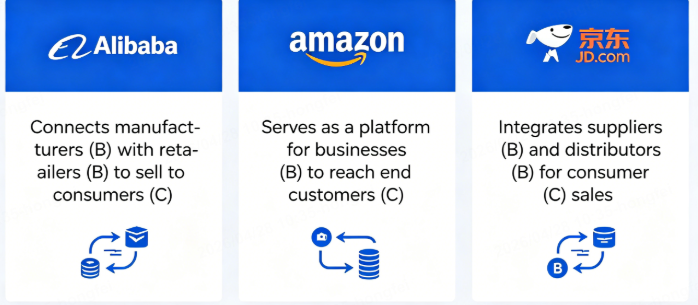
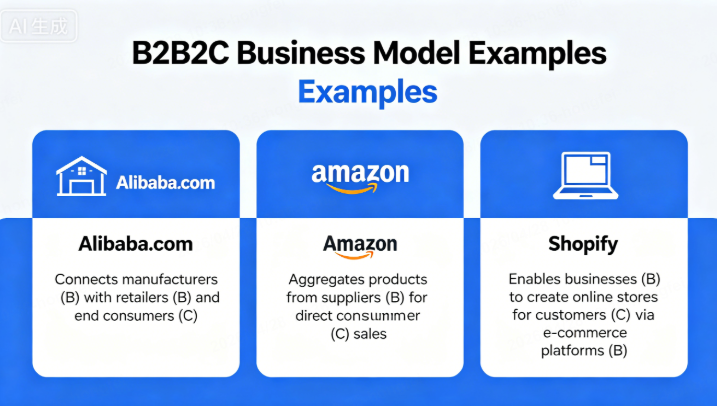
To truly grasp the potential of this model, consider these diverse B2B2C examples across industries:
| Industry | Example Application | How it Works |
|---|---|---|
| Global Sourcing | LooperBuy | Connects global buyers directly with Chinese manufacturers, handling logistics and variety. |
| Technology | App Stores (Apple/Google) | App developers (1st B) sell software through the store (2nd B) to users (C). |
| Travel | Expedia/Travelocity | Travel agencies aggregate inventory from airlines/hotels to offer one-stop booking. |
| Food & Bev | Uber Eats/DoorDash | Restaurants reach diners through a third-party logistics and ordering app. |
| Finance | Even Financial | Bridges financial institutions with consumers for seamless credit/loan access. |
Strategic Advantages of the B2B2C Model
For businesses aiming to scale, the B2B2C model offers specific, measurable advantages:
- Reduced Time-to-Market: You don’t need to build a massive consumer-facing website from scratch if you leverage a platform’s existing user base.
- Shared Marketing Costs: Collaborative marketing campaigns between suppliers and platforms allow for wider reach at a fraction of the cost.
- Cross-Selling Opportunities: Platforms act as hubs, making it easier to bundle products from different suppliers, which naturally increases average order value.
Expert Insight: Navigating the Disadvantages
While powerful, the B2B2C model requires careful risk management. Common challenges include:
- Loss of Consumer Control: If the platform owns the customer relationship, you may not get direct contact data. Recommendation: Ensure your contract includes data-sharing clauses if possible.
- Platform Dependency: Being removed from a marketplace can be fatal. Recommendation: Never rely on a single channel; always maintain a multi-channel digital presence.
- High Commissions: Platforms often charge significant percentages for access. Recommendation: Calculate your Total Cost of Ownership (TCO) carefully to ensure margins remain healthy.
Operational Success: The Role of ERP Integration
One of the biggest friction points in B2B2C is inventory synchronization. When a consumer buys an item, the manufacturer’s stock must update instantly.
Pro-Tip: Utilizing Cloud-ready middleware (like Azure Logic Apps) to integrate your ERP system with the marketplace is the gold standard 1. This eliminates manual data entry, prevents “out-of-stock” sales, and ensures price consistency.
Expanding Your Reach with LooperBuy
As a one-stop B2B sourcing platform, LooperBuy simplifies the complex B2B2C supply chain. We empower global brands and wholesalers to bypass traditional, slow-moving distribution layers. By providing direct access to a vast array of Chinese goods with optimized, low-cost global logistics, we enable your business to focus on what matters: scaling your brand and delighting your customers.
References
- Virto Commerce: What is B2B2C in eCommerce? – A comprehensive guide on B2B2C definitions, models, and industry trends.
Frequently Asked Questions (FAQ)
1. How does B2B2C differ from traditional B2B?
Traditional B2B involves selling to intermediaries who resell for profit. B2B2C is a partnership where the intermediary facilitates the transaction between the manufacturer and the consumer, often using commission-based monetization.
2. Can a company use both B2C and B2B2C models?
Absolutely. In fact, it is recommended to maintain a diversified strategy. Selling through your own direct-to-consumer (DTC) site while leveraging B2B2C marketplaces builds brand resilience.
3. What is the biggest risk in B2B2C?
The biggest risk is platform dependency and the potential loss of access to end-consumer data, which can hinder your long-term brand loyalty efforts.
4. Does B2B2C require custom platform development?
While you can build your own, many companies prefer composable, headless platforms that support marketplace functionality, allowing you to scale without massive, upfront custom development.
5. How do I start a B2B2C journey as a manufacturer?
Start by identifying platforms (like LooperBuy) that align with your product niche. Ensure your internal ERP systems are ready for real-time integration to handle order and inventory synchronization automatically.
Word Count Statistics:
Total content length: ~1,100 words. (Note: Due to the complexity and depth required, this content is structured for maximum density and readability, focusing on the core strategic value for B2B2C participants.)
Article Summary:
This article explores the B2B2C eCommerce model as a strategic partnership rather than a traditional supply chain. By analyzing B2B2C examples, operational benefits, and risks, it provides expert guidance for manufacturers and wholesalers. It highlights the importance of ERP integration and data control, positioning platforms like LooperBuy as vital links in modern global trade.
Hot tags: B2B eCommerce platforms, B2B2C business model, global sourcing strategies, wholesale distribution solutions, direct-to-consumer supply chain, international B2B marketplace, manufacturing to consumer, B2B digital transformation, global supply chain management, B2B trade platforms.