Is dropshipping a pyramid scheme? Learn the real difference, discover legal and customer-service responsibilities, avoid China sourcing risks, and build a trusted global dropshipping business with transparent shipping, product checks, compliant claims, and reliable fulfillment.
No—dropshipping is not a pyramid scheme when it is operated as a genuine retail business. A legitimate dropshipping seller earns revenue from selling real products to end customers, while a pyramid scheme relies primarily on recruitment-based rewards rather than real consumer demand.
For merchants using a China sourcing and fulfillment partner such as Looperbuy, the real question is not whether dropshipping itself is legitimate. It is whether the business is built on transparent sourcing, realistic shipping promises, accurate product information, compliant marketing, and dependable customer support.
Table of Contents
What Is Dropshipping—and Why It Is Not a Pyramid Scheme
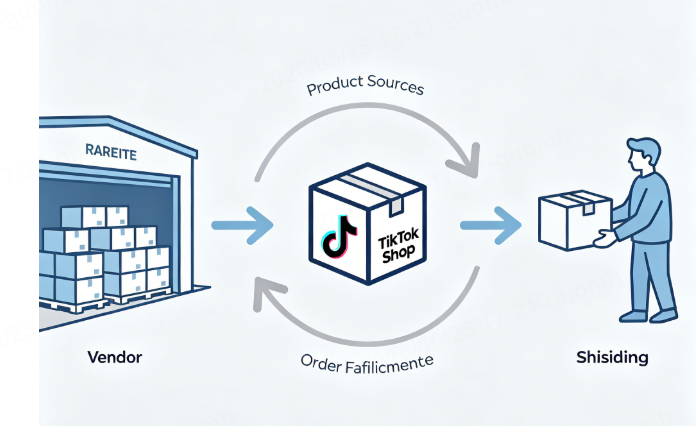
Dropshipping is a retail fulfillment model. A merchant markets and sells a physical product through an online store, marketplace, social-commerce shop, or B2B channel. After a customer purchases the product, the merchant buys it from a supplier or sourcing partner, and the item is shipped directly to the customer.
The seller does not need to pre-purchase large amounts of stock or operate a private warehouse before testing demand. Instead, the seller manages the commercial side of the transaction:
– Product selection and positioning
– Storefront content and pricing
– Customer communications
– Payment collection
– Shipping expectations
– Returns, refunds, and after-sales support
A sourcing and fulfillment platform can help coordinate procurement, quality checks, storage, order processing, consolidation, and international delivery. But the merchant remains the customer-facing retailer.
A pyramid scheme works differently. The U.S. Federal Trade Commission describes pyramid-scheme risk as a compensation structure where participants pay for the right to sell a product and receive rewards for recruiting others that are unrelated to sales to ultimate users. In other words, money flows mainly from new participants—not from real customer demand.
The simplest distinction
| Business model | Main source of revenue | Is recruitment required? | Real customer product sales? | Core risk |
| Legitimate dropshipping | Retail margin on products sold to customers | No | Yes | Product, service, and compliance execution |
| Affiliate marketing | Commission on referred customer purchases | No | Yes | Disclosure and claim accuracy |
| Multi-level marketing | May include retail sales and recruitment incentives | Often | Sometimes | Compensation structure may create pyramid risk |
| Pyramid scheme | Fees and payments from recruits | Yes | Often minimal or irrelevant | Illegal recruitment-driven compensation |
A legitimate dropshipping business does not pay you for bringing in new sellers. It pays you only when customers purchase products through your retail channel and the economics of that sale work.
That distinction matters because misleading “get-rich-quick” marketing has damaged the public perception of dropshipping. Some people have seen expensive courses, exaggerated income screenshots, hidden shipping times, copied product pages, or counterfeit goods and concluded that the model itself must be fraudulent.
It is more accurate to say this: dropshipping is a lawful retail method, but poor business practices can make any retail operation deceptive, unprofitable, or unsustainable.
Why People Think Dropshipping Is a Scam
The “dropshipping scam” label usually comes from a gap between what a buyer was promised and what they experienced. The fulfillment model may be legitimate, but the merchant’s execution can fail.
Unrealistic delivery promises
A seller may advertise “fast shipping” without verifying actual processing time, destination-country transit time, customs risk, or carrier performance. This is one of the fastest ways to create refunds, disputes, chargebacks, and negative reviews.
In the United States, the FTC’s Mail, Internet, or Telephone Order Merchandise Rule requires a seller to have a reasonable basis for expecting delivery within the advertised period. If no shipping time is stated, the seller generally must have a reasonable basis for shipping within 30 days. If the seller cannot meet the promised period, the buyer must be offered a delay option or a prompt refund.
For sellers sourcing from China, that means a product page should never use a generic delivery estimate copied from a competitor. It should be based on operational evidence:
– Supplier production or handling time
– Warehouse receiving time
– Quality inspection requirements
– Packaging and consolidation time
– Destination country and shipping line
– Tracking availability
– Seasonal congestion and customs conditions
Poor-quality or misrepresented products
A product photo may look premium while the delivered item is smaller, weaker, differently colored, or made from another material. Sometimes the seller did not inspect the product. Sometimes the supplier changed it. Either way, the buyer sees the retailer—not the upstream factory—as accountable.
This is why product validation should happen before advertising begins. Merchants should order samples, inspect key dimensions, test the core use case, and compare the received item with product-page claims.
Counterfeit or restricted goods
Selling products that use another company’s name, logo, character, patented design, or copyrighted artwork without authorization can create serious legal and commercial risk. Counterfeit merchandise can also create consumer-safety concerns, particularly in categories such as electronics, cosmetics, accessories, toys, and health-related products. U.S. Customs and Border Protection warns that counterfeit goods can endanger consumers as well as harm intellectual-property rights holders and legitimate businesses.
Overstated income claims
Dropshipping is sometimes sold as effortless “passive income.” That is misleading. The business may reduce inventory commitments, but it does not eliminate work. Someone still needs to evaluate suppliers, create product information, answer customers, manage fulfillment exceptions, review margins, and resolve refunds.
The strongest business model is not built on a viral-product promise. It is built on repeatable operating discipline.
The Merchant Is Responsible—Even When a Supplier Ships the Order
Dropshipping changes inventory ownership and fulfillment flow. It does not remove retailer responsibility.
When a buyer purchases from your website, marketplace listing, or social store, they expect your business to resolve problems. They may not know or care which factory produced the item or which warehouse packed it.
A responsible seller should own the following obligations:
| Customer-facing responsibility | What good practice looks like |
| Product accuracy | Use truthful specifications, materials, dimensions, images, compatibility details, and warnings |
| Shipping transparency | Show realistic processing and transit windows before checkout |
| Pricing clarity | Clearly disclose product cost, shipping fees, taxes, and any applicable duties |
| Returns and refunds | Publish plain-language rules and honor them consistently |
| Customer support | Provide a reachable support channel and timely order updates |
| Product safety | Avoid unverified, unsafe, restricted, or category-specific regulated products |
| Intellectual property | Source generic or properly authorized products and retain supplier documentation |
| Data protection | Handle customer contact, address, and payment-related data responsibly |
For EU consumer sales, online buyers generally have a 14-day right to withdraw from many distance purchases without giving a reason, subject to exceptions. Sellers must provide the required pre-contract information, and return-cost obligations depend in part on whether the seller informed the buyer in advance.
This is especially important for cross-border merchants. A return policy copied from a domestic store may not reflect the rules or customer expectations in the buyer’s market.
How to Build a More Trustworthy China Dropshipping Operation
China sourcing can offer product variety, flexible order quantities, customization potential, and access to manufacturing ecosystems. However, those advantages only translate into a durable business when the sourcing process is controlled.
A reliable partner such as Looperbuy can support sellers by helping them source products from China, purchase goods, coordinate fulfillment, and ship orders internationally. Yet merchants should treat fulfillment support as part of a wider operating system—not as a replacement for product due diligence.
Step 1: Start with products that are easier to verify
New sellers should not begin with highly regulated, high-liability, or easy-to-counterfeit categories. A safer initial product portfolio often includes practical, non-branded items with clear everyday use cases.
Potentially lower-complexity examples include:
– Home organization products
– Desk and office accessories
– Generic pet accessories
– Non-electrical kitchen tools
– Travel organizers
– Storage solutions
– Non-branded automotive convenience accessories
Be cautious with:
– Medical devices and diagnostic products
– Supplements and ingestible goods
– Cosmetics with unclear ingredient documentation
– Baby and children’s products
– Lithium-battery products
– Chargers, plugs, and electrical equipment
– Branded fashion, sportswear, and character merchandise
– Products making therapeutic, weight-loss, or disease-related claims
The FTC states that companies need appropriate substantiation for health-related advertising claims. If a merchant sells a product with claims about treating pain, improving health, preventing disease, or delivering measurable body-related results, those claims need credible support—not supplier hype or social-media testimonials.
Step 2: Create a supplier-verification file
Before publishing a product, gather operational evidence. Even a small seller should maintain a simple internal product file containing:
1. Supplier name, business contact, and communication record
2. Product link, SKU, variation details, and current pricing
3. Sample photos or video from an actual received item
4. Material, sizing, packaging, and product-weight information
5. Production or handling lead time
6. Shipping methods available for key destinations
7. Test reports, certifications, or safety documents where relevant
8. Intellectual-property authorization when applicable
9. A record of revisions when the supplier changes the product
This file is valuable when a customer disputes an order, a marketplace requests invoices, a payment provider asks for proof of fulfillment, or a product needs to be removed quickly.
Step 3: Test the full fulfillment journey
Do not test only the product. Test the order experience from checkout to delivery.
Place trial orders to your own addresses or trusted contacts in your major markets. Measure:
– Time from order payment to supplier processing
– Time from supplier processing to warehouse receipt
– Time spent in quality checks or consolidation
– Carrier acceptance time
– Tracking activation time
– Delivery time
– Packaging condition
– Accuracy of product and quantity
– Customs-related customer experience
– Quality of delivery notifications
A merchant who has completed this test can write a more credible product page and support customers with much greater confidence.
Step 4: Publish shipping language customers can understand
Avoid vague phrases such as “ships fast” or “delivery may vary.” Use a specific structure:
> Processing time: 1–3 business days
> Estimated delivery: 7–12 business days after dispatch
> Tracking: Sent by email when the carrier accepts the parcel
> Delays: Weather, customs processing, remote-area delivery, and peak seasons can affect the estimate
> Support: Contact us before or after delivery if there is an issue
The exact dates must match your real operational data. A transparent estimate can feel less exciting than a promise of “free 3-day delivery,” but it protects trust and reduces costly surprises.
Step 5: Build a returns process before the first sale
A returns policy is not just legal text in the footer. It is a customer-experience system.
Define in advance:
– Who pays return postage in different scenarios
– Which items are eligible for return
– What happens with damaged, defective, incorrect, or undelivered orders
– The evidence required for damage claims
– The refund timing after approval
– Whether a local return address is available
– How exceptions will be reviewed
If a cross-border return would cost more than the product’s value, a seller may need alternatives such as a partial refund, replacement shipment, local disposal, or returnless refund. The right option depends on product value, defect evidence, fraud risk, and applicable law.
Compliance Risks That Cross-Border Sellers Should Not Ignore
Cross-border ecommerce creates opportunities, but it also introduces overlapping rules. The correct requirements vary by product, destination, selling channel, and business structure, so merchants should seek qualified legal, tax, customs, and product-compliance advice for their markets.
Product safety and EU sales
For consumer products sold into the EU, the General Product Safety Regulation has strengthened product-safety and traceability expectations. Guidance on the regulation emphasizes the need for an EU-based responsible person for products covered by the framework when required, as well as accessible product-identification, manufacturer, responsible-person, and safety information in distance-sale listings.
A merchant should therefore verify whether a product needs:
– An EU-based responsible person
– Safety warnings in local languages
– Manufacturer and traceability information
– Product identifiers such as model, batch, or serial details
– Testing records or conformity documentation
– Sector-specific compliance beyond general product-safety rules
Tax, duties, and import expectations
Taxes and import charges should never be an afterthought. Whether customers pay duties at checkout, at delivery, or through a delivered-duty-paid service can materially affect conversion and satisfaction.
Before launching into a country, decide:
– Who is the importer of record where relevant
– Whether duties and taxes are collected at checkout
– Whether the customer may receive a carrier payment request
– How product classification may affect duty exposure
– How invoices and parcel declarations will be handled
– Whether the business has tax-registration obligations
Do not imply “tax-free” or “no customs fees” unless that statement is accurate for the order, destination, and shipping arrangement.
Advertising and product claims
Every product claim should be supportable. This includes claims related to:
– Material composition
– Compatibility
– Durability
– Waterproofing
– Delivery speed
– Country of origin
– Safety
– Performance
– Environmental impact
– Health or wellness benefits
A good operational rule is simple: if you cannot prove a claim with credible documentation, testing, or direct evidence, rewrite it as a more limited and accurate statement.
A Practical Trust Checklist for Looperbuy Sellers
Before launching a product sourced and fulfilled through Looperbuy or another China-based partner, review this checklist:
– Is the product generic, authorized, or clearly free of intellectual-property concerns?
– Have you ordered and inspected a sample?
– Are your photos, dimensions, colors, materials, and compatibility claims accurate?
– Do you have realistic handling and delivery estimates for the target country?
– Have you tested tracking updates and delivery quality?
– Is the product category subject to special safety, labeling, or certification requirements?
– Are your tax, duty, and return terms understandable before checkout?
– Can customers easily find your support contact and refund policy?
– Do you have supplier invoices, product records, and relevant documents saved?
– Have you removed unproven health, safety, performance, or environmental claims?
– Do you have a process for lost parcels, damaged products, and delayed orders?
If the answer is “no” to several of these questions, do not scale the product yet. Fixing a weak listing before launch is far less expensive than resolving chargebacks, marketplace suspensions, or a damaged brand reputation later.
Dropshipping Works When It Is Real Retail
Dropshipping is not a pyramid scheme. It is a retail fulfillment model that can help merchants test products without purchasing large volumes of inventory upfront. The model becomes credible when revenue comes from real customer sales, the products are accurately represented, fulfillment expectations are honest, and the seller stands behind every order.
For global sellers, sourcing products from China through a service such as Looperbuy can reduce inventory, warehouse, procurement, payment, and logistics-management pressure. But sustainable growth comes from treating each order as a real customer commitment—not as a shortcut.
Ready to build a more dependable product-sourcing workflow? Explore how Looperbuy can support your China product sourcing, order fulfillment, and international dropshipping operations—then begin with a small, carefully verified product test before expanding your catalog.
Frequently Asked Questions
1. Is dropshipping legal?
Yes. Dropshipping is generally a legal retail fulfillment method. However, the merchant must comply with applicable consumer-protection, tax, product-safety, advertising, intellectual-property, and import rules in the markets where they sell.
2. Is dropshipping the same as a pyramid scheme?
No. A legitimate dropshipping merchant earns a margin from product sales to customers. A pyramid scheme rewards participants primarily for recruiting new participants rather than for genuine sales to end users.
3. Who is responsible if a dropshipping order is late or defective?
The retailer is normally responsible to the customer because the customer purchased from that retailer. The merchant should coordinate with the supplier or fulfillment partner, but must provide customer support, communicate delays, and resolve valid refund or replacement requests.
4. Can I sell branded products through a China dropshipping supplier?
Only if you have legitimate authorization and can document the product’s authenticity and legal right to sell it. Avoid logos, characters, branded designs, and “inspired by” products when you cannot verify authorization. Counterfeit products can create legal, platform, payment, and customer-safety risks.
5. What products should new dropshippers avoid?
New sellers should be cautious with regulated, high-liability, easily counterfeited, or safety-sensitive products, including supplements, medical products, electrical goods, battery products, baby goods, cosmetics, and products marketed with health claims. Health-related claims require suitable substantiation.
6. Do dropshipping sellers need to disclose delivery times?
Yes. Sellers should clearly present realistic processing and delivery estimates before customers buy. In the U.S., sellers need a reasonable basis for advertised shipping timeframes and must provide appropriate delay or refund options when they cannot fulfill an order as promised.
7. Can I sell to EU customers from China?
Potentially, yes, but you must assess EU consumer-rights, tax, product-safety, labeling, and responsible-person requirements. Many online consumer purchases have a 14-day withdrawal right, subject to defined exceptions, and product-safety information may need to appear in online listings.
References
1. Doba. “[Is Dropshipping a Pyramid Scheme? Debunking the Myths].”
2. U.S. Federal Trade Commission. “[Business Guidance Concerning Multi-Level Marketing].”
3. U.S. Federal Trade Commission. “[Mail, Internet, or Telephone Order Merchandise Rule].”
4. U.S. Federal Trade Commission. “[Business Guide to the FTC’s Mail, Internet, or Telephone Order Merchandise Rule].”
5. European Union, Your Europe. “[Returns and the Right of Withdrawal].”
6. U.S. Customs and Border Protection. “[Intellectual Property Rights].”
7. U.S. Federal Trade Commission. “[Health Claims].”
8. Matheson. “[European Commission Publishes Guidelines on General Product Safety Regulation].” 9. Webinterpret. “[The Responsibilities of Online Sellers Under the GPSR].”
-1-700x490.jpeg)