For global brand owners, wholesalers, and manufacturers, mastering how to price a product calculation is the single most critical factor determining profitability and competitive advantage. Understanding the true cost of your goods isn’t just about numbers; it’s about gaining the leverage needed to negotiate with suppliers, optimize your supply chain, and make informed decisions that protect your margins.

Having worked closely with businesses sourcing from China, I’ve seen firsthand that the difference between a successful product launch and a financial drain often comes down to a precise and strategic pricing model. On a platform like LooperBuy, which offers direct access to premium Chinese suppliers, the ability to calculate pricing accurately transforms procurement from guesswork into a strategic advantage.
Table of Contents
The Fundamentals of Wholesale Pricing Calculation
Before you can negotiate effectively, you need to understand what the price should be. The should-cost model is a powerful procurement tool that estimates a fair price for a product by breaking down its production costs .
The core formula for calculating a product price is straightforward:
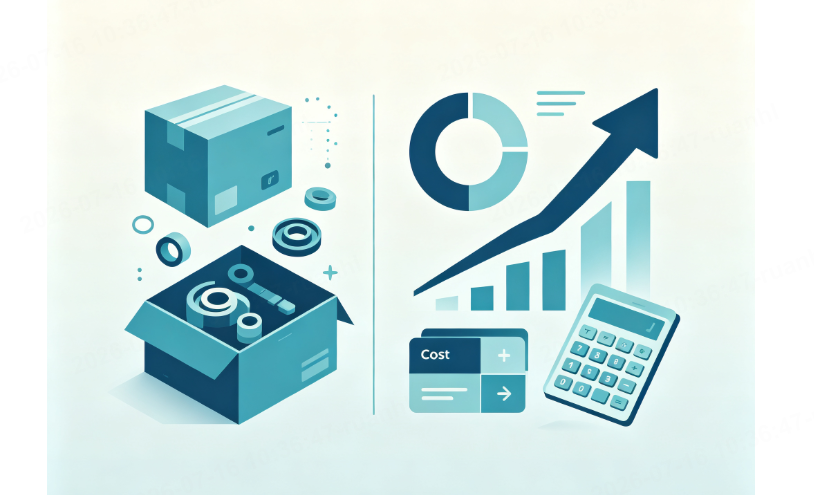
Should-Cost = Material Cost + Labor Cost + Manufacturing Overhead + Other Costs
However, the true expertise lies in understanding each component in detail. For example, if you are sourcing a custom metal part, the calculation might look like this:
- Direct Materials: Steel and other raw materials cost $25 per part.
- Direct Labor: Machining and assembly take 1.2 hours at $25/hour = $30.
- Manufacturing Overhead: Machine depreciation, electricity, and quality inspection = $12.
This gives a base should-cost of $67. Adding a reasonable profit margin for the supplier (say, 25%) results in a final target price of $83.75 . This becomes your benchmark for supplier negotiations.
The LooperBuy Advantage: Transparency in a Complex Market
In my experience, one of the biggest challenges for international buyers is the lack of pricing transparency. Traditional sourcing often hides costs in markups, currency conversion fees, and logistics. This is where a platform like LooperBuy changes the game.
A significant pain point for overseas buyers is the inability to access platforms like 1688 directly. LooperBuy solves this by acting as a bridge, granting you access to a vast inventory of Chinese products at factory-direct prices, which is crucial for accurate cost calculation . The platform promises zero price markup and transparent, zero-exchange-rate-adjustment fees. This means your “how to price a product calculation” is based on the actual cost, not an inflated estimate . Furthermore, by streamlining cross-border payments, you avoid the hidden costs associated with currency exchange that can eat into your profit margins .
Step-by-Step Guide to Product Costing
To perform a robust product pricing calculation, you need to adopt a professional methodology. Here is a practical framework based on established procurement best practices:
1. Define Your Cost Objectives and Scope
Before you even look at a quote, you need to know your target. What is the highest unit cost you can accept to maintain your desired profit margin? Establish your break-even point and desired profit margin early . This is your financial guardrail.
2. Break Down the Supplier’s Price
Do not accept a single figure. Use the should-cost model to analyze the quote:
- Raw Materials: What is the going rate for the specific materials?
- Manufacturing Process: Calculate the cost of machine use and labor hours.
- Packaging and Logistics: Factor in export packaging, shipping, and duties.
- Profit Margin: Industry-standard supplier margins typically range from 5% to 20% .
3. Benchmark Using Domestic Prices
One powerful negotiation tactic is to use domestic Chinese pricing as a benchmark. Platforms like 1688 offer a window into the true cost of goods within China. If your supplier’s quote is significantly higher, you have a strong foundation to ask why. The gap often highlights value-added services like quality control, English-language support, and export-ready packaging that justify the cost .
4. Consider Total Cost of Ownership (TCO)
The cheapest unit price is rarely the cheapest total cost. A lower price might mean a higher MOQ, longer lead times, or additional QC costs, which all tie up your capital and increase risk .
Example of a Pricing Breakdown for Sourcing:
A U.S. company requesting quotes for 10,000 units of a smart sensor found that while one supplier offered the lowest unit price ($7.90 vs $8.75), the higher MOQ and longer lead time increased inventory holding costs, making the slightly more expensive option ($8.75) the better overall value due to included inspection reports and design feedback .
The Negotiation Phase: Validating the Model
Once you have your should-cost model, it’s time to negotiate. The goal is not to simply beat the supplier down on price but to align on value.
Building Trust and Leverage
Start by sending a clear specification, target quantity, and timeline. Vague requests rarely get you the best price . Show that you have done your homework. Mentioning that you are “comparing a few suppliers and will choose the best overall value” signals that you are serious and have options .
Ask “Why”
When a supplier says they cannot meet your target price, ask them to explain the cost drivers. It could be the material grade, a specific labor-intensive step, or packaging requirements. By understanding why it costs what it does, you can often adjust variables to reduce costs without sacrificing quality .
Common Pricing Pitfalls to Avoid
From my experience, businesses often stumble by focusing on the wrong metrics.
- Chasing the Lowest Unit Price: This often leads to a reduction in material quality or QC standards, resulting in costly returns and returns from your own customers.
- Negotiating Only on Unit Price: Many terms are negotiable beyond the unit cost. You can optimize MOQ, payment terms, lead times, packaging, and labeling to improve your total cost .
- Vague Specification Requests: Changing specs mid-negotiation can kill your credibility. Ensure you have a version-controlled spec sheet that has been approved before production begins .
Conclusion: Transforming Sourcing with LooperBuy
Mastering how to price a product calculation is the foundation of successful B2B sourcing. It is the process of turning assumptions into facts, enabling you to negotiate from a position of strength and secure a supply chain that supports your business goals.
For international buyers, platforms like LooperBuy are leveling the playing field by providing direct, transparent access to China’s manufacturing powerhouse. By combining a data-driven costing methodology with a platform that eliminates hidden fees and simplifies logistics, you can optimize your costs from the first inquiry to final delivery.
Ready to take control of your product costs and streamline your global sourcing? Explore LooperBuy today to find premium suppliers and get accurate, factory-direct pricing for your next project.
Frequently Asked Questions (FAQ)
Q: What is the simplest way to calculate a wholesale price?
A: The simplest method is to calculate your total cost to produce the item (COGS + overhead) and then add your desired profit margin. A common formula is: Wholesale Price = Cost of Goods / (1 – Desired Profit Margin) .
Q: What is the difference between cost of goods sold (COGS) and overhead?
A: COGS includes the direct costs of producing an item, such as raw materials and direct labor. Overhead includes indirect costs necessary to run your business, such as rent, administrative salaries, and insurance .
Q: How can I use 1688 to negotiate better prices with suppliers?
A: You can use 1688 to find the domestic, base price for the product you are sourcing. When you get a higher quote from an export supplier, ask them to explain the difference. This often leads to a discovery of value-added services or the opportunity to simplify your packaging or specifications to save costs .
Q: What should a good profit margin be for wholesale products?
A: In the wholesale industry, a good profit margin typically ranges from 15% to 50%. The ideal margin depends on your industry, the product’s value, and your overall business model .
Q: Why does LooperBuy offer an advantage for product pricing?
A: LooperBuy connects buyers directly to 1688, offering “factory-direct prices” and transparent pricing with zero markup on goods and no hidden currency conversion fees. This allows for a more accurate and cost-effective product pricing calculation .
Introduction (300 characters)
Mastering product pricing calculation is vital for global B2B sourcing success. This guide offers a strategic framework, leveraging a should-cost model to negotiate transparently with Chinese suppliers. Platforms like LooperBuy enhance this by providing direct access to factory prices, removing hidden costs, and simplifying logistics for international buyers.
Hot Tags
B2B sourcing, product pricing calculation, wholesale pricing, LooperBuy, should-cost model, supplier negotiation, global sourcing, China sourcing, procurement strategy, total cost of ownership