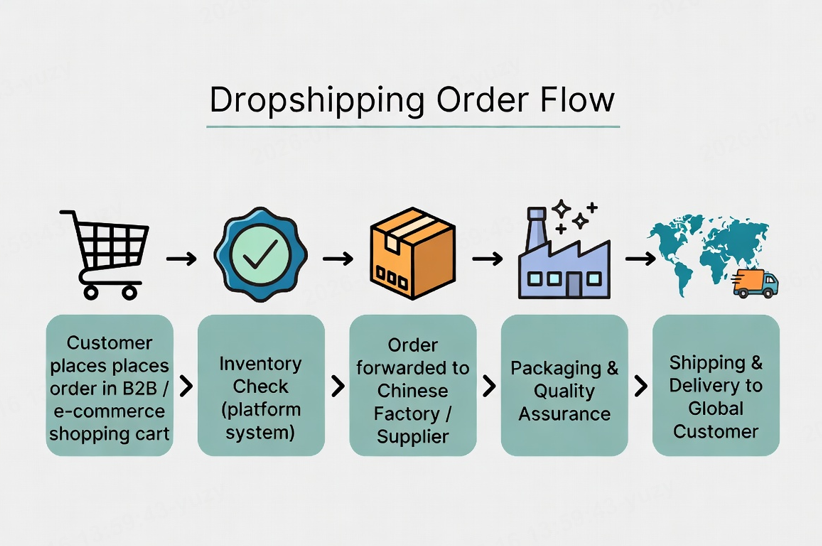
A practical guide to modern B2B shopping carts for global sellers, showing how architecture, user experience and integration choices affect abandoned carts, approvals and cross‑border dropshipping. Includes expert insights for working with China‑based sourcing platforms like Looperbuy.
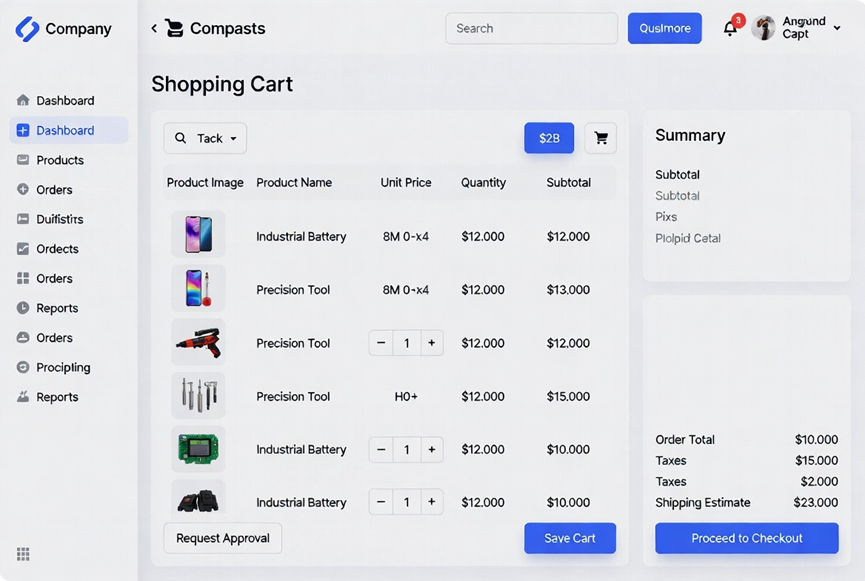
For more than a decade, I’ve helped manufacturers, wholesalers and cross‑border sellers build and optimize their online sales infrastructure, and one pattern is always clear: shopping cart decisions compound over time. The cart you choose and the way you design it directly impacts abandoned orders, operations workload, and your ability to scale with new markets and channels.
From the perspective of a B2B practitioner working with platforms like Looperbuy, a high‑performance cart must simultaneously support complex corporate buying workflows and low‑inventory models such as one‑piece dropshipping from Chinese factories.
Table of Contents
What a B2B Shopping Cart Really Does in Practice
In day‑to‑day operations, the shopping cart is the last interactive step of the buying journey before checkout, approvals and fulfillment. It aggregates items, prices, discounts, shipping options and buyer‑specific terms so that corporate customers can review, adjust and validate orders with internal stakeholders.
A well‑implemented cart for B2B should enable buyers to:
– See line‑item level details for SKUs, MOQs, packaging and lead time.
– Save, duplicate and share carts as draft orders for internal approval.
– Attach purchase orders, compliance documents and instructions for packaging or labeling.
– Trigger downstream automation for invoicing, warehouse picking and cross‑border shipping once an order is confirmed.
For cross‑border dropshipping sellers using Looperbuy, an effective cart also needs to synchronize order data directly with Chinese factories and logistics partners so you can operate with no inventory, minimal manual handling, and full shipment traceability.
Three Core Types of Shopping Cart Solutions
From an architectural perspective, most enterprise‑grade carts fall into three categories, each with different implications for B2B and cross‑border sellers.
Simple SaaS Shopping Cart Solutions
Simple SaaS carts are subscription‑based applications hosted and maintained by a third‑party vendor. You typically embed a Buy button or checkout link on your site and route transactions through their hosted environment.
They are ideal when:
– You run a relatively small catalog and handle under a few hundred orders per month.
– Your workflow is closer to B2C than complex B2B procurement.
– You want speed to market more than deep customization.
However, they often lack support for multi‑step approval flows, custom RFQs, complex shipping rules by region, and deep integration with ERP, CRM or external procurement platforms. For sellers planning to plug into a sourcing platform like Looperbuy or connect multiple marketplaces (Amazon, regional B2B marketplaces, proprietary portals), these limitations become visible very quickly.
Full‑Scale eCommerce Platforms with Built‑In Cart
Modern B2B platforms such as Virto Commerce, Magento, BigCommerce B2B Edition and others provide the cart as a core module alongside catalog, CMS and self‑service portal. In this model, the cart is deeply integrated with:
– Product and price management (tiered pricing, contract pricing, volume discounts).
– Customer accounts, roles and permissions (buyer, approver, finance).
– Content, localization and branding through the CMS.
This option makes the most sense for manufacturers, distributors and sourcing platforms that want a unified experience from product discovery to checkout and after‑sales service, including custom quotes and re‑orders.
Headless API‑First Shopping Carts
Headless carts decouple the front end (what users see) from the backend logic, exposing ordering and checkout capabilities via APIs that can connect to any storefront or application.
For enterprises and platforms like Looperbuy, headless architecture brings several strategic advantages:
– You can integrate a dedicated cart module into an existing portal, marketplace or app without replatforming everything.
– You can orchestrate complex flows between ERP, CRM, WMS, sourcing platforms and logistics providers at the cart level.
– You can scale components independently, which is crucial when traffic spikes due to seasonal demand or marketing campaigns.
Key Capabilities B2B Carts Must Deliver
When advising manufacturers or cross‑border sellers, I rarely start with features like themes or templates. Instead, I look at operational capabilities that directly tie to revenue, risk and customer satisfaction. The most critical ones include:
Abandoned Cart Tracking and Recovery
Abandoned carts are one of the clearest indicators of friction in your buying journey. In B2B, they are often driven not by impulse but by internal complexity: budget approvals, compliance checks, or hesitation about freight and customs costs.
High‑performing carts provide:
– Real‑time tracking of abandoned carts per account or segment.
– Recovery triggers like reminder emails, account manager alerts and promotional nudges.
– Integration with remarketing campaigns to re‑engage buyers across channels.
Automated Data Fill‑In and Buyer Convenience
Autofill capabilities—saved addresses, payment profiles, tax IDs, invoice preferences—cut down repetitive data entry and reduce error risk during checkout. For global dropshipping, saving and reusing recipient data across multiple orders can significantly speed up daily operations.
A solid cart should:
– Store verified buyer information securely and apply it automatically at checkout.
– Maintain full order history accessible via account self‑service.
– Support multiple shipping profiles and invoice recipients per account (common in B2B).
Scalability for Growing Product and Order Volume
As B2B sellers expand catalogs, connect more suppliers and enter new regions, the cart must handle more SKUs, higher traffic and more complex pricing rules without performance degradation. Modular, microservices‑based platforms like Virto Commerce are designed for this, allowing you to scale specific services such as cart and checkout independently.
When your sourcing is powered by Looperbuy and connected to tens of thousands of Chinese factories, scalability becomes non‑negotiable, because any bottleneck at cart level translates into delayed orders and lost trust.
User Experience and User Interface: Clear, Fast, and Focused
From a user experience standpoint, the cart has to balance information density with clarity. B2B buyers need technical details, but they also need to move quickly.
Effective cart interfaces typically feature:
– Clean product rows with essential specs, quantity fields, and pricing breakdown.
– Visible shipping estimate ranges and Incoterms when applicable.
– Clear CTAs such as “Proceed to approval,” “Request quote,” “Place order,” instead of generic buttons.
Comparative View of Popular Shopping Cart Solutions
Capability Matrix for Common Cart Solutions
| Solution | Abandoned cart tools | Autofill & saved data | Scalability for B2B | UX / UI flexibility | Upsell features | Mobile & desktop support | Integration depth |
| WooCommerce | Basic plugins | Plugin‑dependent | Limited for large B2B | Good themes | Basic add‑ons | Strong via themes | Constrained by WordPress stack |
| BigCommerce | Built‑in + apps | Solid profiles | Better enterprise scaling | Flexible storefront | Native upsell tools | Responsive by default | Strong APIs and connectors |
| Shopify | Native + app ecosystem | Good saved customer data | Limited without heavy customization | Polished UX, limited deep customization | Rich upsell apps | Excellent mobile support | Wide app ecosystem, some constraints |
| Magento | Advanced with customization | Powerful but complex | High scalability, high maintenance | Very flexible, developer‑centric | Strong upsell/cross‑sell | Good responsive themes | Deep integration via extensions |
| 3dcart | Reasonable built‑ins | Standard saved data | Adequate for mid‑market | Some design limits | Solid upsell options | Responsive templates | Decent integrations |
| Virto Commerce | Enterprise‑grade tracking | Highly configurable profiles | Designed for deep B2B scaling | Modular, API‑first UI options | Supports complex upsell scenarios | Mobile‑friendly architecture | Strong ERP/CRM/API integration |
For sellers building their own B2B portal on top of a sourcing platform like Looperbuy, Virto‑style modular architectures and other headless platforms provide a strong foundation for complex cross‑border workflows.
Designing a Cart for Cross‑Border Dropshipping with Looperbuy
This is where traditional cart theory meets the realities of working with Chinese factories and global buyers on tight margins and lean inventory. Looperbuy connects sellers to thousands of certified factories, supports multi‑currency payments, and offers “traceless” dropshipping with hidden supplier information.
To align your cart with this operating model, focus on four practical design principles:
1. Real‑time sourcing and availability
Synchronize cart items with Looperbuy’s sourcing data—stock status, lead time, factory minimum quantities—so buyers only add SKUs that can actually be fulfilled.
2. Transparent cost breakdown
Show product cost, service fees, estimated freight and any duties or surcharges as separate line items where possible to avoid surprise costs.
3. Recipient and label management
Allow buyers to specify recipient details, packaging marks and branding preferences at cart level, then transmit these to factories via Looperbuy’s order integration.
4. Traceless dropshipping safeguards
Ensure that invoices, packing slips and tracking pages generated from the cart respect “traceless” rules by hiding factory data while still providing full logistics tracking.
Actionable Steps to Upgrade Your Cart
To move from theory to execution, B2B teams and platform owners can follow a phased approach that aligns UX, technology and operations. Here is a structured checklist you can apply or adapt:
1. Map your buyer workflows
Document how different buyer roles (procurement, technical, finance) interact with the cart today, and where they typically drop out or revert to manual processes.
2. Audit existing cart capabilities
Assess your current solution against the key capabilities table above—particularly abandoned cart tracking, autofill, scalability and integration depth.
3. Prioritize cross‑border requirements
If you rely on Looperbuy or similar platforms, identify required integrations for sourcing, factory coordination, warehousing and logistics tracking at cart level.
4. Design and test UX improvements
Implement smaller, sharp changes: clearer headers, more visible CTAs, simplified column sets. Test these with a small group of real B2B buyers and collect feedback.
5. Plan medium‑term architecture upgrades
If your current cart is a simple SaaS tool and you see signs of strain, start planning a gradual move to a headless or modular platform that can handle your next three years of growth.
Build a Cart That Matches Your Global Ambitions
If your business depends on China‑based sourcing and dropshipping, and you want to serve global B2B buyers without drowning in inventory, logistics or manual approvals, your shopping cart must become a strategic asset, not just a basic feature.
Work with your product, operations and IT teams—or with a specialized partner—to redesign your cart around buyer workflows, Looperbuy integrations and scalable architecture. When you are ready to explore how a more advanced cart can support factory‑price delivery, traceless dropshipping and reliable global fulfillment, connect with your platform provider or integration partner and start a focused upgrade project.
FAQs
Q1: Why is the shopping cart so critical for B2B sellers?
Because it is the last interactive step before commitment, the cart determines whether buyers feel confident enough to proceed with approvals and payment, especially when orders are large or complex.
Q2: How does a headless cart help cross‑border dropshipping?
A headless cart exposes APIs that can connect directly to sourcing platforms, ERPs and logistics systems, making it easier to route orders to factories and synchronize status back to buyers.
Q3: Which cart features matter most for Looperbuy users?
Real‑time product availability, multi‑currency pricing, recipient management and strict control of visible supplier data are particularly important for traceless dropshipping from Chinese factories.
Q4: Do small B2B sellers need enterprise‑grade cart solutions?
Not always—simple SaaS carts are often enough at low volume. The tipping point comes when you handle complex approvals, large catalogs, multiple regions or integrated sourcing platforms.
Q5: How can I reduce abandoned carts in B2B?
Combine clear UX, transparent cost breakdown, saved buyer data and remarketing tools, and follow up manually for high‑value carts where relationship‑based outreach still makes a big difference.
References
1. Virto Commerce Blog – *eCommerce Shopping Cart: Guide & Software Comparison*, Jan 19, 2024. [looperbuy]
2. Looperbuy – Official Website and About Us. [looperbuy]
3. Looperbuy – *Dropshipping Revolution* Resource Page. [looperbuy]
4. Looperbuy – *Top 10 Dropshipping Manufacturers in China*. [blog.looperbuy]
5. Virto Commerce – *Best B2B eCommerce Platforms in 2026: The Expert Overview*. [virtocommerce]
6. DHL eCommerce – *2026 E‑Commerce Trends Report*. [dhl]