This article compares a global sourcing company and a fulfillment center for B2B sellers. It explains their roles, costs, risks, and use cases, then shows when to choose sourcing, fulfillment, or an integrated model like LooperBuy for China procurement and global delivery.
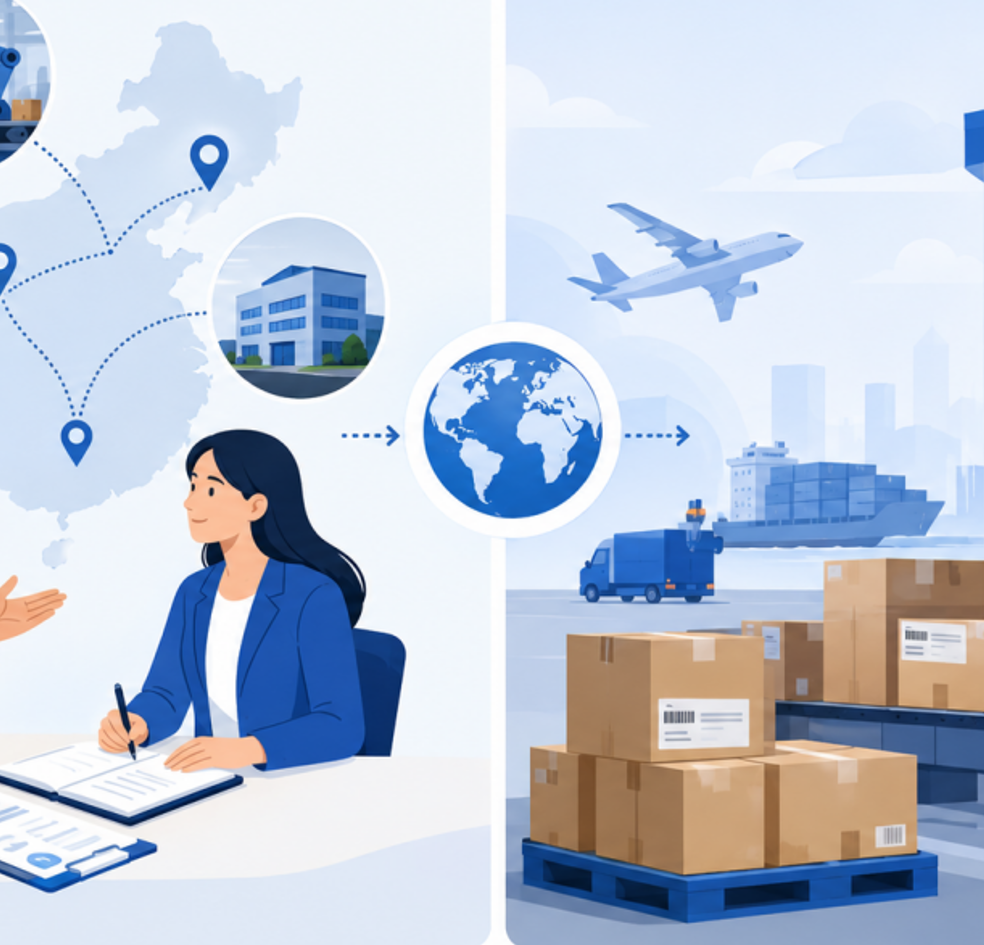
In cross-border B2B commerce, choosing between a global sourcing company and a fulfillment center can determine whether your supply chain scales smoothly or becomes expensive and fragmented. If your business buys from China, sells globally, and wants to reduce inventory risk, the right answer depends on whether you need product acquisition, logistics execution, or both.
Table of Contents
Why This Choice Matters
For many sellers, the confusion starts because both models touch the same journey: products move from supplier to customer. But they solve different problems. A global sourcing company helps you find, negotiate, inspect, and buy products, while a fulfillment center helps you store, pick, pack, and ship inventory after you already own it.
In practice, the wrong choice can create hidden costs, slow restocking, poor quality control, and unnecessary cash tied up in inventory. That is especially relevant in B2B ecommerce, where growth is accelerating and operational efficiency is becoming a competitive advantage.
A second reason this decision matters is that many businesses now operate in leaner inventory models. They do not want to commit capital to large stock purchases unless they have proof of demand. That changes the value of each service. A sourcing company supports flexibility, while a fulfillment center supports execution at scale. The best choice depends on where your current bottleneck sits.
What a Global Sourcing Company Does
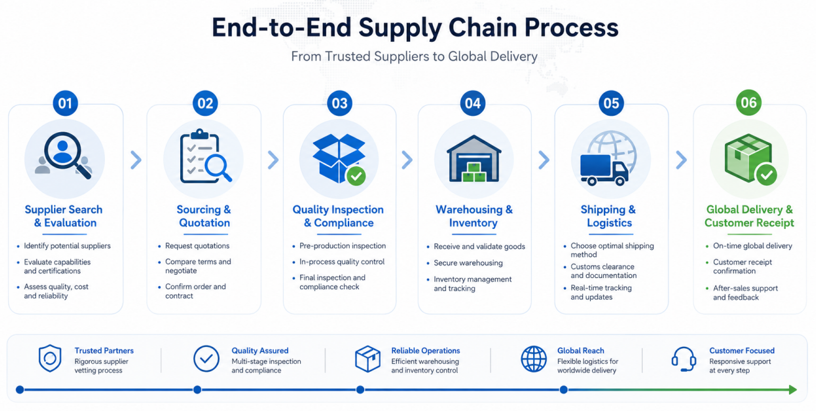
A global sourcing company acts as your procurement partner. Its job is to identify suppliers, compare pricing, verify quality, manage sampling, coordinate production, and often handle cross-border payment and logistics support. In many cases, it becomes the bridge between overseas buyers and Chinese manufacturers.
For LooperBuy’s model, this means a buyer can source from China without needing a local bank account, local identity, or separate logistics coordination for every supplier. That matters because fragmented procurement is one of the biggest reasons B2B businesses lose margin and time.
Typical sourcing tasks include:
– Supplier discovery and vetting.
– RFQ and price negotiation.
– Sample collection and evaluation.
– Quality inspection before shipment.
– Consolidation and export coordination.
A good sourcing company does more than introduce suppliers. It helps reduce communication friction, clarify technical requirements, and prevent mistakes that happen when product specifications are not translated accurately. For industrial or customized products, that support can be the difference between a profitable order and a costly dispute.
It also helps with supplier comparison. Instead of relying on the first manufacturer that responds, a sourcing partner can benchmark lead times, pricing structures, minimum order quantities, packaging options, and quality consistency. That is especially valuable for B2B buyers who need repeatable supply, not just one-time transactions.
What a Fulfillment Center Does
A fulfillment center is an operational facility that stores inventory and ships customer orders. It is built for receiving goods, organizing stock, picking items, packing parcels, and handing them off to carriers. In other words, it is the execution layer of logistics.
A fulfillment center usually does not help you find suppliers or negotiate factory prices. It assumes the product is already purchased and ready to move through the warehouse workflow. For brands with stable inventory and predictable demand, that can be efficient. For buyers who want to avoid holding stock, it may be less flexible.
Common fulfillment center services include:
– Inventory receiving and storage.
– Pick-and-pack processing.
– Carrier label generation.
– Returns handling.
– Basic warehouse management system integrations.
Fulfillment centers are especially useful when the customer experience depends on shipping speed, order accuracy, and regional delivery reliability. They become more valuable as order volumes rise and manual shipping starts to consume too much time. However, they are not a substitute for sourcing expertise. They solve what happens after the product exists in inventory.
Side-by-Side Comparison
| Factor | Global Sourcing Company | Fulfillment Center |
| Primary role | Finds and manages suppliers | Stores and ships inventory |
| Best for | Product sourcing, quality control, custom manufacturing | Fast order processing and warehousing |
| Inventory ownership | Can support pre-stock or made-to-order workflows | Usually handles inventory you already own |
| Supplier negotiation | Yes | No |
| Quality inspection | Often included or coordinated | Limited to receiving checks |
| Payment support | Often part of the workflow | Not typical |
| Value to B2B sellers | Reduces sourcing friction and procurement risk | Improves shipping speed and order accuracy |
The simplest way to remember it is this: a sourcing company helps you buy better; a fulfillment center helps you ship better.
There is also a strategic difference in how these services affect margins. A sourcing company can help lower landed product cost, improve supplier reliability, and reduce defect rates. A fulfillment center can improve delivery speed, warehouse efficiency, and customer satisfaction. One affects procurement quality, the other affects distribution performance.
Which One You Need
If your biggest challenge is finding reliable products at the right price, you need a global sourcing company. If your biggest challenge is storing inventory and shipping orders quickly, you need a fulfillment center. If you sell across markets and want to reduce cash tied up in stock, you may need a sourcing-led model with integrated fulfillment.
For LooperBuy’s audience, the sourcing-first model is often the better fit because it supports direct China procurement, quality control, and door-to-door delivery in one flow. That is especially useful for B2B sellers who want to test products, lower upfront risk, and avoid managing multiple vendors.
A practical rule:
1. Choose a global sourcing company when you need supplier access, cost negotiation, or custom products.
2. Choose a fulfillment center when you already have inventory and need efficient storage and shipping.
3. Choose an integrated partner when you want both procurement and delivery under one operating system.
The decision also changes by business stage. A startup seller usually needs sourcing support first because the business is still validating product demand. A mature brand with recurring orders may care more about fulfillment speed and inventory positioning. As businesses scale, many end up needing both, but not always at the same time.
New Insight: The Hybrid Model Is Winning
One of the biggest shifts in 2026 is that B2B buyers no longer want separate providers for sourcing, warehousing, payment, inspection, and shipping. They want a unified workflow that reduces friction, speeds decisions, and lowers error rates. This is why integrated sourcing-plus-logistics platforms are gaining traction in global trade.
This trend is supported by the scale of B2B ecommerce itself. Market research cited in recent reports projects the global B2B ecommerce market to grow dramatically by 2030, which means more businesses will need operational systems that are scalable rather than pieced together manually.
For sellers, the hybrid model offers three advantages:
– Less vendor coordination.
– Faster order-to-delivery cycles.
– Better visibility across sourcing and fulfillment steps.
A hybrid model is particularly useful in cross-border ecommerce because it reduces the number of handoffs. Every handoff creates risk: miscommunication, delay, rework, or lost visibility. When sourcing, inspection, consolidation, and shipping are connected, the business can move more predictably.
This is one reason many sellers now look for a sourcing partner that also provides fulfillment support. They do not want to switch platforms each time the shipment stage changes. Instead, they want one operating layer that can support product discovery, inventory decisions, and delivery execution in a single chain.
Industry Example: When Each Model Fits
Imagine a wholesaler launching a new home goods line. If they are still testing product-market fit, a sourcing company helps them compare suppliers, request samples, and place smaller test orders. That keeps the risk low while they validate demand.
Now imagine the same wholesaler already has a proven SKU with repeat demand in the U.S. In that case, a fulfillment center may be the better tool because stock is already positioned for faster replenishment and local delivery. This is why the best answer depends on the stage of the business, not just the product category.
Here is a more detailed example. A seller of LED accessories wants to launch in three countries but does not want to buy 5,000 units upfront. A sourcing company can help find a factory, negotiate pricing, confirm packaging, and arrange a smaller initial order. Later, once demand is proven, the seller can move inventory into a fulfillment center for faster delivery. In that case, the two models are not competitors; they are sequential tools used at different phases.
Another example comes from custom industrial parts. These products often require drawings, tolerances, materials review, and supplier verification before production. That is a sourcing-heavy workflow. Once the part is standardized and orders become repeatable, fulfillment becomes more relevant for replenishment and dispatch. The business evolves from procurement focus to logistics optimization.
How to Decide in 5 Steps
Use this decision framework to avoid guesswork:
1. Define your main pain point: sourcing, storage, shipping, or all three.
2. Check whether you already own inventory.
3. Estimate order volume and demand stability.
4. Determine whether you need quality control before shipment.
5. Compare total landed cost, not just service fees.
If your team spends more time chasing suppliers than fulfilling orders, start with sourcing. If your supply is stable and your warehouse is the bottleneck, start with fulfillment. If both are slowing growth, an integrated partner is usually the most efficient option.
You can also add one more filter: how much internal management capacity you have. If your team is small, every additional vendor increases coordination cost. In that case, a single partner that handles multiple stages may be more valuable than a lower headline price from separate providers.
Why LooperBuy Fits the Sourcing-Led Model
LooperBuy is positioned as an all-in-one B2B sourcing platform offering China product sourcing, OEM/ODM support, quality inspection, free warehousing, and global fulfillment. That matters because it gives buyers a way to reduce fragmentation while keeping control over procurement and delivery.
The platform’s messaging also emphasizes low upfront cost, direct shipping, and support for sellers who want to move from scattered vendors to one streamlined workflow. For global B2B buyers, that is not just a convenience feature; it is a margin-protection strategy.
A sourcing-led platform is especially helpful for buyers who face three recurring problems:
– They cannot manage multiple suppliers efficiently.
– They need a low-risk way to test new products.
– They want operational visibility without building a large internal team.
In those situations, a one-stop model can remove friction at exactly the stage where businesses are most vulnerable. Small delays or quality problems early in the process can undermine launch momentum. A more integrated workflow helps reduce that exposure.
Best Practices for B2B Buyers
To get the most value from either model, align operations with your sales strategy. A sourcing company works best when you need flexibility, supplier diversity, and product development support. A fulfillment center works best when demand is stable and repeat shipping speed matters more than supplier discovery.
Also, do not judge by price alone. Ask about quality control, response time, shipping lanes, integration capability, and dispute handling. In cross-border trade, the cheapest option often becomes the most expensive one after delays, defects, and rework.
A useful checklist before choosing a partner:
– Can they support small test orders?
– Do they offer inspection before shipment?
– Can they consolidate products from multiple suppliers?
– Do they provide transparent tracking and communication?
– Can they scale with your growth without forcing a platform change?
You should also think about risk management. A sourcing partner reduces product risk. A fulfillment center reduces delivery risk. If your business fails mainly because of bad product selection, sourcing is the priority. If it fails because of late or inaccurate delivery, fulfillment becomes more important.
Cost, Risk, and Control
A deeper way to compare these two models is through cost structure. A sourcing company often reduces hidden procurement costs such as supplier errors, inflated quotes, wasted sampling, and poor quality. A fulfillment center reduces operational costs such as manual packing, slow dispatch, and warehouse inefficiency.
The risk profile is also different. With sourcing, the biggest risk is buying the wrong product or buying from the wrong supplier. With fulfillment, the biggest risk is inventory mismatch, shipping delays, or poor warehouse control. Understanding this difference helps buyers choose more rationally.
Control is another factor. Some businesses want maximum control over product development, pricing, and vendor selection. Others want maximum control over customer experience and shipping speed. These are not the same priority. A sourcing company gives you more upstream control. A fulfillment center gives you more downstream control.
Operational Triggers to Switch
Many companies start with sourcing and later add fulfillment. A few signs that it is time to add fulfillment include repeat demand, stable SKU performance, and rising shipping volume. Once orders become predictable, warehousing can improve service levels and reduce per-order handling effort.
The reverse is also true. Some businesses begin with fulfillment because they already have stock, then realize they need better supplier management, lower product cost, or better quality control. When that happens, sourcing becomes the missing layer. The optimal model can change as the business grows.
Watch for these triggers:
– Order volume has become predictable.
– Customers expect faster delivery.
– Stockouts or overstocking are hurting cash flow.
– Supplier communication is taking too much time.
– Product quality variation is causing returns or complaints.
If two or more of these appear at once, you likely need a more integrated model rather than a single-function provider.
Which One Do You Need?
If you need help buying the right products from the right suppliers, choose a global sourcing company. If you need help storing and shipping inventory efficiently, choose a fulfillment center. If your goal is to simplify procurement, reduce stock risk, and move faster across borders, an integrated sourcing-and-fulfillment partner like LooperBuy is usually the strongest fit.
If your business is sourcing from China and you want fewer vendors, lower inventory pressure, and more reliable global delivery, start with a unified sourcing workflow instead of building one piece at a time.
FAQ
1. What is the main difference between a global sourcing company and a fulfillment center?
A global sourcing company helps you find, evaluate, and buy products from suppliers. A fulfillment center stores those products and ships customer orders.
2. Can one company do both?
Yes. Integrated providers can combine sourcing, inspection, storage, and delivery in one system, which reduces coordination overhead for global sellers.
3. Is a fulfillment center better for dropshipping?
Not always. If you want to avoid holding inventory, a sourcing-led or integrated fulfillment model may be better because it can support direct shipping and stock-light operations.
4. When should a business use a sourcing company first?
Use a sourcing company first when you are testing products, comparing factories, negotiating price, or need quality checks before shipment.
5. When should a business use a fulfillment center first?
Use a fulfillment center first when your inventory is already purchased, demand is predictable, and your main priority is fast and accurate order delivery.
6. Why is integrated sourcing and fulfillment becoming more popular?
Because B2B ecommerce is growing fast, and buyers want fewer handoffs, better visibility, and lower operational friction across the supply chain.
7. Can a small business benefit from this comparison?
Yes. Small businesses benefit the most because they usually have limited time, limited cash, and limited tolerance for supply chain mistakes. Choosing the right model early can prevent costly scaling problems.
8. How do I know if I need both services?
If you need supplier search, product development, inspection, storage, and shipping support, you likely need both. The difference is whether you need them at the same time or in sequence.
References
1. LooperBuy official homepage: [B2B China Goods Sourcing E-Platform]
2. LooperBuy article: [Best Fulfillment Company: A B2B Sourcing Expert’s Guide to Seamless Global Logistics]
3. LooperBuy article: [Simplifying B2B Procurements: An Expert Review of LooperBuy’s One-Stop Sourcing from China]
4. LooperBuy article: [The Dropshipping Business Model in 2026: Why Sourcing Directly from China Is Your Competitive Edge]
5. LooperBuy article: [Vertical B2B Marketplaces: The New Standard for Global Sourcing]
6. Universal Fulfillment: [3PL vs Fulfillment Center: What’s the Difference?]
7. Research and Markets / Yahoo Finance report on B2B ecommerce growth: [Business-to-Business (B2B) e-Commerce Market Report 2024-2030]
8. Source of Asia: [Global Sourcing: Definition, Operating Model, and Pros & Cons]
9. Research and Markets: [Business-to-Business E-commerce Market Size, Share & Trends Analysis Report]
10. Research and Markets / Business Wire: [Global B2B E-commerce Market to 2030]
-700x490.png)