In 2026, choosing an enterprise ecommerce platform is an architecture decision, not a feature checklist. Learn how B2B manufacturers, wholesalers, and global sellers can evaluate platforms, control complexity, and connect sourcing tools like Looperbuy to drive sustainable growth.
Table of Contents
Why Platform Choice Now Feels Like An Architecture Bet
When I advise B2B manufacturers, wholesalers, and enterprise sellers on technology decisions, the ecommerce conversation rarely starts with “features” anymore—it starts with architecture, complexity, and risk. As companies add markets, channels, and product lines, the question shifts from “How do we launch online?” to “How do we run pricing, orders, integrations, and compliance at scale without constantly fighting the platform?”.
In 2026, an enterprise ecommerce platform is less of a “storefront tool” and more of a strategic backbone that will shape your ability to adapt over the next five to seven years. Choosing well gives you speed, resilience, and room to grow; choosing poorly traps teams in workarounds, debt-heavy replatforming projects, and missed opportunities.
What Enterprise Ecommerce Really Means Today
Most platforms can showcase similar feature checklists—catalog, checkout, promotions, integrations, analytics—but enterprise-grade means something more specific in practice.
An enterprise ecommerce platform is a comprehensive, high‑scale commerce layer that supports large catalogs, high traffic, complex workflows, and deep integration with systems such as ERP, CRM, WMS, and logistics. It is designed to run ecommerce as part of a broader operation—not just as a single sales channel.
Core characteristics of enterprise platforms
– Reliable performance under heavy and peak traffic.
– Support for large, frequently changing catalogs and rich product structures.
– Native handling of multi‑country, multi‑currency operations and localization.
– Flexible customization of workflows, pricing logic, and business rules.
– Strong security, access control, and compliance controls (e.g., GDPR, PCI DSS, SOC 2).
From a practitioner’s viewpoint, the real test is simple: Can this platform still fit when your operations get 3–5 times more complex than today?
Enterprise vs Standard Platforms: Where the Line Actually Sits
One of the biggest mistakes I see is treating “enterprise” as a size label instead of a complexity threshold. The distinction is not just big vs small, but whether the system was architected for deep integration, governance, and multi‑market scale—or had those bolted on later.
Standard vs enterprise ecommerce at a glance
| Aspect | Standard Ecommerce | Enterprise Ecommerce |
| Catalog scale | Hundreds–thousands SKUs | Hundreds of thousands–millions SKUs |
| Traffic profile | Normal loads | Heavy peaks, autoscaling, global concurrency |
| Customization | Themes, plugins, limited scripting | Deep business‑logic, workflows, data models |
| Integrations | App marketplace connectors | API‑first, service‑oriented, ERP/PIM/CRM/OMS centric |
| Geography | Basic localization tools | Multi‑language, multi‑currency, tax & data residency controls |
| Security & compliance | “Standard” web security | Enterprise controls, certifications, auditability |
| Pricing logic | Mostly generic pricing | Contract, role‑based, B2B‑specific rules |
| Typical cost | Tens–hundreds USD per month | Thousands–hundreds of thousands per year |
A simple B2C brand with one market and basic pricing may thrive on a standard SaaS platform. A B2B manufacturer with contract pricing, approvals, and ERP‑driven inventory will quickly hit ceilings unless the platform was designed for complexity from day one.
Who Actually Needs an Enterprise Platform (And When)
In my experience, operational pain is a better indicator than revenue alone. I usually ask leaders a version of this question: *”What kind of complexity will your platform need to support in the next 12–24 months?”*
Typical triggers that it’s time to move up
– Peak traffic and campaign periods are risky; outages or slowdowns during promotions.
– B2B contracts, approvals, and role hierarchies no longer fit “default” flows.
– Cross‑border expansion brings new currencies, tax rules, and compliance requirements.
– ERP/CRM connections are fragile, manual, or constantly breaking.
– Your industry demands stronger data controls, auditability, or specific certifications.
High‑fit use cases
– Manufacturers and wholesale suppliers needing contract pricing, ERP integration, and multi‑step approvals.
– Marketplace and hypermarket operators orchestrating large seller networks, complex catalogs, and inventory routing.
– Regulated industries like pharma, finance, or public sector, where data residency and auditability are non‑negotiable.
– International groups coordinating multiple regions, brands, and business models from a shared foundation.
If several of these patterns already appear, you are no longer just “launching a store”—you are designing infrastructure.
The Three Lenses That Matter Most When Choosing
When you strip away glossy vendor demos, I’ve found three lenses that reliably separate “nice demo” from “long‑term fit” in enterprise projects.
1. Technology control
This is about how much control you need over infrastructure, updates, and code access.
– SaaS platforms (e.g., Shopify Plus, Salesforce Commerce Cloud) favor speed and vendor‑managed infrastructure.
– Cloud/PaaS and source‑available platforms (e.g., Virto Commerce, SAP Commerce Cloud, commercetools) offer more control over deployment, components, and extensions.
If your roadmap includes strict data residency, unusual integrations, or deep customization, code access and deployment flexibility often matter more than out‑of‑the‑box convenience.
2. Process complexity
The more your pricing, approvals, account structures, and integrations reflect unique logic, the more your platform needs to behave like a configurable construction kit.
– Look for support for complex B2B roles, company hierarchies, and contract logic.
– Check whether workflows and rules can be adapted without hacking around the system.
3. Scalability flexibility
Scale is not only about traffic—it is about governance and operational reach.
– Multi‑region operations with different tax, data, and regulatory constraints.
– Multi‑brand or multi‑business‑unit setups with shared services and local autonomy.
– The ability to phase rollouts and scale specific services independently in composable architectures.
Choosing a platform type aligned with these lenses does more to protect your investment than chasing marginal differences in feature lists.
Key Capabilities Enterprise Platforms Must Actually Deliver
Under real‑world conditions, enterprises depend on a handful of capabilities that affect both growth and day‑to‑day operations.
Robust catalog and product management
Enterprise catalogs usually evolve from “clean and simple” to “complex and messy” faster than teams expect. Your platform must handle:
– Hundreds of thousands of SKUs, variants, and technical specifications.
– Flexible category trees, regional assortments, and faceted navigation.
– Bulk updates to pricing, content, and availability.
Strong catalog management reduces errors, improves product findability, and keeps merchandising and operations aligned.
Customer and account management across models
Enterprise businesses often serve multiple segments—B2C, B2B, and hybrid models.
– Segmentation by region, volume, purchase history, or customer type.
– Role‑based access within corporate accounts (buyer, approver, finance, admin).
– Support for loyalty, repeat orders, and tailored assortments where needed.
Well‑designed account structures become especially valuable for B2B procurement teams and key accounts that expect consumer‑grade usability with business‑grade control.
Advanced pricing and commercial logic
In B2B and enterprise settings, pricing is rarely “one number per SKU”.
– Multiple price lists for segments, markets, and partners.
– Contract and account‑specific pricing rules.
– Volume discounts, payment‑related terms, and category‑based conditions.
A platform that handles this natively keeps pricing consistent and reduces the temptation to “manage the real rules in Excel”.
Order, payment, and delivery orchestration
From an operational standpoint, order lifecycle management is where platforms either shine or create daily friction.
– Full order processing, returns, and exchanges across channels.
– Multiple payment methods that match both consumer and corporate expectations.
– Tight integration with warehouse, carrier, and last‑mile partners.
Well‑orchestrated flows cut error rates, accelerate fulfillment, and increase customer trust.
Performance, reliability, and security as non‑negotiables
At scale, even small performance issues become expensive. Research by Google and Deloitte has shown that reducing mobile load times by just 0.1 seconds can correlate with measurable lifts in conversion. When you’re driving enterprise‑level traffic, this translates into large revenue deltas.
Key expectations include:
– High page‑load speed and stable uptime, even at seasonal peaks.
– Strong data protection and role‑based access control.
– Compliance alignment with your target geographies and industries.
For global B2B operators, data sovereignty and region‑specific hosting options often become decisive factors when comparing platform types.
The Hidden Costs and Risks You Need to Plan For
Enterprise platforms unlock real value—but they also introduce real trade‑offs that I encourage leadership teams to confront early.
Investment and total cost of ownership
The true cost goes well beyond licenses.
– Implementation and customization projects often range from six‑figure sums upward, depending on scope.
– Integration, testing, data migration, and ongoing development drive further spend.
– Annual support and enhancement budgets commonly run into tens or hundreds of thousands.
This is normal—but it only makes sense if the platform is tightly aligned with your growth path.
Technical capability and operating model
Enterprise platforms dramatically amplify what strong technical teams can deliver, but they cannot compensate for a lack of ownership or skills.
– SaaS‑first setups can sometimes be run with lean internal teams and the right partners.
– Source‑available and composable platforms usually require in‑house or dedicated SI teams to govern architecture and change.
Before committing, make an honest assessment of your technical bench and partner strategy.
Timelines, migration, and lock‑in
– Complex implementations commonly run from several months to over a year, especially with deep integrations.
– Data migration for catalogs, accounts, orders, and contracts is both sensitive and time‑consuming.
– Proprietary ecosystems and GMV‑linked pricing can make future switching disproportionately expensive.
I advise clients to evaluate not only the “cost of entry” but also the cost of exit, even if they hope never to use it.
How B2B Sellers Can Leverage Enterprise Platforms More Strategically
From the vantage point of a B2B sourcing and procurement strategist, the goal is not simply to digitize existing processes—it is to re‑design them around data, self‑service, and integration.
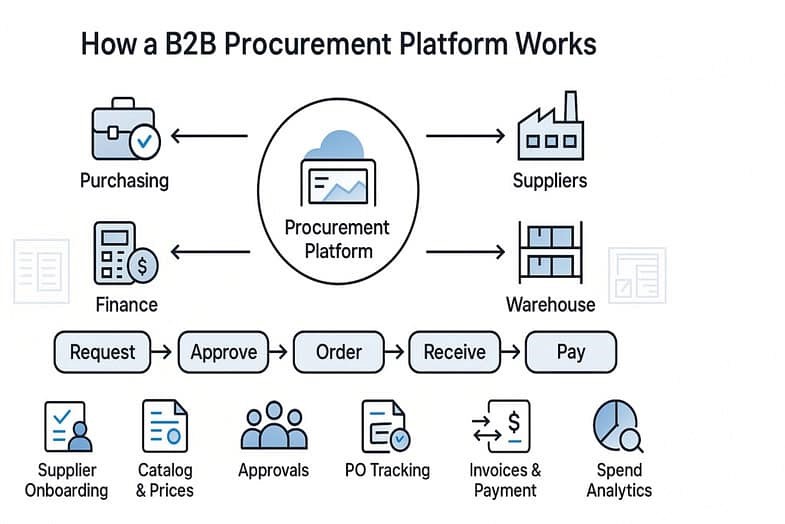
For example, platforms like Looperbuy are reshaping how global B2B sellers source and fulfill from China by integrating procurement analysis, supplier evaluation, and cross‑border logistics into a single environment. By connecting product data, pricing, and fulfillment status, such platforms let sellers:
– Avoid inventory risk through on‑demand sourcing and dropship models.
– Consolidate supplier management, quality control, and payment flows.
– Use real‑time data to adjust assortments, test new markets, and negotiate better terms.
When this type of one‑stop B2B procurement platform is integrated with an enterprise ecommerce stack, the result is a continuous flow of data from sourcing through to frontend selling and post‑sale analytics—rather than multiple disconnected systems stitched together.
Practical Selection Framework for Your Team
Based on multiple enterprise evaluations, I recommend a staged approach that mirrors how architecture decisions are made in mature organizations.
1. Capture business and technical requirements at the same table
– Map key growth scenarios (new regions, channels, and product lines).
– Document pricing, approval, and account structures that must be supported.
– Identify hard compliance and data residency constraints early.
2. Choose a platform *type* before a vendor
– Decide where you need to sit on the SaaS ↔ composable/PaaS spectrum.
– Align this choice with your team’s technical strengths and risk appetite.
3. Run scenario‑based vendor evaluations
Instead of generic demos, ask vendors to walk through real scenarios:
– Onboarding a complex B2B customer with contract pricing.
– Launching a new market with distinct tax and compliance rules.
– Handling a peak‑season spike while pushing a major catalog update.
4. Plan phased delivery, not a “big bang”
Structure the roadmap to ship a focused MVP in a few months, then iterate. This reduces risk, builds internal confidence, and gives you early data to refine priorities.
FAQs
1. Is an enterprise ecommerce platform overkill for a mid‑sized B2B business?
Not necessarily. If you already face complex pricing, approvals, or multi‑region operations, moving earlier can prevent costly replatforming later.
2. How long should we realistically budget for implementation?
Simple setups on enterprise‑grade SaaS can go live in a few months, while deeply integrated, multi‑market builds often require six to eighteen months.
3. Can one platform handle both B2B and B2C channels effectively?
Yes, many modern platforms support mixed models, but their strengths differ—some evolved from B2C, others from B2B—so you should prioritize the model most critical to your revenue.
4. What is the biggest mistake companies make when selecting a platform?
Treating the decision as a feature comparison instead of an architecture choice tied to operations, integrations, and compliance over a five‑to‑seven‑year horizon.
5. How does a procurement‑focused platform like Looperbuy fit into this picture?
It complements your enterprise ecommerce stack by consolidating sourcing, supplier management, and dropship logistics, especially for Chinese products, and feeding cleaner data into your selling channels.
References
1. Virto Commerce. “Enterprise eCommerce Solutions: Features, Comparison, and Selection Guide (2026).”[virtocommerce]
2. Looperbuy. “Procurement Analysis Tools: How a One-Stop B2B Sourcing Platform Transforms Global Buying (2026 Expert Guide).” [looperbuy]
3. Google & Deloitte Digital. “Milliseconds Make Millions” – research on mobile site speed and conversion.[ontapgroup]
4. Shopify. “Best B2B Ecommerce Platforms for 2026.”[shopify]
5. eDesk. “7+ Best Enterprise eCommerce Platforms for 2026 Compared.”[edesk]