Entering the international market is a pivotal step for any brand, wholesaler, or manufacturer. The method you choose—Direct Exporting vs. Indirect Exporting—can fundamentally determine your
growth trajectory, profit margins, and long-term brand equity globalsources facebook.
In an era where global supply chain efficiency is paramount, understanding these distribution channels is not just an academic exercise; it is a business necessity. Whether you are a small enterprise testing the waters or a large brand seeking to optimize your global reach, choosing the right model is critical bankatfirst imf.
Table of Contents
Understanding Your Options
What is Indirect Exporting?
Indirect exporting is a method where a company sells its products to an intermediary (such as a trading company, export management company, or specialized distributor) who then assumes responsibility for marketing, logistics, and selling those products in foreign markets globalsources trade. Essentially, you are outsourcing your international presence to a partner who already has the infrastructure and local market knowledge globalsources.
What is Direct Exporting?
Direct exporting involves a business selling its products or services directly to customers or partners in foreign markets without using domestic intermediaries globalsources. This requires the company to manage every aspect of the process, from market research and logistics to distribution and payment collection trade.
Head-to-Head Comparison: Which Model Fits Your Business?
Choosing between these methods involves a trade-off between control, risk, and investment studocu.
| Feature | Indirect Exporting | Direct Exporting |
|---|---|---|
| Control over Brand | Low | High |
| Profit Margins | Generally Lower (Intermediary takes a cut) | Generally Higher |
| Initial Investment | Low | High |
| Risk Level | Low | High |
| Market Knowledge | Relies on Intermediary | Developed In-house |
| Complexity | Simple | Complex |
The Strategic Shift: Why Modern Businesses are Evolving
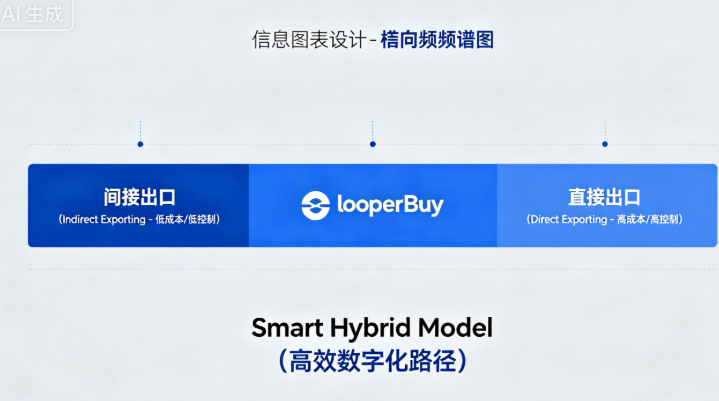
Historically, firms started with indirect exporting to minimize risk and gradually scaled to direct exporting as they gained experience imf foodexport. However, the rise of digital B2B sourcing platforms—like LooperBuy—is changing the game.
Innovative platforms now bridge the gap, offering the ease and accessibility of indirect channels with the direct control and lower costs traditionally reserved for direct exporting globalsources bankatfirst.
Key Advantages of Modern Hybrid Models
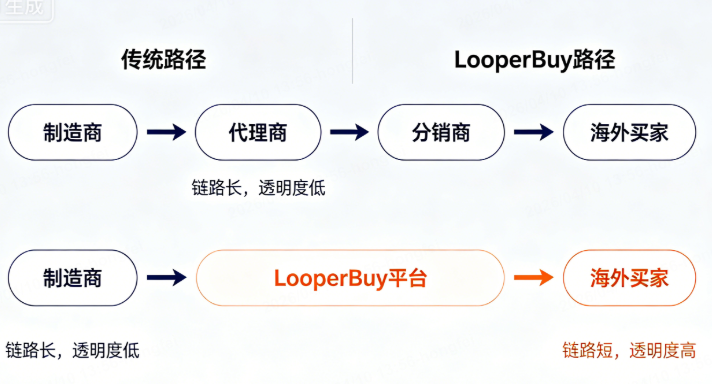
- Global Reach without the Complexity: Leverage established logistics networks to reach any market directly without the need for multiple layers of intermediaries bankatfirst.
- Lower Costs, Higher Margins: By cutting out unnecessary middle-men, manufacturers can offer competitive pricing to international buyers while maintaining better margins globalsources facebook.
- Direct Data Access: Gain real-time insights into buyer behavior, which is often lost in traditional indirect exporting models globalsources.
Deep Dive: The Economics of Export Channels
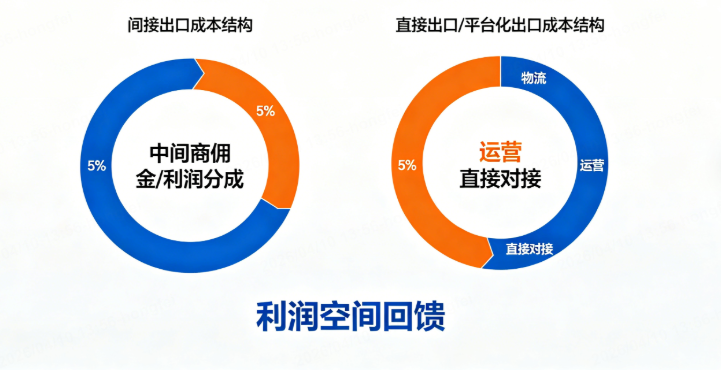
When analyzing indirect exporting, one must consider the “hidden costs.” While the initial barrier is low, the long-term cost is often higher due to the intermediary’s markup. This markup is necessary for their service, but it can make your product less competitive in the end-market pthms.
Conversely, direct exporting allows you to capture that markup yourself. However, you must invest heavily in international trade expertise, compliance, and logistics infrastructure trade. For many SMEs, this investment is a significant hurdle that often results in stalled growth.
Navigating Global Logistics and Compliance
One of the greatest challenges in direct exporting is managing the regulatory landscape of foreign countries. Every nation has unique import duties, certifications, and safety standards trade.
Strategies for Mitigating Export Risk
- Compliance Automation: Utilize digital tools to track changing trade regulations in real-time.
- Logistics Consolidation: Working with specialized freight forwarders or “One-Stop” platforms (like LooperBuy) reduces the number of vendors you need to manage bankatfirst.
- Phased Market Entry: Rather than attempting to export directly to ten countries at once, focus on one primary market, perfect your processes, and then scale.
The Future: Why B2B Sourcing Platforms are the New “Direct”
We are witnessing a paradigm shift. B2B platforms are democratizing access to global markets. By integrating the sourcing, logistics, and payment layers, these platforms essentially function as an “indirectly-direct” model bankatfirst.
- Transparency: Buyers and sellers can communicate directly, ensuring product requirements are met precisely.
- Speed: Automated logistics tracking allows for near-instant visibility, which is a massive upgrade over traditional indirect methods where information flow is often siloed.
- Scalability: You can easily add new product lines or markets without needing to hire an international trade department.
Operational Checklist: Moving Beyond Theory
To decide your strategy, follow this 4-step assessment:
- Assess Internal Readiness: Does your team have the logistics, legal, and multilingual capability to manage export documentation directly? pthms
- Evaluate Market Potential: For high-volume, stable markets, direct exporting often yields better long-term returns. For emerging or high-risk markets, starting with an intermediary may be safer trade.
- Define Brand Goals: If maintaining strict control over brand image and pricing is a top priority, direct control is essential globalsources studocu.
- Leverage Digital Platforms: Explore One-Stop B2B Sourcing Platforms that handle global logistics, currency conversion, and verification, effectively giving you the benefits of direct export with minimal overhead bankatfirst.
(Suggested Image: A graphic showing a spectrum of “Low Control/Low Risk” (Indirect) to “High Control/High Risk” (Direct), with digital platforms like LooperBuy positioned in the “High Efficiency” sweet spot.)
Conclusion
There is no “one size fits all” answer when choosing between direct vs. indirect exporting. While indirect methods offer a lower barrier to entry, direct exporting provides the ultimate control and profit potential facebook pthms. Today’s successful global brands often utilize a blended approach, leveraging digital sourcing platforms to streamline operations and maximize efficiency in diverse markets bankatfirst. Ready to optimize your global supply chain? Visit LooperBuy to simplify your international procurement today.
References
- Global Sources: Direct vs. Indirect Exporting
- Reddit: What is the difference between exporting and directly exporting
- Facebook: Direct vs. Indirect Export Comparison
- EDC: Indirect vs. direct exporting
- ISO: Direct and indirect exporting
- First Financial Bank: Exporting products to overseas markets
- Studocu: What is indirect exporting
- The Enterprise World: Direct vs. Indirect Exporting
- FREIT: Direct Versus Indirect Export Channels
- PTHMS: Direct vs. Indirect Exports: Profitability
- CEPR: The ladder of internationalisation modes
- International Trade Administration: Approaches to Exporting
- North Dakota Trade Office: Approaches to Exporting
- IMF: Exporting Through Intermediaries
- ConnectAmericas: Direct or indirect exporting
- Food Export: A Guide to International Channels
FAQ
Q1: Can I use both direct and indirect exporting simultaneously?
A: Yes, many companies use a hybrid strategy—exporting directly to major markets while using intermediaries for smaller or more challenging regions bankatfirst trade.
Q2: Which method is better for a startup?
A: Indirect exporting is generally recommended for startups due to lower risk and resource requirements, but modern digital platforms like LooperBuy can make direct exporting more viable early on erasmus bankatfirst.
Q3: How does indirect exporting affect my brand’s control?
A: In indirect exporting, you give up significant control over pricing, marketing, and the customer experience, as these are managed by the intermediary studocu.
Q4: Does direct exporting always result in higher profit margins?
A: Generally yes, as you eliminate the intermediary’s fee; however, you must account for the higher operational costs of managing exports internally pthms.
Q5: How can a sourcing platform simplify direct exporting?
A: Such platforms centralize logistics, payment, and communications, reducing the administrative burden and technical complexity of handling exports in-house bankatfirst.
Hot tags: B2B sourcing platform, global export strategies, international trade logistics, direct exporting, indirect exporting, supply chain management, B2B wholesale marketplace, cross-border e-commerce, global expansion strategy, import and export consulting.
Article Summary: This expert-led guide demystifies the strategic choice between direct and indirect exporting for B2B enterprises. By analyzing risks, control levels, and modern digital alternatives like LooperBuy, the article empowers brands to optimize their international expansion for maximum growth and profitability.