Looperbuy can position itself as a trusted China sourcing and dropshipping partner for global B2B sellers. This article reframes cross-border ecommerce into a practical procurement workflow, highlighting supplier trust, logistics clarity, and localized buyer experience to help merchants scale with less inventory and lower operational friction.

Cross-border B2B sourcing is becoming a core growth engine for sellers that want to buy from China, reduce inventory risk, and scale internationally with less operational friction. For a platform like Looperbuy, the opportunity is not only in access to Chinese products, but in making procurement, payments, logistics, and fulfillment easier for global buyers.
Table of Contents
Why cross-border sourcing matters
Cross-border commerce is no longer just about selling abroad; it is about building a repeatable sourcing system that connects buyers, suppliers, and logistics across markets. Recent guides emphasize that successful cross-border expansion depends on market selection, localization, payment flexibility, and fulfillment design rather than simply listing products online.
For B2B buyers, the value is even clearer. They want reliable supply, lower upfront capital needs, fewer warehousing burdens, and a faster way to test demand without overcommitting to stock. That is exactly where a China sourcing and dropshipping model can create a competitive edge.
What cross-border B2B sourcing is
Cross-border B2B sourcing means a business buys products or components from suppliers in another country and fulfills orders to customers in target markets without building a heavy local inventory base. In practice, this can include wholesale purchasing, made-to-order procurement, private-label sourcing, and dropshipping-style fulfillment.
Compared with traditional importing, this model reduces the need for large warehouse commitments and gives sellers more flexibility to test categories, respond to demand shifts, and expand into new regions faster. It also creates a tighter need for supplier verification, shipment tracking, and payment control.
The market opportunity
The strongest cross-border opportunities usually appear where demand is clear but local supply is fragmented, expensive, or slow. Current market guides highlight growth in cross-border ecommerce across APAC, North America, Europe, and the Middle East, with localization and regional fulfillment becoming critical differentiators.
For buyers sourcing from China, the appeal lies in variety, manufacturing depth, and pricing flexibility. But the real business advantage comes from pairing Chinese supply with a platform that simplifies buying, quality control, and cross-border execution for overseas merchants.
Common business pain points
Many global sellers face the same operational problems when sourcing internationally. These usually include supplier inconsistency, hidden landed costs, customs complexity, payment risk, and time lost coordinating with multiple vendors.
A stronger sourcing platform helps address these issues by organizing the process around three priorities: trusted suppliers, transparent operations, and scalable fulfillment. Without those three, cross-border sourcing often becomes harder to manage than local purchasing.
How Looperbuy can position itself
Looperbuy can stand out by positioning itself as more than a marketplace. It should be presented as an operational partner for global B2B buyers that need China sourcing, dropshipping support, and less administrative overhead. This is especially persuasive for businesses that want to avoid stockpiling goods or hiring large logistics teams.
A strong positioning angle is:
– Source from China with lower risk.
– Start selling without large inventory.
– Simplify payments and supplier coordination.
– Manage logistics through one workflow.
– Scale across markets with less internal complexity.
A practical operating model
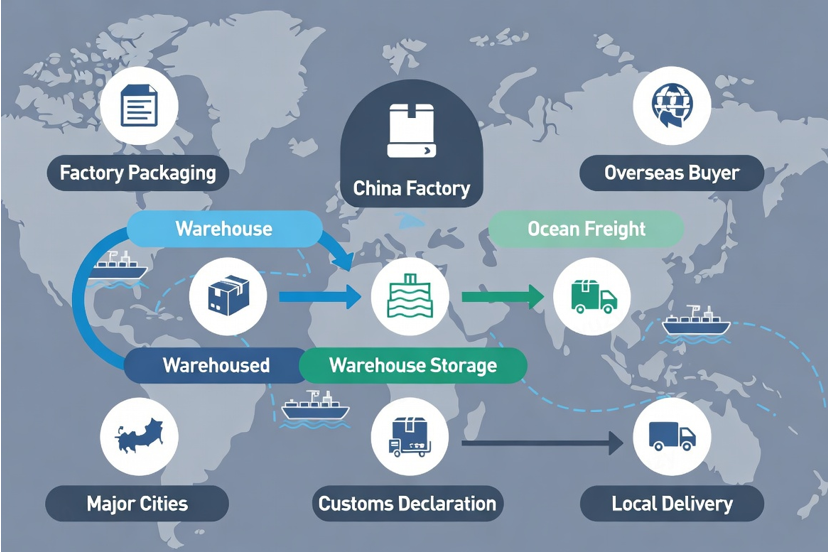
A high-performing cross-border sourcing workflow usually follows a clear sequence. First, the buyer identifies demand and validates product-market fit. Next, the platform matches the buyer with a supplier or factory, confirms pricing and lead times, and then coordinates payment, shipment, and post-sale tracking.
That sequence matters because it reduces rework. It also allows the business to standardize sourcing rules, improve conversion, and protect margins by making costs visible earlier in the buying journey.
A stronger buyer journey
To improve user experience, Looperbuy should design the buyer journey around decision clarity, not around catalog volume. Buyers need to see supplier credibility, product specifications, production timelines, shipping options, and estimated landed costs as early as possible.
A useful interface structure is:
1. Search by product category or use case.
2. Compare supplier capability and MOQ.
3. Review estimated shipping and fulfillment options.
4. Place sample or bulk orders.
5. Track order status and delivery progress.
This reduces friction and creates confidence, especially for overseas merchants handling their first China procurement transaction.
Trust and compliance
Trust is one of the biggest differentiators in cross-border sourcing. Buyers want confidence that products match specifications, suppliers are legitimate, and transactions are protected. Guides on procurement platforms consistently stress the need for integration, governance, and compliance controls to prevent costly mistakes.
Looperbuy can strengthen trust by highlighting supplier vetting, quality assurance checkpoints, clear dispute handling, and transparent documentation. For international buyers, this is often more valuable than a large catalog.
New market realities
Cross-border commerce in 2026 is shaped by three major realities: localization, multi-currency payments, and fulfillment resilience. Buyers no longer accept a one-size-fits-all experience; they expect regional payment methods, local language support, and faster delivery visibility.
This is a major opportunity for Looperbuy. A sourcing platform that presents China products in a localized, buyer-friendly way can help global merchants act faster and reduce the friction that normally comes with international procurement.
Actionable playbook
If Looperbuy wants to attract serious B2B buyers, the content and product experience should reflect the same logic. The platform should educate, reassure, and accelerate purchase decisions. It should also make cross-border complexity feel manageable instead of overwhelming.
Recommended execution steps:
– Publish product and sourcing guides by category.
– Explain lead times, fulfillment options, and payment flows.
– Add clear supplier qualification signals.
– Offer practical buying checklists for overseas merchants.
– Create market-specific landing pages for priority regions.
Cross-border B2B sourcing is strongest when it removes friction from buying, logistics, and scaling. Looperbuy can win by turning China procurement into a clear, trustworthy, and efficient workflow for global sellers.
FAQ
1. What is cross-border B2B sourcing?
It is the process of buying products from suppliers in another country for resale, fulfillment, or business use, often with lower inventory commitments and more flexible scaling.
2. Why do global sellers use China sourcing?
China offers broad manufacturing depth, competitive pricing, and supply variety, which makes it attractive for merchants looking to test or scale product categories.
3. How does dropshipping help B2B sellers?
Dropshipping reduces the need for upfront stock and warehouse space, which lowers capital pressure and makes it easier to launch or expand into new markets.
4. What makes a sourcing platform trustworthy?
Clear supplier vetting, transparent pricing, reliable shipping information, strong support, and well-defined compliance processes are key trust signals.
5. What should buyers check before placing an order?
They should confirm product specifications, supplier capability, lead times, shipping costs, payment terms, and dispute resolution rules before committing.
6. How can Looperbuy improve user experience?
By showing supplier credibility, estimated landed costs, fulfillment options, and order tracking clearly, while reducing unnecessary steps in the buyer journey.
References
– Virto Commerce, “Cross-Border eCommerce: Explanation, Trends, Examples” – [virtocommerce]
– “Cross-border eCommerce: A complete guide” – [lokalise]
– “Cross-Border e-commerce APAC: Complete 2026 …” – [cleargo]
– “Cross-Border eCommerce: International Sales Guide” – [digitalapplied]
– “B2B Purchasing Platform & Sourcing Marketplace Guide” – [spxcommerce]
– “B2B Procurement Platform Guide for Efficient Sourcing” – [ossisto]
– “Entering China’s cross-border e-commerce market: A step-…” – [china.acclime]
– “Cross-Border eCommerce 101: A guide for wholesale and …” – [airwallex]
– “Navigating B2B Procurement Marketplaces: Efficiency and Cost …” – [hubzonedepot]
– “Building a B2B Marketplace: Complete Blueprint for Scale …” – [linearloop]