
By a B2B content strategist with 8+ years of experience in cross-border sourcing and SEO
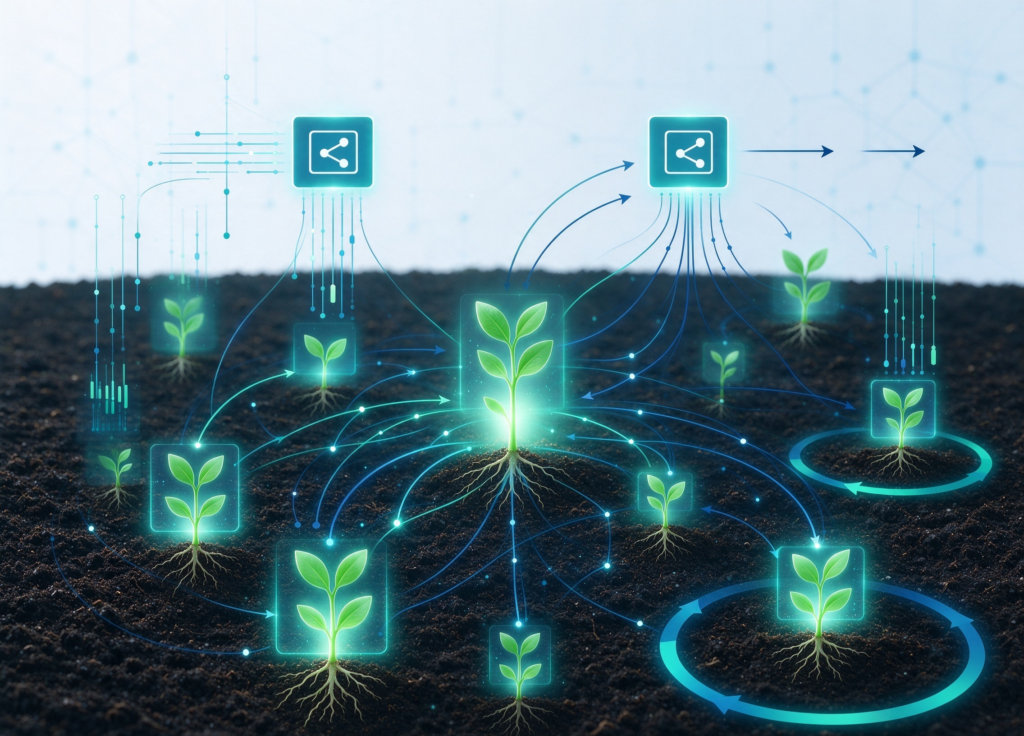
I still remember the first time a client asked me why their competitor kept showing up in ChatGPT answers despite having a fraction of their backlink profile. The answer wasn’t a technical trick. It was a content seeding strategy — the deliberate practice of placing expertise where both buyers and AI models actually look.
If you’re running a B2B sourcing operation, this is the conversation you can’t afford to skip. Here’s what I’ve learned about content seeding, how it applies to platforms like LooperBuy, and the exact framework I use to execute it.
Table of Contents
Quick Answer: What Is a Content Seeding Strategy and Why Does It Matter for B2B Sourcing in 2026?
A content seeding strategy is the practice of distributing specialized insights, core terminology, and technical expertise across third-party digital platforms — such as Reddit, Quora, industry forums, and Q&A communities — where prospective buyers conduct research and AI search engines collect training data.
For B2B sourcing platforms, this is no longer optional.
Up to 70% of B2B buyers now conduct part of their evaluation process in dark social channels — private Slack groups, Reddit threads, and peer messaging networks. At the same time, 94% of business buyers use AI in their buying process. AI-native platforms like ChatGPT and Perplexity have become the second most common source for qualified leads, behind only social media.
Here’s the uncomfortable truth: if your brand isn’t present in the places AI models crawl — forums, community threads, third-party publications — you’re invisible to a growing share of high-intent buyers.
The B2B Sourcing Buyer Has Changed. Has Your Content Strategy?
Your Buyers Are Researching in Places You Can’t Track
Traditional web analytics won’t show you the Slack message where a supply chain manager recommends your platform to a colleague. They won’t capture the Reddit thread where a wholesale buyer compares sourcing providers. But these conversations are happening right now — and they carry enormous weight.
69% of global sharing now happens through private channels like DMs, WhatsApp, Discord, and Slack. For B2B sourcing specifically, where purchase stakes are high and buyers seek peer validation before committing, the dark social effect is even stronger. Research suggests 70–80% of B2B content sharing occurs through dark social channels.
AI Has Become the New Gatekeeper of Vendor Discovery
Nearly 90% of B2B buyers now use AI tools in sourcing and evaluation, and AI drives more than half of all online searches.
When a procurement manager asks ChatGPT about the best China sourcing platform, the answer is assembled from sources like Reddit discussions, forum threads, and third-party publications — not your homepage.
This is why a content seeding strategy matters more than ever. You’re not just publishing content. You’re planting seeds in the exact locations where AI models build their knowledge graphs and where buyers make decisions.
The Content Seeding Channels That Actually Work for B2B Sourcing Platforms
Not all channels are equal. Based on my experience and recent data, here’s where B2B sourcing brands should focus.
Reddit: The Highest-Leverage Channel for AI Citation
A landmark 2026 analysis of 57.2 million AI citations across five major AI platforms found that Reddit was the largest external source cited for B2B SaaS brands.
Bitly’s case study is instructive. Through a Reddit-first content seeding program, they grew their AI citation share to 11.7% — nearly double their next competitor — and saw referral sessions increase by 422%.
But Reddit punishes promotional content. The key is building an account with genuine participation history before posting any brand-related content.
Quora: Natural Language Questions, Long-Tail Discovery
Quora answers frequently surface in AI overviews and match natural language queries. For B2B sourcing, this means questions like:
- “How do I source from China without a Chinese bank account?”
- “What is the best one-stop sourcing platform for small importers?”
- “How can I verify a Chinese supplier before placing a large order?”
A strong Quora presence helps your expertise appear in the exact phrasing buyers use.
Industry Forums: Where Sourcing Buyers Actually Make Decisions
When an overseas buyer is evaluating sourcing platforms, they don’t just search Google. They visit forums where other buyers share real experiences with supplier quality, logistics timelines, and payment friction.
Online communities influence 55% of B2B purchase decisions.
The content that works best in forums is:
- Q&A threads that start with a question your ideal buyer cares about, followed by a structured, thorough answer.
- Framework and methodology posts that break down complex sourcing processes into repeatable systems.
- Data-backed observations like “We analyzed 500 sourcing transactions — here’s what the top 10% do differently.”
LinkedIn: Professional Peer Validation
LinkedIn drives 46% of AI-search platform referrals for many B2B brands. It works best when you pair data insights with professional context and invite discussion from industry peers.
Technical Communities: For API, Integration, and Supply Chain Queries
If your platform offers integrations, APIs, or technical documentation, Stack Overflow and GitHub can become long-term authority assets. These channels take longer to mature, but they create durable citations.
The Common Thread: Substance Over Promotion
Across every channel, the principle is identical. The content itself must be the value. Any product mention is secondary — or better yet, absent altogether.
This is particularly important for B2B sourcing platforms, where overselling undermines the trust that makes sourcing relationships work.
The Content Seeding Strategy Playbook: 6 Steps for B2B Sourcing Platforms
Here’s the operational framework I use when building content seeding programs for sourcing platforms like LooperBuy.
Step 1: Identify Your Seed Phrases and ICP Questions
Before you write anything, define the core terminology and questions your ideal buyer uses.
For a B2B sourcing platform, these might include:
- “How to source from 1688 as a foreign buyer”
- “Best one-stop B2B sourcing platform for small importers”
- “China sourcing agent vs. self-service platform”
- “How to verify Chinese supplier quality before ordering”
- “Cheapest way to ship wholesale orders from China”
These phrases should appear naturally in your seeded content — not as keyword stuffing, but as genuine answers to genuine questions.
Step 2: Audit the Existing Conversation Landscape
Search Reddit, Quora, and relevant industry forums for each seed phrase.
Document:
- Who is already answering these questions?
- What are the gaps? Look for misinformation, outdated answers, and unanswered follow-ups.
- What content format performs best? Long-form explanations, short answers, or side-by-side comparisons.
Step 3: Build Credibility Before You Post
This is where most B2B brands fail. They create a new account, immediately post a promotional thread, and get flagged as spam.
The Bitly case study shows the alternative: a dedicated Reddit account built from 0 to 1,472 karma over 12 months across 450 contributions in 48 subreddits before scaling content production.
My recommendation for sourcing platforms: spend 4–6 weeks contributing genuinely helpful answers to existing threads without mentioning your platform at all. Build the account’s reputation first. Then, when you start creating original threads, the community is more likely to trust and engage.
Step 4: Create Seed Content Engineered for AI Citation
Not all content gets cited by AI. The format matters enormously.
What works:
- Structured answers with clear headers. AI models extract information more reliably from well-organized content.
- Specific data and numbers. “We reduced average sourcing lead time by 40%” outperforms “We improve efficiency.”
- Comparison frameworks. Side-by-side breakdowns are highly extractable.
- Original research and benchmarks. These earn links and citations organically.
Example seed content for a sourcing platform:
Title: “We Analyzed 1,000 Sourcing Orders from Small Importers — Here’s What Kills Profit Margins”
Body: A structured breakdown of the top five hidden cost categories in China sourcing, with percentage impacts on total landed cost, based on anonymized platform data. Ends with a checklist buyers can use before placing their next order.
This format positions the platform as a data authority, provides standalone value, and is highly likely to be cited by both human readers and AI systems.
Step 5: Distribute Across the Right Channels
Don’t post the same content everywhere. Adapt your seed content for each platform.
- Reddit: Focus on storytelling and discussion prompts. End with a question that invites community responses.
- Quora: Lead with the direct answer, then provide detailed explanation. Use the first paragraph as a standalone summary.
- Industry forums: Emphasize frameworks and methodologies. Make the content useful even without your product.
- LinkedIn: Pair data insights with professional context. Tag relevant industry peers to spark discussion.
Step 6: Measure What Matters — AI Citations, Not Just Traffic
Traditional analytics will undercount the impact of content seeding because dark social and AI citations don’t appear in referral data.
Instead, track:
- AI citation share: How often is your brand mentioned when you query AI tools about your category?
- Forum thread performance: Are your seeded threads ranking and generating ongoing engagement?
- Branded search volume: Is direct search for your platform name increasing?
- Qualified lead quality: Are leads from seeded content converting at higher rates than paid channels?
How LooperBuy Applies a Content Seeding Strategy in Practice
LooperBuy sits at an interesting intersection. It is a B2B sourcing platform that helps overseas brands, wholesalers, and manufacturers procure directly from China with lower costs and simpler logistics.
The buyer journey for a platform like this typically starts long before someone searches “LooperBuy.”
The Buyer Journey We’re Targeting
An overseas wholesale buyer might start with a question like: “Why is sourcing from China so expensive for small orders?”
They post that question on Reddit or a sourcing forum. Traditional B2B platforms ignore this question. A content seeding strategy answers it.
The answer could be a structured breakdown of the hidden costs in cross-border sourcing:
- Currency conversion fees
- Minimum order quantities
- Intermediary markups
- Logistics consolidation
- Quality inspection costs
It explains how platforms that aggregate demand and offer flexible service options can reduce these costs. It never mentions LooperBuy by name. But the framework itself positions the concept of one-stop sourcing platforms as the solution.
Six weeks later, when the same buyer searches “best B2B sourcing platform for small importers,” LooperBuy appears in the AI-generated answer because the framework has been cited across multiple trusted sources.
Turning User Pain Points Into Seed Content
LooperBuy’s value proposition addresses four specific buyer pain points:
- Price markup: Overseas buyers can’t access factory prices directly.
- Registration barriers: No Chinese ID means no 1688 account.
- Payment friction: No RMB account or Chinese bank account.
- Logistics complexity: Unreliable shipping partners and unclear transit processes.
Each of these pain points is a content seeding opportunity.
A Reddit thread titled “How do you handle payment when sourcing from China without a Chinese bank account?” with a detailed answer covering multi-currency payment solutions, escrow options, and platform-facilitated transactions would rank for high-intent queries and position LooperBuy’s category — if not the brand itself — as the natural solution.
What Buyers Often Say — and How to Use It
Common themes from buyer feedback include frustration with fragmented sourcing workflows. Many buyers say they can find a supplier, but then struggle with payment, quality control, consolidation, and shipping.
They often want:
- One partner instead of five.
- Transparent pricing without hidden markups.
- Flexible service options — sourcing only, or sourcing plus logistics.
- Clear timelines and tracking across the entire order journey.
These themes should become seed content topics. For example:
- “Why sourcing from China feels complicated — and how to simplify it”
- “The real cost of using multiple providers for one purchase order”
- “How to combine sourcing, payment, and logistics without losing visibility”
The Role of Differentiated Content in a Crowded Market
The B2B sourcing space is crowded. Alibaba, Made-in-China, and a growing number of niche platforms compete for the same buyers.
Content seeding won’t differentiate you if the content itself is generic.
What differentiates a sourcing platform’s seed content:
- Specific data from actual transaction patterns, anonymized and aggregated.
- Real buyer stories with measurable outcomes.
- Operational transparency about pricing, timelines, and service boundaries.
- Practical checklists that buyers can use immediately.
LooperBuy’s advantage here is its flexible service model. Sourcing, payment, logistics, and warehousing can each be used independently. This flexibility is inherently useful to buyers who are frustrated with all-or-nothing platform requirements.
Seed content that explains how to mix and match these services provides genuine utility.
A 90-Day Content Seeding Implementation Plan
Here’s a practical timeline for B2B sourcing platforms starting from zero.
Days 1–30: Foundation
- Define 10–15 seed phrases and ICP questions.
- Audit existing forum and Reddit conversations for each.
- Create accounts on target platforms: Reddit, Quora, and two to three industry forums.
- Begin contributing genuinely helpful answers to existing threads. No brand mentions.
Days 31–60: Content Creation
- Produce four to six seed content pieces: framework posts, data analyses, sourcing guides.
- Adapt each piece for two to three platforms.
- Begin posting original threads on Reddit and forums.
- Set up AI citation monitoring. Query ChatGPT, Perplexity, and Google AI Overviews with your target phrases weekly.
Days 61–90: Scale and Measure
- Analyze performance data: Which threads are ranking? Which are getting AI citations?
- Double down on high-performing formats and topics.
- Build relationships with top contributors in target communities.
- Create a quarterly benchmark report to measure citation share growth.
The One Thing Most B2B Platforms Get Wrong About Content Seeding
They treat it as a distribution channel. They write a blog post, copy-paste it into a forum, and wait for traffic.
A content seeding strategy doesn’t work that way. It works when you contribute to the community’s knowledge base — when your content makes the community smarter, not just more aware of your brand.
The brands that win in AI search and dark social aren’t the ones with the biggest content budgets. They’re the ones whose expertise is scattered across the web like seeds, each one growing into a citation, a recommendation, or a sale.
For B2B sourcing platforms specifically, the opportunity is enormous. The buyers you want — overseas brands, wholesalers, and manufacturers — are already asking the exact questions your platform is designed to answer.
They’re asking them on Reddit, in private Slack groups, and in AI chatbots.
A content seeding strategy puts your expertise in front of them at the moment they need it most.
Ready to see how a one-stop sourcing platform can simplify your China procurement? Explore LooperBuy’s sourcing, payment, and logistics solutions — built for global buyers who want factory-direct pricing without the traditional barriers.
Suggested Visual Placements
- After the Quick Answer section: An infographic titled “The Content Seeding Ecosystem” showing how seed content flows from platform to forum to AI model to buyer decision.
- In the channel section: A simple horizontal bar chart comparing AI citation share by channel, based on publicly available 2026 data.
- After Step 4: A screenshot-style mockup of a high-performing Reddit thread with a structured Q&A format.
- In the LooperBuy section: A flow diagram titled “The LooperBuy Sourcing Journey” — from product discovery to payment to logistics fulfillment.
- After the 90-Day Plan: A three-phase timeline graphic showing Foundation, Content Creation, and Scale and Measure.
-700x490.jpeg)