Learn how to scale from basic dropshipping to a private label brand with practical steps for product validation, supplier sourcing, custom packaging, quality control, inventory planning, fulfillment, brand protection, and customer retention. Build a differentiated ecommerce brand with stronger margins and long-term growth potential.
Basic dropshipping is an effective way to validate demand with relatively low upfront risk. But if you want stronger margins, repeat customers, pricing power, and a business that is not easily replaced by the next seller using the same product photos, you need to scale from basic dropshipping to a private label brand.
The transition is not simply about putting a logo on a product. It means moving from selling an easily comparable item to creating a more complete customer experience: a differentiated product, coherent packaging, reliable quality standards, useful content, and a fulfillment system that supports growth. For global sellers, a China sourcing and fulfillment partner such as Looperbuy can help bridge that gap by coordinating product sourcing, supplier communication, quality checks, branded packaging, inventory handling, and order fulfillment.
> Key idea: The best time to build a private label brand is usually after you have evidence that a product category can sell—not after you have already spent heavily on inventory, design, and advertising.
Table of Contents
Why Basic Dropshipping Eventually Hits a Ceiling
Basic dropshipping allows a seller to list products without purchasing stock upfront. When a customer places an order, the supplier ships directly to the end customer or to a fulfillment partner. This model can be valuable for testing niches, advertising angles, landing pages, and product-market fit.
However, the same characteristics that make basic dropshipping accessible also make it highly competitive.
When dozens of stores sell an identical product, they often rely on the same supplier images, product descriptions, shipping methods, and customer promises. Shoppers can compare offers within minutes. Your business then competes mainly on price, ad spend, and temporary creative performance.
Common limits of basic dropshipping
– Low product differentiation: Other stores can sell an identical product almost immediately.
– Weak customer trust: Generic packaging and inconsistent delivery experience can reduce perceived value.
– Limited margin control: Sellers may have little room to increase prices when the product is widely available.
– Unstable quality: Product batches may vary if quality standards are not documented and inspected.
– Poor retention: Customers remember the item, but not necessarily the store that sold it.
– Shipping uncertainty: Long or inconsistent shipping times can lead to refunds, chargebacks, and support tickets.
– Restricted brand assets: You may not own the photography, packaging design, product instructions, or positioning that persuade customers to buy.
A private label strategy addresses these limitations by giving you more control over what the customer sees, receives, and remembers.
Global ecommerce remains a large and expanding opportunity. Shopify estimates that worldwide ecommerce sales reached approximately $6.88 trillion in 2026, reinforcing why sellers need a clearer brand position instead of relying only on commodity-style listings. provides additional context on the size and continued growth of online retail.
What a Private Label Brand Really Means
A private label brand sells products made by a third-party manufacturer but presented under the seller’s own brand identity. Depending on the product category and supplier capability, private labeling may include a custom logo, packaging, inserts, product colors, bundles, formulas, materials, instructions, and product improvements.
It does not always require inventing a completely new product from scratch.
For many first-time brand builders, the practical path is:
1. Start with a proven product category.
2. Identify a clear customer problem or dissatisfaction.
3. Improve one or more meaningful elements.
4. Add consistent branding and packaging.
5. Create a more trustworthy post-purchase experience.
6. Build repeat purchase, referral, or cross-sell opportunities.
Basic dropshipping vs. private label branding
| Area | Basic Dropshipping | Private Label Brand |
| Product ownership | Usually sells existing generic items | Builds a branded product offer |
| Differentiation | Often limited | Can improve product, bundle, packaging, and positioning |
| Pricing power | Usually low to moderate | Often stronger when the offer is clearly differentiated |
| Customer memory | Customer remembers the item | Customer can remember the brand |
| Supplier relationship | Transactional | Longer-term and specification-driven |
| Quality control | Varies by supplier and batch | Defined standards, inspections, and feedback loops |
| Inventory model | Often ships one order at a time | Can use small-batch inventory, fulfillment centers, or hybrid fulfillment |
| Long-term asset | Store and ad account | Brand identity, customer list, packaging, product data, and repeat demand |
> Important: A logo alone does not create a brand. A brand is the repeated connection between a customer promise and the experience customers actually receive.
When You Are Ready to Move Beyond Dropshipping
You do not need to wait until you have a massive order volume. But you should have enough evidence to make decisions based on customer behavior rather than assumptions.
Use this private label readiness checklist
You may be ready to begin private labeling when most of the following are true:
– You have achieved repeatable sales for a product or product category.
– You understand who buys the product and why.
– You have customer reviews, support tickets, or survey responses that reveal product weaknesses.
– Your paid advertising produces reasonably consistent conversion data.
– You can identify a specific way to make the offer better.
– Your target selling price leaves room for product cost, shipping, advertising, returns, taxes, and profit.
– You can afford a small initial inventory commitment without threatening cash flow.
– You have a supplier or sourcing partner capable of providing samples and following specifications.
A useful rule is to avoid branding a product merely because it is currently “trending.” Trends can be helpful, but durable brands are built around repeatable demand and a defined customer problem.
For example, imagine you have sold generic travel organizers through a basic dropshipping store. Customer feedback repeatedly mentions weak zippers, limited compartment sizes, and poor packaging. Instead of launching a random logo, you could create a more focused offer:
– Reinforced zipper specifications.
– A layout designed for carry-on travelers.
– A waterproof laundry pouch.
– A packing checklist insert.
– Branded recyclable packaging.
– A product bundle for frequent business travelers.
That is a meaningful shift from “another travel organizer” to a more complete, customer-specific solution.
Build a Brand Position Before You Place an Order
Private label businesses often fail before the first purchase order because the seller rushes into packaging design without defining the offer.
Before contacting suppliers, write a simple brand brief. It should explain what you sell, who you serve, why your version is different, and what customers should expect after buying.
Define your brand foundation
Your brand brief should include:
– Target customer: Who has the problem you solve?
– Primary use case: When and where will customers use the product?
– Core promise: What outcome should the buyer expect?
– Product advantage: What is tangibly better than generic alternatives?
– Price position: Budget, mid-market, premium, or luxury?
– Brand personality: Practical, minimalist, professional, playful, sustainable, technical, or wellness-focused.
– Visual direction: Color palette, packaging style, typography, photography style, and unboxing experience.
– Proof points: Materials, tests, certifications, warranty, instructions, customer reviews, or product demonstrations.
Create a one-sentence positioning statement
Use this formula:
> For [target customer], [brand name] offers [product category] that helps them [primary outcome] through [specific differentiator].
Example:
> For frequent business travelers, AeroPack offers compact travel organizers that reduce packing stress through structured compartments, durable water-resistant materials, and airport-ready packing accessories.
This statement helps guide product decisions, product-page copy, photography, advertising, and supplier discussions.
Choose the Right Product to Private Label
Not every winning dropshipping product should become a private label item. The strongest candidates are products where branding or improvement can change the customer’s purchase decision.
Look for products with room for improvement
Prioritize products with one or more of these characteristics:
– Customers care about quality, durability, safety, comfort, or design.
– The item can be bundled with complementary products.
– Packaging can increase giftability or perceived value.
– The product has a clear repeat purchase or cross-sell path.
– Product photography and education can influence conversion.
– The category has a specific user group with unmet needs.
– Product defects can be reduced through better specifications.
– The item is not overly fragile, highly regulated, or prohibitively expensive to ship.
Be cautious with difficult categories
Some categories require more careful compliance and supplier verification:
– Cosmetics and skincare.
– Supplements and ingestible products.
– Baby products.
– Electronics and battery-powered goods.
– Medical or health-related products.
– Products that make safety, therapeutic, or performance claims.
– Items that may infringe intellectual property rights.
For example, cosmetics marketed in the United States must comply with applicable labeling rules. FDA guidance explains that cosmetic labeling must be truthful and not misleading, and it outlines requirements involving product identity, net quantity, ingredient declarations, and business information.
Do not treat product compliance as an afterthought. If your product category has safety, labeling, testing, certification, import, or intellectual-property requirements, consult qualified legal, regulatory, and product-compliance professionals before launch.
Source Products Like a Brand Owner
The sourcing process changes when you move from basic dropshipping to private label. Your goal is no longer simply to find the lowest product price. You need a supplier relationship that can deliver repeatable quality, documented specifications, reasonable lead times, and scalable packaging options.
What to ask suppliers before selecting one
When evaluating a supplier, request clear answers to the following:
– What is the minimum order quantity for the product?
– What is the MOQ for logo printing, custom packaging, or custom colors?
– What are the unit prices at different order quantities?
– Can the supplier provide samples before production?
– What materials, dimensions, weights, and tolerances apply?
– What quality-control process does the factory use?
– Can the supplier share relevant test reports or certificates?
– What is the sample lead time?
– What is the bulk-production lead time?
– How are defects, replacements, and claims handled?
– Can product manuals, labels, and inserts be customized?
– Can barcodes, FNSKU labels, or marketplace labels be applied?
– Can the supplier ship inventory to a fulfillment center?
Build a product specification sheet
A product specification sheet is one of the most valuable documents you can create. It turns vague expectations into measurable requirements.
Include:
– Product name and SKU.
– Approved reference images.
– Exact materials and colors.
– Dimensions and tolerance range.
– Weight range.
– Required logo placement and size.
– Packaging dimensions and materials.
– Insert card content.
– Barcode or fulfillment labels.
– Defect criteria.
– Inspection sampling requirements.
– Carton specifications.
– Required documentation or certifications.
A sourcing and fulfillment partner can reduce coordination friction by consolidating supplier communication, collecting samples, checking product details, arranging packaging, managing inventory, and shipping orders internationally. For sellers working with multiple factories or product variations, this centralized workflow can be more manageable than coordinating every production and fulfillment step independently.
> Practical advice: Never approve a product using only supplier photos. Order samples, test them as a customer would, and compare every important detail with your written specifications.
Validate Samples Before Scaling Inventory
Your first samples are not just a formality. They are a low-cost opportunity to prevent expensive mistakes.
Test the sample across four dimensions:
1. Product quality
Check materials, finish, function, durability, measurements, and potential defects.
2. Customer experience
Open the package as if you were a first-time buyer. Is the product intuitive? Is the packaging damaged? Are instructions clear?
3. Brand consistency
Does the color, logo, packaging, copy, and product appearance match your intended price position?
4. Shipping resilience
Consider whether the packaging protects the product during international transport and last-mile delivery.
Use a sample scoring matrix
| Evaluation Area | Questions to Ask | Score Range |
| Product function | Does it solve the promised problem reliably? | 1–5 |
| Materials | Do the materials match the desired quality level? | 1–5 |
| Branding | Is the logo accurate, clear, and consistently placed? | 1–5 |
| Packaging | Does packaging protect the product and look credible? | 1–5 |
| Instructions | Can a new customer understand how to use it? | 1–5 |
| Shipping readiness | Can it withstand handling and transport? | 1–5 |
| Supplier communication | Are revisions understood and documented? | 1–5 |
Do not move into bulk production until every non-negotiable requirement is approved. A supplier’s verbal confirmation is less useful than approved files, photos, measurements, and written specifications.
Protect Your Name and Product Assets
As you build a private label business, protect the elements that make the brand recognizable and defensible.
Important assets to consider
– Brand name.
– Domain name.
– Social media handles.
– Logo and visual identity.
– Product photos and videos.
– Packaging artwork.
– Product instructions.
– Customer email list.
– Product specifications.
– Supplier agreements and production records.
A trademark can help identify the source of your goods and distinguish your brand from others. The U.S. Patent and Trademark Office recommends conducting a clearance search before applying and provides guidance on filing and maintaining a federal trademark registration.
Trademark registration does not automatically solve every brand-protection issue, and requirements differ by country. Consider speaking with a qualified trademark attorney, especially before investing heavily in packaging, marketplace launches, or international expansion.
Design Packaging That Supports Conversion
Packaging is not merely an expense. It is part of the product experience and can influence reviews, customer trust, referrals, and social sharing.
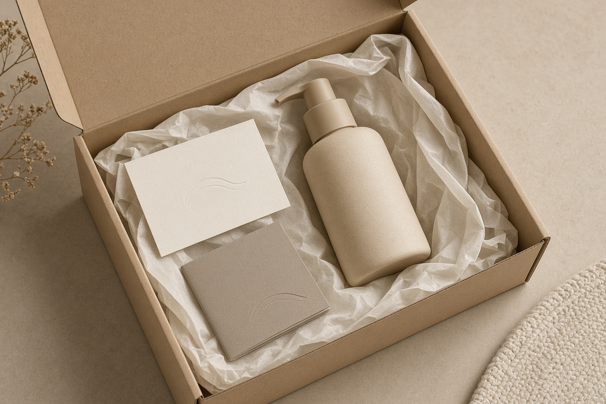
The right level of packaging depends on your product price, target audience, and shipping requirements. A low-cost item may only need a branded polybag, thank-you card, and clear instructions. A premium giftable product may justify a custom box, protective insert, branded tissue paper, and a post-purchase offer.
High-impact packaging elements
– A clear brand name and product identity.
– Protective materials suited to the shipping route.
– A concise product benefit statement.
– Setup or care instructions.
– A QR code linking to a tutorial or support page.
– A warranty or satisfaction message when appropriate.
– A cross-sell offer for complementary products.
– A review request that follows marketplace or platform rules.
– Recyclable or reduced-waste materials when that aligns with your brand promise.
Avoid making packaging too complicated at the start. Every custom element can increase minimum order quantities, production time, shipping volume, and error risk.
Create a Hybrid Fulfillment Model
Many sellers assume they must choose between classic dropshipping and holding large inventory. In reality, a hybrid model can be more practical.
You can continue testing new products with lower-risk dropshipping while holding limited inventory for proven private label SKUs. This allows you to protect cash flow while improving delivery speed and brand control for your best sellers.
A practical fulfillment path
| Growth Stage | Primary Goal | Recommended Approach |
| Product testing | Validate demand | Basic dropshipping or sample-based testing |
| Early validation | Improve offer | Small private label batch with basic branded packaging |
| Stable demand | Improve delivery and margin | Hold limited inventory with a fulfillment partner |
| Growth phase | Scale operations | Forecast inventory, add bundles, introduce regional fulfillment |
| Brand expansion | Increase lifetime value | Launch complementary products and retention campaigns |
For a platform such as Looperbuy, the operational opportunity is to combine China product sourcing with fulfillment support. Instead of managing separate suppliers, packaging vendors, warehouses, and shipping agents, sellers can create a more coordinated workflow for sourcing, labeling, inspection, storage, and order dispatch.
Inventory planning formula
A simple starting point is:
Reorder Point=(Average Daily Sales×Lead Time in Days)+Safety Stock
For example, if you sell 15 units per day, have a 30-day production and shipping lead time, and hold 150 units of safety stock:
(15×30)+150=600
Your initial reorder point would be approximately 600 units.
The formula is simple, but the inputs matter. Review sales velocity, seasonality, ad spend changes, supplier lead times, defect rates, and stockout risk regularly.
Improve the Customer Experience After Purchase
A private label brand wins when customers feel that the seller understands their needs. The post-purchase experience is where generic dropshipping operations often lose the opportunity to build trust.
Build a simple retention system
– Send an order confirmation with accurate delivery expectations.
– Provide tracking updates in plain language.
– Include helpful setup, care, or usage instructions.
– Send a post-delivery email or message with product support.
– Request feedback at an appropriate time.
– Respond quickly to defects or delivery problems.
– Offer a complementary product or replenishment option.
– Use customer feedback to improve the next production batch.
Customer reviews should be treated as operational data, not only marketing assets. Track recurring complaints by category:
– Product quality.
– Sizing or dimensions.
– Packaging damage.
– Shipping delay.
– Product instructions.
– Missing components.
– Color variation.
– Customer expectations versus actual product performance.
If five customers complain about a zipper, you may have a product-specification problem. If customers repeatedly misunderstand how to use the product, you may have an instruction, photography, or product-page problem.
Measure the Right Numbers During the Transition
Revenue alone does not tell you whether your private label strategy is working. You need to understand whether the brand is creating healthier economics and stronger customer relationships.
Core metrics to monitor
– Gross margin: Revenue minus product cost, shipping, packaging, duties, and fulfillment costs.
– Contribution margin: Revenue remaining after variable costs such as advertising, payment fees, and order-level expenses.
– Customer acquisition cost: Total marketing spend divided by new customers acquired.
– Conversion rate: Percentage of visitors who make a purchase.
– Average order value: Revenue divided by the number of orders.
– Repeat purchase rate: Percentage of customers who buy again.
– Return and refund rate: A warning signal for product quality, expectations, or shipping issues.
– Defect rate: Number of defective units divided by units inspected or sold.
– Inventory turnover: How quickly you sell and replenish stock.
– Stockout frequency: How often you lose sales because inventory is unavailable.
A private label launch may initially produce lower cash flow than basic dropshipping because you are investing in samples, packaging, inventory, and quality control. The objective is not simply to sell more units. It is to build a stronger business with better margins, more predictable fulfillment, and a more valuable customer base.
Start Building Your Private Label Brand
The move from basic dropshipping to a private label brand is a strategic progression. Start with proven demand. Listen carefully to customer complaints. Improve a product in a meaningful way. Document your specifications. Test samples. Build packaging that supports your positioning. Then use a fulfillment workflow that protects customer experience as order volume grows.
For sellers sourcing from China, Looperbuy can support the transition by helping coordinate product sourcing, supplier communication, sample evaluation, custom packaging, quality inspection, inventory handling, and global order fulfillment. This approach can help you focus more on brand building, product positioning, and customer growth rather than managing disconnected sourcing and logistics tasks.
Ready to turn a proven product into a branded offer? Start by choosing one validated SKU, writing a detailed product specification sheet, and requesting samples before committing to your first private label production run.
FAQ
1. What is the difference between dropshipping and private label?
Dropshipping is a fulfillment model in which a seller typically lists products without holding inventory, while private label refers to selling products under your own brand name. A private label business can still use dropshipping, but it usually adds branded packaging, defined product specifications, quality control, and a more controlled customer experience.
2. How much money do I need to start a private label brand?
The required budget depends on the product, supplier minimum order quantity, packaging, samples, shipping method, testing requirements, and marketing costs. Start with a small, validated product batch whenever possible. Your budget should include contingency funds for sample revisions, defective units, freight changes, customs-related costs, and customer service.
3. Can I private label a product from China?
Yes. Many manufacturers in China offer logo printing, custom packaging, product modifications, labeling, and bulk production services. However, you should verify supplier capabilities, request samples, document specifications, conduct quality checks, and confirm relevant regulatory requirements before placing a production order.
4. Do I need to trademark my private label brand?
A trademark is not always legally required before selling, but it can be an important step in protecting your brand identity. Before investing heavily in packaging and inventory, conduct a name search and consider professional legal advice. In the United States, the USPTO provides information on trademark searches, applications, registration, and maintenance.
5. What products are best for private labeling?
Strong private label candidates often have room for better quality, packaging, bundles, design, customer education, or targeting. Products with a clear use case and repeatable demand are generally more suitable than random trend products. Avoid highly regulated or safety-sensitive categories unless you have the expertise and compliance support to manage them responsibly.
6. Should I hold inventory or use fulfillment services?
Many growing sellers use a hybrid approach. They test new products with low inventory exposure, then hold inventory for proven products to improve shipping speed, packaging consistency, and quality control. A sourcing and fulfillment partner can help manage inventory without requiring you to operate your own warehouse.
7. How can I make a private label product stand out?
Focus on meaningful differentiation. Improve the product itself, solve a specific customer problem, create stronger packaging, include useful instructions, offer a better bundle, use original photography, and provide reliable customer support. The goal is to create a better overall offer—not only a different logo.
References
1. Shopify. “[Global Ecommerce Statistics and Trends].”
2. U.S. Food and Drug Administration. “[Cosmetics Labeling Guide].”
3. U.S. Food and Drug Administration. “[Summary of Cosmetics Labeling Requirements].”
4. United States Patent and Trademark Office. “[Trademark Basics].”
5. United States Patent and Trademark Office. “[Trademarks].”
6. United States Patent and Trademark Office. “[Trademark Center].”