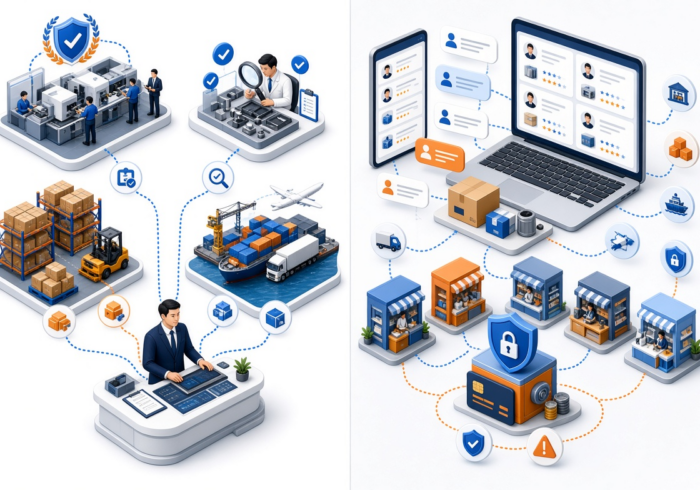
Learn how subscription dropshipping helps e-commerce sellers create recurring revenue without holding inventory. Explore product selection, sourcing, fulfillment, retention, pricing, cancellation transparency, and practical steps for building a dependable subscription business with China sourcing support.
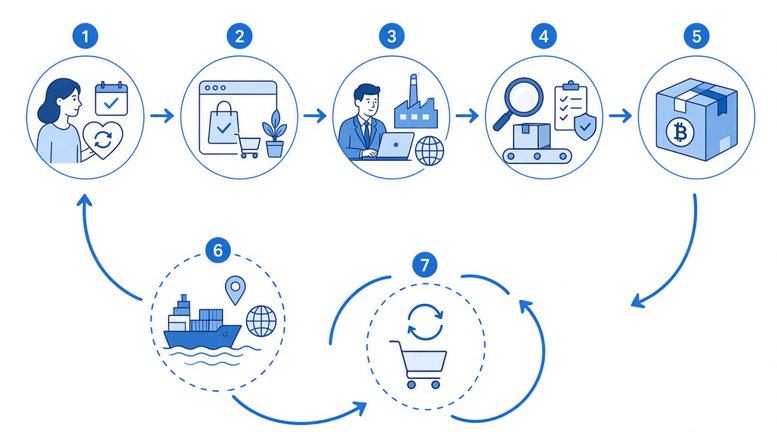
Subscription dropshipping combines recurring customer orders with inventory-light fulfillment. For online sellers, it can reduce upfront stock risk, improve demand visibility, and create a more predictable revenue base—provided that product quality, delivery reliability, pricing transparency, and cancellation policies are managed carefully.
Unlike a standard one-time dropshipping store, a subscription model asks customers to trust your business repeatedly. That makes the customer experience—not simply product selection—the real competitive advantage.
Table of Contents
What Is Subscription Dropshipping?
Subscription dropshipping is an e-commerce fulfillment model in which customers agree to receive products on a recurring schedule—such as weekly, monthly, or quarterly—while the retailer does not hold the inventory directly.
Instead, the seller markets the subscription, manages the customer relationship and billing cycle, and sends each recurring order to a supplier or sourcing partner for fulfillment. The supplier picks, packs, and ships the products to the customer.
This model brings together two familiar ideas:
– Subscription commerce: Customers pay repeatedly for continued access, replenishment, or curated deliveries
– Dropshipping: The seller avoids purchasing and storing most inventory before receiving customer orders
In practice, a customer might subscribe to a monthly pet-accessory box, recurring beauty tools, hobby supplies, eco-friendly household goods, or seasonal stationery. The store creates the offer and manages the experience. Its sourcing and fulfillment partner handles procurement, consolidation, quality checks, packaging, and international delivery.
For sellers sourcing from China, a platform such as Looperbuy can support this workflow by helping merchants source Chinese products, ship orders on behalf of their stores, and avoid the cost burden of self-managed warehousing, supplier payments, and logistics coordination.
Why Subscription Dropshipping Is Growing
Subscription commerce appeals to customers because it can make repeat purchasing easier. It appeals to merchants because recurring orders can make demand more visible and revenue less dependent on constantly acquiring new customers.
McKinsey categorizes consumer subscriptions into three primary models: replenishment, curation, and access. Replenishment automates purchases of frequently used products; curation focuses on discovery and personalization; and access gives members benefits such as lower prices or exclusive perks.
| Subscription model | Customer promise | Suitable product examples | Fulfillment priority |
| Replenishment | “Never run out” | Pet consumables, beauty accessories, household essentials, craft materials | Reliable recurring delivery |
| Curation | “Discover something new” | Stationery, collectibles, hobby products, lifestyle accessories | Product novelty and presentation |
| Access | “Get better value as a member” | Wholesale bundles, member-only products, bulk purchasing offers | Clear membership benefits |
| Hybrid model | “Convenience plus surprise” | Monthly themed kits with repeat-use core items | Consistency and flexibility |
Subscription businesses have historically grown faster than many conventional businesses because recurring relationships can create more stable revenue and deeper customer data over time. McKinsey found that subscription businesses collectively grew by more than 300% from 2012 to 2018, approximately five times the revenue growth rate of S&P 500 companies over the same period.
However, the opportunity should not be confused with automatic success. A recurring charge does not guarantee recurring satisfaction. Customers will cancel quickly if the product feels repetitive, delivery is inconsistent, product quality varies, or the value proposition is unclear.
The Business Benefits of a Subscription Dropshipping Model
More Predictable Revenue Planning
Traditional dropshipping is often promotion-driven. A store may experience strong sales during an advertising campaign and weak sales after that campaign ends. Subscription orders create a more visible baseline because a portion of future sales is already scheduled.
This helps merchants estimate:
– Expected monthly order volume
– Product purchasing needs
– Packaging and fulfillment capacity
– Customer support workload
– Cash-flow requirements
– Seasonal demand patterns
For example, if a store has 800 active subscribers receiving a monthly product kit, it can forecast a substantial portion of next month’s orders before new customer acquisition begins. That forecast can help a sourcing partner prepare product procurement and shipping capacity earlier.
Lower Inventory Exposure
A conventional e-commerce seller may need to buy inventory in advance, pay for storage, manage stock accuracy, and absorb the risk of unsold products. Subscription dropshipping can reduce this exposure because orders are tied to known subscriber demand.
This does not mean inventory risk disappears. Suppliers can still face shortages, product discontinuations, delayed production, or shipping disruption. But recurring demand data gives sellers a stronger basis for planning than unpredictable one-off orders.
For global B2B sellers, the operational value is significant: they can focus on storefront growth, customer retention, and brand positioning while a sourcing and fulfillment partner coordinates product procurement, inspection, consolidation, packing, and cross-border dispatch.
Higher Customer Lifetime Value
A successful subscription creates a longer customer relationship. Instead of earning one order, a store earns the opportunity to deliver value repeatedly.
A higher lifetime value can allow a merchant to invest more responsibly in:
– Product samples and quality inspections
– Better packaging
– Personalization quizzes
– Customer education content
– Retention emails and loyalty rewards
– Responsive customer support
The goal is not to lock customers into a difficult-to-exit plan. The goal is to make each delivery valuable enough that remaining subscribed feels like the easiest and best decision.
How to Choose the Right Subscription Products
The strongest subscription products solve one of two customer needs: repeat consumption or repeat discovery.
Repeat-consumption products are purchased because customers use them regularly. Repeat-discovery products are purchased because customers enjoy receiving something fresh, useful, collectible, or personalized.
Products That Work Well
Consider product categories that are compact, easy to ship, frequently used, or naturally suited to themed collections:
– Pet accessories, grooming tools, toys, and themed gift bundles
– Beauty tools, reusable skincare accessories, nail supplies, and cosmetic organizers
– Stationery, journals, pens, planners, stickers, and desk accessories
– Craft kits, DIY components, beads, paints, sewing accessories, and hobby tools
– Fitness accessories, resistance bands, hydration accessories, and recovery tools
– Kitchen gadgets, reusable food-storage products, baking accessories, and coffee tools
– Phone accessories, cable-management items, desk organizers, and travel gadgets
– Seasonal decorations, party supplies, gift-wrap products, and celebration kits
Products That Require Extra Caution
Some categories create higher sourcing, regulatory, delivery, or customer-safety risks. Merchants should conduct product and market checks before launching subscriptions involving:
– Supplements, foods, beverages, and ingestible wellness products
– Cosmetics or skin-contact products without appropriate compliance documentation
– Baby products and children’s goods
– Electrical products, batteries, chargers, and high-power devices
– Branded or trademark-sensitive goods
– Fragile, oversized, temperature-sensitive, or highly perishable products
A practical principle is simple: choose products that are easy to explain, useful when received, affordable to ship, and consistent enough for repeat fulfillment.
Use the “Subscription Fit” Test
Before committing to a category, ask five questions:
1. Would a customer realistically need or want this again within 30 to 90 days?
2. Can the value remain clear after the novelty of the first box wears off?
3. Can you maintain reliable product quality across multiple deliveries?
4. Can the products be shipped internationally without excessive damage, delay, or compliance risk?
5. Can your gross margin support product cost, packing, payment fees, shipping, replacements, and customer support?
If the answer to several questions is “no,” the product may work better as a one-time purchase than as a subscription.
A Step-by-Step Launch Plan
A subscription dropshipping business should be launched as an operating system, not simply as a product page. The following process helps reduce avoidable mistakes.
1. Define One Specific Customer Problem
Avoid starting with “a subscription box for everyone.” Start with a precise customer group and a clear reason they should subscribe.
Examples include:
– Monthly desk-organization accessories for remote workers
– Quarterly DIY jewelry-making kits for beginners
– A recurring pet-enrichment bundle for indoor cats
– Monthly planner and stationery refills for students
– Seasonal home-decoration bundles for small retailers
The narrower your initial positioning, the easier it becomes to select products, create content, and explain your value.
2. Build a Repeatable Product Mix
A useful model is to combine:
– One or two reliable “core” products
– One new or seasonal discovery item
– One low-cost bonus or educational insert
– Optional add-ons that customers can choose before renewal
For a stationery subscription, the core items could be notebooks and pens, while the discovery items could be specialty stickers, themed paper clips, or limited-edition desk accessories.
This structure keeps the subscription recognizable while preventing it from feeling identical every month.
3. Validate Suppliers Before Selling
Do not rely only on listing photos or supplier descriptions. Order samples and review the full delivery experience.
Check:
– Actual product materials and finish
– Product dimensions and weight
– Color consistency
– Packaging condition
– Functionality and usability
– Supplier response time
– Available stock and replenishment ability
– Shipping method options
– Labeling and customization capability
For subscription commerce, one poor delivery can affect multiple future renewals. Establishing an inspection process is therefore more valuable than simply choosing the lowest unit price.
4. Create a Transparent Subscription Offer
Customers should know exactly what they are buying before entering payment information.
State clearly:
– Subscription price
– Billing frequency
– First-charge date
– Renewal date
– Estimated shipping timeline
– Countries served
– Whether products may vary
– How to skip, pause, edit, or cancel
– Whether taxes, duties, or shipping fees apply
The U.S. Federal Trade Commission’s final negative-option rule emphasized clear disclosure of material terms, express informed consent before billing, and a simple way to cancel recurring charges. Even if a merchant operates internationally, clear terms and uncomplicated cancellation are strong trust-building practices.
5. Plan Fulfillment Before You Scale Ads
When sourcing from China, recurring orders may involve multiple suppliers, variable lead times, and international transit. Before scaling traffic, decide how each subscription cycle will work:
– Set a cut-off date for new orders and changes
– Confirm product availability before each billing cycle
– Allow sufficient time for procurement and quality checks
– Consolidate multiple products into one shipment where practical
– Use branded packaging only after validating repeat order volume
– Provide tracking updates and realistic delivery estimates
– Establish a replacement and refund process for damaged or missing items
A procurement and dropshipping partner can simplify this process by centralizing sourcing, supplier communication, payment handling, inspection, packaging, and shipping coordination.
Retention: The Part Most Sellers Underestimate
The first purchase is a marketing event. The second and third renewals are proof that the operating model works.
Retention improves when customers feel that the subscription is useful, flexible, and worth the price every cycle.
Build Retention Into the Experience
Use these practices to make each delivery more valuable:
– Send a welcome email that explains what customers can expect
– Provide a clear shipment calendar
– Let subscribers choose themes, colors, sizes, or preferences when possible
– Offer a skip option for customers who need a temporary pause
– Send renewal reminders before billing where appropriate
– Include practical product-use tips or QR-linked content
– Ask for feedback after each delivery
– Analyze cancellation reasons instead of guessing
– Reward longer-term subscribers with useful perks, not unnecessary discounts
For curation-based subscriptions, personalization can be particularly important. McKinsey describes curation subscriptions as offers designed to surprise and delight through new items or highly personalized experiences, especially in categories such as apparel, beauty, and food.
Track the Metrics That Matter
A subscription store should monitor more than total sales. Use a simple monthly dashboard that includes:
| Metric | What it tells you | Why it matters |
| Active subscribers | Current recurring customer base | Indicates predictable demand |
| Monthly recurring revenue | Revenue expected from renewals | Helps plan cash flow |
| Renewal rate | Share of customers who continue | Measures offer quality |
| Churn rate | Share of customers who cancel | Reveals retention problems |
| Average order value | Revenue per subscription order | Supports margin planning |
| Product defect rate | Quality issues per shipment | Protects customer trust |
| On-time delivery rate | Orders delivered within expectation | Shows fulfillment reliability |
| Customer support rate | Support requests per order | Identifies friction points |
A high acquisition rate cannot compensate forever for poor retention. If subscribers leave after one or two cycles, review product quality, perceived value, delivery timing, and billing communication before spending more on advertising.
Common Mistakes to Avoid
The subscription dropshipping model is attractive because it appears lean. Yet it can become expensive when merchants underestimate its complexity.
Avoid these common errors:
– Selling a vague box: Customers need a clear reason to subscribe, not just a random assortment of products.
– Using unstable suppliers: A low price is not valuable if stock availability or product quality changes without warning.
– Promising unrealistic delivery speeds: Be transparent about international shipping timelines and possible seasonal delays.
– Ignoring landed cost: Include product cost, packaging, inspection, payment fees, shipping, taxes, replacements, and customer support.
– Making cancellation difficult: Friction may produce short-term retention but damages trust, increases disputes, and weakens the brand.
– Repeating the same products too often: Curation subscribers expect relevance, novelty, or personalization.
– Scaling before validating fulfillment: Confirm the process with a small subscriber group before increasing acquisition spend.
Build a More Reliable Subscription Supply Chain
Subscription dropshipping works best when customer experience and fulfillment planning are designed together. Merchants should not treat sourcing as a back-office detail; it directly affects reviews, renewals, chargebacks, and referral potential.
Looperbuy can help global B2B sellers build a leaner product operation by supporting China product sourcing and direct shipping. Rather than purchasing large volumes of inventory, managing a warehouse, coordinating supplier payments, and arranging international logistics independently, sellers can use an integrated sourcing and fulfillment workflow to manage recurring orders more efficiently.
The best starting point is a focused pilot:
1. Choose one defined niche and one subscription cadence.
2. Test a small number of products and suppliers.
3. Order samples and inspect the real customer experience.
4. Launch with a limited subscriber group.
5. Track quality, delivery, renewal, and cancellation feedback.
6. Refine the offer before scaling.
Ready to turn repeat demand into a more manageable fulfillment model? Start by sourcing and testing a small subscription-ready product range through Looperbuy, then build your recurring offer around products you can deliver consistently, transparently, and profitably.
Frequently Asked Questions
1. Is subscription dropshipping profitable?
It can be profitable when the subscription has a clear customer value proposition, stable sourcing, healthy gross margins, and strong retention. Profitability depends on the full landed cost, not only the supplier’s unit price. Merchants should include products, packaging, inspection, shipping, transaction fees, replacements, customer service, and customer-acquisition costs in their calculations.
2. What is the difference between traditional dropshipping and subscription dropshipping?
Traditional dropshipping usually involves individual, one-time orders. Subscription dropshipping uses recurring billing and scheduled fulfillment. This can create more predictable demand, but it also requires stronger supplier coordination, clearer billing terms, and more consistent product quality.
3. What products are best for subscription dropshipping?
Products with repeat-use or repeat-discovery value are usually the best fit. Examples include pet accessories, stationery, craft supplies, beauty tools, home-organization products, hobby kits, seasonal goods, and selected lifestyle accessories. High-risk or regulated products require additional compliance checks.
5. How often should a subscription box ship?
Monthly delivery is common because it is familiar to customers and provides regular engagement. However, the best frequency depends on product usage and shipping economics. Consumable products may fit a 30-day cycle, while curated hobby kits may work better quarterly.
6. How can I reduce subscription cancellations?
Reduce cancellations by providing consistent product value, accurate shipping expectations, flexible skip or pause options, transparent billing, responsive support, and regular product variety. Ask customers why they cancel and use that feedback to improve the offer instead of relying only on discount incentives.
7. Do I need inventory for a subscription dropshipping business?
Not necessarily. A dropshipping model allows you to avoid holding most inventory yourself. However, you still need a reliable sourcing and fulfillment process, especially for recurring orders. For high-volume products, pre-planning or reserving stock with suppliers may be necessary to protect delivery reliability.
8. How can Looperbuy support subscription sellers?
Looperbuy can support international sellers by helping them source products from China and arrange direct fulfillment. This can reduce the operational burden of purchasing inventory, storing products, managing supplier payments, and coordinating logistics independently. Sellers should still validate products, define clear customer terms, and monitor fulfillment performance.
References
1. Doba. “[Why Subscription-Based Dropshipping Models Are Revolutionizing E-Commerce].” Discusses the combination of recurring subscriptions and inventory-light dropshipping, including niche selection, product curation, automation, community building, and supply-chain planning.
2. McKinsey & Company. “[Thinking Inside the Subscription Box: New Research on E-Commerce Consumers].” Defines replenishment, curation, and access subscription models and explains the consumer roles of automation, discovery, and membership benefits.
3. McKinsey & Company. “[Creating Consumer—and Business—Value with Subscriptions].” Provides historical context on the growth of subscription businesses and the potential business value of recurring customer relationships.
4. U.S. Federal Trade Commission. “[Federal Trade Commission Announces Final ‘Click-to-Cancel’ Rule].” Outlines expectations for clear material terms, express informed consent, and simple cancellation mechanisms in negative-option subscription offers.
5. Chargebee. “[Comply With FTC’s Click-to-Cancel Rule: Retain Subscribers].” Summarizes practical subscription-management considerations, including transparent disclosures, accessible cancellation, and immediate termination of recurring billing after cancellation.